
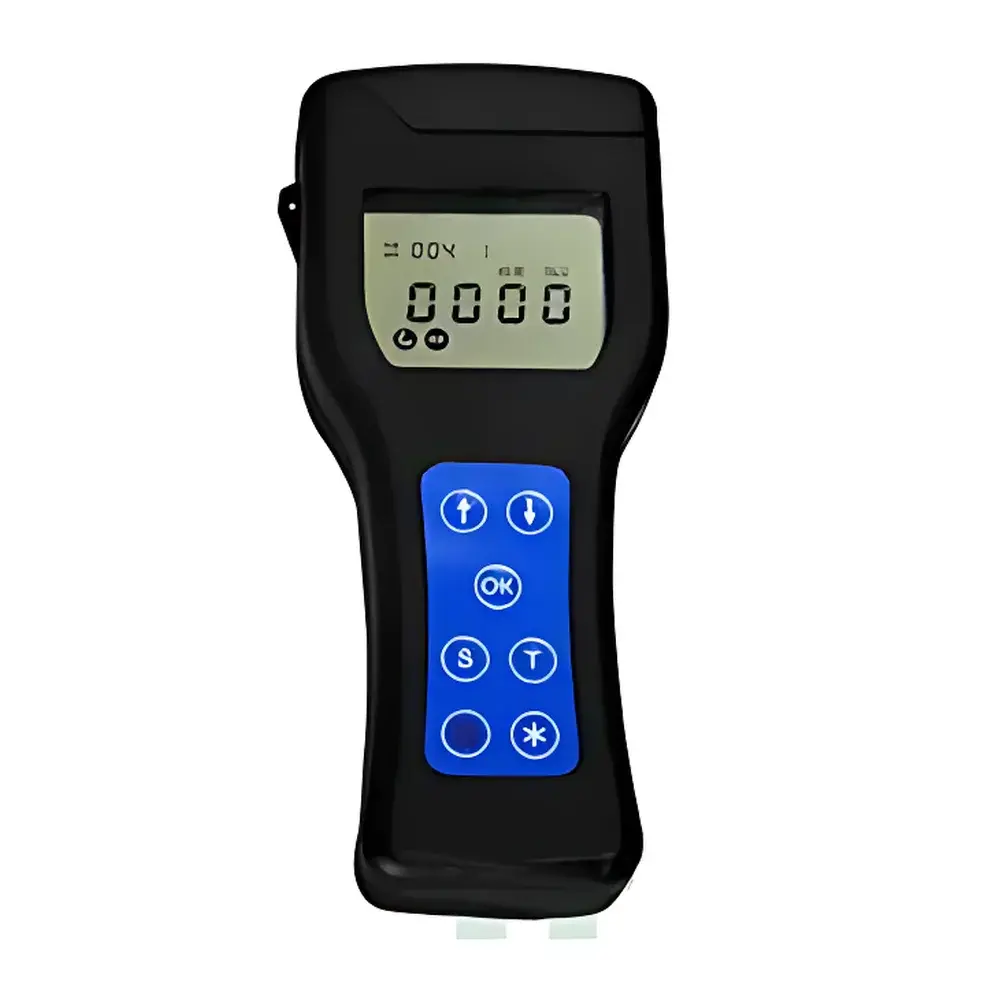
FX-ATP ATP Bioluminescence Microbial Detector
| Brand | HJ Purification (HJ) |
|---|---|
| Origin | Shanghai, China |
| Manufacturer Type | Direct Manufacturer |
| Country of Origin | China |
| Model | FX-ATP |
| Price | USD 1,550 (approx.) |
Overview
The FX-ATP ATP Bioluminescence Microbial Detector is an engineered field-deployable instrument designed for rapid, quantitative assessment of microbial contamination via adenosine triphosphate (ATP) bioluminescence. It operates on the principle of luciferase-catalyzed oxidation of ATP—extracted from viable cells—yielding visible light proportional to ATP concentration. This photonic signal is captured by a calibrated photomultiplier tube (PMT) and converted into Relative Light Units (RLUs), enabling indirect quantification of total viable microorganisms within seconds. Unlike culture-based methods requiring 24–72 hours, the FX-ATP delivers results in ≤10 seconds per sample, making it suitable for high-frequency hygiene verification in food production lines, retail environments, and sanitation validation workflows. Its detection limit of ≤1.0 CFU/mL (equivalent to ≥1 × 10⁰ CFU/mL for common Gram-negative bacteria under standardized swab recovery conditions) aligns with ISO 22000 hygiene monitoring requirements and supports real-time decision-making in HACCP-critical control points.
Key Features
- Automated self-diagnostic startup sequence verifies optical path integrity, PMT gain stability, and internal calibration reference prior to each assay cycle.
- Intelligent sample chamber sensing detects incomplete lid closure and suspends measurement until mechanical seal integrity is confirmed—minimizing ambient light leakage and ensuring RLU reproducibility (±5 RLU or ±5% CV).
- Real-time pass/fail evaluation against user-defined threshold sets: instruments compare post-measurement RLU values to preconfigured upper/lower limits and display status indicators (Pass / Alert / Fail) directly on the OLED interface.
- Integrated low-battery warning system triggers audible and visual alerts when remaining charge falls below 12%, supporting uninterrupted operation during extended shift-based audits.
- Onboard memory stores up to 2,000 complete assay records—including timestamp, RLU value, selected limit ID, operator code (if assigned), and environmental metadata (ambient temperature/humidity at time of test).
- Dual-mode reporting: configurable output in RLU (for general hygiene trending) or semi-quantitative coliform screening mode (with algorithmic conversion based on empirically derived RLU-to-CFU correlation curves validated per ISO 11290-2 and FDA BAM Chapter 4 protocols).
Sample Compatibility & Compliance
The FX-ATP accommodates standard 3M™ Clean-Trace™, Hygiena™ UltraSnap™, or generic ATP swabs (100 mm² surface area, 1 mL extraction buffer volume). It also supports liquid-phase analysis of rinse water, milk, juice, and cleaning-in-place (CIP) effluents after appropriate dilution and filtration. Instrument performance complies with ISO 22000:2018 Annex A.8.3 (verification of cleaning effectiveness), EN 13697:2015 (chemical disinfectant efficacy testing), and FDA Food Code §3-202.11 (food contact surface sanitation verification). All firmware and data handling routines adhere to ALCOA+ principles (Attributable, Legible, Contemporaneous, Original, Accurate, Complete, Consistent, Enduring, Available), supporting GLP/GMP audit readiness.
Software & Data Management
The FX-ATP interfaces via USB 2.0 to Windows-based Expert Analysis Software (v3.2+), enabling batch export of CSV/Excel files with full traceability. The software provides statistical process control (SPC) charts, Pareto analysis of contamination hotspots, automated report generation compliant with ISO/IEC 17025 documentation standards, and audit trail logging meeting FDA 21 CFR Part 11 requirements (electronic signatures, user access levels, immutable event logs). Up to 100 distinct limit profiles can be deployed across multiple sites—each containing dual thresholds (e.g., Action Limit = 50 RLU; Alert Limit = 20 RLU)—and synchronized across fleets via encrypted configuration files.
Applications
- Routine hygiene monitoring of food contact surfaces (conveyor belts, cutting boards, stainless steel tanks) in meat processing, dairy, bakery, and ready-to-eat facilities.
- Validation of CIP cycle efficacy in beverage bottling plants and dairy pasteurization units—particularly for alkaline phosphatase residual detection in raw milk (correlating RLU suppression with enzyme inactivation).
- Environmental swabbing in retail delis, school kitchens, and hospital cafeterias to verify post-cleaning compliance against internal SOPs.
- Quantitative assessment of non-microbial ATP sources (e.g., food debris, biofilm matrix components) using differential extraction protocols—supporting root cause analysis beyond simple microbial load estimation.
- Field-deployed sanitation auditing in mobile food trucks and outdoor catering operations where ambient temperature (5–40 °C) and humidity (20–85% RH) vary significantly.
FAQ
What is the minimum detectable ATP concentration?
The instrument achieves a theoretical detection sensitivity of 2 × 10⁻¹⁸ mol ATP per assay, corresponding to ≤1.0 CFU/mL under optimal swab recovery efficiency (≥65% for E. coli on stainless steel per AOAC 990.12).
Can the FX-ATP differentiate between microbial and non-microbial ATP?
It does not perform intrinsic differentiation; however, paired sampling (e.g., total ATP vs. heat-treated ATP to denature microbial enzymes) enables calculation of microbial-specific contribution using the Expert Software’s differential analysis module.
Is the device compliant with regulatory data integrity standards?
Yes—firmware implements secure user authentication, electronic signature capture, and tamper-evident audit trails fully aligned with FDA 21 CFR Part 11 and EU Annex 11 requirements for regulated environments.
How many limit sets can be stored onboard?
The device supports storage of up to 100 unique limit configurations, each with independent high/low thresholds and descriptive labels for zone-specific hygiene criteria.
What is the typical battery life per charge?
Using standard AA alkaline batteries, continuous operation yields ≥8 hours of active testing (≈2,000 assays); rechargeable NiMH options extend runtime to 12+ hours with integrated charge-state monitoring.






