
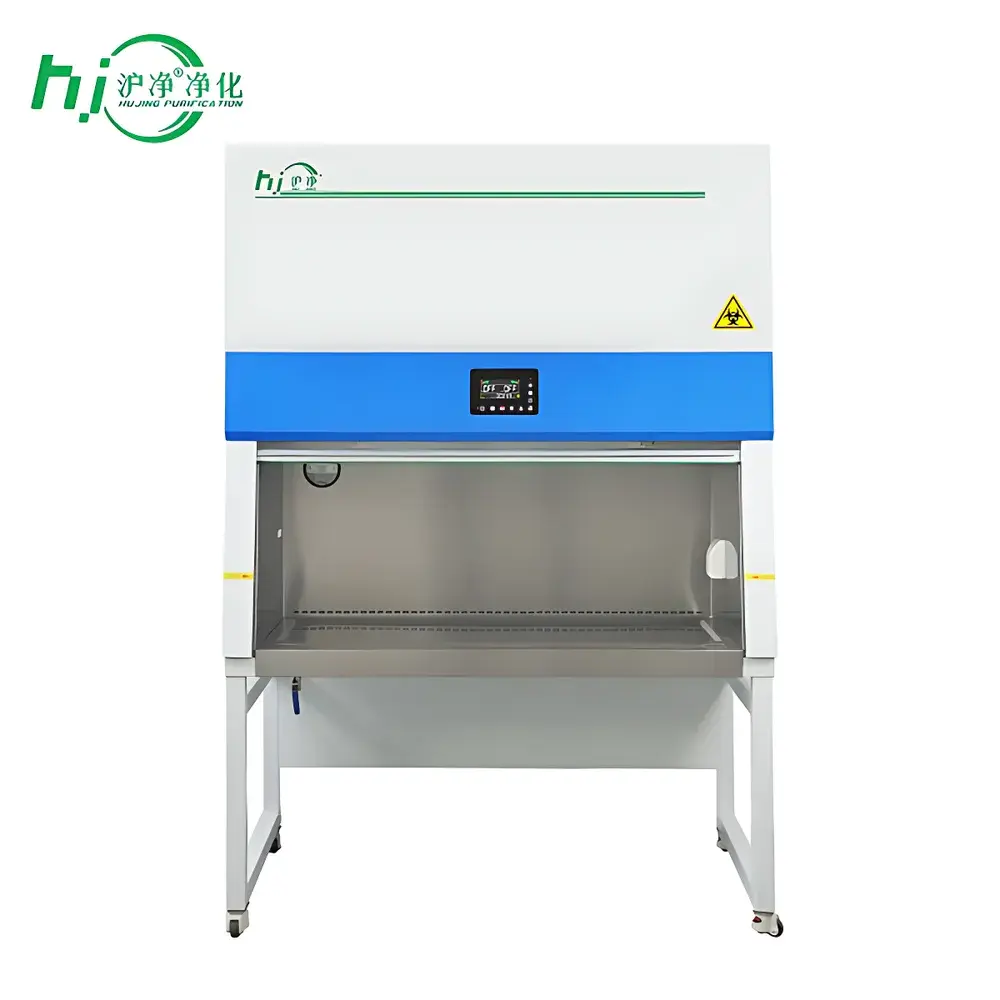
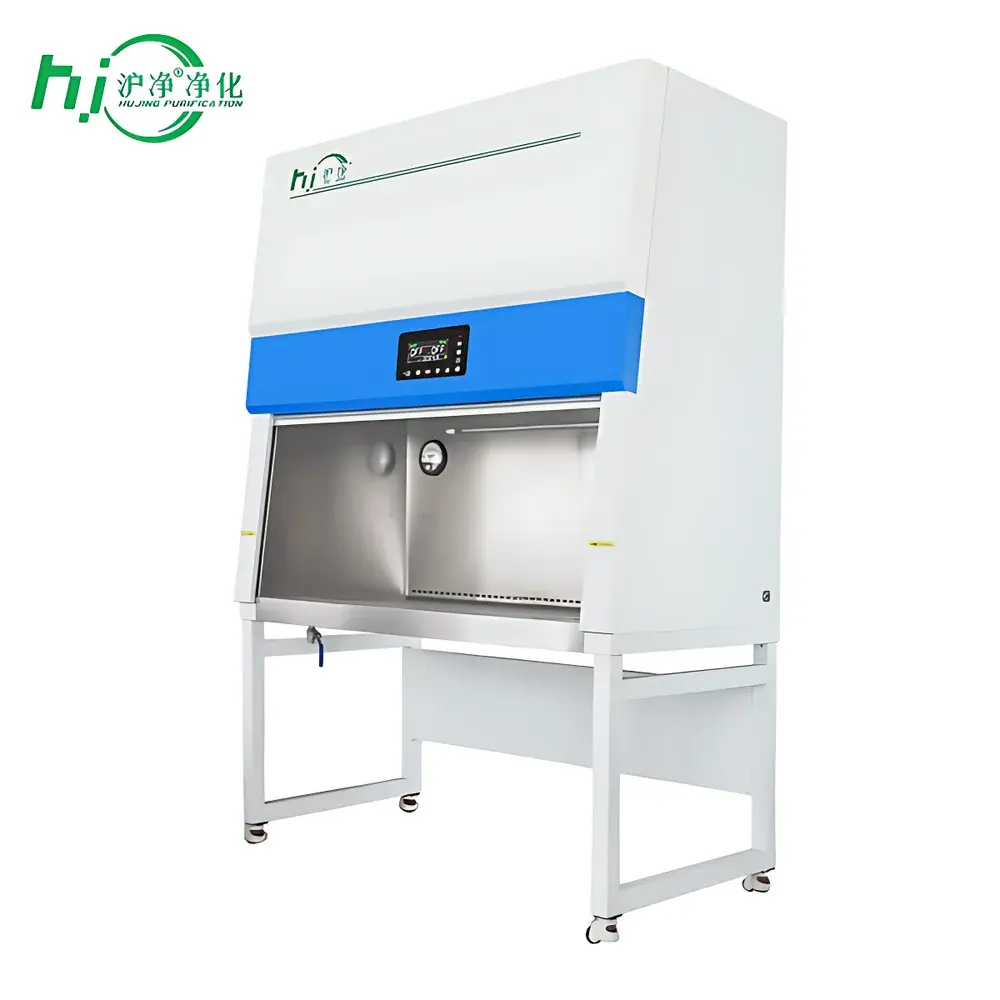
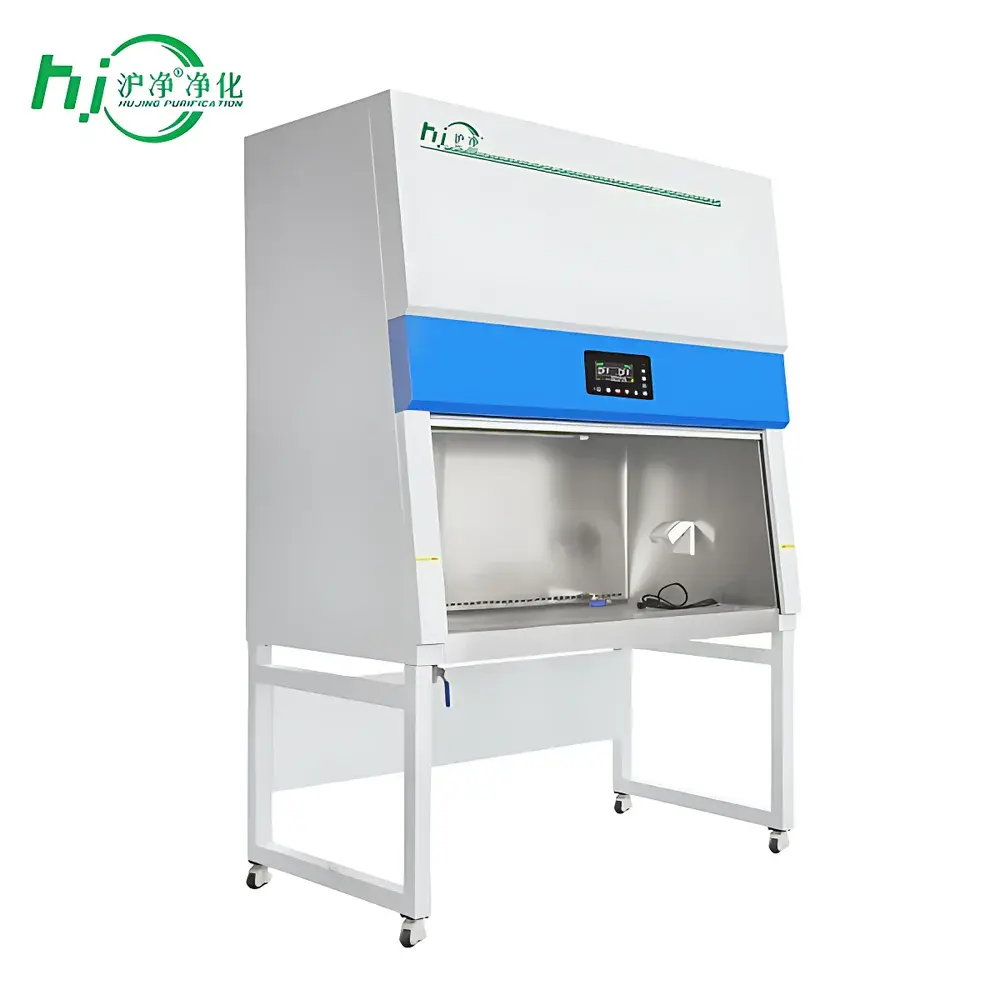
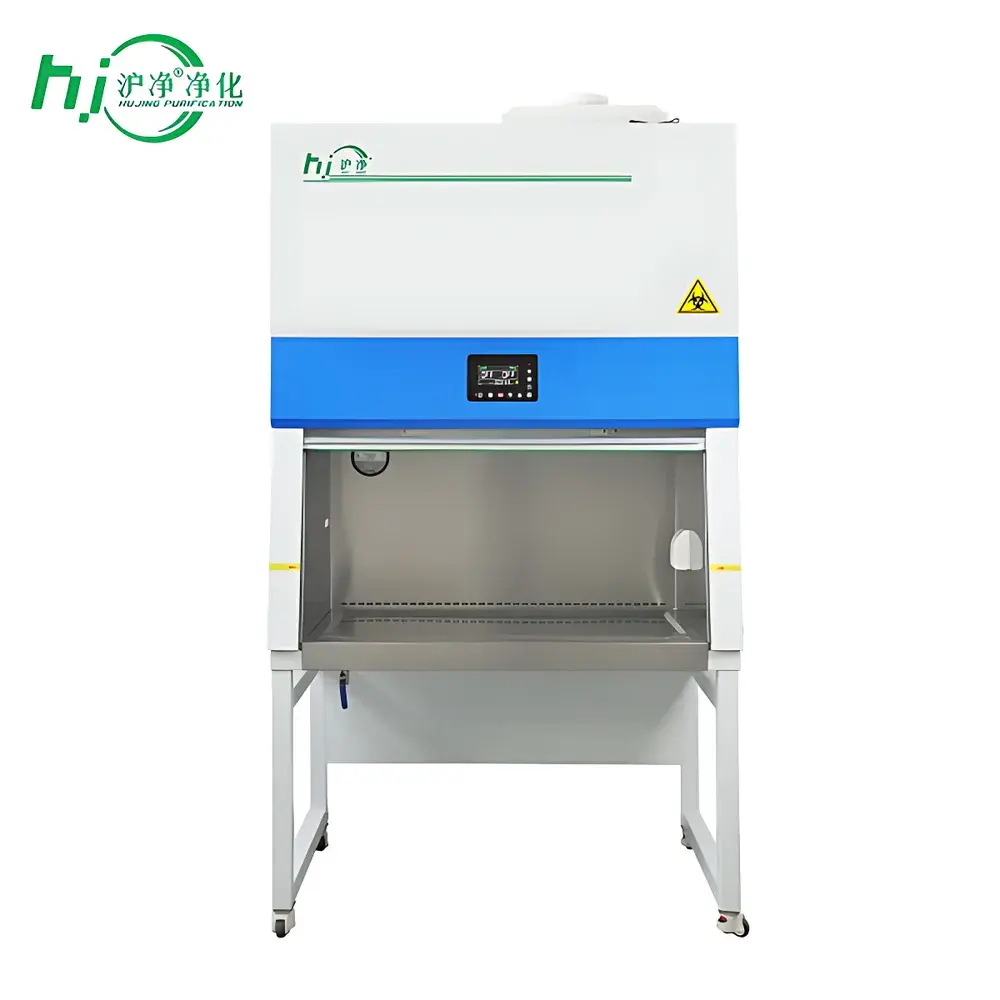
HJ BSC1000IIA2 Class II Type A2 Biological Safety Cabinet
| Brand | HJ Purification |
|---|---|
| Origin | Shanghai, China |
| Manufacturer Type | Direct Manufacturer |
| Country of Origin | China |
| Model | BSC1000IIA2 |
| External Dimensions (L×W×H) | 1000 × 800 × 2100 mm |
| Internal Work Area Dimensions (L×W×H) | 840 × 700 × 600 mm |
| Filter Capture Efficiency | ≥98% @ 0.3 µm (DOP/NaCl test) |
| Average Inflow Velocity | 0.55 ± 0.025 m/s |
| Average Downflow Velocity (Center) | 0.26 ± 0.025 m/s |
| Noise Level | ≤65 dB(A) |
| Power Supply | AC 220 V / 50 Hz |
| Max. Power Consumption | 500 W |
| Net Weight | 210 kg |
| Work Surface Material | 304 Stainless Steel |
| Certifications | Compliant with NSF/ANSI 49-2022, GB 50346-2011, and EN 12469:2000 |
Overview
The HJ BSC1000IIA2 is a Class II, Type A2 biological safety cabinet engineered for precision containment and operator protection in microbiological, clinical, and pharmaceutical laboratories. It operates on the principle of laminar airflow combined with dual-filtered recirculation and controlled exhaust — 70% of the air is recirculated through a supply HEPA filter after passing through the work area, while 30% is exhausted via a dedicated ducted or thimble-connected system following filtration through a second HEPA filter. This configuration ensures simultaneous protection of personnel, product, and environment in low-to-moderate risk biosafety level (BSL-2) applications. The cabinet maintains negative pressure relative to the laboratory, preventing unfiltered air ingress, and employs a vertical downward laminar flow across the work surface to safeguard samples from airborne particulate contamination. Its structural integrity, aerodynamic design, and real-time airflow monitoring meet the performance requirements defined in NSF/ANSI 49-2022 and EN 12469:2000.
Key Features
- Aerodynamic barrier design with an active air curtain at the front aperture, minimizing cross-contamination between external and internal environments.
- Motorized or manual counterbalanced sash window with smooth vertical travel, adjustable positioning, and mechanical sash-height limiter with audible/visual alarm when exceeding safe operational range.
- Dual HEPA filtration system: one for recirculated air (≥99.99% efficiency at 0.3 µm), one for exhaust air (≥99.99% efficiency at 0.3 µm); both validated per IEST-RP-CC001 and ISO 14644-3 protocols.
- Integrated DOP (Di-Octyl Phthalate) testing port and built-in differential pressure gauge for routine verification of filter integrity and airflow balance.
- Work surface and interior chamber fabricated from electropolished 304 stainless steel — seamless, non-porous, corrosion-resistant, and compatible with common disinfectants including 70% ethanol, sodium hypochlorite, and hydrogen peroxide vapor.
- LED touch-control panel with real-time display of inflow/downflow velocities, UV lamp status, sash position, and system fault diagnostics; UV interlock prevents activation unless sash is fully closed.
- 10° forward tilt of the front control panel and work surface enhances ergonomic access and reduces operator fatigue during extended procedures.
- Dedicated GFCI-protected power outlets (IPX4 rated) and liquid waste drain port located within the work area for integration with centrifuges, pipetting stations, or aspiration systems.
Sample Compatibility & Compliance
The BSC1000IIA2 supports handling of BSL-1 and BSL-2 agents as defined by the CDC/NIH Biosafety in Microbiological and Biomedical Laboratories (BMBL, 6th Edition). It is suitable for sterile tissue culture, antibiotic susceptibility testing, diagnostic specimen processing, and preparation of non-volatile pharmaceutical compounds. All materials contacting the work area comply with USP Class VI biocompatibility standards. The unit is certified to NSF/ANSI 49-2022 for Class II Type A2 cabinets and conforms to Chinese national standard GB 50346-2011 for biosafety laboratory construction. Optional validation packages support IQ/OQ/PQ documentation aligned with GLP and GMP requirements, including audit trails for airflow calibration records and UV irradiance logs.
Software & Data Management
While the BSC1000IIA2 operates as a standalone hardware platform without embedded network connectivity, its control interface supports data logging via optional RS-485 or USB export modules (sold separately). Logged parameters include sash position history, UV exposure duration, airflow velocity trends, and filter service intervals. Exported CSV files are compatible with LIMS integration and satisfy basic FDA 21 CFR Part 11 requirements when paired with validated third-party electronic signature software. Firmware updates are performed locally via secure USB key; version history and change logs are retained in non-volatile memory.
Applications
- Maintenance of mammalian and insect cell lines under aseptic conditions
- Preparation of media, reagents, and master cell banks in QC/QA labs
- Handling of clinical specimens containing Mycobacterium tuberculosis, HIV, and other BSL-2 pathogens
- Compounding of non-sterile and low-risk sterile preparations in hospital pharmacies
- Environmental monitoring swab processing and microbial enumeration (ISO 14698-1)
- Training platforms for biosafety protocol implementation in academic institutions
FAQ
Does the BSC1000IIA2 require external ducting for safe operation?
Yes — although it can operate in recirculating mode with canopy connection, full compliance with NSF/ANSI 49 mandates connection to an external exhaust system when volatile chemicals or radionuclides are used. For microbiological work only, a thimble-type exhaust adapter may be installed.
What maintenance intervals are recommended for HEPA filters?
Supply and exhaust HEPA filters should be tested annually via DOP/PAO challenge; replacement is required if penetration exceeds 0.01% or if pressure drop increases by >20% from baseline. Filter life typically ranges from 3–5 years under normal use.
Is the cabinet compatible with UV germicidal irradiation validation protocols?
Yes — the integrated 254 nm UV-C lamp (20 W) meets ISO 15195 requirements for surface decontamination. Irradiance mapping and dwell time validation must be conducted per user-defined SOPs prior to first use.
Can this unit be integrated into a Building Management System (BMS)?
Not natively — however, analog 4–20 mA outputs for inflow velocity and digital relay contacts for alarm states are available upon request for third-party BMS interfacing.
What documentation is provided for regulatory submissions?
Factory calibration certificates, filter test reports (per ISO 14644-3), and conformity declarations to NSF/ANSI 49 and GB 50346 are included. Full validation support kits (IQ/OQ templates, traceable calibration logs) are available under separate contract.
Related Products




