
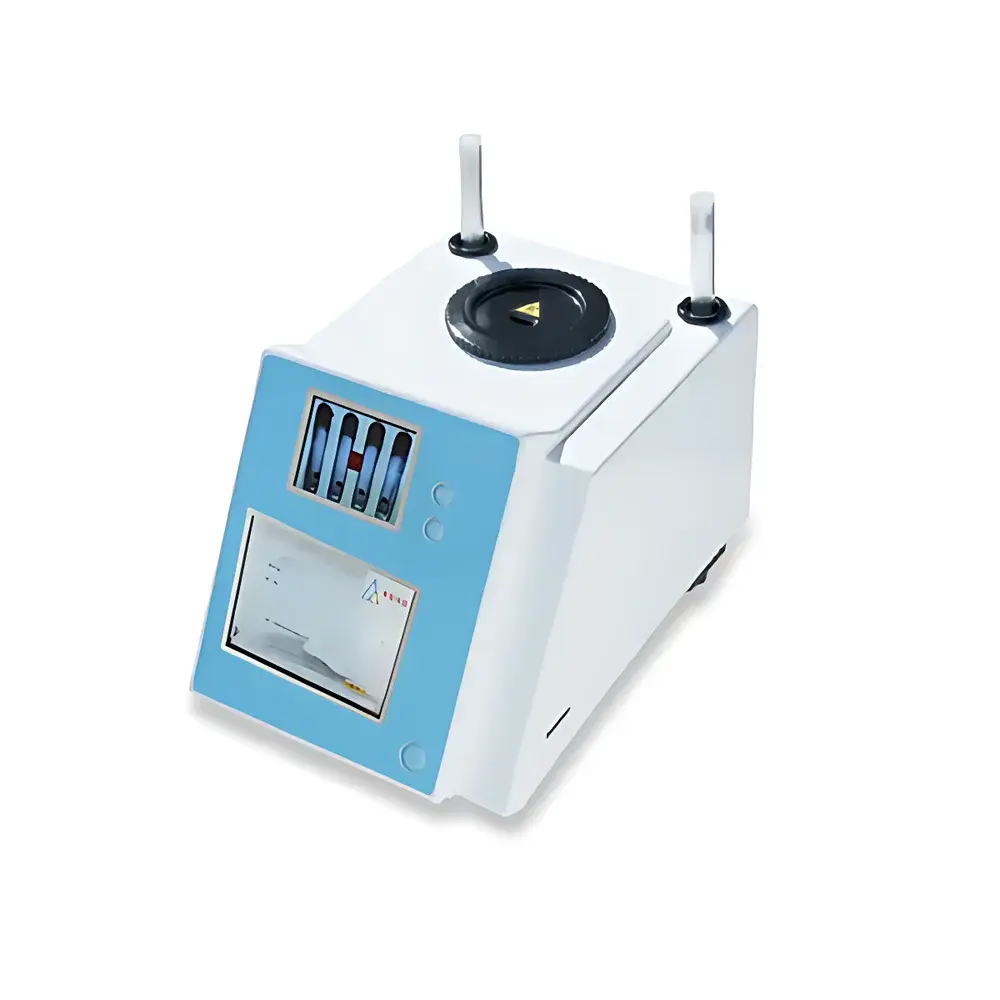
BenAng BA-50RDY Automated Video Melting Point Apparatus
| Brand | BenAng |
|---|---|
| Origin | Shanghai, China |
| Manufacturer Type | Authorized Distributor |
| Country of Origin | China |
| Model | BA-50RDY |
| Price | USD 3,200 (FOB Shanghai) |
| Sample Capacity | 4 channels |
| Temperature Range | Ambient to 350 °C |
| Heating Rate | 0.1–20.0 °C/min (infinitely adjustable) |
| Display | 7-inch TFT color touchscreen with 8× digital zoom |
| Camera Resolution | 5 MP, real-time video capture & playback |
| Compliance | USP <741>, EP 2.2.14, ChP 0612 |
| Data Output | USB storage, thermal printer interface, GLP-compliant audit trail (time-stamped event log) |
Overview
The BenAng BA-50RDY Automated Video Melting Point Apparatus is a precision thermal analysis instrument engineered for pharmaceutical, chemical, and academic laboratories requiring pharmacopoeial-compliant melting point determination. It operates on the principle of visual endpoint detection via high-resolution digital imaging synchronized with precise temperature control. Unlike traditional analog or semi-automated systems, the BA-50RDY employs a calibrated Pt100 sensor array and closed-loop PID heating control to maintain thermal stability ±0.2 °C across its full operating range (ambient to 350 °C). The system uses standard 1.0 mm OD capillary tubes—fully compatible with USP , European Pharmacopoeia 2.2.14, and Chinese Pharmacopoeia ChP 0612 protocols—to hold solid crystalline samples. As the sample is heated at a user-defined ramp rate, a 5-megapixel CMOS camera continuously captures frame-by-frame video of the capillary column. An embedded image-processing algorithm detects morphological transitions—including meniscus formation, shrinkage, collapse, and complete liquefaction—correlating each visual event with real-time temperature data to determine onset, clear point, and interval values.
Key Features
- Four independent sample channels enable parallel testing—reducing batch analysis time by up to 75% compared to single-channel instruments.
- Real-time 7-inch TFT color display with 8× digital zoom and adjustable brightness supports direct visual verification without external monitors.
- Infinitely variable heating rates from 0.1 °C/min to 20.0 °C/min allow method optimization for thermally sensitive compounds or high-melting polymers.
- Onboard video recording (AVI format) stores full melting sequences with synchronized temperature/time metadata for retrospective review and regulatory submission.
- Integrated thermal printer interface supports immediate hard-copy output of test reports including sample ID, operator name, date/time stamp, ramp profile, and detected melting points.
- Rugged aluminum alloy heating block ensures uniform thermal distribution and long-term calibration stability under repeated thermal cycling.
Sample Compatibility & Compliance
The BA-50RDY accommodates standard pharmacopoeial capillaries (1.0 mm OD × 100 mm length) filled to 3–5 mm height with dry, finely powdered crystalline solids. It is validated for organic small molecules, APIs, excipients, dyes, fragrances, and intermediate compounds—provided they exhibit sharp, visually discernible phase transitions. No sample derivatization or solvent addition is required. The instrument’s firmware implements mandatory pharmacopoeial logic: automatic onset detection based on first observable movement (e.g., meniscus rise), and clear point identification when the last solid particle disappears. All measurement events are logged with ISO/IEC 17025-aligned traceability—including ambient temperature, humidity, operator ID, and calibration certificate expiry. Full compliance with 21 CFR Part 11 is achieved via optional password-protected user roles, electronic signatures, and immutable audit trails stored in encrypted internal memory.
Software & Data Management
Data acquisition and reporting are managed through the embedded BA-MP Control Suite, a deterministic real-time OS with no external PC dependency. Each test generates a structured .CSV file containing timestamped temperature readings (0.1 °C resolution), pixel-intensity differentials (for edge-detection validation), and annotated video thumbnails. USB 2.0 ports support export to LIMS or ELN systems; CSV files include columns compliant with ASTM E1135 and ISO 11357-3 metadata conventions. Historical data is searchable by sample ID, date range, or operator. For regulated environments, the system supports GLP/GMP workflows: all method changes are version-controlled and logged; calibration entries require dual authorization; and report generation includes digital signature fields meeting FDA ALCOA+ criteria.
Applications
The BA-50RDY serves as a primary QC tool in API release testing per ICH Q5, supporting identity confirmation and purity assessment of crystalline drug substances. In R&D labs, it accelerates polymorph screening by enabling rapid comparison of melting behavior across crystallization conditions. Its wide temperature range supports characterization of high-melting specialty chemicals (e.g., liquid crystals, metal-organic frameworks, and polymer additives). Academic users apply it for teaching thermal transitions in undergraduate physical chemistry curricula, where visual correlation between macroscopic morphology and thermodynamic events reinforces fundamental concepts. Regulatory submissions to EMA, PMDA, or NMPA routinely reference BA-50RDY-generated reports when justifying specification limits for melting point in drug master files.
FAQ
Does the BA-50RDY meet USP requirements for automated melting point determination?
Yes—the instrument implements all visual detection criteria defined in USP , including simultaneous multi-point observation, documented ramp rate verification, and unambiguous endpoint assignment.
Can the system be integrated into a networked laboratory environment?
It supports standalone operation but also provides Ethernet-ready firmware (optional upgrade) for remote monitoring and centralized data aggregation via HTTP-based API.
What maintenance is required to ensure long-term accuracy?
Annual recalibration using NIST-traceable indium and tin standards is recommended; optical path cleaning with lint-free swabs and isopropanol is performed quarterly.
Is video data export compatible with common analytical software platforms?
Raw AVI files are codec-agnostic and import directly into ImageJ, MATLAB, or ChemDraw for custom morphometric analysis.
How does the BA-50RDY handle samples with broad or ambiguous melting intervals?
The system logs full thermal-video correlation—enabling manual override of auto-detected endpoints during post-acquisition review using frame-accurate playback controls.



