
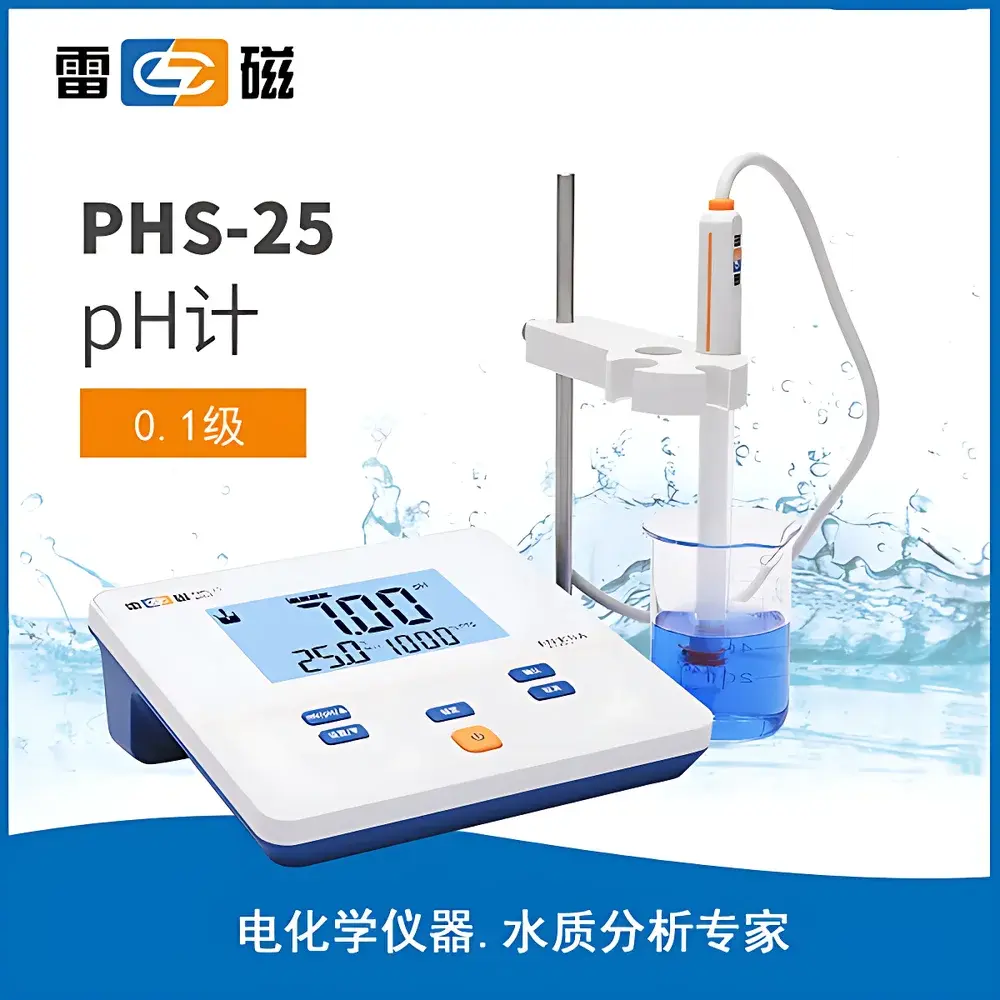
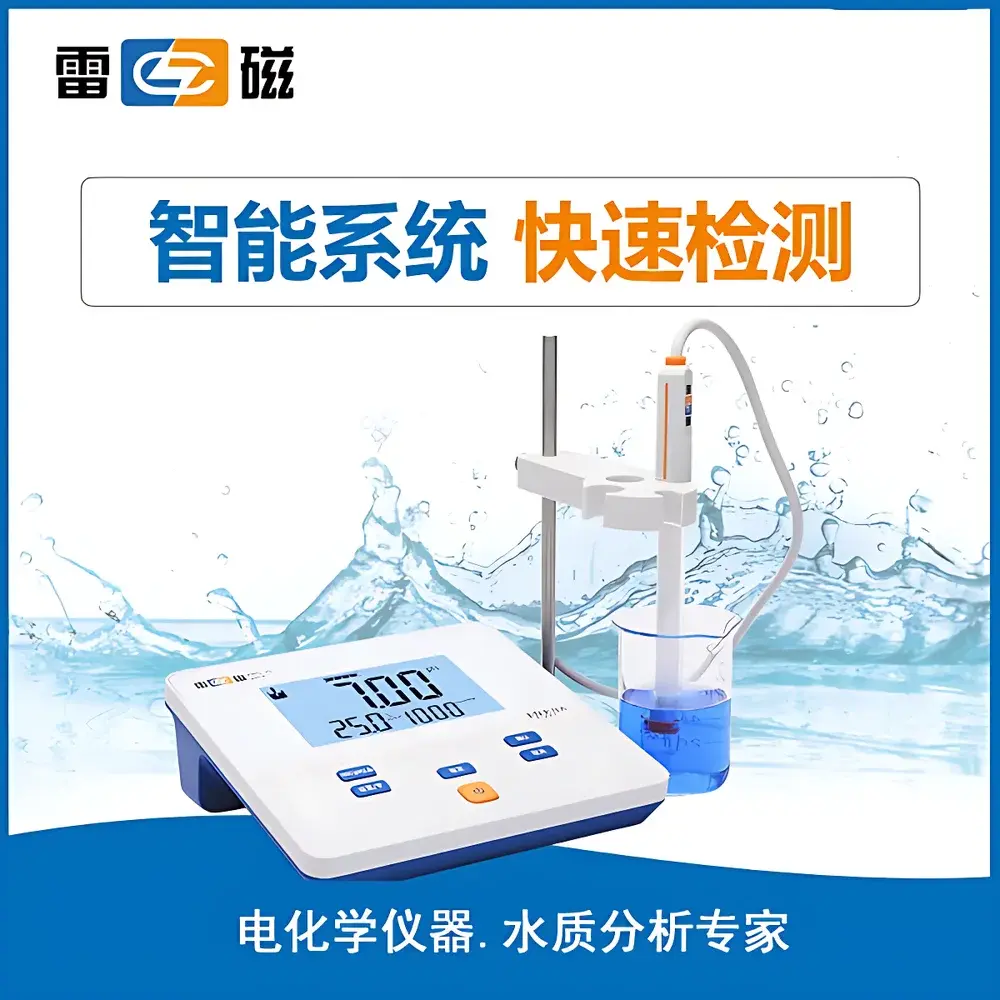
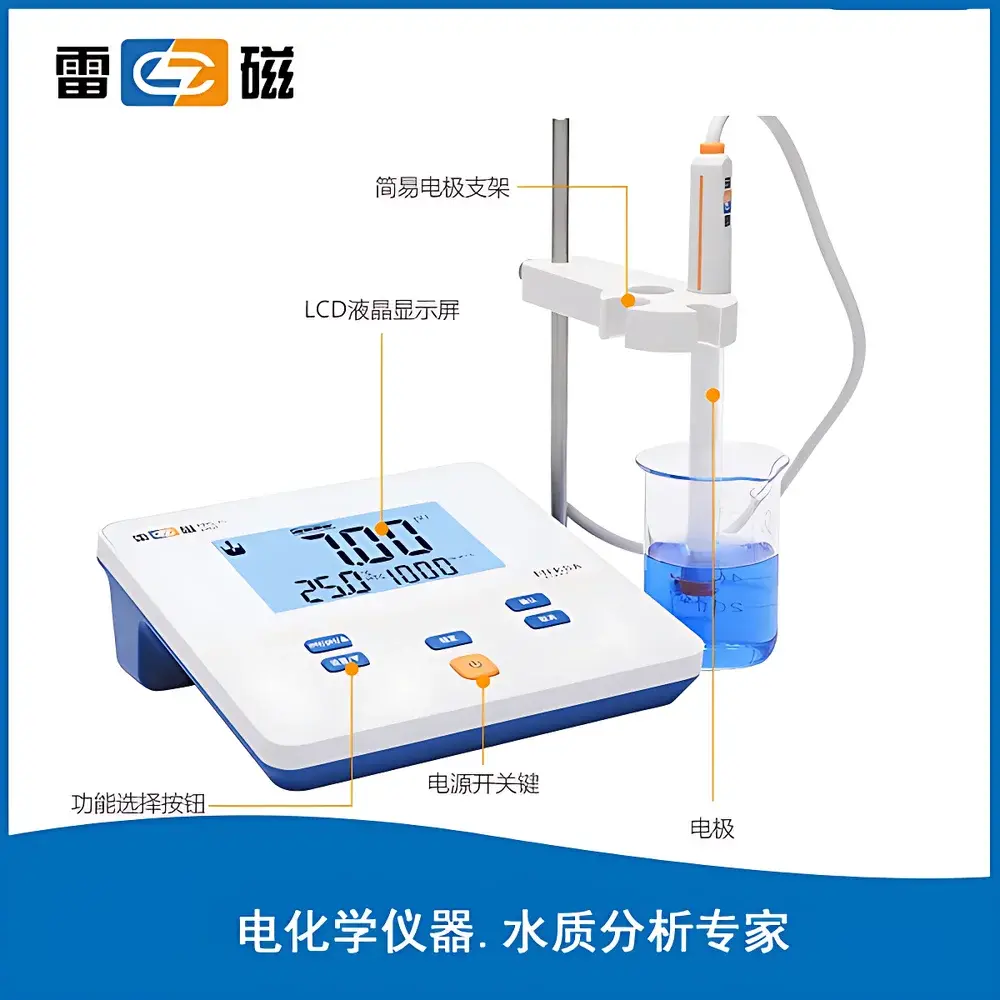
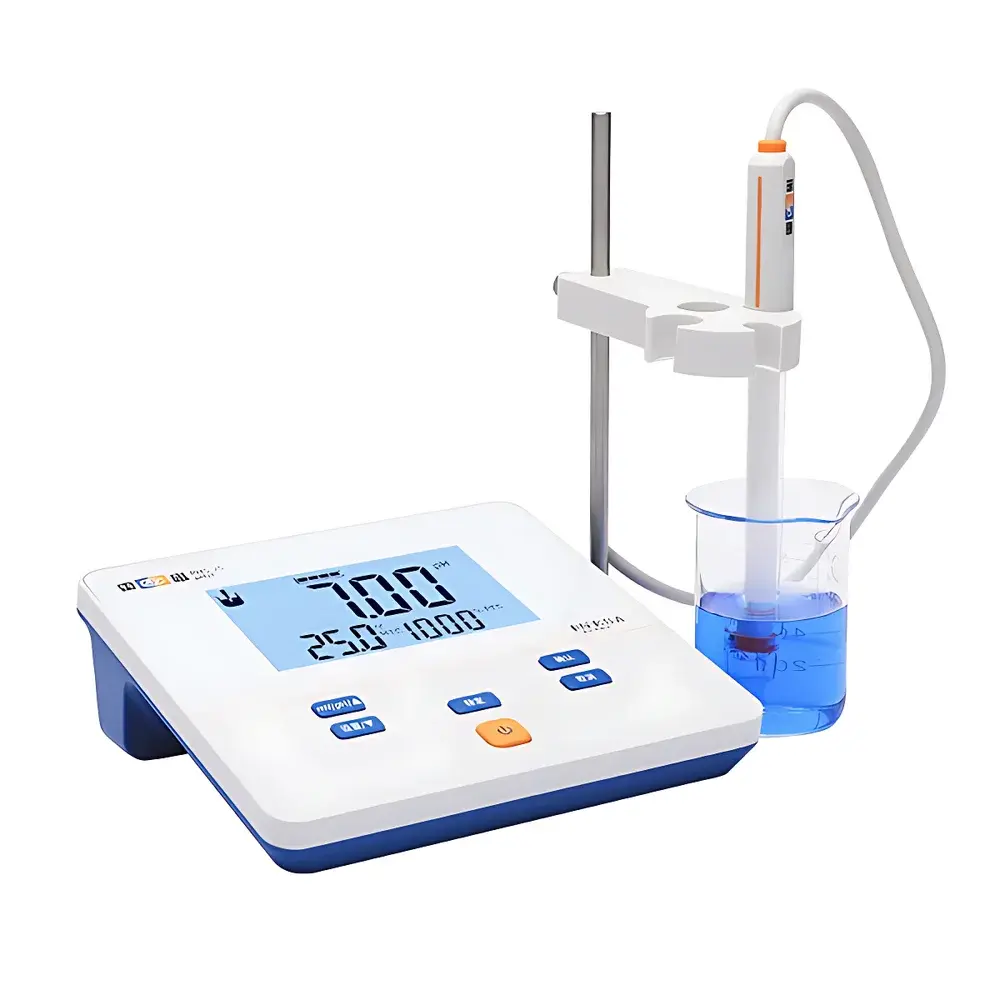
Leici PHS-25 Benchtop pH Meter
| Brand | Leici |
|---|---|
| Origin | Shanghai, China |
| Instrument Type | Benchtop |
| Parameter Type | Single-parameter (pH/mV) |
| Measurement Range | 0.00–14.00 pH |
| Resolution | 0.01 pH |
| Accuracy | ±0.05 pH ±1 digit |
| Basic Error | ±0.05 pH ±1 digit (pH mode) |
| Temperature Compensation | Manual (0.0–60.0 °C) |
| Calibration | Two-point digital calibration using pH 4.00 and pH 7.00 or pH 9.00 buffers |
| Display | LCD (digital) + analog pointer (dual-scale model) |
| Power Supply | DC 9 V (digital version) |
| Dimensions & Weight | 220 × 160 × 65 mm, 1 kg (digital) |
| Standard Electrode | E-201-C composite pH electrode with Q9 connector |
Overview
The Leici PHS-25 is a dual-display benchtop pH meter engineered for routine laboratory pH and redox potential (mV/ORP) measurements in quality control, academic teaching labs, environmental monitoring, and industrial process support. Based on potentiometric measurement principles, the instrument determines hydrogen ion activity via a glass membrane electrode (E-201-C composite sensor) referenced against an internal Ag/AgCl system. Its analog-digital hybrid display architecture—featuring both a calibrated analog pointer and a high-contrast LCD—provides immediate visual trend assessment alongside precise numeric readout. Designed to meet Class 0.1 accuracy requirements per GB/T 11165–2022 (Chinese national standard equivalent to ISO 5725 for precision validation), the PHS-25 delivers stable, repeatable measurements under controlled ambient conditions (15–30 °C, <85% RH). While not compliant with FDA 21 CFR Part 11 out-of-the-box due to absence of electronic audit trail or user access controls, its manual calibration workflow and documented electrode handling procedures align with GLP-aligned documentation practices for non-regulated testing environments.
Key Features
- Benchtop form factor with compact footprint (220 × 160 × 65 mm) optimized for shared lab benches and fume hood integration
- Dual-scale output: Simultaneous analog pointer deflection and 3-digit LCD display for intuitive real-time trend interpretation and exact value capture
- Manual temperature compensation (0.0–60.0 °C) via front-panel rotary dial—calibrated to NIST-traceable reference electrodes and validated across standard buffer sets (pH 4.00, 7.00, 9.00)
- Two-point digital calibration protocol supporting bracketing calibration strategy to minimize systematic offset error across the full 0.00–14.00 pH range
- Integrated mV/ORP measurement mode (–1400 to +1400 mV) with 1 mV resolution, suitable for redox titrations, disinfectant residual monitoring, and electrochemical stability assessments
- Rugged mechanical design featuring ABS housing, Q9-compatible electrode socket with short-circuit protection, and built-in electrode holder clamp
Sample Compatibility & Compliance
The PHS-25 is intended for aqueous solutions with low to moderate ionic strength (<0.1 mol/L) and minimal suspended solids or organic fouling agents. It is compatible with standard pH 4.00 (potassium hydrogen phthalate), pH 7.00 (phosphate buffer), and pH 9.00 (borax) certified reference materials traceable to NIST SRM 186, 187, and 188. The E-201-C composite electrode features a low-resistance glass membrane and double-junction reference system, reducing liquid junction potential drift in samples containing chloride, sulfide, or proteinaceous matrices. While not certified to IEC 61010-1 for hazardous area use, the instrument meets GB 4793.1–2019 (equivalent to EN 61010-1) for general laboratory electrical safety. It supports compliance with ASTM D1293 (pH of water), ISO 10523 (water quality — determination of pH), and USP (pH values) when operated within specified environmental and procedural constraints.
Software & Data Management
The PHS-25 operates as a standalone hardware instrument without embedded firmware-based data logging or PC connectivity. All measurement records must be manually transcribed into laboratory notebooks or LIMS-compatible spreadsheets. Calibration logs—including date, operator ID, buffer lot numbers, measured mV values, slope (%), and asymmetry potential (mV)—are maintained externally per institutional SOPs. For regulated environments requiring electronic record integrity, users may integrate the instrument into validated workflows by pairing it with 21 CFR Part 11–compliant digital loggers (e.g., LabChart or custom Python-based acquisition scripts using RS232-to-USB adapters, though native serial output is not provided). Firmware updates are not supported; calibration verification and periodic performance checks against certified reference standards constitute the primary maintenance protocol.
Applications
- Academic instruction in general chemistry and analytical laboratories for teaching fundamental potentiometry and calibration theory
- QC testing of purified water, boiler feedwater, and wastewater effluent in municipal and industrial facilities
- pH monitoring during fermentation, enzymatic assays, and buffer preparation in biotechnology R&D
- Soil extract analysis (1:5 water suspension) following ISO 10390 protocols
- mV-based endpoint detection in iodometric and cerimetric redox titrations
- Verification of cleaning solution acidity/alkalinity in pharmaceutical equipment sanitation cycles
FAQ
What is the recommended calibration frequency for the PHS-25 in routine use?
Calibration is required before each measurement session and after any significant temperature shift (>5 °C) or electrode replacement. For high-throughput QC labs, mid-session verification using a third buffer (e.g., pH 7.00 between pH 4.00 and 9.00 calibrations) is advised.
Can the PHS-25 measure non-aqueous samples such as ethanol or glycerol solutions?
No. The E-201-C electrode is designed exclusively for aqueous media. Non-aqueous solvents cause dehydration of the glass membrane and unstable junction potentials, leading to erroneous readings and accelerated electrode aging.
Is automatic temperature compensation (ATC) available on this model?
No. Temperature compensation is manual only, requiring user input of sample temperature via the front-panel dial. ATC functionality requires external Pt100 probe integration, which the PHS-25 does not support.
What is the expected service life of the E-201-C electrode under proper storage and usage?
When stored in 3 M KCl solution and rinsed thoroughly after each use, the electrode typically maintains specification-grade performance for 12–18 months. Slope degradation below 95% or asymmetry potential exceeding ±30 mV indicates end-of-life.
Does the instrument include regulatory documentation for ISO/IEC 17025 accreditation?
The unit ships with a factory calibration certificate (traceable to national metrology institutes) and GB/T 11165 test report. Full ISO/IEC 17025 implementation requires user-generated uncertainty budgets, intermediate checks, and documented preventive maintenance logs.





