
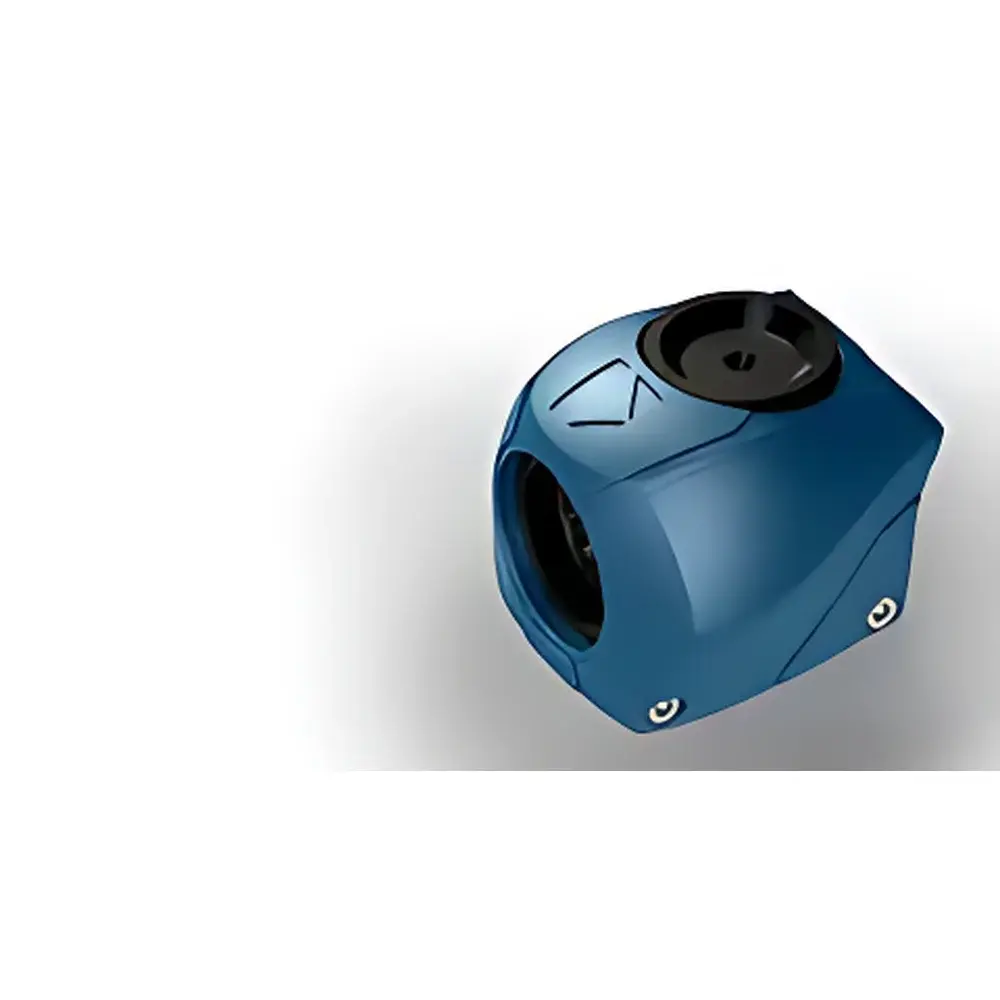
Imagine Optics HASO4 Series Wavefront Sensors
| Key | Origin: USA |
|---|---|
| Manufacturer Type | Authorized Distributor |
| Product Origin | Imported |
| Models | HASO4 Broadband, HASO4 Visible, HASO4 FIRST, HASO3-32, HASO3-128 GE2, HASO HP-16, HASO3 FAST |
| Calibration Wavelength Range | 350–1100 nm (model-dependent) |
| Aperture Size | 1.7×1.7 mm² to 14.6×14.6 mm² |
| Lenslet Count | 14×14 to 128×128 |
| Max Frame Rate | 905 Hz |
| Wavefront Accuracy (rms) | λ/100 to λ/200 (absolute mode) |
| Tilt Dynamic Range | > ±3° |
| Focus Dynamic Range | ±0.018 m to ∞ |
| Spatial Resolution | ~105–290 µm |
| Interface | USB 3.0 / GigE / FireWire / Camera Link |
| Power | 2.7–6 W |
| Operating Temp | 15–30 °C |
| Software | WaveView or HASOv3 with SDK (C/C++, LabVIEW, MATLAB) |
Overview
The Imagine Optics HASO4 Series represents a family of high-precision, micro-lens array-based Shack-Hartmann wavefront sensors engineered for quantitative optical metrology in research, industrial alignment, adaptive optics, and laser system characterization. Based on the well-established Shack-Hartmann principle, each HASO sensor samples the incident wavefront by partitioning it into sub-apertures using a proprietary monolithic microlens array; local tilt of each sub-aperture is determined via centroid displacement of its focused spot on a high-sensitivity CCD or CMOS detector. This enables simultaneous, independent measurement of both phase (wavefront aberration) and intensity distribution — a critical capability for comprehensive beam diagnostics and real-time closed-loop control. The HASO platform delivers traceable, absolute wavefront measurements without reliance on reference surfaces or iterative calibration routines, supporting compliance with ISO 10110-5, ISO 21254 (laser damage threshold testing), and ASTM E2811 (optical surface error mapping). All models operate within a thermally stabilized environment (15–30 °C) to ensure long-term repeatability and minimize thermal drift-induced artifacts.
Key Features
- Patented monolithic microlens array fabrication ensures uniformity, stability, and minimal ghosting across full spectral range (350–1100 nm)
- Simultaneous, decoupled acquisition of wavefront phase and irradiance — essential for M² measurement, beam quality analysis, and aberration source identification
- True absolute wavefront reconstruction with no need for Zernike fitting or external references; supports both relative and absolute modes per ISO 14132-3
- Multi-configurable hardware variants: HASO4 Broadband (20 Hz, 68×50 lenslets), HASO4 Visible (100 Hz, optimized 400–700 nm), HASO4 FIRST (100–160 Hz, dual-resolution modes), HASO3-32 (50 Hz, 32×40), HASO3-128 GE2 (7.5 Hz, 128×128, GigE interface), HASO HP-16 (λ/200 rms accuracy), and HASO3 FAST (905 Hz, ultra-high-speed OEM integration)
- Integrated thermal management and rigid aluminum housing (42–115 mm footprint) for vibration-resistant operation in cleanroom and vacuum-adjacent environments
- Compliant with FDA 21 CFR Part 11 requirements when used with validated WaveView software configurations, including full audit trail, electronic signatures, and data integrity controls
Sample Compatibility & Compliance
HASO sensors accommodate collimated or converging beams with numerical apertures up to 0.1 (HASO4 Visible/FAST) or 0.06 (HASO HP-16), enabling direct integration into laser cavities, telescope pupil planes, ophthalmic simulators, and EUV lithography test benches. Each model supports C-mount mechanical interface for seamless coupling with off-the-shelf imaging optics and relay systems. Calibration is performed traceably against NIST-traceable flat and spherical standards across multiple wavelength bands (e.g., A: 400–600 nm; B: 500–700 nm; C: 630–900 nm; D: 800–1100 nm), with extended ranges available upon request. All devices meet CE marking requirements for electromagnetic compatibility (EN 61326-1) and safety (EN 61010-1), and are routinely deployed in GLP/GMP-compliant facilities for optical component certification per ISO 10110-7 (surface irregularity) and ISO/DIS 15362 (interferometric verification).
Software & Data Management
Each HASO system ships with either WaveView (HASO4 series) or HASOv3 (HASO3/HP series) — industry-standard metrology suites offering real-time wavefront visualization, Zernike and Fourier decomposition, PV/RMS error reporting, dynamic aberration tracking, and export to HDF5, CSV, or MATLAB .mat formats. Both platforms support automated pass/fail reporting aligned with user-defined specification limits, and include built-in tools for beam propagation simulation (Rayleigh-Sommerfeld back-propagation), M² calculation per ISO 11146, and Strehl ratio estimation. The WaveKit SDK (C/C++, LabVIEW, MATLAB) and HASOv3 Core Engine enable deep OEM integration, custom GUI development, and synchronization with motion controllers, tunable lasers, or deformable mirrors. All software versions maintain full audit trail functionality, supporting 21 CFR Part 11 compliance through role-based access control, timestamped metadata logging, and immutable raw-data archiving.
Applications
- Laser resonator optimization and cavity alignment in ultrafast, UV, and high-power fiber laser systems
- Adaptive optics loop closure for astronomy (e.g., ELT instrumentation), retinal imaging, and free-space optical communications
- Optical component qualification: aspheric lens metrology, coated mirror flatness verification, and EUV multilayer reflectivity mapping
- Industrial metrology: wafer stepper illumination homogeneity analysis, lithographic projection lens wavefront error mapping, and laser welding beam profiling
- Biomedical optics: objective characterization in confocal microscopy, OCT system alignment, and customized IOL wavefront evaluation
- Education and R&D labs: hands-on teaching of physical optics principles, Shack-Hartmann theory, and closed-loop control design
FAQ
What distinguishes HASO4 from HASO3 platforms?
The HASO4 series features updated electronics, higher native frame rates (up to 100–160 Hz depending on model), USB 3.0 connectivity, and enhanced thermal stability over the FireWire- or GigE-based HASO3 generation — while retaining backward compatibility with HASOv3 software and calibration protocols.
Can HASO sensors measure pulsed lasers?
Yes — all models support external TTL triggering for synchronization with Q-switched or mode-locked sources; HASO3 FAST and HASO4 FIRST are specifically optimized for single-shot or burst-mode acquisition at kHz repetition rates.
Is NIST-traceable calibration included?
Each unit ships with factory calibration certificates referencing NIST-traceable standards; optional on-site recalibration services and ISO/IEC 17025-accredited reports are available through authorized service centers.
How is long-term measurement stability ensured?
All HASO sensors incorporate passive thermal stabilization and low-drift analog front-end circuitry; HASO HP-16 and HASO3-128 GE2 further integrate active temperature monitoring and compensation algorithms to maintain <λ/200 rms accuracy over 8-hour continuous operation.
Does the software support automated report generation for quality audits?
Yes — WaveView and HASOv3 include configurable templates for PDF/HTML reports with embedded pass/fail indicators, operator ID, instrument serial number, environmental logs, and digital signatures — fully compliant with ISO 9001 and FDA QSR documentation requirements.





