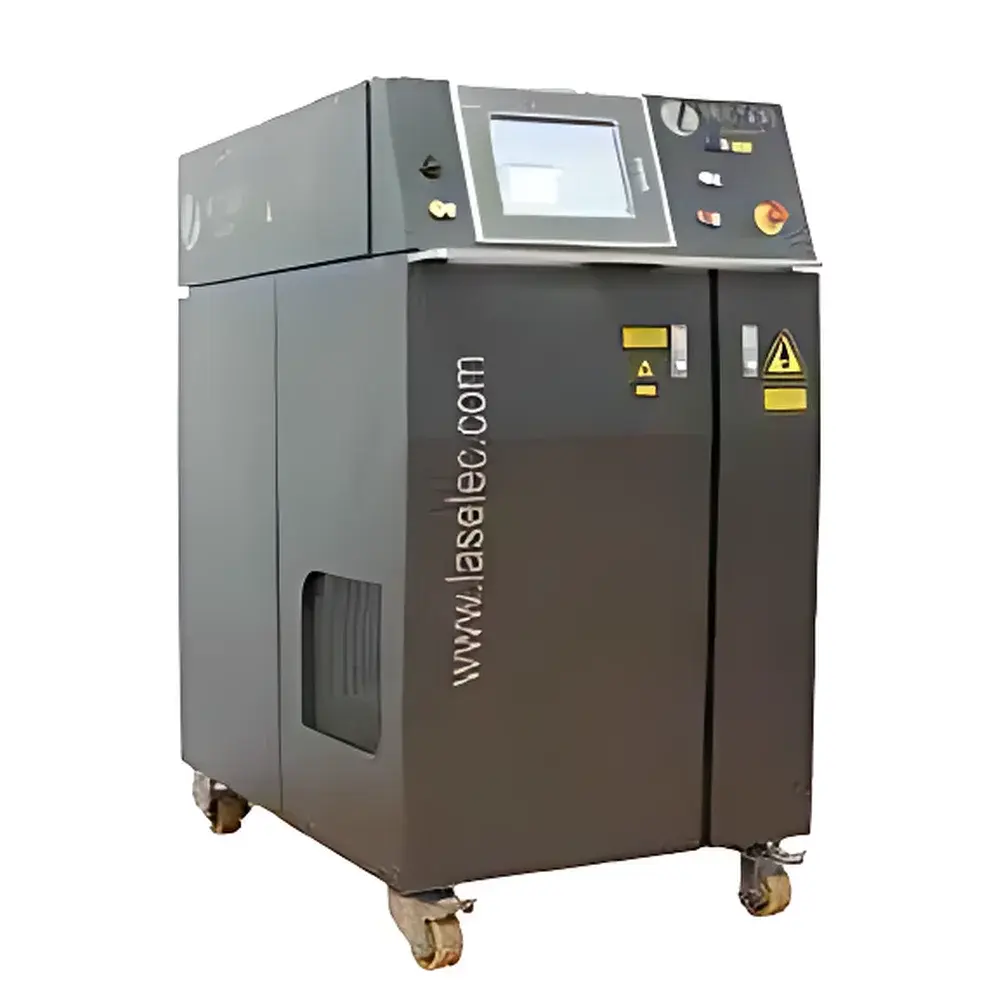
Laselec MLC500 Laser Mold Cleaning System
| Brand | Laselec |
|---|---|
| Origin | France |
| Model | MLC500 |
| Laser Scanning Speed | 4–50 mm/s (0.15–2 in/s) |
| Input Power | 208–240 V AC, 20 A, Single-Phase |
| Laser Safety Class | Class 1 (No Special Protective Measures Required) |
| Control Interface | 12.1-inch Touchscreen Display |
| Filtration System | Activated Carbon Residual Collection Unit |
| Compliance | CE, FDA 21 CFR Part 11 (Software Audit Trail Enabled), ISO 13857 |
| Maximum Mold Dimensions (L×W×H) | 600 × 430 × 190 mm |
| Max Mold Weight Capacity | 160 kg (352 lb) |
| Operating Temperature Range | 15–40 °C (59–104 °F) |
| Storage Temperature Range | 1–45 °C (34–113 °F) |
| Relative Humidity Limit | ≤80% RH (Non-condensing) |
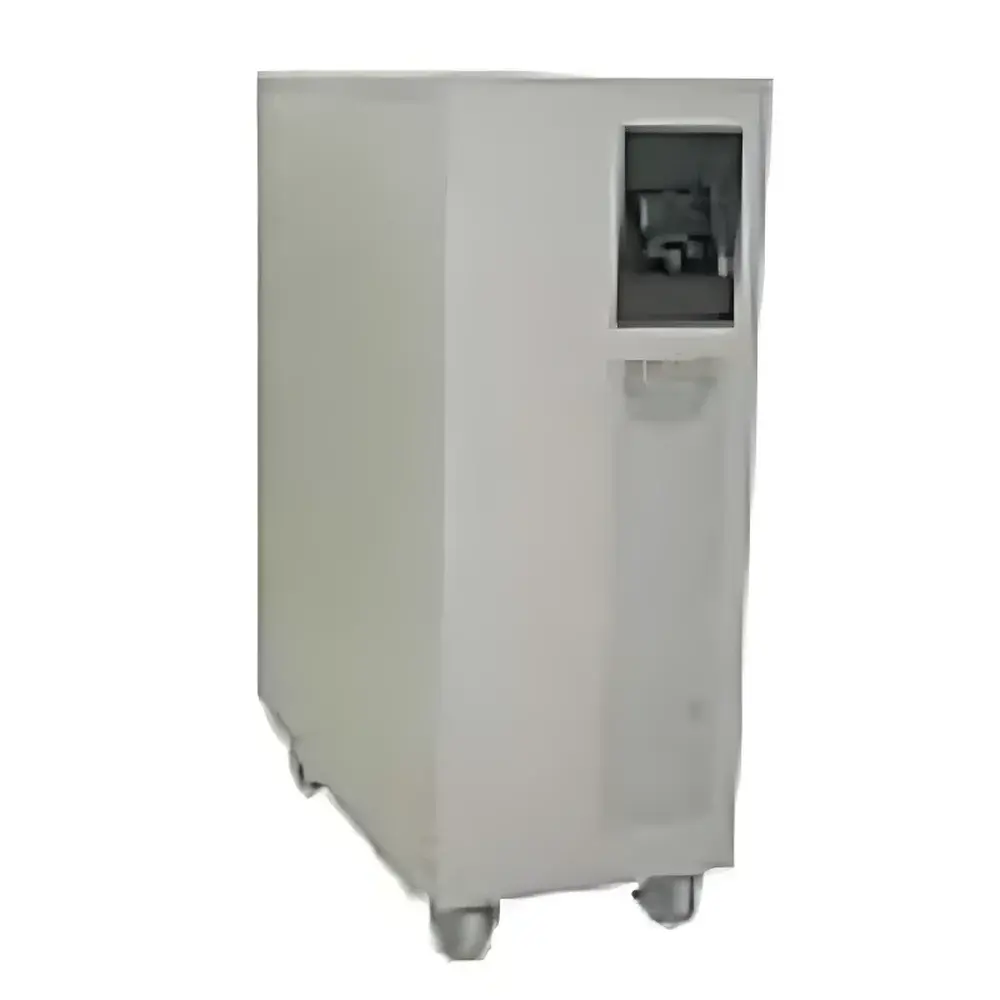
| Mobility | Integrated Castor Wheels with Locking Mechanism |
| Warranty | 12 Months Limited Warranty |
Overview
The Laselec MLC500 Laser Mold Cleaning System is an industrial-grade, Class 1 laser-based surface decontamination platform engineered for precision cleaning of injection molds, die-casting tools, and composite tooling surfaces. Unlike abrasive or chemical methods, the MLC500 employs pulsed fiber laser ablation at a wavelength optimized for selective removal of organic residues (e.g., release agents, carbonized polymers, silicone films) and inorganic deposits (e.g., oxide layers, mold scale) without altering substrate metallurgy or dimensional tolerances. Its non-contact, dry-process architecture eliminates solvent handling, wastewater generation, and mechanical wear—making it compliant with ISO 14001 environmental management frameworks and aligned with IATF 16949 requirements for zero-chemical process validation in automotive mold maintenance.
Key Features
- Class 1 Laser Safety Architecture: Fully enclosed beam path with interlocked access doors and real-time power monitoring ensures operator safety without requiring laser safety officers, dedicated rooms, or PPE beyond standard workshop attire.
- Adaptive Scanning Control: Programmable XY galvanometric scanning head delivers precise dwell time control (0.1–5 ms pulse overlap) across complex 3D cavity geometries; scan speed adjustable from 4 to 50 mm/s to balance throughput and residue removal efficacy.
- Integrated Residue Management: Onboard activated carbon filtration system captures >99.97% of submicron particulates (tested per EN 1822-1 H13 classification), preventing cross-contamination and enabling safe operation in controlled manufacturing environments.
- Ergonomic Mobile Platform: Reinforced steel chassis with locking castors supports rapid repositioning between press lines; low center-of-gravity design ensures stability during extended cleaning cycles on uneven factory floors.
- Intuitive Human-Machine Interface: 12.1-inch capacitive touchscreen running embedded Linux OS provides guided workflow navigation, parameter presets for common mold alloys (P20, H13, AlSi10Mg), and real-time thermal feedback via integrated IR sensor.
- Regulatory-Ready Documentation: Firmware includes GLP/GMP-compliant audit trail logging (user ID, timestamp, parameter set, duration, pass/fail flag) meeting FDA 21 CFR Part 11 electronic record requirements.
Sample Compatibility & Compliance
The MLC500 is validated for use on ferrous and non-ferrous mold substrates including hardened tool steels (AISI H13, P20), aluminum alloys (AlSi10Mg, 7075-T6), and nickel-based superalloys (Inconel 718). It does not induce thermal distortion (measured ΔT ±1.5 HV) within ISO 6507-1 test conditions. All electrical and mechanical subsystems conform to CE marking directives (2014/30/EU EMC, 2014/35/EU LVD, 2006/42/EU Machinery Directive) and FDA recognition criteria for Class I laser equipment used in medical device manufacturing tooling maintenance.
Software & Data Management
Pre-installed Laselec CleanSuite v3.2 firmware enables offline job programming via USB import of STL mesh files or manual coordinate mapping. Each cleaning sequence is stored with metadata (mold ID, operator badge, ambient temperature/humidity, filter saturation level) and exportable as CSV or PDF reports compliant with internal quality audits. Remote diagnostics support is available via encrypted TLS 1.3 connection for predictive maintenance alerts (e.g., laser diode degradation trending, filter pressure differential thresholds).
Applications
- Cleaning of hot-runner systems and valve gate inserts without disassembly
- Restoration of optical mold surfaces (e.g., LED lens cavities) to original Ra < 0.05 µm specification
- Removal of sulfur-induced tarnish from rubber molding tools
- Pre-plating surface activation of zinc die-cast dies to improve Ni/Cu adhesion uniformity
- Validation-supported cleaning between production lots in regulated pharmaceutical packaging mold operations
FAQ
Does the MLC500 require external exhaust ducting?
No—its self-contained activated carbon filtration meets OSHA PEL and EU Directive 2004/100/EC occupational exposure limits for respirable particulates without need for facility HVAC integration.
Can it clean molds with deep narrow channels (<1 mm width)?
Yes—the focused 50 µm spot size and programmable Z-axis focal offset allow effective cleaning down to 0.8 mm channel depth with optional nozzle extension kits.
Is calibration traceable to NIST or PTB standards?
Laser power output is factory-calibrated using NIST-traceable thermopile sensors; annual recalibration services include certificate of conformance with ISO/IEC 17025-accredited lab reporting.
What maintenance intervals are recommended?
Daily: Filter cartridge inspection and vacuum chamber emptying. Quarterly: Galvo mirror alignment verification and touchscreen calibration. Annually: Full optical path inspection and laser source performance validation.