
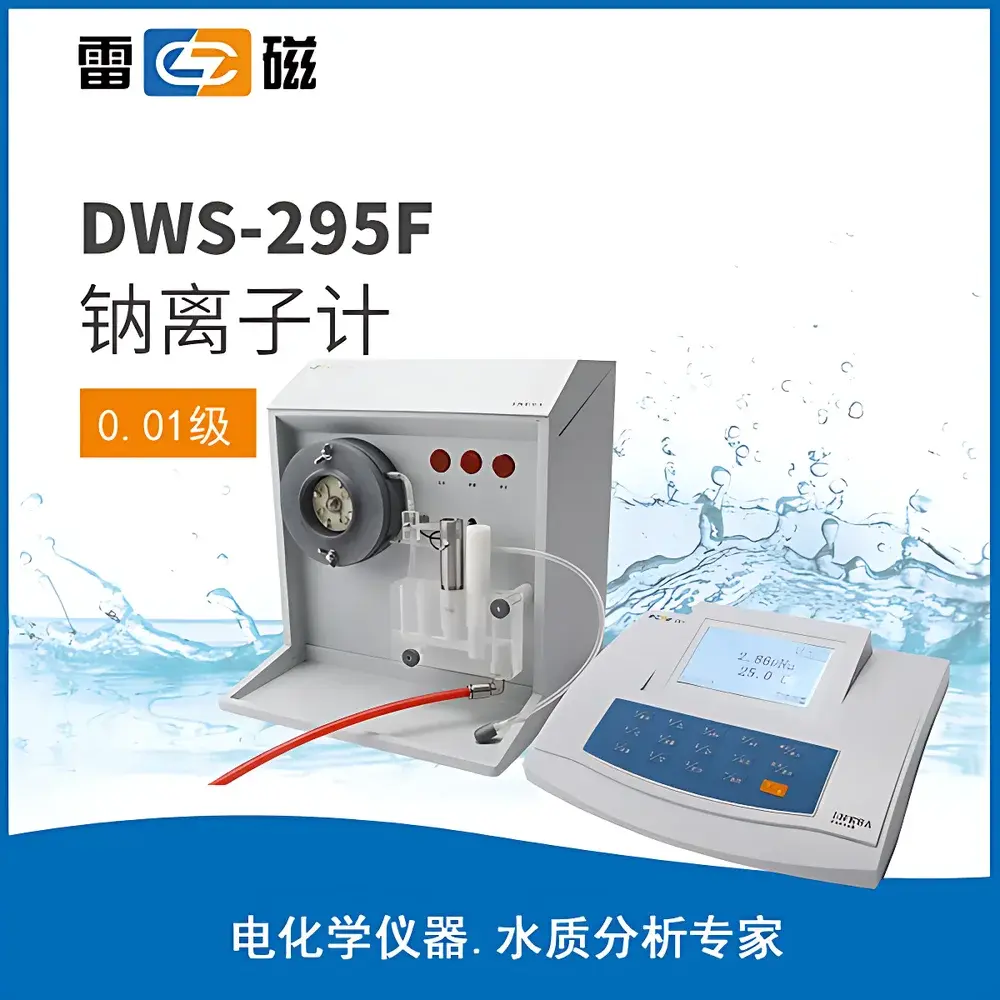
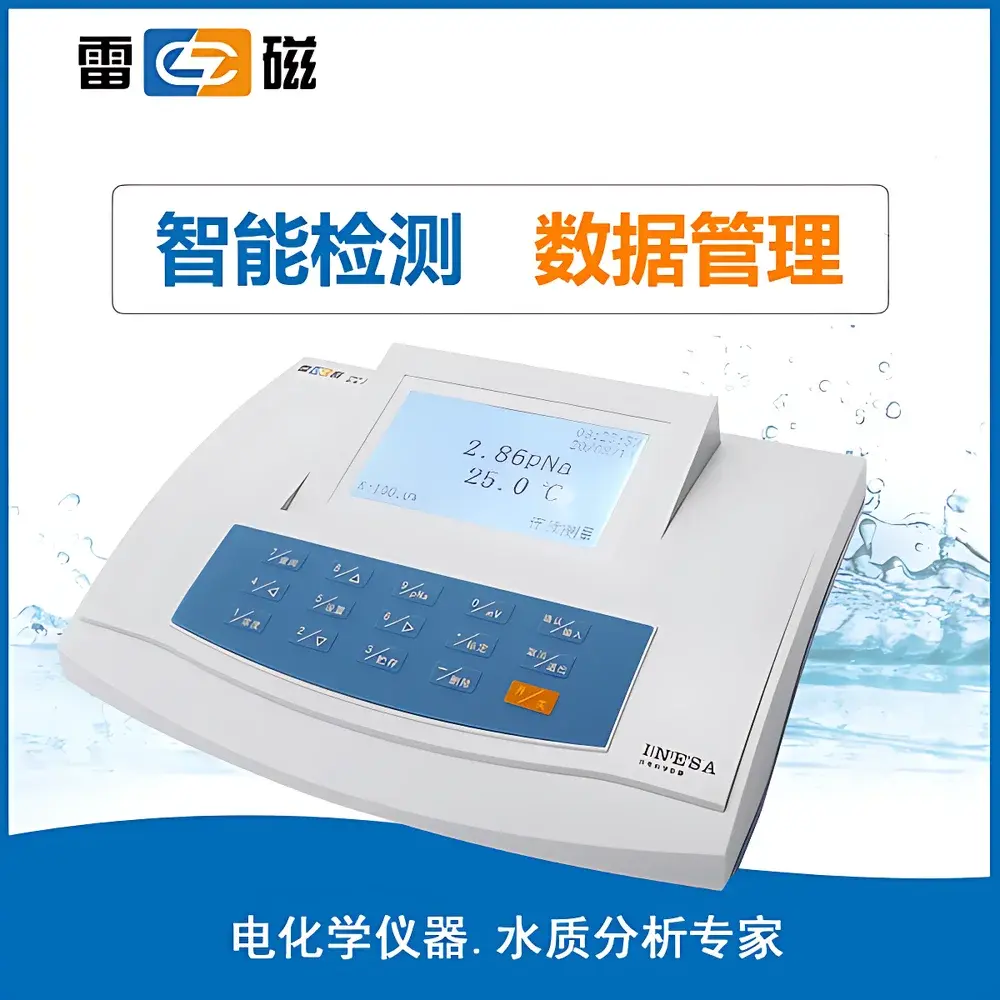
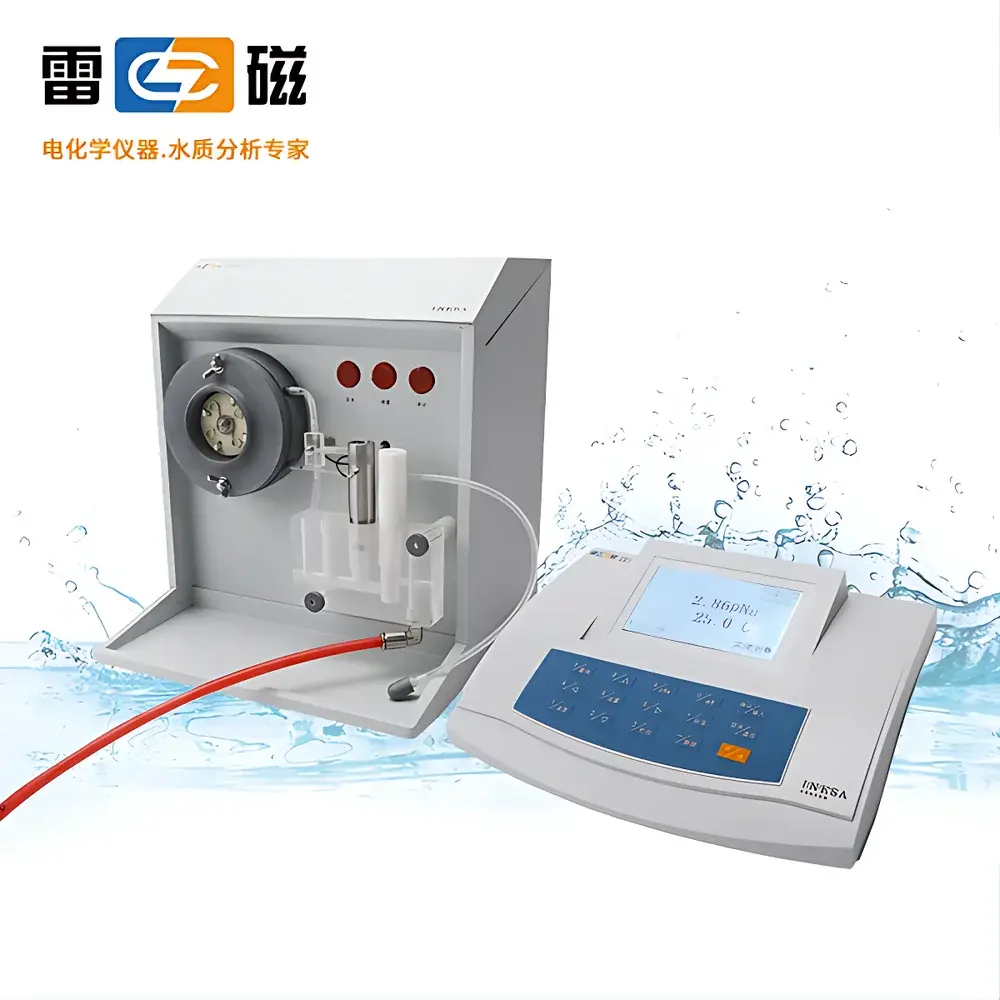
Leici DWS-295F Sodium Ion Meter
| Brand | Leici |
|---|---|
| Origin | Shanghai, China |
| Model | DWS-295F |
| Instrument Type | Benchtop Sodium Ion Analyzer |
| Measurement Range | pNa 0.00–9.00 |
| [Na⁺] Concentration | 2.3×10⁻²–2.3×10⁷ µg/L |
| mV Range | −1999–+1999 mV |
| Temperature Range | −5.0–110.0 °C |
| Accuracy | ±0.01 pNa |
| Response Time | ≤1 min (typical, per ISO 7888) |
| Detection Limit | 0.023 µg/L (equivalent to pNa 9.00) |
| Temperature Compensation | Automatic (NTC sensor, 0–100 °C range) |
| Data Storage | 50 sets (pNa/mV/[Na⁺]/temperature) |
| Interface | USB-B (device side), compliant with CDC/ACM class |
| Power Supply | DC 9 V, 800 mA (center-positive barrel connector) |
| Dimensions (W×D×H) | 280 × 215 × 92 mm |
| Weight | 1.0 kg |
Overview
The Leici DWS-295F Sodium Ion Meter is a benchtop potentiometric analyzer engineered for precise, trace-level quantification of sodium ion activity in aqueous solutions. It operates on the principle of ion-selective electrode (ISE) potentiometry, utilizing a glass membrane sodium-selective electrode to generate a Nernstian response proportional to the logarithm of Na⁺ activity. The instrument measures pNa (−log₁₀[Na⁺]), direct millivolt output (mV), and calculates Na⁺ concentration (µg/L) with automatic temperature compensation—critical for high-purity water applications where sub-ppb sodium detection directly correlates with steam cycle integrity and corrosion risk mitigation. Designed for routine use in power plant chemistry labs, semiconductor ultrapure water (UPW) monitoring, and boiler feedwater quality control, the DWS-295F meets functional requirements aligned with ASTM D4582 (Standard Practice for Determining Sodium in High-Purity Water) and supports method validation under GLP-compliant workflows.
Key Features
- Triple-electrode measurement architecture: simultaneous display of pNa/mV/[Na⁺] paired with real-time temperature (−5.0 to 110.0 °C), enabling dynamic thermal correction per NIST SRM protocols.
- Automatic calibration sequence with slope verification: computes theoretical electrode sensitivity (% theoretical slope) based on two-point calibration (e.g., 10⁻³ M and 10⁻⁶ M NaCl standards), flagging drift beyond ±5% deviation.
- Persistent memory retention: non-volatile storage retains up to 50 complete measurement records—including pNa value, mV reading, calculated [Na⁺], temperature, date/time stamp, and electrode ID—without battery backup.
- USB-CDC communication interface: exports data in CSV format via virtual COM port; compatible with Windows-based LIMS and laboratory informatics platforms without proprietary drivers.
- Dual-print mode support: direct thermal printer output (via optional RS-232 adapter) or formatted report generation through PC software, including calibration history and uncertainty annotations.
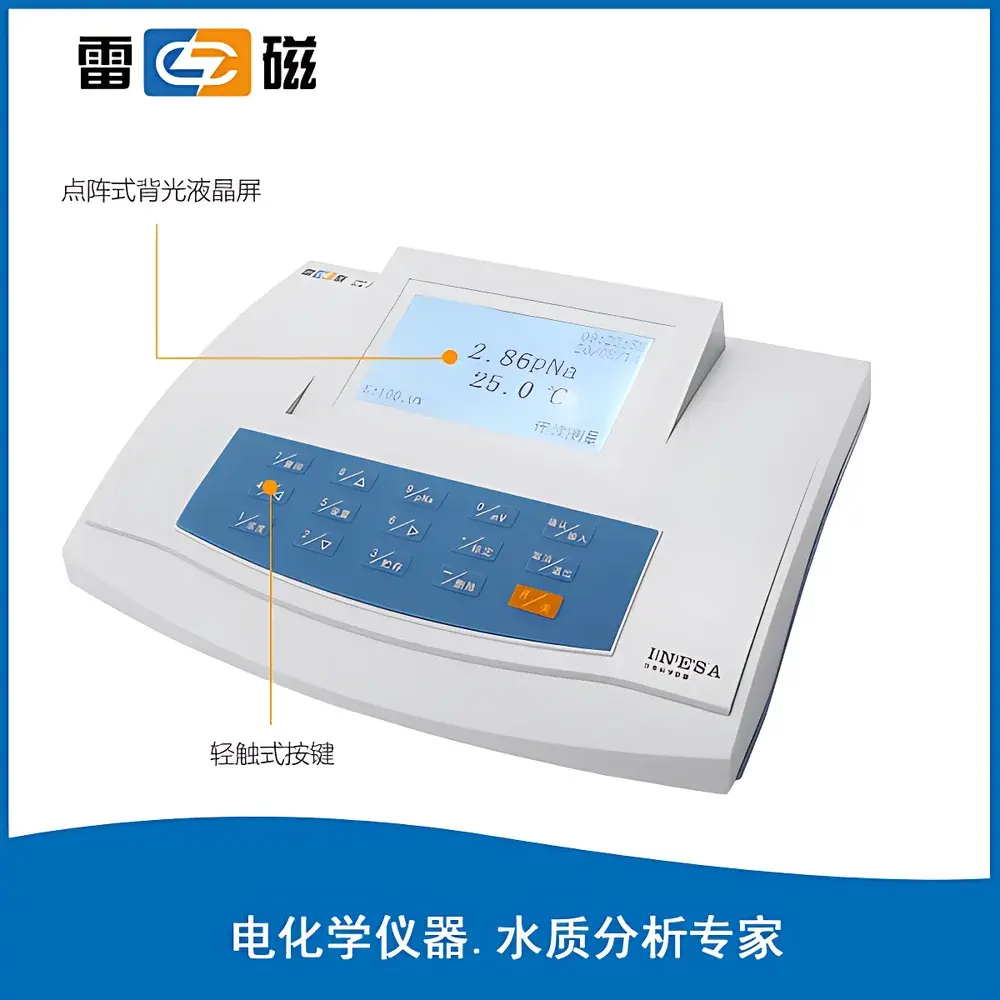
- Robust front-panel operation: tactile membrane keys with backlighting, ESD-protected input circuitry, and conformal-coated PCBs for humid laboratory environments.
Sample Compatibility & Compliance
The DWS-295F is validated for use with low-conductivity samples (typically <1 µS/cm), including condensate, demineralized water, nuclear-grade primary coolant, and UPW rinse streams. Sample introduction requires standard ISE conditioning: rinsing with deionized water, immersion in 10⁻³ M NaCl for electrode stabilization, and pH adjustment to 10–11 using diisopropylamine (DIPA) to suppress H⁺ interference. The instrument complies with electrical safety standards IEC 61010-1 (2010) and electromagnetic compatibility per EN 61326-1:2013. While not FDA 21 CFR Part 11–certified out-of-box, its audit trail-capable data export enables integration into validated systems meeting GMP Annex 11 and ISO/IEC 17025 documentation requirements.
Software & Data Management
Data transfer occurs via standard USB CDC ACM class enumeration, eliminating driver installation on modern Windows/macOS/Linux systems. Exported CSV files include column headers: “Timestamp”, “pNa”, “mV”, “[Na⁺]_µg/L”, “Temp_°C”, “Cal_Slope_%”, and “Electrode_ID”. The meter does not embed firmware-level audit trails; however, timestamped records and calibration logs satisfy minimum ALCOA+ (Attributable, Legible, Contemporaneous, Original, Accurate) data integrity criteria when managed within a controlled electronic record system. Optional Leici LabSuite software (v3.2+) provides trend visualization, statistical process control (SPC) charts, and PDF report templating aligned with ISO 5725 repeatability guidelines.
Applications
- Power generation: continuous monitoring of turbine condensate sodium leakage (target: <2 µg/L) to prevent stress corrosion cracking in austenitic stainless steel components.
- Semiconductor manufacturing: verification of sodium contamination in UPW distribution loops prior to wafer cleaning—critical for preventing gate oxide defects in sub-28 nm node fabrication.
- Pharmaceutical water systems: verification of sodium carryover in purified water (PW) and water for injection (WFI) after distillation or reverse osmosis polishing steps.
- Research laboratories: kinetic studies of ion exchange resin breakthrough curves and evaluation of sodium-selective membrane performance under variable ionic strength conditions.
- Environmental testing: analysis of sodium leaching from construction materials (e.g., concrete, geopolymer binders) in simulated rainwater exposure protocols (ASTM C1580).
FAQ
What is the minimum detectable sodium concentration?
The DWS-295F achieves a practical detection limit of 0.023 µg/L (pNa 9.00) under optimized conditions—requiring low-noise cabling, shielded electrode housing, and strict avoidance of sodium-contaminated labware or ambient aerosols.
Does the instrument support automatic temperature compensation across its full range?
Yes—integrated NTC thermistor provides continuous compensation from −5.0 °C to 110.0 °C; however, electrode response stability is only guaranteed between 5–60 °C per ISE manufacturer specifications.
Can the meter be used with non-Leici sodium electrodes?
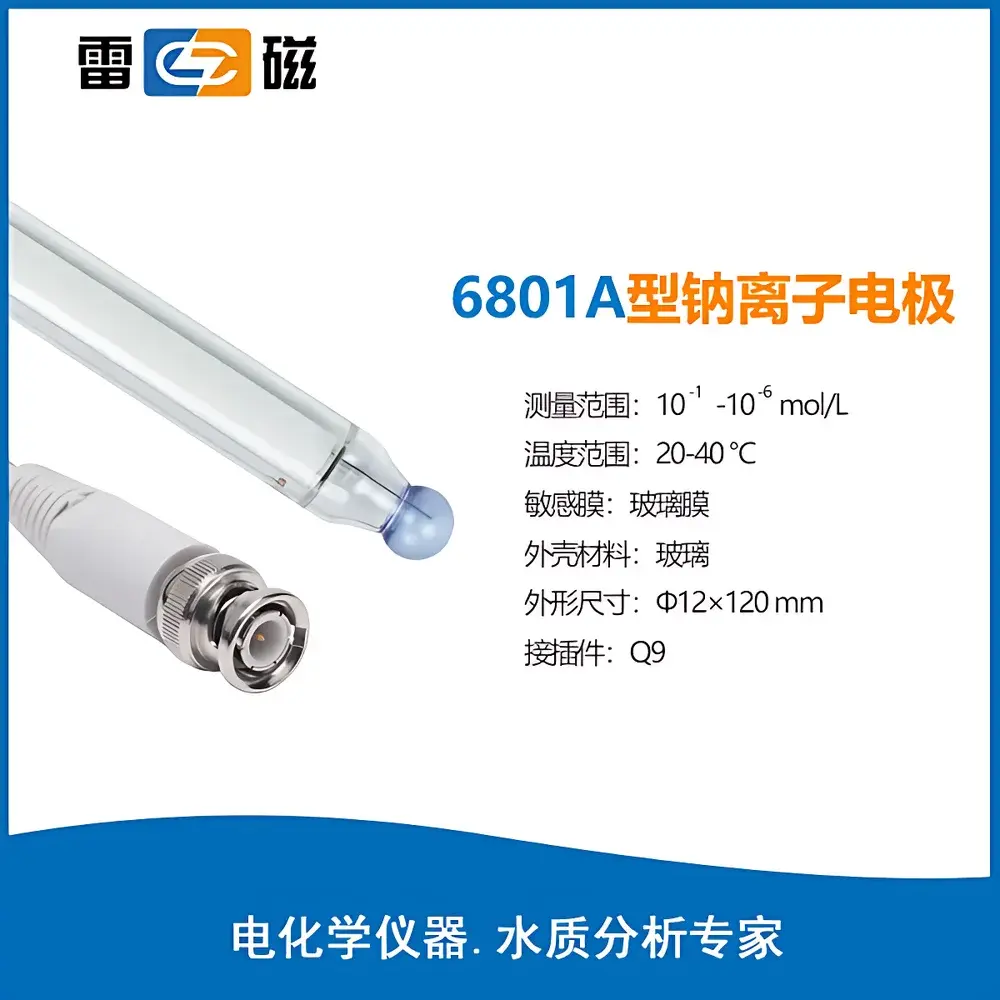
It accepts any BNC-compatible sodium ISE with standard 0–1000 mV output and impedance <10¹² Ω; however, slope calculation accuracy assumes Nernstian response (59.16 mV/pNa at 25 °C).
Is calibration verification traceable to national standards?
While the meter itself is not NIST-traceable, users may calibrate using certified reference materials (CRMs) such as NIST SRM 3194 (sodium in water) or equivalent ISO 17034-accredited standards.
How is data integrity maintained during power interruption?
All measurement data, calibration coefficients, and user settings reside in EEPROM—retained indefinitely without auxiliary power, satisfying IEC 60746-2 clause 7.3.2 for memory persistence.







