
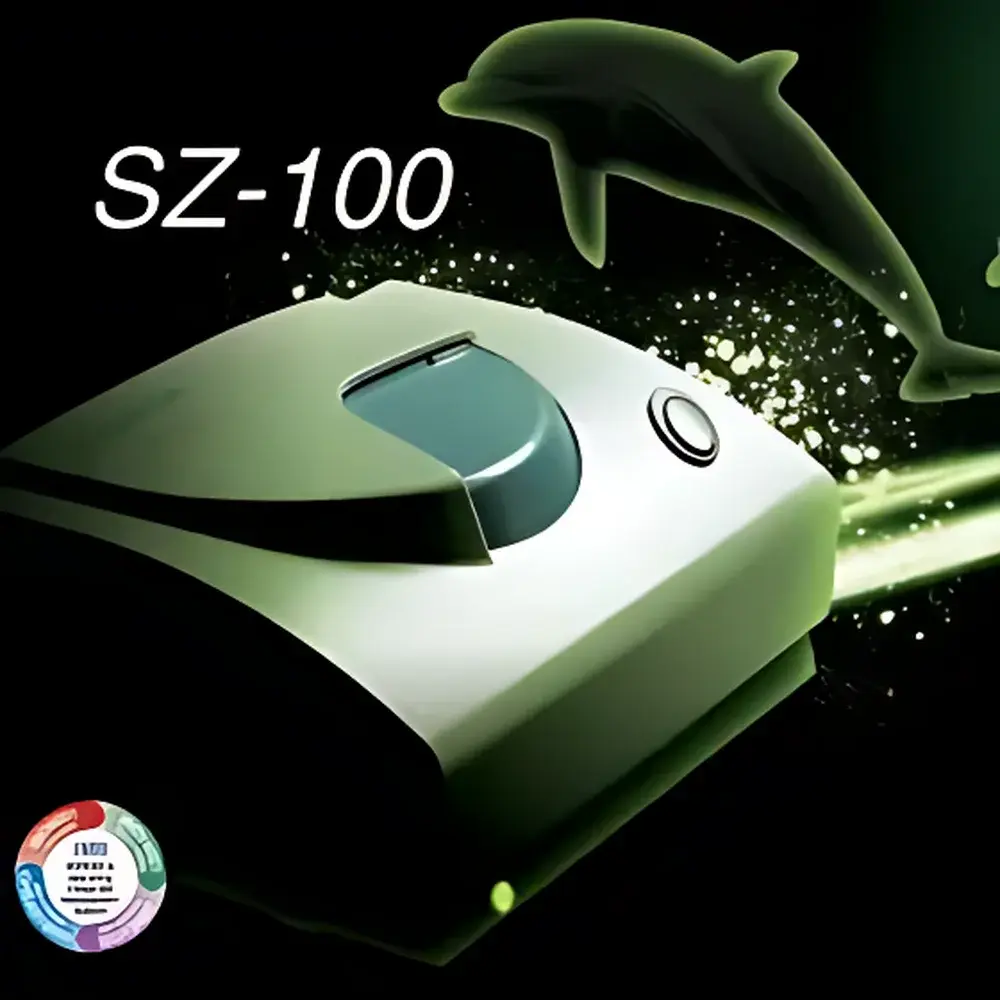
HORIBA SZ-100 Nanoparticle Size and Zeta Potential Analyzer
| Brand | HORIBA |
|---|---|
| Origin | Japan |
| Model | SZ-100 |
| Dispersion Method | Dry & Wet Dispersion |
| Particle Size Range | 0.3 nm – 8,000 nm |
| Molecular Weight Range | 1,000 – 2 × 10⁷ Da (Debye plot method) |
| Repeatability | <2% |
| Measurement Time | ~2 minutes (from start to size result display) |
Overview
The HORIBA SZ-100 Nanoparticle Size and Zeta Potential Analyzer is a dual-function benchtop instrument engineered for precision characterization of colloidal and nanoscale systems using dynamic light scattering (DLS), electrophoretic light scattering (ELS), and static light scattering (SLS) principles. It employs a dual-angle detection architecture—90° for high-sensitivity particle sizing in dilute dispersions and 173° backscatter for robust analysis of highly concentrated or turbid samples (e.g., slurries, pigments, CMP slurries)—enabling reliable measurements across an exceptionally broad concentration range without dilution. The system integrates a custom-designed low-stray-light optical path optimized for single-nanoparticle sensitivity and utilizes a high-stability He–Ne laser (633 nm) with temperature-controlled detection electronics. Its core analytical capability rests on autocorrelation function analysis via a dedicated correlator developed in collaboration with Japan’s New Energy and Industrial Technology Development Organization (NEDO), ensuring high signal-to-noise ratio and statistical reliability even at sub-nanometer scales.
Key Features
- Dual-angle optical configuration (90° and 173°) supports both low-concentration biomolecular samples (e.g., proteins, ribosomes, virus particles) and high-concentration industrial dispersions (e.g., ceramic slurries, pigment pastes, CMP formulations).
- Ultra-low volume Zeta potential measurement: proprietary micro-electrophoresis cell enables reproducible zeta analysis using only 100 µL of sample—critical for precious or synthetically limited nanomaterials.
- Integrated molecular weight estimation via Debye plot analysis from static light scattering data, supporting characterization of polymers, micelles, and protein aggregates within the same run.
- Compact footprint design (W × D × H: 350 × 400 × 250 mm) facilitates integration into regulated QC laboratories, cleanrooms, or shared core facilities with space constraints.
- Automated measurement workflow: after sample loading and parameter selection (e.g., material refractive index, dispersant viscosity), one-button initiation triggers sequential DLS, ELS, and SLS acquisition with real-time quality assessment and auto-optimization of measurement duration.
- Temperature control module (±0.1 °C stability) ensures thermal equilibrium during kinetic studies or temperature-dependent stability profiling (e.g., aggregation onset temperature determination).
Sample Compatibility & Compliance
The SZ-100 accommodates aqueous and organic dispersions—including polar solvents such as DMF, THF, and ethanol—across a wide pH range (pH 2–12) and ionic strength (0.1 mM–1 M NaCl equivalent). Sample formats include standard quartz cuvettes (1 mL), disposable polystyrene cells (for routine QC), and the optional capillary zeta cell for trace-volume electrokinetic analysis. Instrument operation complies with ISO 22412:2017 (DLS), ISO 13099-2:2012 (ELS), and ASTM E2490-18 (nanoparticle size distribution by light scattering). Data acquisition and reporting support audit-trail functionality aligned with FDA 21 CFR Part 11 requirements when used with validated software configurations under GLP/GMP environments.
Software & Data Management
HORIBA’s Particle Size Analyzer Software (PSA v5.x) provides full control over instrument parameters, real-time correlation curve visualization, multi-modal size distribution deconvolution (cumulants, NNLS, CONTIN), and automated zeta potential calculation using Smoluchowski or Henry’s equation with adjustable f(κa) correction. All raw intensity autocorrelation functions, phase analysis light scattering (PALS) interferograms, and SLS intensity integrals are stored in vendor-neutral HDF5 format. Export options include CSV, PDF reports with embedded metadata (operator ID, timestamp, instrument serial number, calibration history), and direct integration with LIMS via ODBC-compliant database connectors. Version-controlled method templates ensure inter-laboratory reproducibility and facilitate IQ/OQ/PQ validation documentation.
Applications
The SZ-100 serves as a primary characterization tool in pharmaceutical development (e.g., liposome and mRNA-LNP stability screening, protein aggregation kinetics), advanced materials R&D (ceramic nanopowder dispersion quality, metal nanoparticle surface charge optimization), semiconductor manufacturing (CMP slurry particle count and zeta-driven stability prediction), and food science (emulsion droplet size distribution, starch nanoparticle surface modification verification). It is routinely deployed for quality control of cosmetic emulsions, polymer latex synthesis monitoring, carbon black dispersion homogeneity assessment, and virology research involving viral capsid integrity evaluation under varying buffer conditions.
FAQ
What is the minimum required sample volume for Zeta potential measurement?
The standard micro-electrophoresis cell requires only 100 µL of sample, enabling analysis of scarce or expensive biological or synthetic nanomaterials.
Can the SZ-100 measure polydisperse samples with broad size distributions?
Yes—the instrument supports non-negative least squares (NNLS) and CONTIN algorithms to resolve multimodal distributions down to 10% population resolution under optimal signal conditions.
Is calibration traceable to NIST standards?
Particle size calibration is performed using NIST-traceable polystyrene and silica reference nanoparticles (e.g., NIST SRM 1963, 1981), with documented uncertainty budgets included in the calibration certificate.
Does the system support automated cleaning and cell rinsing protocols?
Yes—the integrated fluidic module includes programmable rinse cycles using compatible solvents (water, ethanol, isopropanol) with pressure and flow-rate monitoring to prevent cross-contamination between runs.
How is temperature stability maintained during extended measurement sequences?
The Peltier-controlled sample chamber maintains setpoint accuracy within ±0.1 °C over 24-hour periods, with active feedback from dual platinum resistance thermometers positioned adjacent to the detection zone.



