
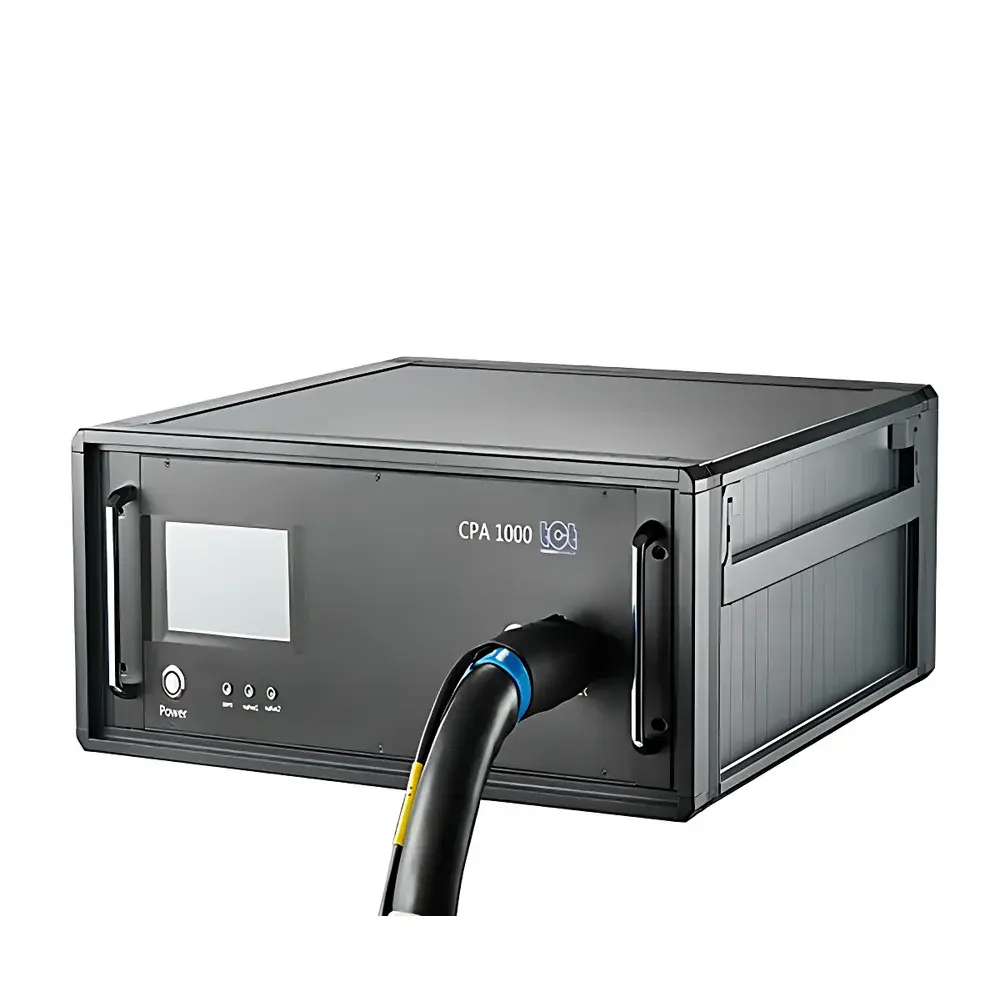
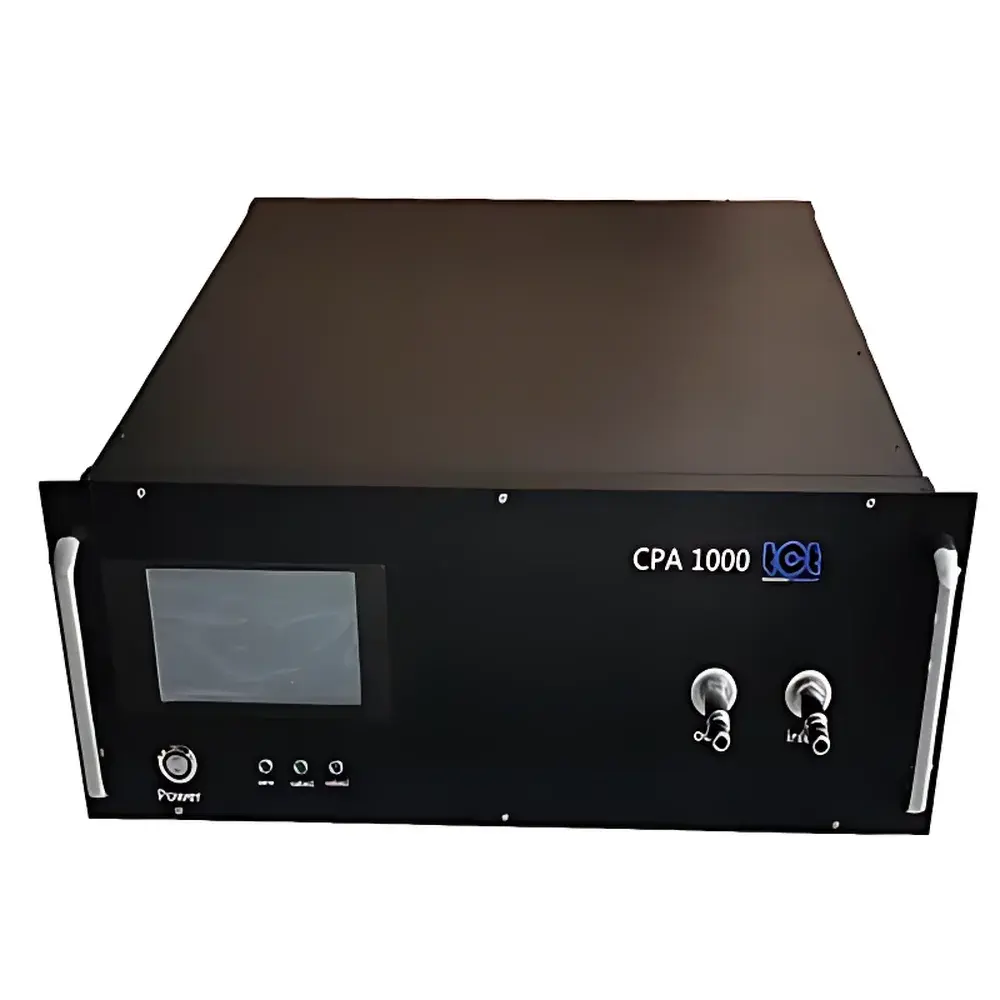
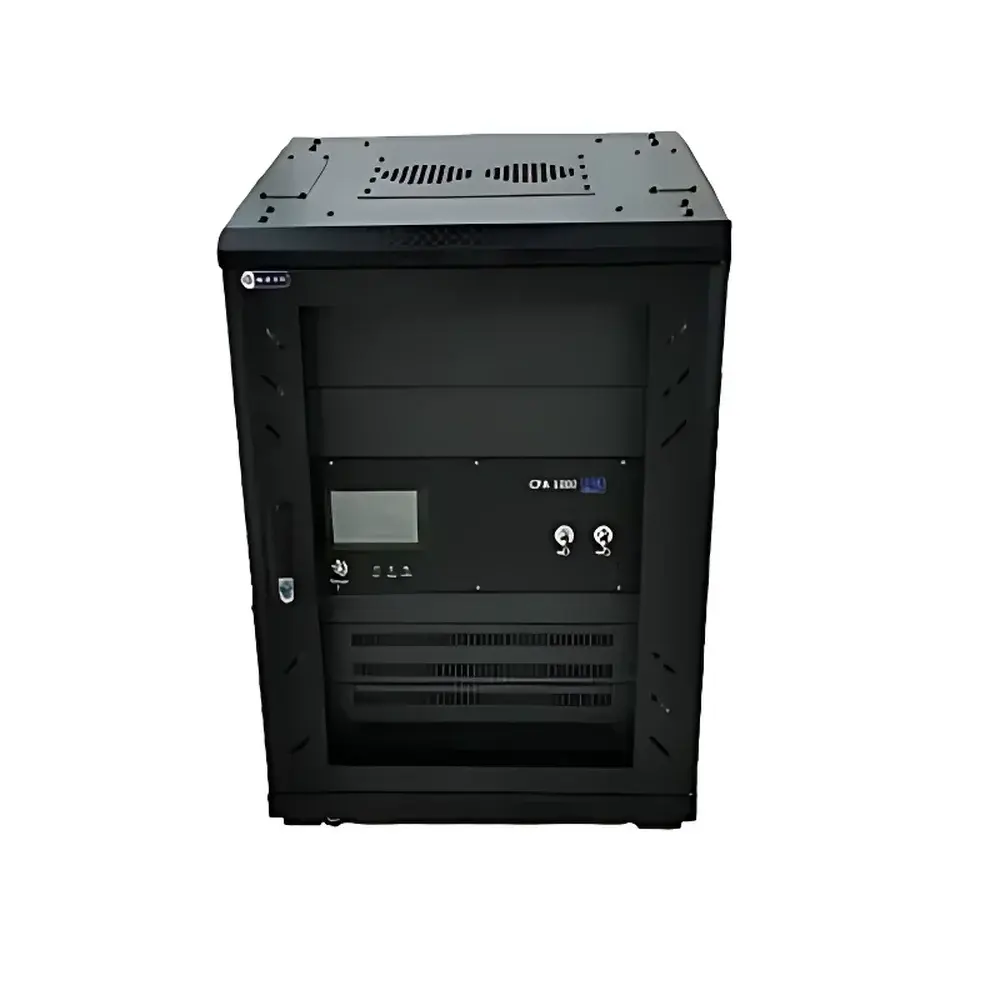
TCT CPA1000 Continuous Particle Analyzer (Transient Smoke Meter)
| Brand | TCT (Xiamen Tongchuang) |
|---|---|
| Origin | Fujian, China |
| Model | CPA1000 |
| Instrument Type | Online |
| Detection Principle | Corona-Charged Faraday Cup Electrometric Method |
| Max. Permissible Error | ±1% |
| Zero Drift | ±0.5% FS/24h |
| Span Drift | ±1% FS/24h |
| Repeatability | <1% RSD |
| Sampling Frequency | 100 Hz (24-bit ADC) |
| Response Time (t₉₀) | 200 ms |
| Measurable Particle Size Range | ~3 nm – 2.5 µm |
| PM Mass Concentration Range | 0.001 – 3000 mg/m³ |
| PN Number Concentration Range | 6×10² – 1.3×10⁹ #/cm³ |
| Operating Temperature | 0–55 °C |
| Sample Gas Inlet Temperature | Up to 850 °C (with 200 °C heated inlet line) |
| Compressed Air Supply | 3–10 bar(g), dry & particle-free, compliant with ANSI/ISA-7.0.01-1996 Class 3 |
| Air Consumption | 20 L/min (normal), 10 L/min (mobile mode) |
| Power | 24 VDC / 20 A |
| Heated Inlet Line | 200 °C max, 2 m flexible antistatic polymer tube |
| Dimensions | 720 × 495 × 240 mm |
| Weight | ~30 kg |
| Analog Outputs | 4 channels (4–20 mA / 0–10 V) |
| Digital Interface | RS232 |
| Auto-zero & Flow Verification | Integrated mass flow controller |
Overview
The TCT CPA1000 Continuous Particle Analyzer (Transient Smoke Meter) is an online, real-time emission measurement system engineered for regulatory-grade particulate matter (PM) and particle number (PN) quantification in dynamic combustion environments. It operates on the corona-charged Faraday cup electrometric principle—a physically traceable, charge-based method compliant with ISO 8549-1 and underpinning reference techniques cited in UN GTR No. 15 and EU Regulation (EU) 2016/427. Unlike optical extinction or light-scattering methods, the CPA1000 directly measures the electrostatic current induced by charged particles collected in a grounded Faraday cup, enabling simultaneous, co-located determination of both mass concentration (mg/m³) and number concentration (#/cm³) without reliance on assumed density or morphology. Its sub-200 ms response time, wide dynamic range (>10⁶), and robust design make it suitable for transient engine testing—including PEMS (Portable Emission Measurement Systems), steady-state and ramped-modal engine dynamometer cycles, and aftertreatment evaluation such as DPF filtration efficiency analysis.
Key Features
- Simultaneous dual-parameter output: Real-time, synchronized reporting of PM mass and PN concentration from a single sensor core.
- Electrometric measurement architecture: Eliminates calibration drift associated with optical alignment or filter loading; inherently stable under thermal and flow transients.
- Integrated heated sampling train: 200 °C-rated antistatic inlet line (2 m), internal sensor heating, and active dew-point management ensure non-condensing operation across exhaust conditions up to 850 °C at source.
- Self-calibrating flow control: Onboard thermal mass flow controller enables automated zero-checks, span verification, and continuous flow monitoring—fully traceable per ISO 16183 Annex B.
- No consumables or replaceable filters: Sensor core requires no periodic replacement; maintenance limited to routine inlet cleaning and compressed air quality verification.
- High-fidelity signal acquisition: 24-bit analog-to-digital conversion at 100 Hz sampling rate, SNR ≥ 100 dB, supporting high-resolution transient analysis per SAE J1711 and ISO 8178-4.
- Embedded diagnostics: Real-time monitoring of corona voltage stability, Faraday cup leakage current, ion collector efficiency, and thermal sensor health—with event logging and fault flagging via RS232.
- Modular integration interface: Four isolated analog outputs (4–20 mA / 0–10 V), configurable alarm thresholds, and programmable valve control I/O for automated sampling sequence coordination.
Sample Compatibility & Compliance
The CPA1000 is validated for use with diesel, gasoline, and alternative fuel (e.g., biodiesel, HVO, CNG) exhaust streams. Its particle size sensitivity—from nucleation-mode (~3 nm) through accumulation mode to coarse particles up to 2.5 µm—supports compliance testing against China’s GB 17691–2018 (Stage VI), Euro 6d/7, US EPA Tier 4 Final, and UNECE R49/R83 requirements. The instrument meets electromagnetic compatibility (EMC) per EN 61326-1:2013 and environmental operating specifications per EN 60068-2 series. All firmware and data handling routines are designed to support audit-ready operation under GLP and ISO/IEC 17025 frameworks; raw current measurements and timestamped diagnostic logs are retained onboard for post-test forensic analysis.
Software & Data Management
The CPA1000 interfaces natively with industry-standard test cell control platforms (e.g., AVL PUMA, Horiba MEXA, ETAS INCA) via analog signals or ASCII protocol over RS232. Optional TCT DataLink software provides local configuration, live waveform visualization, batch export in CSV/CSV-T format (including metadata headers per ASTM D6259), and time-synchronized multi-channel overlay with torque, speed, and gas analyzer data. All stored records include embedded calibration certificates, sensor health metrics, and environmental condition stamps—ensuring full traceability required for regulatory submissions and 21 CFR Part 11-compliant environments when deployed with validated IT infrastructure.
Applications
- On-road PEMS testing for real-driving emissions (RDE) conformity assessment per EU 2016/646 and GB 3847–2018.
- Engine development and certification testing on steady-state and transient dynamometers (e.g., WHSC, WHTC, FTP-75).
- Aftertreatment system evaluation—including DPF regeneration kinetics, SCR soot interaction studies, and GPF filtration efficiency mapping.
- Research into nanoparticle formation mechanisms, fuel formulation impacts, and combustion optimization in academic and OEM laboratories.
- Continuous stack monitoring for industrial combustion sources where regulatory limits apply to both PM₂.₅ mass and ultrafine particle counts.
FAQ
Does the CPA1000 require periodic recalibration with certified aerosol standards?
No. The electrometric principle is based on fundamental charge collection physics. While initial factory calibration uses NIST-traceable polystyrene latex (PSL) and dioctyl sebacate (DOS) aerosols, long-term stability is maintained via internal zero/span verification routines—not external reference aerosols.
Can the CPA1000 be used with raw, uncooled exhaust?
Yes—provided the heated inlet line (rated to 200 °C) is installed and the sample gas temperature at the sensor inlet remains below 150 °C. For >200 °C source gases, dilution or quenching upstream of the heated line is required per ISO 8178-1 Annex F.
Is the instrument compatible with existing engine test cell data acquisition systems?
Yes. All analog outputs are galvanically isolated and configurable for direct integration with DAQ hardware from National Instruments, DEWETRON, or AVL. RS232 communication supports custom scripting for synchronization with crank-angle-resolved combustion analysis.
What compressed air quality standard must be met for reliable operation?
Compressed air must comply with ANSI/ISA-7.0.01-1996 Class 3 (≤0.1 µm particles, ≤−40 °C dew point, ≤0.1 ppm oil). Nitrogen may be substituted if oil-free generation is unavailable.
How is sensor contamination mitigated during extended testing?
An automated sampling valve isolates the sensor during idle periods. Combined with continuous clean-air purge and electrostatic repulsion of neutral particles at the inlet, this reduces deposition-related drift to <0.5% over 100-hour continuous operation.







