
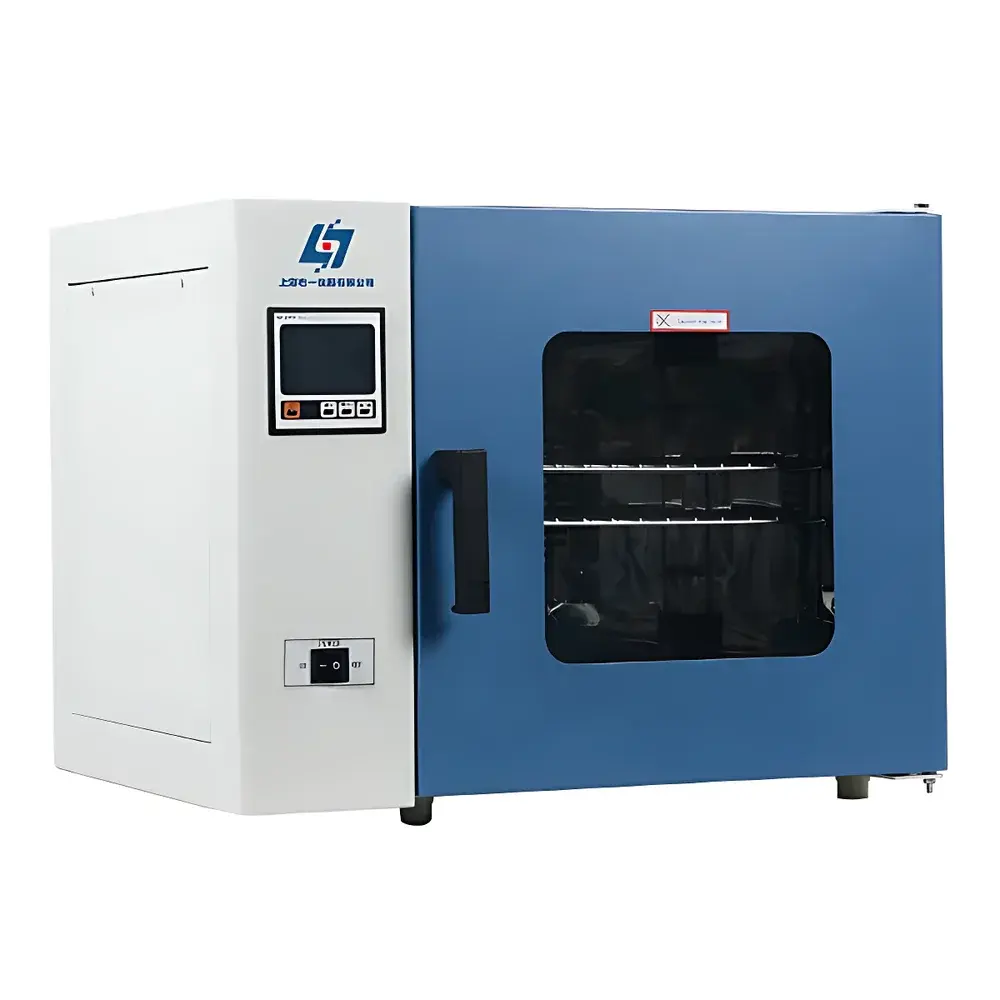
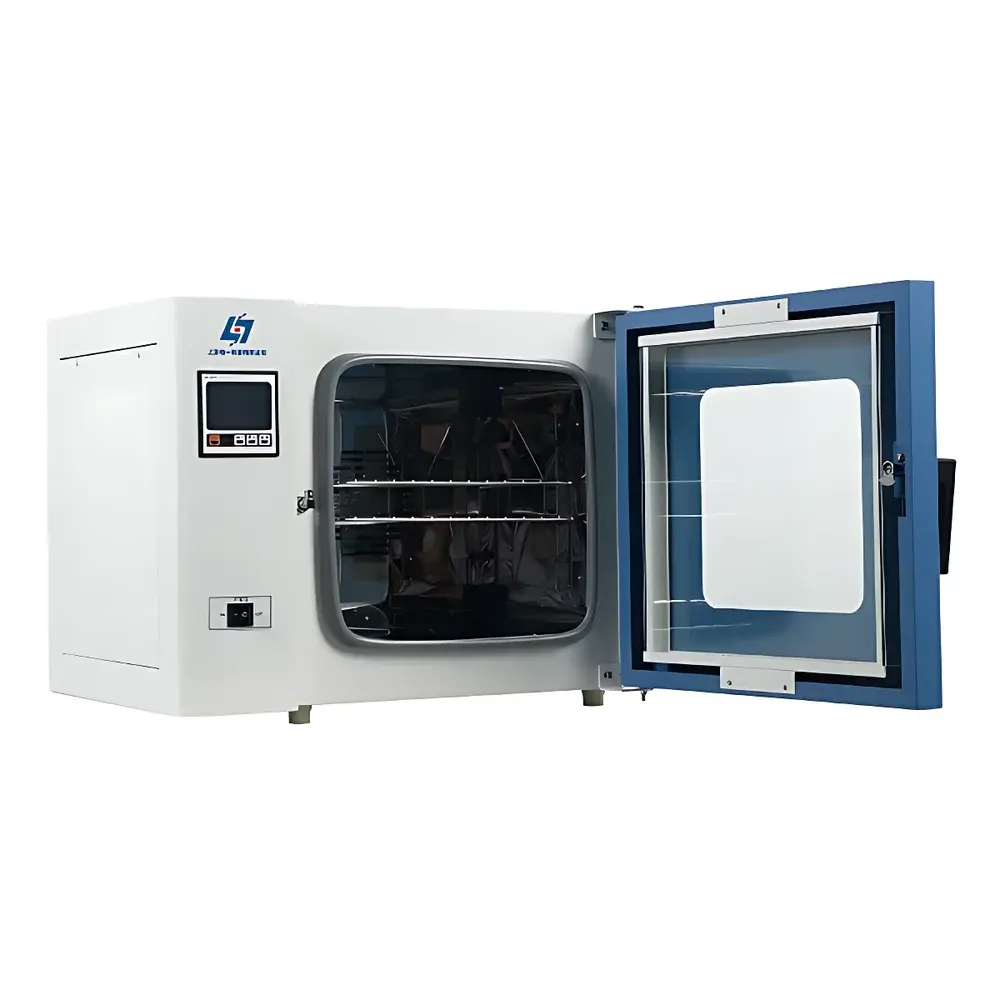
Yoyi DHG-9265A Forced-Air Constant-Temperature Drying Oven
| Brand | Yoyi |
|---|---|
| Origin | Shanghai, China |
| Manufacturer Type | Direct Manufacturer |
| Model | DHG-9265A |
| Temperature Range | RT+10°C to 300°C |
| Temperature Uniformity | ±2.5% (at 100°C) |
| Temperature Fluctuation | ±1°C |
| Temperature Resolution | 0.1°C |
| Internal Dimensions (W×D×H) | 600×595×750 mm |
| External Dimensions (W×D×H) | 880×800×930 mm |
| Interior Material | Mirror-Finish Stainless Steel |
| Power Input | 2550 W |
| Net Volume | 260 L |
| Standard Compliance | GB/T 30435–2013 |
Overview
The Yoyi DHG-9265A is a precision-engineered forced-air constant-temperature drying oven designed for reliable thermal processing in regulated laboratory and industrial environments. Operating on the principle of convection-driven heat transfer, it employs an optimized rear-mounted air circulation system with adjustable airflow dynamics to ensure uniform thermal distribution across the entire working chamber. The oven maintains stable setpoint temperatures from ambient +10°C up to 300°C—making it suitable for applications requiring controlled dehydration, sterilization, polymer curing, moisture content analysis, pre-conditioning of samples prior to analytical testing, and thermal aging studies. Its construction adheres to GB/T 30435–2013, the Chinese national standard governing performance, safety, and metrological requirements for electric heating drying ovens. While not certified to ISO/IEC 17025 or ASTM E145, its design incorporates engineering safeguards aligned with general good laboratory practice (GLP) for temperature-critical workflows.
Key Features
- Microprocessor-based PID temperature controller with intuitive LCD menu interface—displays setpoint, real-time chamber temperature, and remaining hold time simultaneously
- Intelligent power-loss recovery function: automatically resumes operation with previously saved parameters after unexpected shutdowns or grid interruptions
- Double-layer tempered glass observation window with oversized viewing area enables non-invasive visual monitoring without compromising thermal integrity
- High-efficiency forced-air circulation system featuring rear-mounted blower and directional ductwork—enhances temperature uniformity and reduces stabilization time
- Self-contained exhaust and intake ports with passive vapor management—eliminates manual vent adjustment and supports continuous moisture removal during extended drying cycles
- Robust structural architecture: cold-rolled steel exterior with electrostatic epoxy coating; mirror-finish 304 stainless steel interior chamber and adjustable stainless steel shelving
- High-temperature silicone door gasket ensures long-term sealing integrity and thermal efficiency at sustained 300°C operation
- Independent over-temperature cut-off circuit (optional)—meets basic functional safety requirements for unattended operation
Sample Compatibility & Compliance
The DHG-9265A accommodates a broad range of sample types—including petri dishes, weighing boats, crucibles, glassware, polymer specimens, electronic components, and biological substrates—within its 260 L chamber. Its stainless steel interior resists corrosion from residual solvents, saline solutions, and organic volatiles commonly encountered in pharmaceutical stability testing, food moisture analysis, and materials science protocols. Although not intrinsically rated for hazardous location use (e.g., Class I Div 2), optional inert gas purging (via dedicated inlet port and calibrated rotameter) permits operation under nitrogen or argon atmospheres—critical for oxygen-sensitive oxidation studies or low-oxygen annealing procedures. The unit complies with GB/T 30435–2013 for temperature accuracy, uniformity, and electrical safety. It supports traceable calibration practices but does not natively meet FDA 21 CFR Part 11 requirements unless integrated with validated third-party data logging systems.
Software & Data Management
The base configuration includes local parameter storage and real-time display only. Optional RS485 serial interface (with included communication protocol documentation) enables integration with external SCADA platforms or custom LabVIEW/Python-based acquisition scripts. An optional embedded thermal printer provides hard-copy time-stamped records of temperature profiles—useful for audit-ready documentation in QA/QC labs. For users requiring electronic record retention compliant with GLP or GMP frameworks, third-party validation packages are available to support IQ/OQ documentation and audit trail generation when paired with compliant software environments. No cloud connectivity or proprietary cloud platform is embedded or supported.
Applications
- Moisture content determination per AOAC 950.46, USP <731>, and ISO 712 in food, feed, and agricultural commodities
- Thermal sterilization of glassware and metal instruments in microbiology and cell culture facilities
- Curing and post-bake conditioning of adhesives, coatings, and composite laminates in R&D settings
- Accelerated aging tests for polymers and elastomers per ASTM D573 and ISO 188
- Drying of filter papers, gravimetric precipitates, and ceramic green bodies in analytical and geochemical laboratories
- Pre-heating and conditioning of sensors, PCB assemblies, and high-reliability electronic modules prior to environmental stress screening
- Constant-temperature holding of reagents and standards in clinical chemistry and forensic toxicology workflows
FAQ
What is the maximum allowable operating temperature?
The DHG-9265A is rated for continuous operation up to 300°C. Sustained use above this limit may compromise sensor accuracy, seal longevity, and insulation integrity.
Does the oven include calibration certification?
No factory-issued NIST-traceable calibration certificate is provided by default. Users must perform initial verification using accredited reference thermometers and follow internal SOPs for periodic recalibration.
Can the oven be used for sterilization of medical devices?
It meets basic dry-heat sterilization temperature thresholds (e.g., 160°C for 120 min), but lacks built-in cycle validation, load temperature mapping, or regulatory documentation required for ISO 17665-compliant medical device sterilization.
Is remote monitoring possible without add-on hardware?
No. Native Ethernet/Wi-Fi capability is not integrated. Remote access requires installation of the optional RS485 interface and external host software.
What maintenance intervals are recommended?
Inspect door gasket integrity and clean interior surfaces weekly; verify temperature uniformity quarterly using a multi-point probe array; replace air filter (if equipped) every six months under continuous operation.



