
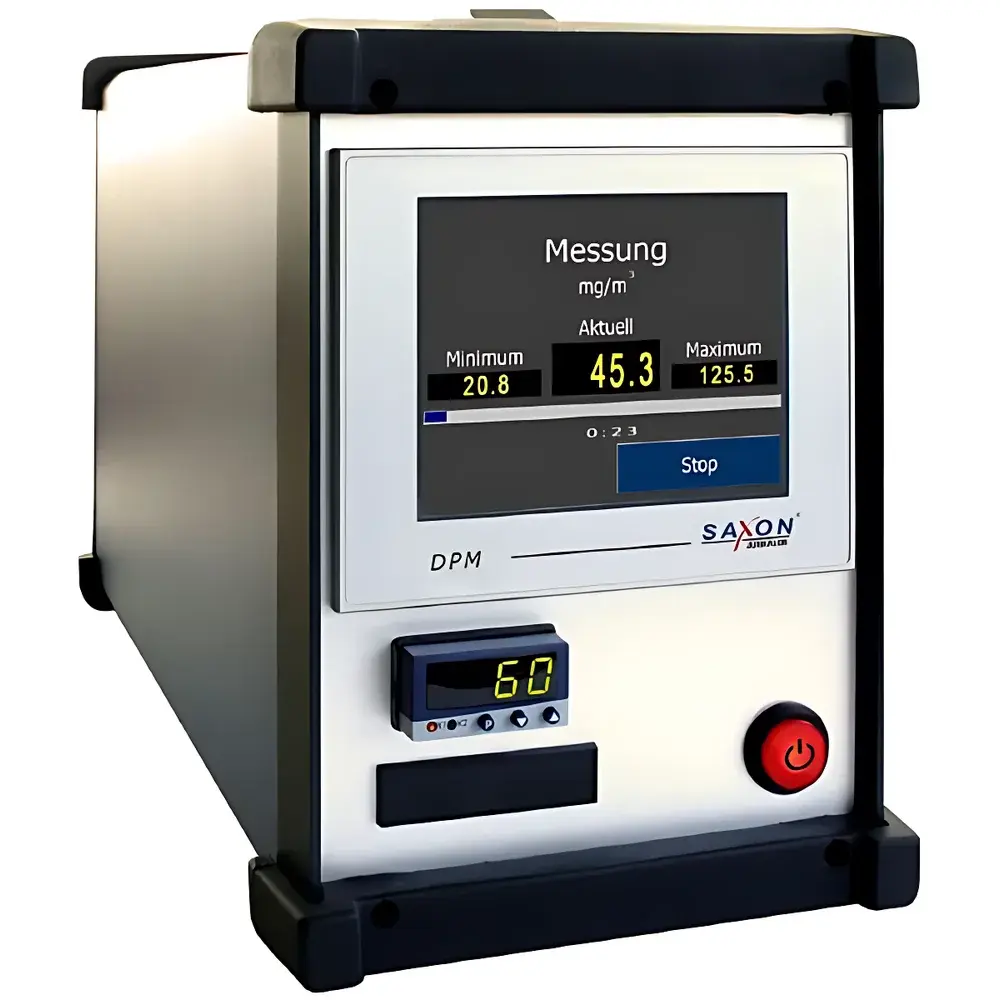
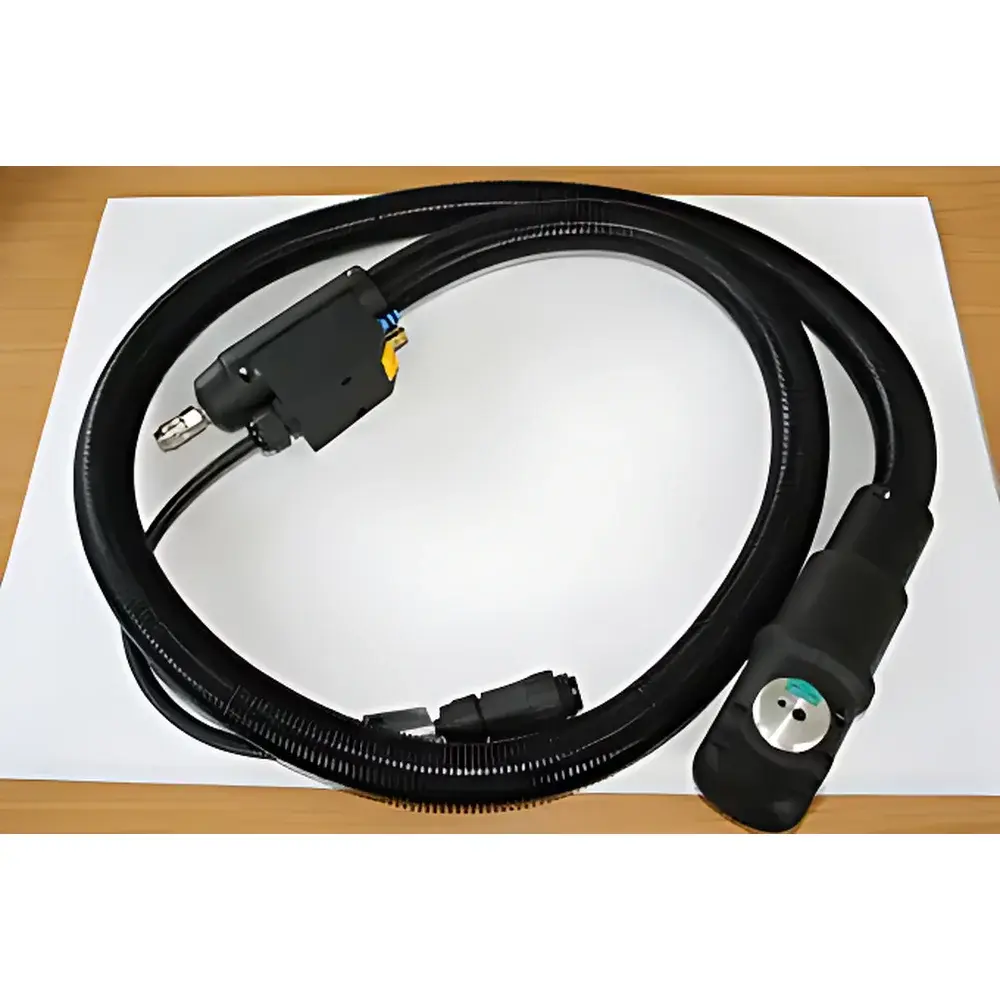
DPM Diesel Particulate Matter Monitor
| Origin | Germany |
|---|---|
| Manufacturer Type | Authorized Distributor |
| Origin Category | Imported |
| Model | DPM |
| Instrument Type | Portable |
| Measurement Principle | Laser Light Scattering Photometry (LLSP) |
| Maximum Permissible Error | ±2% |
| Zero Drift | <1% FS/24h |
| Span Drift | <2% FS/24h |
| Repeatability | <2% RSD |
| Warm-up Time | <10 min |
| Zero Calibration Time | 20 s |
| T90 Response Time | <15 s (with 3 m heated sampling line) |
| Power Supply | 230 VAC, 50–60 Hz |
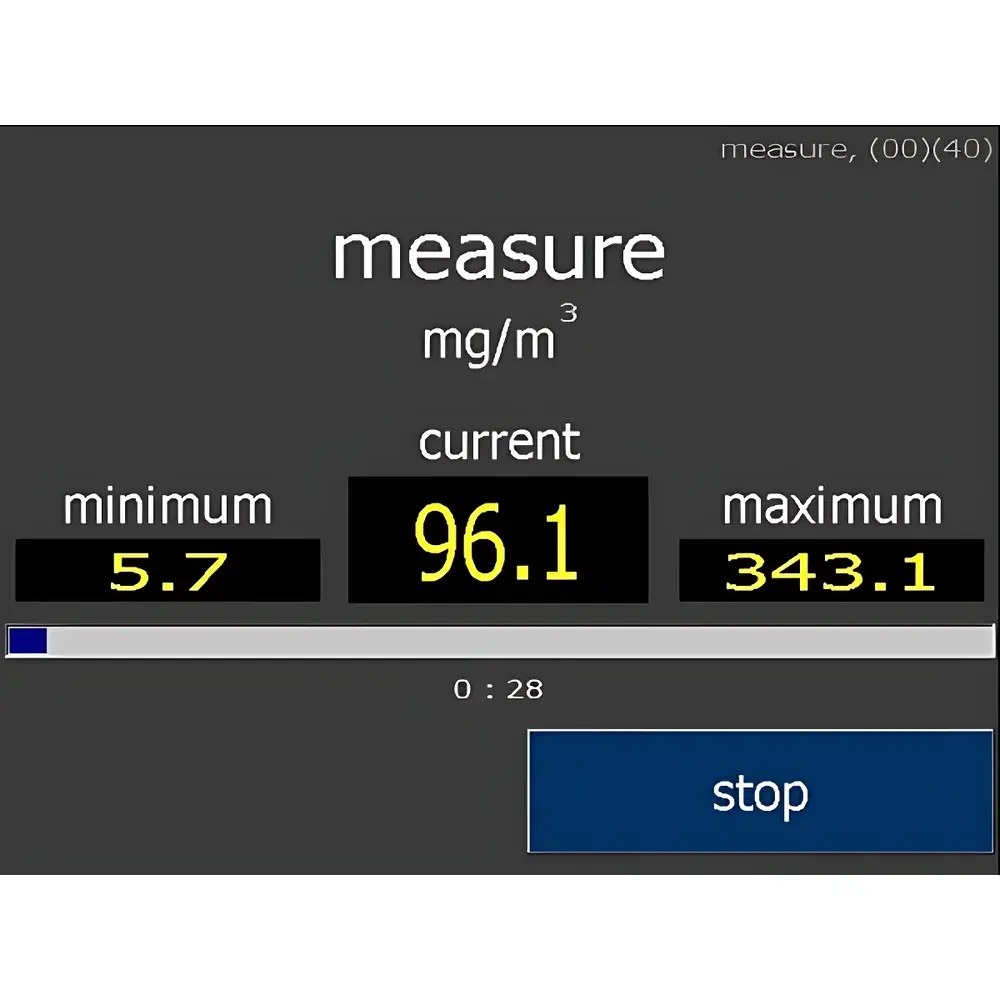
| Display | Large Touchscreen Interface |
| PM Mass Concentration Range | 0–150.0 mg/m³ (extended range available) |
| Resolution | 0.01 mg/m³ (≤10 mg/m³), 0.1 mg/m³ (>10 mg/m³) |
| Sampling Temperature Limit | ≤400 °C |
| Heated Probe Operating Temperature | ≥70 °C (controlled) |
| Particle Size Detection Range | 0.05 µm – >10 µm |
| Sampling Interface | Heated, thermostatically controlled probe with integrated condensate suppression |
| Communication Ports | USB, RS232, Bluetooth v4.2 |
| Dimensions (W×H×D) | 190 × 275 × 330 mm |
| Weight | 7.5 kg |
| Operating Ambient Temperature | 5–40 °C |
| Relative Humidity | Up to 95% RH (non-condensing) |
Overview
The DPM Diesel Particulate Matter Monitor is a portable, field-deployable instrumentation system engineered for precise, real-time quantification of diesel exhaust particulate mass concentration (mg/m³) in accordance with international regulatory and research requirements. It employs Laser Light Scattering Photometry (LLSP), a well-established optical detection principle wherein incident laser light is scattered by suspended particulates in the sampled gas stream; the intensity and angular distribution of scattered photons are correlated to particle number and mass via calibrated Mie scattering models. Unlike filter-based gravimetric or beta-attenuation methods, LLSP enables continuous, non-destructive measurement without sampling interruption or consumables—making it ideal for dynamic engine testing, on-road vehicle evaluation, and aftertreatment system validation. The instrument integrates a thermostatically controlled, heated sampling probe (operating ≥70 °C) to prevent water vapor condensation and thermophoretic particle loss—critical for maintaining measurement integrity across transient exhaust conditions typical of diesel combustion.
Key Features
- Real-time, continuous PM mass concentration output (0–150.0 mg/m³) with dual-resolution display (0.01 mg/m³ below 10 mg/m³; 0.1 mg/m³ above)
- Heated, temperature-stabilized sampling probe (≥70 °C) with integrated thermal management to eliminate moisture-induced bias and cold-wall deposition
- Rapid response dynamics: T90 < 15 s using standard 3 m heated sampling line, enabling capture of high-frequency transients during engine load sweeps
- Robust optical architecture with automatic zero stabilization and manual zero calibration capability (completed in ≤20 s)
- Wide detectable particle size range: 0.05 µm to >10 µm—covering nucleation-mode soot, accumulation-mode aggregates, and coarse ash particles from lubricant-derived ash
- Comprehensive on-device data logging with min/max/average concentration statistics over user-defined time intervals
- Multi-protocol digital interface: USB 2.0, RS232 (ASCII protocol), and Bluetooth 4.2 for wireless telemetry to external acquisition software or test cell control systems
- Compact, ruggedized housing (190 × 275 × 330 mm; 7.5 kg) certified for mobile laboratory and roadside enforcement deployment
Sample Compatibility & Compliance
The DPM monitor is validated for use with undiluted and diluted diesel exhaust streams, including raw exhaust from engine dynamometer cells, chassis dynamometers, and in-use vehicle tailpipe measurements. Its heated sampling train ensures compatibility with high-humidity, low-temperature exhaust conditions common during cold-start and urban driving cycles. The instrument meets essential metrological performance criteria outlined in ISO 8573-1 (compressed air purity), ISO 29463 (high-efficiency filter testing), and supports alignment with U.S. EPA CFR Title 40 Part 1065 (engine emission testing procedures) and EU Regulation (EC) No 692/2008 (light-duty vehicle type approval). While not a certified reference method per EN 16454 or ISO 27891, its ±2% maximum permissible error, <2% repeatability, and <2% span drift over 24 hours satisfy technical verification requirements for engineering-grade PM screening, DPF efficiency assessment, and R&D-level emission mapping under GLP-compliant test protocols.
Software & Data Management
Data acquisition and configuration are managed via an embedded touchscreen interface running a deterministic real-time OS. All measurement parameters—including averaging window, alarm thresholds, and calibration history—are stored locally with timestamped audit trails. Raw and processed data export via USB to CSV or XML formats supports traceability in regulated environments. Optional PC-based software (compatible with Windows 10/11) provides advanced visualization tools: time-series overlays, statistical summaries (Cv, SD, confidence intervals), and correlation analysis against concurrent signals (e.g., NOx, CO, exhaust flow). The communication stack includes full support for SCPI-like command syntax over RS232 and Bluetooth, enabling integration into automated test benches compliant with NI TestStand or dSPACE SCALEXIO frameworks. Audit logs comply with FDA 21 CFR Part 11 requirements when used with password-protected user roles and electronic signature modules (available as optional firmware upgrade).
Applications
- Engine development labs: Transient PM profiling during WHSC, WHTC, and RDE test cycles
- Aftertreatment system validation: Quantitative DPF filtration efficiency (η = 1 − Cout/Cin) and DOC+DPF synergistic effects
- Regulatory enforcement: On-site inspection of in-use diesel vehicles at MOT stations or roadside checkpoints
- Academic research: Aerosol formation mechanisms, nucleation kinetics, and soot oxidation behavior under varying λ and EGR conditions
- Production line QA: Consistency checks of PM emissions across engine families prior to certification submission
- Mobile monitoring networks: Integration into van-mounted air quality observatories for localized black carbon mapping
FAQ
Is the DPM suitable for measuring PM from gasoline direct injection (GDI) engines?
Yes—the LLSP detection principle is fuel-agnostic and responds to all non-volatile particulates. However, calibration coefficients may require adjustment for differences in refractive index and morphology between diesel soot and GDI-generated particles.
Can the instrument be used without the heated probe?
No. The heated probe is integral to measurement accuracy. Unheated sampling introduces condensation artifacts and thermophoretic losses that exceed ±15% bias below 100 °C exhaust temperature.
What maintenance is required for long-term stability?
Optical path cleaning every 200 operational hours and annual factory recalibration against NIST-traceable aerosol standards (e.g., DEHS, PSL) are recommended to maintain ±2% MPE compliance.
Does the DPM meet OIML R127 or similar metrological class requirements?
It conforms to OIML R127 Class 2 specifications for portable PM analyzers used in environmental compliance applications, verified through independent third-party type evaluation reports (available upon request).
How is zero calibration performed in the field?
A dedicated zero-air port accepts filtered compressed air (≤0.001 mg/m³ certified zero gas); the instrument executes automated baseline correction within 20 seconds, storing the offset in non-volatile memory with time/date stamping.
Related Products







