
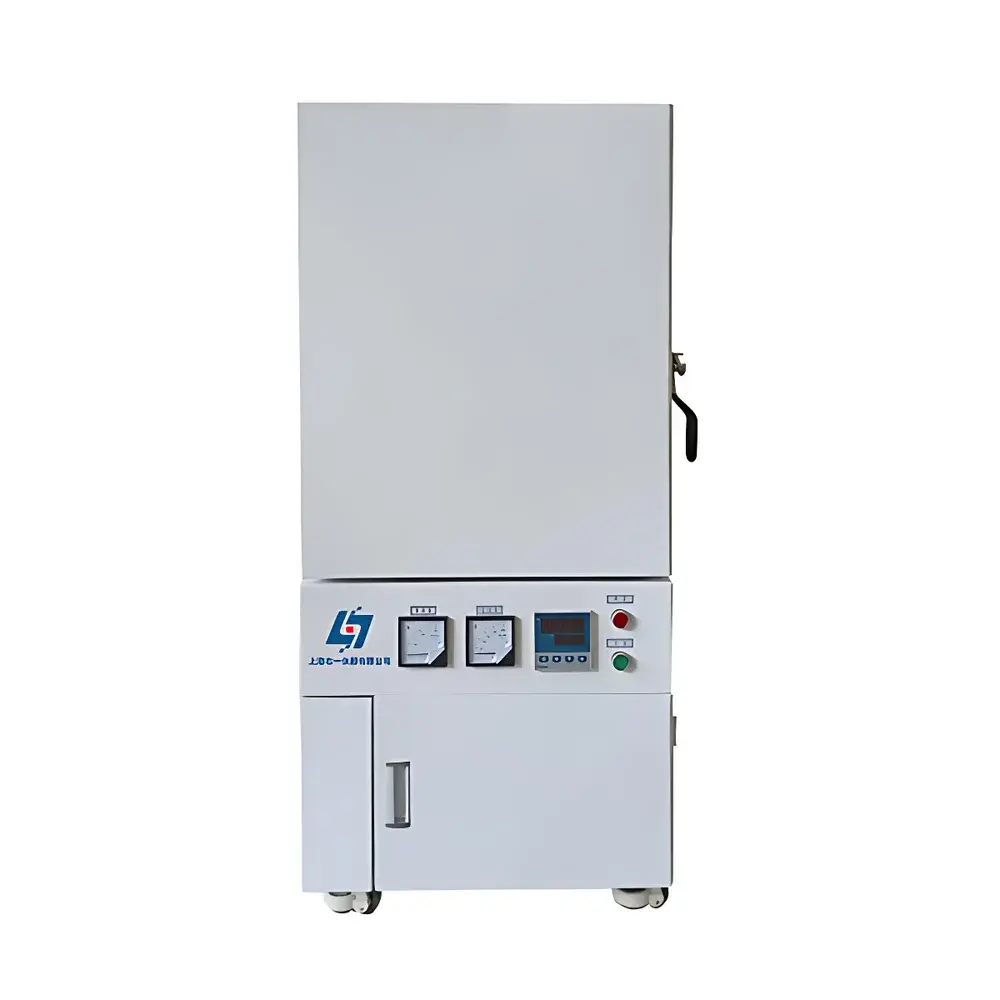
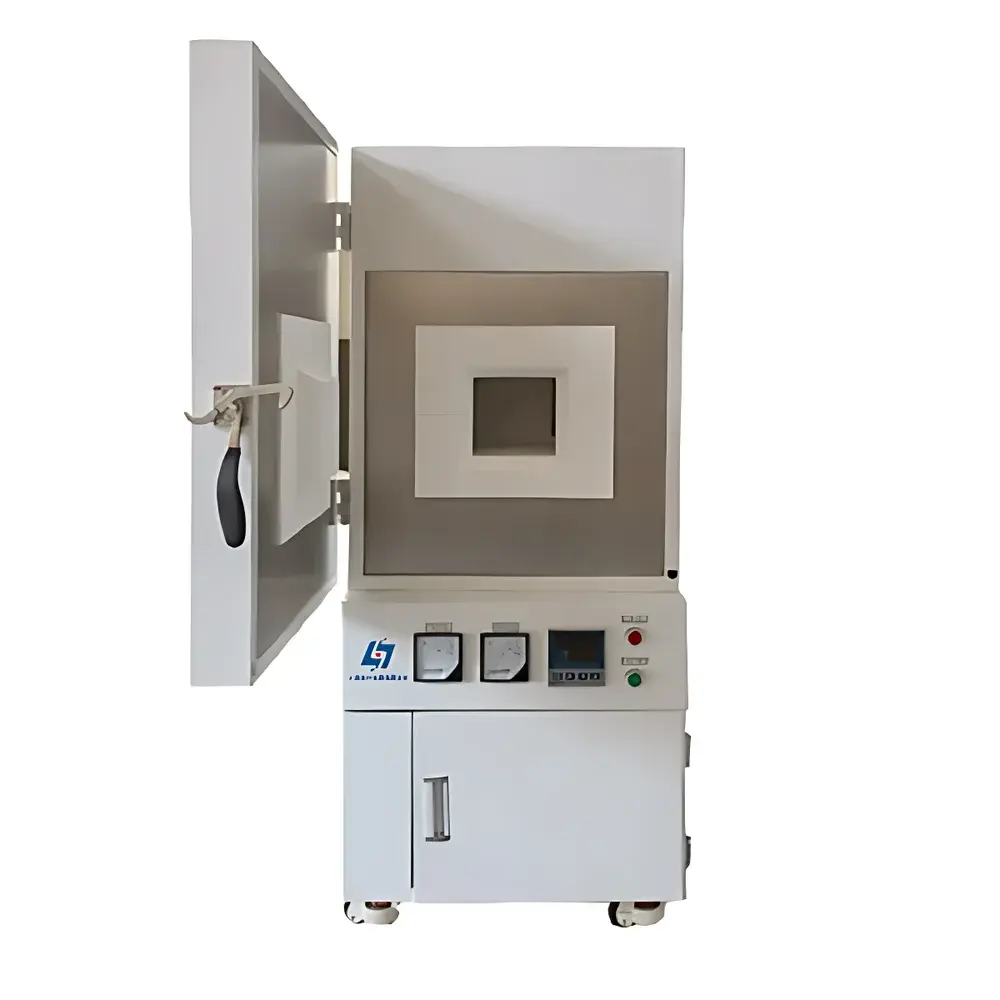
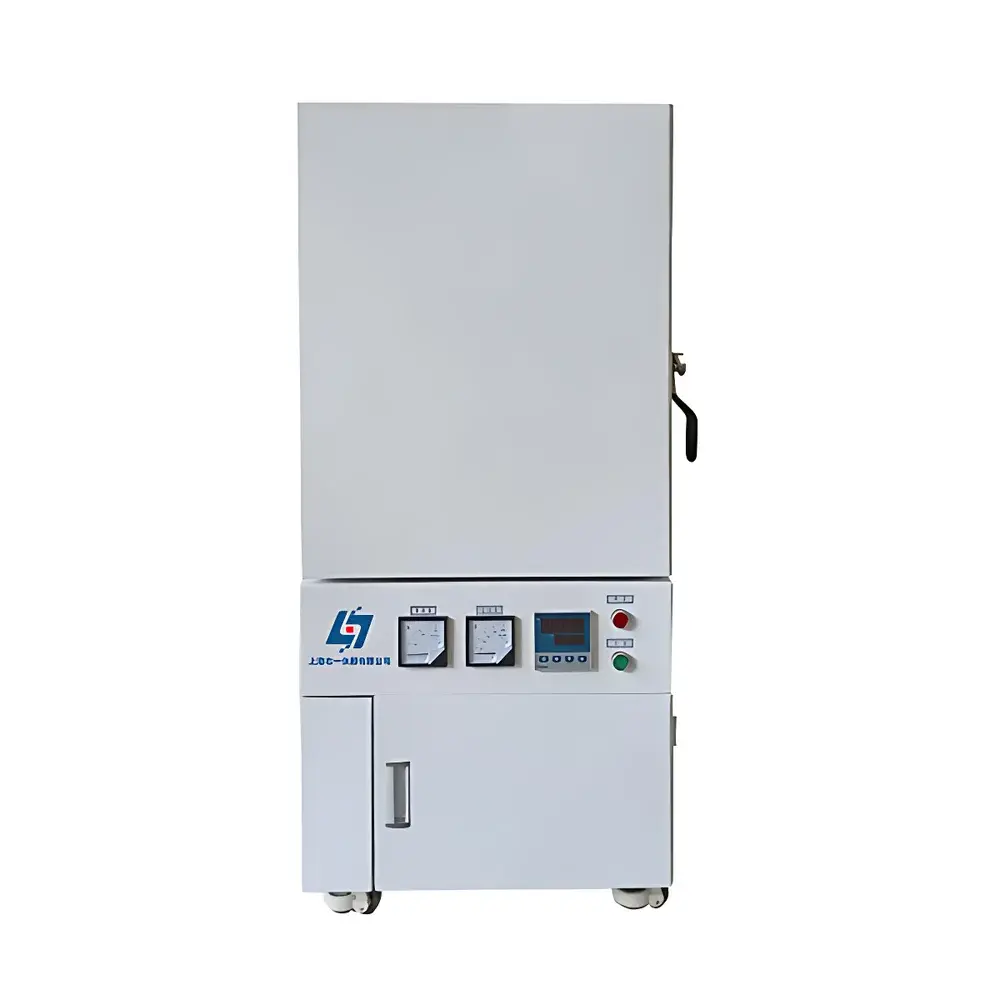
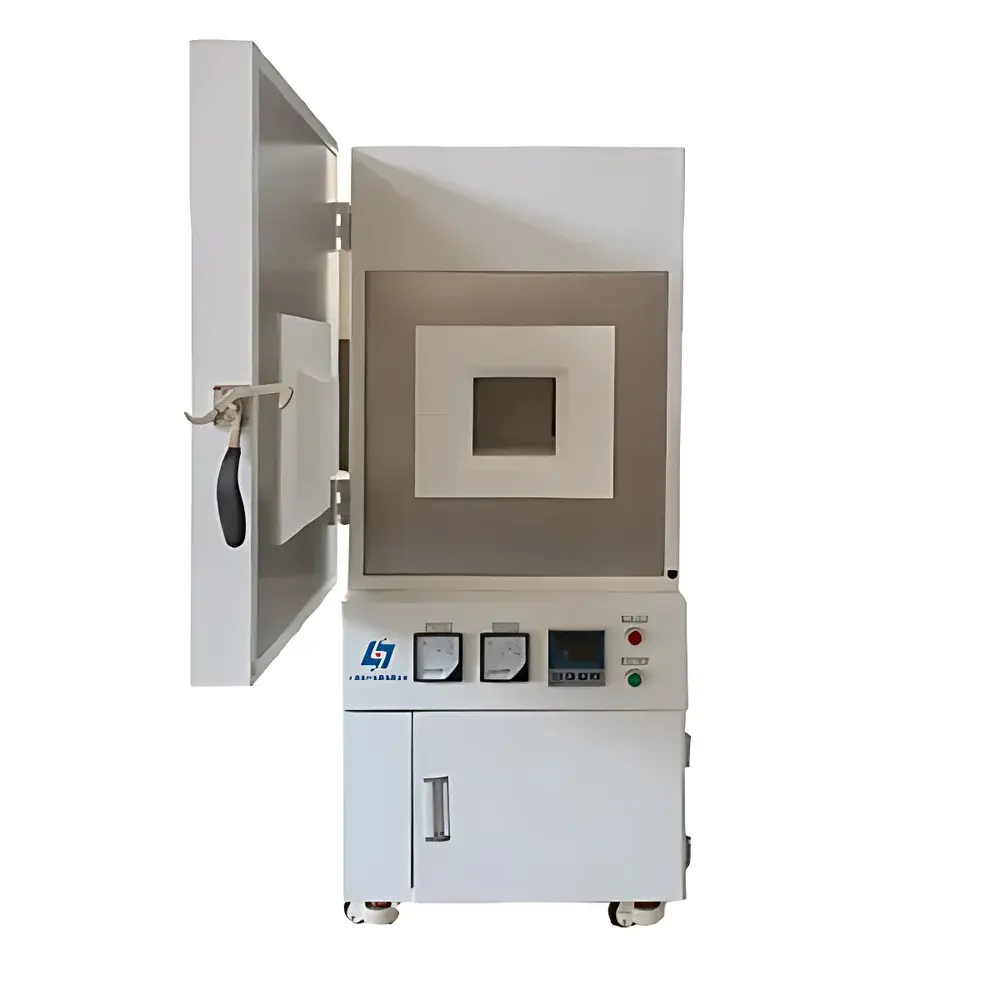
Yoyi SX2-12-16A Ceramic Fiber Muffle Furnace (1600 °C Box-Type Resistance Furnace)
| Brand | Yoyi |
|---|---|
| Origin | Shanghai, China |
| Manufacturer Type | Direct Manufacturer |
| Instrument Type | Box-Type Muffle Furnace |
| Max Temperature | 1600 °C |
| Temperature Control Accuracy | ±1 °C |
| Rated Power | 12 kW |
| Heating Element | Silicon-Molybdenum (MoSi₂) Rods |
| Internal Chamber Dimensions | 200 × 300 × 200 mm |
| Nominal Volume | 12 L |
Overview
The Yoyi SX2-12-16A is a high-temperature ceramic fiber muffle furnace engineered for precision thermal processing in research laboratories, materials science facilities, and quality control environments. Operating on resistive heating principles via silicon-molybdenum (MoSi₂) rods, it delivers stable, uniform temperature distribution across its insulated chamber—critical for reproducible heat treatment protocols including sintering, annealing, ashing, calcination, and controlled oxidation/reduction studies. With a maximum operating temperature of 1600 °C and an ISO/IEC 17025-aligned thermal stability profile, the furnace meets foundational requirements for ASTM C865 (sintering of advanced ceramics), ISO 5660 (fire reaction testing), and USP heavy metal residue analysis. Its lightweight ceramic fiber architecture enables rapid thermal ramp rates—typically 10–15 °C/min from ambient to 1200 °C—while maintaining low thermal mass and minimal standby energy loss.
Key Features
- Ceramic fiber insulation (density: ~128 kg/m³, thermal conductivity: ≤0.15 W/m·K at 1000 °C) reduces wall-to-ambient heat transfer; surface temperature remains ≤50 °C at 1000 °C internal setpoint, complying with IEC 61000-3-2 harmonic emission limits.
- Robust MoSi₂ heating elements rated for continuous operation up to 1600 °C, exhibiting excellent oxidation resistance and long service life (>2000 h at 1500 °C under cyclic conditions).
- Microprocessor-based PID temperature controller with dual thermocouple inputs (Type S or B optional), offering ±1 °C accuracy over full range and programmable ramp-hold profiles (up to 30 segments).
- Integrated safety architecture: over-temperature cutoff (independent limit controller), phase-loss protection, ground-fault detection, and automatic power cut-off upon door opening during operation.
- Electrostatically coated cold-rolled steel enclosure with phosphated underlayer ensures corrosion resistance and mechanical durability in shared lab environments.
- LCD menu-driven interface displays real-time chamber temperature, setpoint, elapsed time, remaining hold duration, and system status—all simultaneously—with password-protected parameter editing.
Sample Compatibility & Compliance
The SX2-12-16A accommodates crucibles and sample holders made from alumina (Al₂O₃), zirconia (ZrO₂), graphite, and platinum-group alloys—compatible with inert, oxidizing, and mildly reducing atmospheres (N₂, Ar, air). It supports standardized sample geometries per ASTM E1111 (ceramic shrinkage measurement) and ISO 11843 (detection limit validation for ash content analysis). The furnace conforms to CE marking directives (2014/35/EU Low Voltage Directive, 2014/30/EU EMC Directive) and carries factory calibration documentation traceable to NIM (National Institute of Metrology, China). Optional RS485 Modbus RTU interface enables integration into GLP/GMP-compliant data acquisition systems with audit-trail-capable software (e.g., LabVIEW or custom SCADA platforms).
Software & Data Management
The standard controller supports manual operation and single-stage hold programming. For advanced process control, the optional multi-segment programmable controller (part no. YOYI-PC16) provides up to 99 programmable steps with independent ramp rate, soak time, and cooling rate settings. When paired with the RS485 communication module and supplied Windows-compatible software, users can log temperature vs. time data at user-defined intervals (1–60 s), export CSV files, generate PDF reports with timestamps and operator ID fields, and enforce electronic signatures per FDA 21 CFR Part 11 requirements. All firmware updates are delivered via USB port without hardware modification.
Applications
- Sintering of oxide and non-oxide ceramics (e.g., AlN, SiC, BaTiO₃) requiring precise dwell times at peak temperature to optimize grain growth kinetics.
- Thermal gravimetric analysis (TGA) sample preparation—pre-ashing of polymer composites prior to ICP-MS quantification.
- Heat treatment of metallic alloys (e.g., Ni-based superalloys, Ti-6Al-4V) for microstructural homogenization prior to SEM-EBSD characterization.
- Crucible-based fusion of geological samples for XRF bead preparation under controlled oxidizing conditions.
- Calibration verification of thermocouples and infrared pyrometers using fixed-point reference materials (e.g., Au, Cu, Co-C).
- Development of solid-state electrolytes for all-solid-state batteries, where controlled oxygen partial pressure and thermal history directly influence Li⁺ conductivity.
FAQ
What type of thermocouple is recommended for continuous use at 1600 °C?
Type B (Pt/Rh 30–6) thermocouples are standard; Type S (Pt/Rh 10–90) may be used for short-term exposure below 1550 °C.
Can this furnace operate under vacuum or controlled gas flow?
It is designed for ambient-pressure air or inert gas purging only; vacuum operation requires a separate sealed chamber retrofit not supplied by default.
Is the ceramic fiber lining resistant to halogen-containing atmospheres?
No—exposure to Cl₂, HCl, or fluorinated gases accelerates fiber degradation; use quartz or alumina tube inserts for such applications.
How often does the furnace require recalibration?
Annual verification against NIST-traceable references is recommended; daily checks with a calibrated handheld pyrometer are advised for critical processes.
What is the expected service life of the MoSi₂ heating elements?
Under proper cycling (≤3 cycles/day, ≤1600 °C max, slow cool-down), typical lifetime exceeds 2000 operational hours before resistance drift exceeds ±5%.
Related Products



