
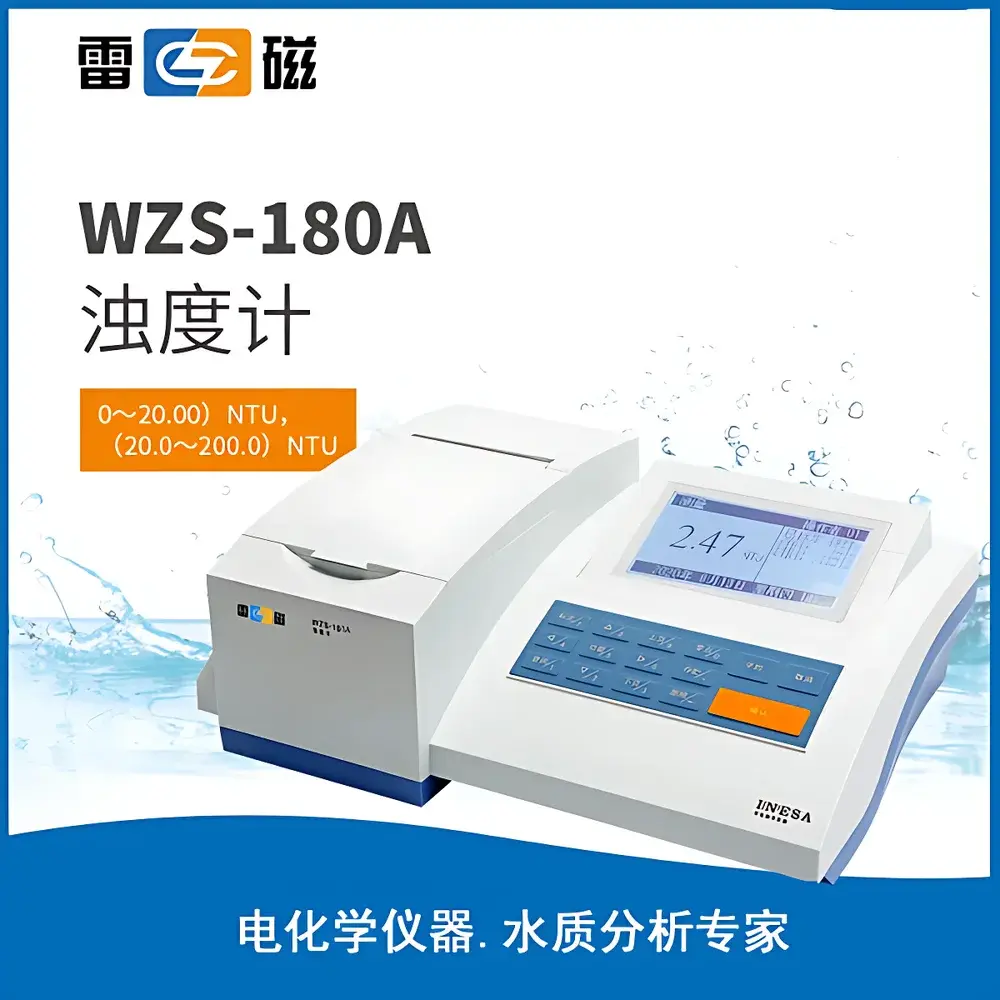
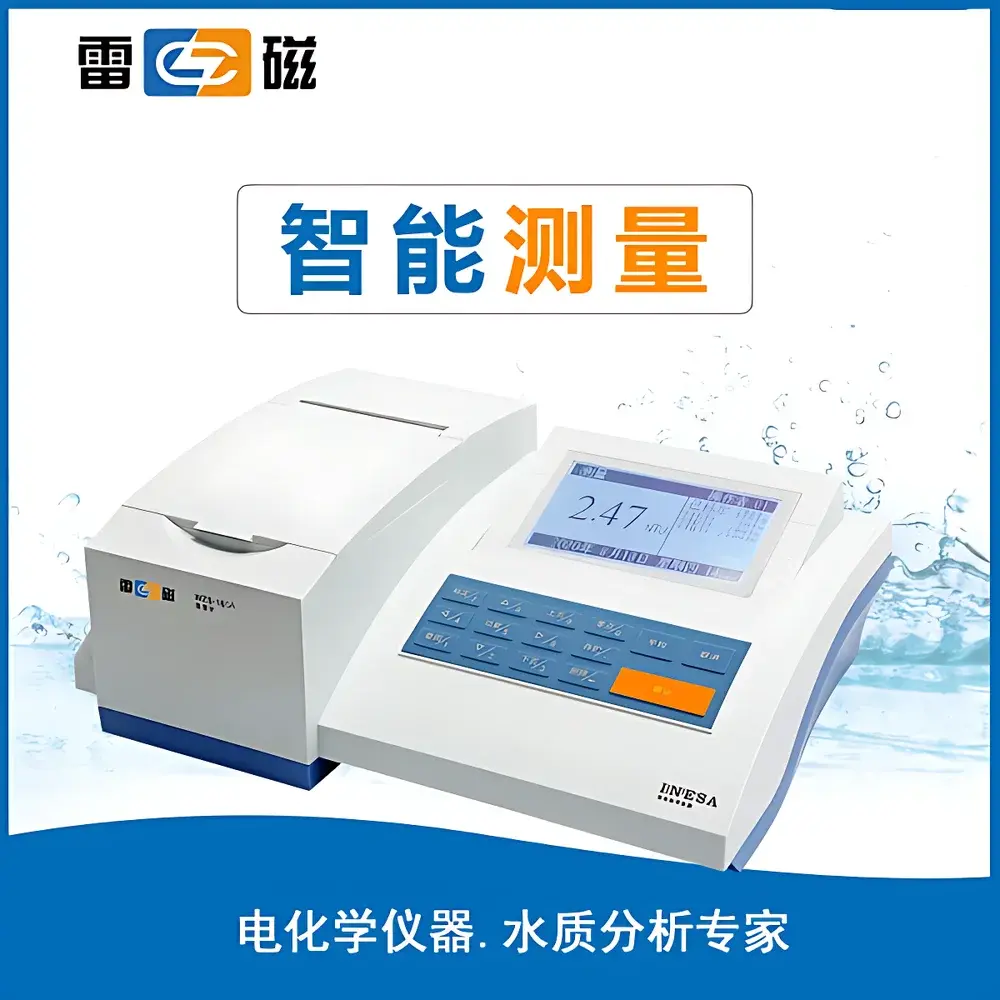
Leici WZS Benchtop Turbidimeter
| Brand | Leici |
|---|---|
| Origin | Shanghai, China |
| Manufacturer Type | Authorized Distributor |
| Product Origin | Domestic (China) |
| Model | WZS |
| Pricing | Upon Request |
| Form Factor | Benchtop / Laboratory |
| Measurement Range | (0–20.00) NTU, (20.0–200.0) NTU |
| Resolution | ±8% (relative to reading) |
| Operating Ambient Temperature | 5–40 °C |
| Accuracy | ±8% (full-scale error, per ISO 7027-1:2016 compliant calibration) |
Overview
The Leici WZS Benchtop Turbidimeter is a laboratory-grade optical instrument engineered for reliable and repeatable turbidity measurement in aqueous samples. It operates on the dual-beam nephelometric principle—simultaneously detecting scattered light at 90° and transmitted light along the incident path—to enable automatic chromatic compensation and minimize interference from sample coloration or absorbance. This design conforms to the fundamental optical geometry specified in ISO 7027-1:2016, ensuring traceability to international reference standards (Formazin or equivalent polymer-based suspensions). The instrument is optimized for routine quality control and regulatory monitoring in water treatment facilities, environmental laboratories, beverage production QA/QC labs, and municipal testing centers where compliance with national drinking water standards (e.g., GB/T 5750.4–2023, equivalent to EPA Method 180.1) is required.
Key Features
- Dual-optical-path detection system integrating 90° scattered-light photometry and axial transmittance measurement for real-time color correction
- Two-range auto-ranging capability: high-sensitivity mode (0–20.00 NTU) with 0.01 NTU display resolution, and extended-range mode (20.0–200.0 NTU) supporting broader industrial applications
- Integrated temperature sensor (NTC type) enabling ambient temperature logging and basic thermal drift mitigation during sequential measurements
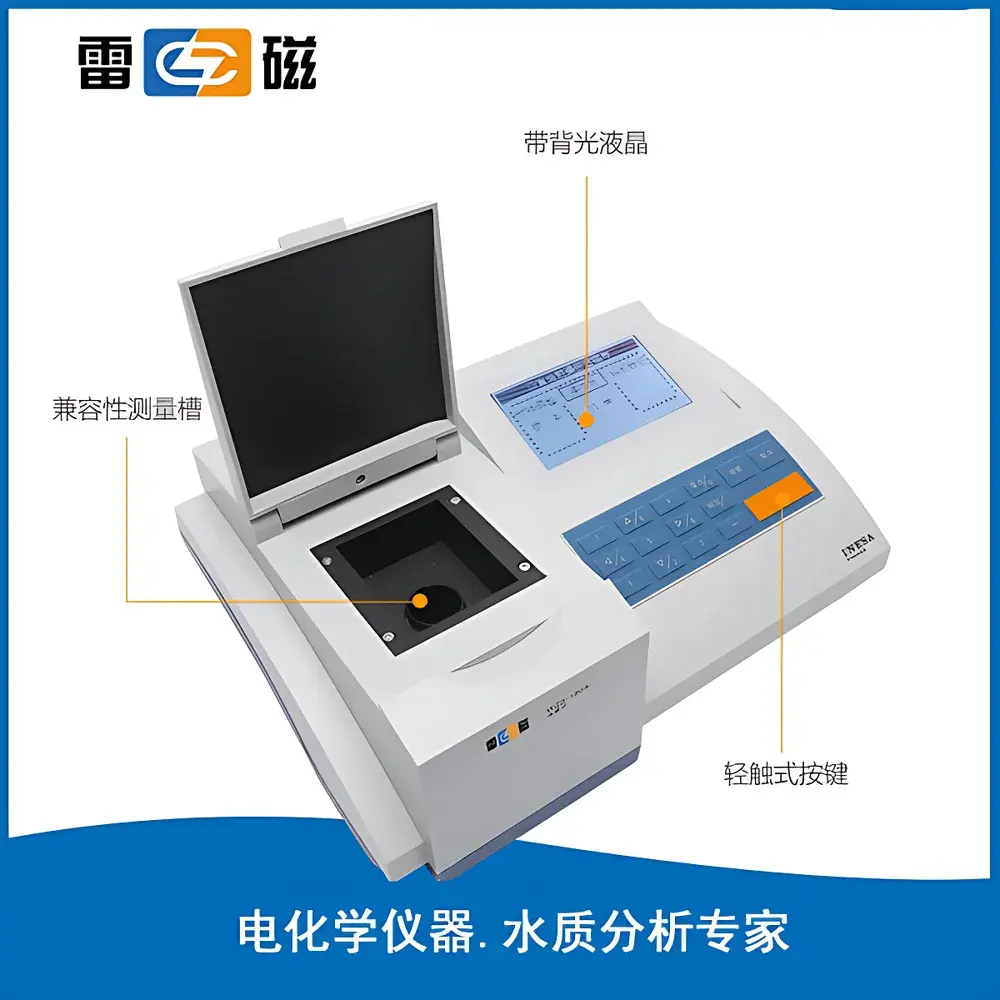
- Stainless-steel sample chamber with precision-machined quartz cuvette holder, designed for consistent optical alignment and long-term mechanical stability
- Backlit LCD interface with intuitive menu navigation, unit toggle (NTU/FNU), and calibration status indicator
- Compliance-ready design: supports manual calibration using certified Formazin or StablCal standards; calibration records can be annotated with operator ID and date
Sample Compatibility & Compliance
The WZS turbidimeter accepts standard 25 mm round glass cuvettes (10 mm path length) and is compatible with deionized water blanks, filtered natural waters, clarified effluents, and low-viscosity process streams. It is not intended for highly viscous, particulate-laden, or strongly fluorescent samples without prior dilution or pretreatment. Regulatory alignment includes adherence to ISO 7027-1:2016 methodology, compatibility with Chinese National Standard GB/T 5750.4–2023 (Standard Methods for Examination of Drinking Water – Turbidity), and functional equivalence to EPA Method 180.1 for drinking water analysis. While the instrument does not include built-in audit trail or electronic signature functionality, its calibration log and manual record-keeping support GLP-compliant workflows when integrated into documented laboratory procedures.
Software & Data Management
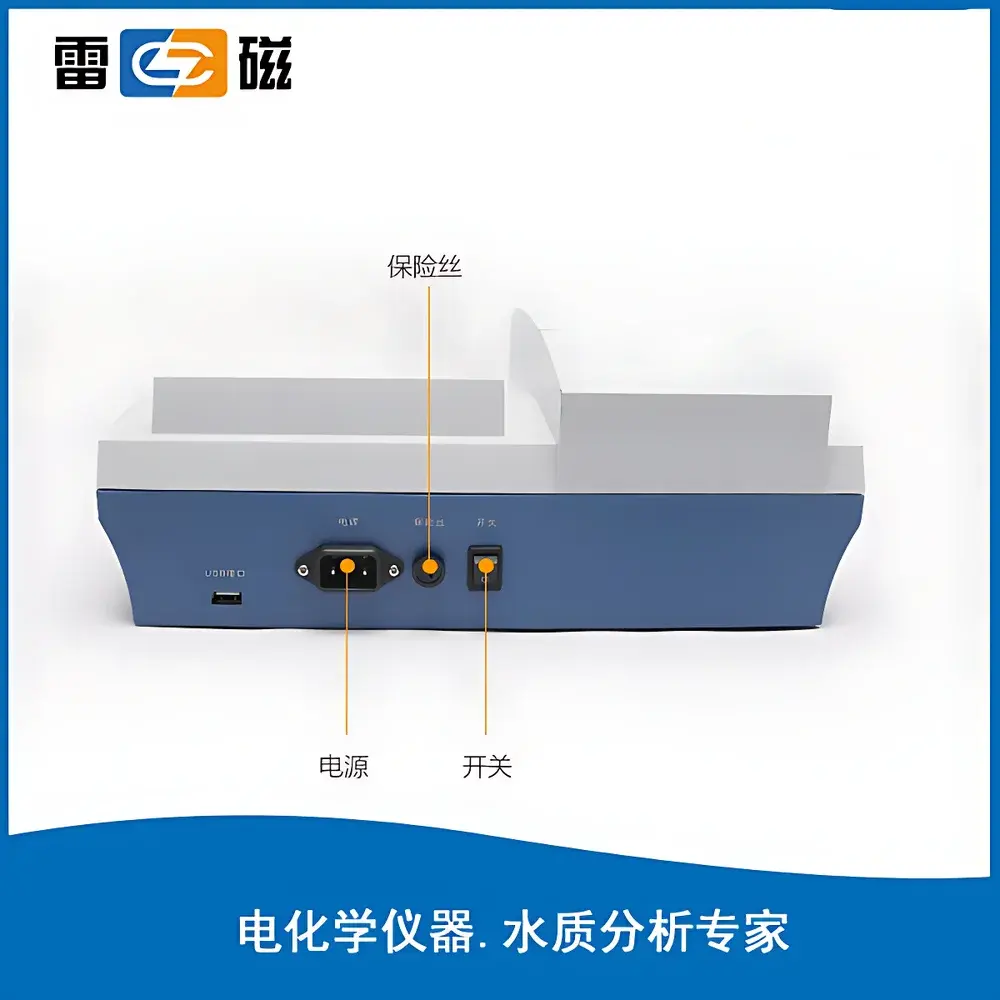
The WZS operates as a standalone benchtop device with no embedded data logging or USB/Bluetooth connectivity. All measurements are displayed in real time and must be manually recorded or transcribed into LIMS or Excel-based tracking systems. Calibration parameters (zero point and span values) are retained in non-volatile memory after power cycling but require revalidation per laboratory SOPs—typically before each analytical batch or at 24-hour intervals under continuous use. For laboratories requiring digital data integrity, external capture via camera-based documentation or integration with third-party lab automation platforms (e.g., via RS-232 serial output on optional configurations) is feasible with custom scripting.
Applications
- Drinking water quality verification in municipal utilities and bottled water facilities
- Effluent monitoring in wastewater treatment plants (primary, secondary, and tertiary discharge points)
- In-process turbidity control during filtration, coagulation, and sedimentation stages
- Environmental surveillance of rivers, lakes, and reservoirs per national surface water classification criteria
- QC testing of pharmaceutical water (PW, WFI) where turbidity serves as a secondary indicator of particulate contamination
- Quality assurance in beverage manufacturing—including soft drinks, beer, and fruit juices—where haze and colloidal stability impact shelf life and consumer perception
FAQ
What calibration standards are recommended for the WZS turbidimeter?
Certified Formazin suspension (e.g., 10 NTU and 100 NTU reference standards) or NIST-traceable StablCal polymer standards are recommended. Calibration should include a zero-point check with particle-free deionized water.
Does the WZS meet FDA 21 CFR Part 11 requirements?
No—the instrument lacks electronic audit trails, user authentication, and secure electronic signatures. It is suitable for non-GMP environments or GMP settings where paper-based records are authorized per internal validation protocols.
Can the WZS measure samples with strong coloration, such as tea or wine extracts?
Yes, due to its dual-beam architecture with automatic chromatic compensation; however, results above 100 NTU in deeply colored matrices may require dilution and correction for multiplicative scattering effects.
Is the cuvette included with the instrument?
One matched pair of Class A optical glass cuvettes (25 mm diameter, 10 mm path length) is supplied as standard equipment.
What is the warm-up time required before first use?
A minimum 15-minute stabilization period is recommended after power-on to ensure LED source thermal equilibrium and photodetector baseline settling.




