
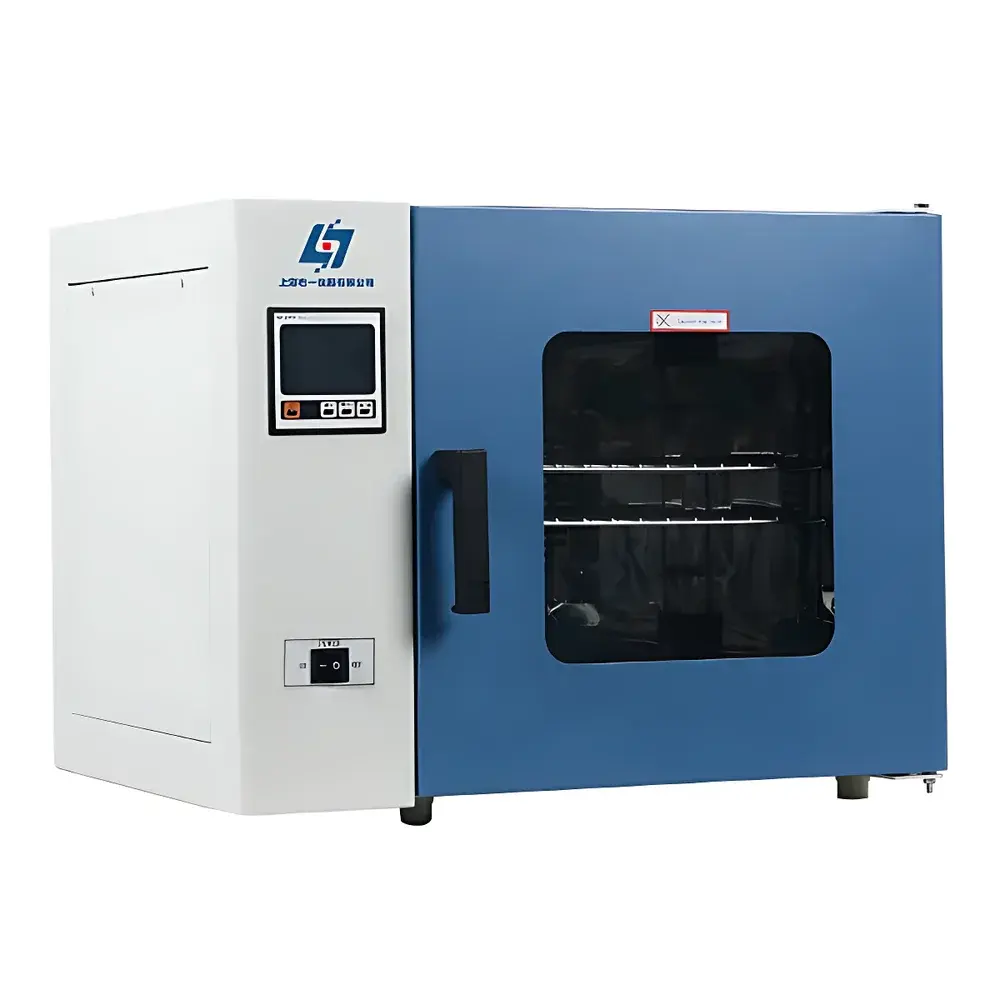
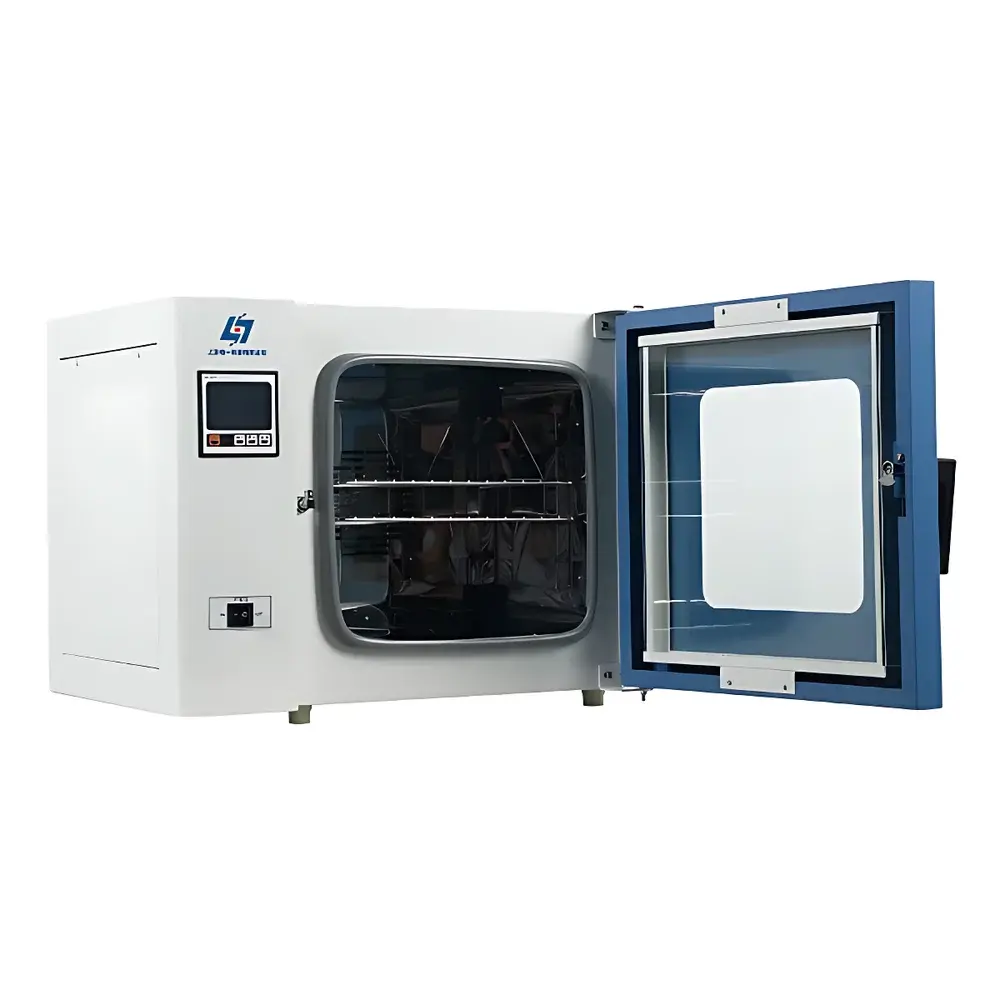
Yoyi DHG-9245A Forced-Air Constant-Temperature Drying Oven
| Brand | Yoyi |
|---|---|
| Origin | Shanghai, China |
| Manufacturer Type | Direct Manufacturer |
| Model | DHG-9245A |
| Temperature Range | RT+10°C to 300°C |
| Temperature Uniformity | ±2.5% (at 100°C) |
| Temperature Fluctuation | ±1°C |
| Temperature Resolution | 0.1°C |
| Internal Chamber Dimensions (W×D×H) | 600×595×650 mm |
| External Dimensions (W×D×H) | 880×800×830 mm |
| Chamber Material | Mirror-Finish Stainless Steel (SUS304) |
| Power Consumption | 2500 W |
| Working Environment | 5–40°C ambient, ≤80% RH |
| Compliance | GB/T 30435–2013 |
Overview
The Yoyi DHG-9245A Forced-Air Constant-Temperature Drying Oven is a precision-engineered laboratory drying system designed for reproducible thermal processing across academic, industrial, and regulatory environments. Utilizing a forced-convection architecture with rear-mounted centrifugal blower and optimized horizontal air ducting, the oven ensures uniform heat distribution throughout its 220 L stainless-steel chamber. Its operational range spans from ambient +10°C to 300°C, making it suitable for applications including moisture removal, pre- and post-weighing sample conditioning, polymer curing, pharmaceutical stability testing, sterilization validation support, and residual solvent evaporation per ICH Q1 guidelines. The unit complies fully with GB/T 30435–2013 — the national standard governing performance, safety, and metrological requirements for electric heating ovens and forced-air drying ovens in China — and incorporates design elements aligned with broader international expectations for GLP-compliant thermal equipment.
Key Features
- Microprocessor-based PID temperature controller with intuitive LCD menu interface displaying setpoint, real-time chamber temperature, elapsed time, and remaining hold duration simultaneously
- Intelligent power-loss recovery function: automatically resumes prior operating parameters (set temperature, timer status, alarm thresholds) after unexpected interruption
- Double-layer tempered glass observation window with high-seal silicone gasket (rated for continuous operation up to 300°C), enabling non-intrusive process monitoring without thermal disturbance
- High-efficiency forced-air circulation system featuring adjustable rear intake/exhaust ports and internal baffle-guided airflow paths to minimize thermal stratification
- Robust structural construction: cold-rolled steel outer casing with electrostatic epoxy-polyester powder coating; interior chamber and removable shelves fabricated from electropolished SUS304 stainless steel for corrosion resistance and cleanability
- Dual independent safety systems: primary PID control loop plus optional over-temperature cut-off device (hardware-limited, non-software-dependent) compliant with Class II protection per IEC 61010-1
- Modular expansion capability: standardized RS485 communication port (Modbus RTU protocol), analog 4–20 mA output option, and configurable inert gas purging inlet with calibrated rotameter (0–10 L/min range)
Sample Compatibility & Compliance
The DHG-9245A accommodates a broad spectrum of sample formats — including Petri dishes, weighing boats, crucibles, glassware, metal trays, and custom fixtures — supported by two adjustable stainless-steel shelves (load capacity: 15 kg per shelf, uniformly distributed). Its chamber geometry and airflow profile have been validated under no-load conditions per GB/T 30435–2013 Annex B for temperature uniformity (±2.5% deviation at 100°C reference point) and stability (±1°C fluctuation over 30 min). While not certified to ISO/IEC 17025 or ASTM E145 as a standalone instrument, the oven’s traceable calibration-ready architecture supports integration into accredited laboratory quality systems. Optional accessories — such as programmable ramp-soak profiles, audit-trail-enabled data loggers, and 25 mm/50 mm pass-through ports — facilitate compliance with FDA 21 CFR Part 11 when deployed with validated software platforms.
Software & Data Management
The base configuration includes local parameter storage (up to 10 user-defined programs) with timestamped event logging (start/stop, over-temp alarms, door openings). When equipped with the optional RS485 interface and compatible SCADA or LIMS middleware, the oven transmits real-time temperature values, status flags, and fault codes at configurable intervals (1–60 s). An embedded thermal printer option provides hard-copy records meeting ALCOA+ principles (Attributable, Legible, Contemporaneous, Original, Accurate, Complete, Consistent, Enduring, Available). All firmware updates are delivered via secure USB dongle with SHA-256 checksum verification to maintain integrity during field deployment.
Applications
- Moisture content determination (ASTM D2216, ISO 11465) in soils, aggregates, and agricultural commodities
- Baking and pre-drying of filter papers, silica gel, and desiccants prior to gravimetric analysis
- Thermal aging studies of polymers and elastomers per ASTM D573 and ISO 188
- Residual solvent removal from coated substrates in electronics manufacturing
- Pre-conditioning of test specimens before tensile, impact, or dielectric testing
- Supporting USP extractables testing protocols through controlled dry-heat exposure
- Low-risk sterilization cycle development for non-critical devices where steam is unsuitable
FAQ
What is the maximum recommended operating temperature for continuous use?
The DHG-9245A is rated for sustained operation at 300°C; however, prolonged use above 250°C may accelerate gasket degradation and reduce long-term uniformity repeatability.
Is the oven suitable for oxygen-sensitive processes?
Yes — when fitted with the optional inert gas inlet kit (N₂ or Ar), users can establish and maintain low-O₂ atmospheres; flow rate is continuously adjustable via integrated rotameter with ±5% full-scale accuracy.
Can the unit be integrated into a centralized building management system (BMS)?
Via the RS485 Modbus interface and appropriate gateway hardware, the oven’s temperature data and operational status can be mapped to BACnet/IP or MQTT-based infrastructure.
Does the stainless-steel chamber meet FDA or EHEDG hygiene standards?
While the SUS304 chamber meets general food-grade material specifications (e.g., FDA 21 CFR 178.3570), formal EHEDG certification requires third-party validation of surface finish Ra ≤ 0.8 µm and weld integrity — achievable via optional electropolishing upgrade.
How often should temperature calibration be performed?
Per ISO/IEC 17025 Clause 6.5.2, calibration interval should be risk-assessed; for routine QC use, annual verification against NIST-traceable PRT or thermocouple standards is recommended, with intermediate checks using Class A PT100 probes.



