
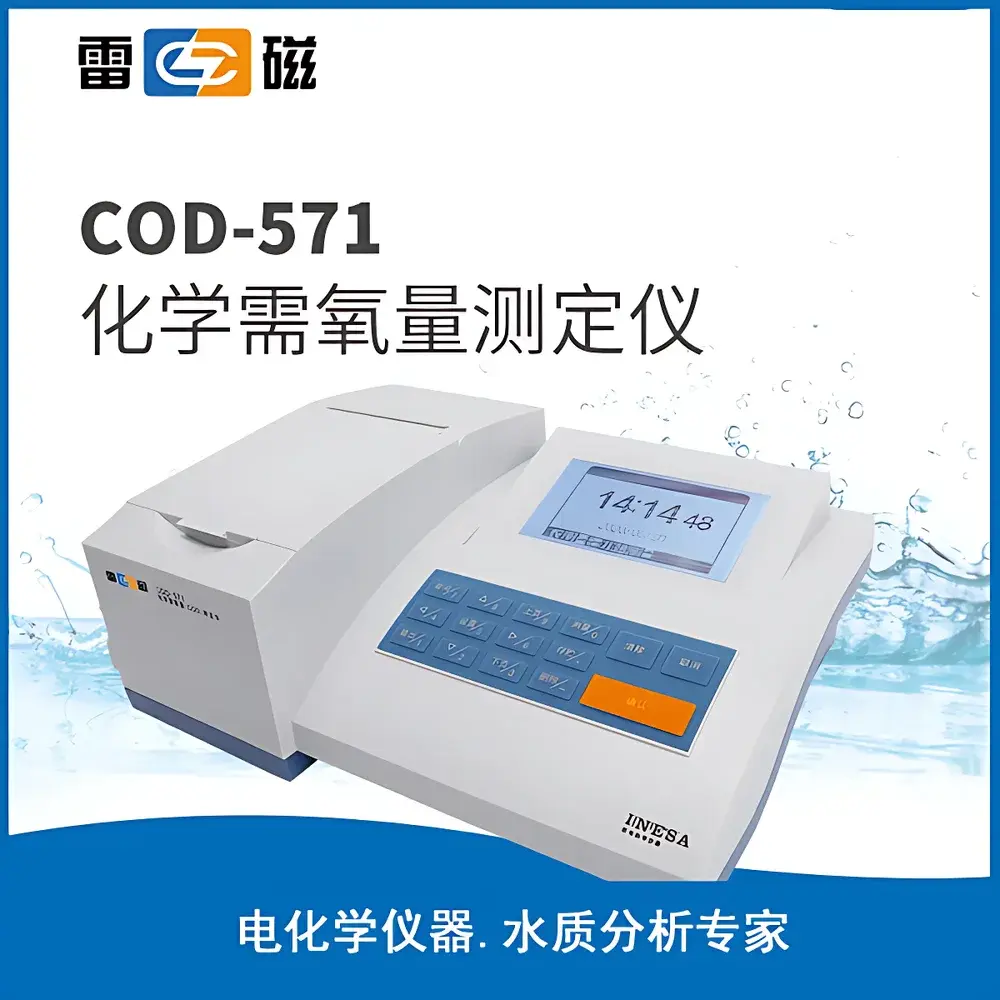
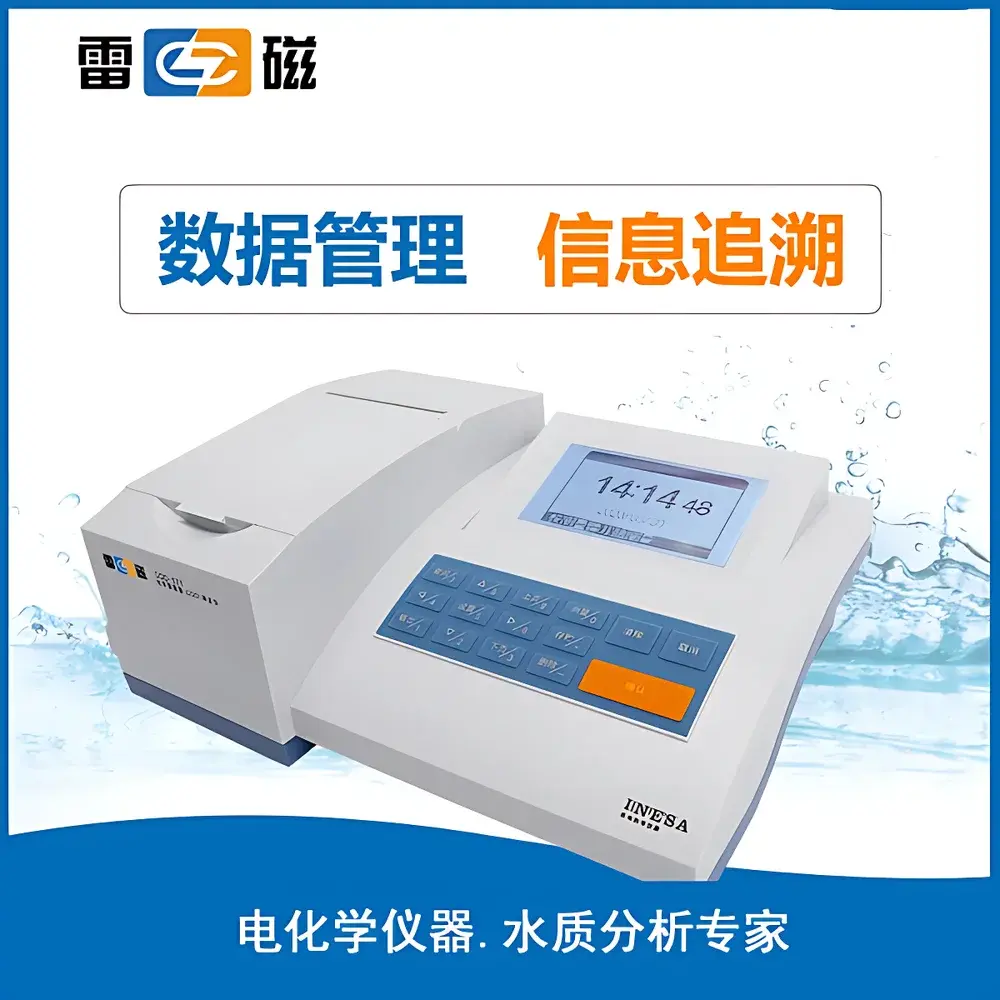
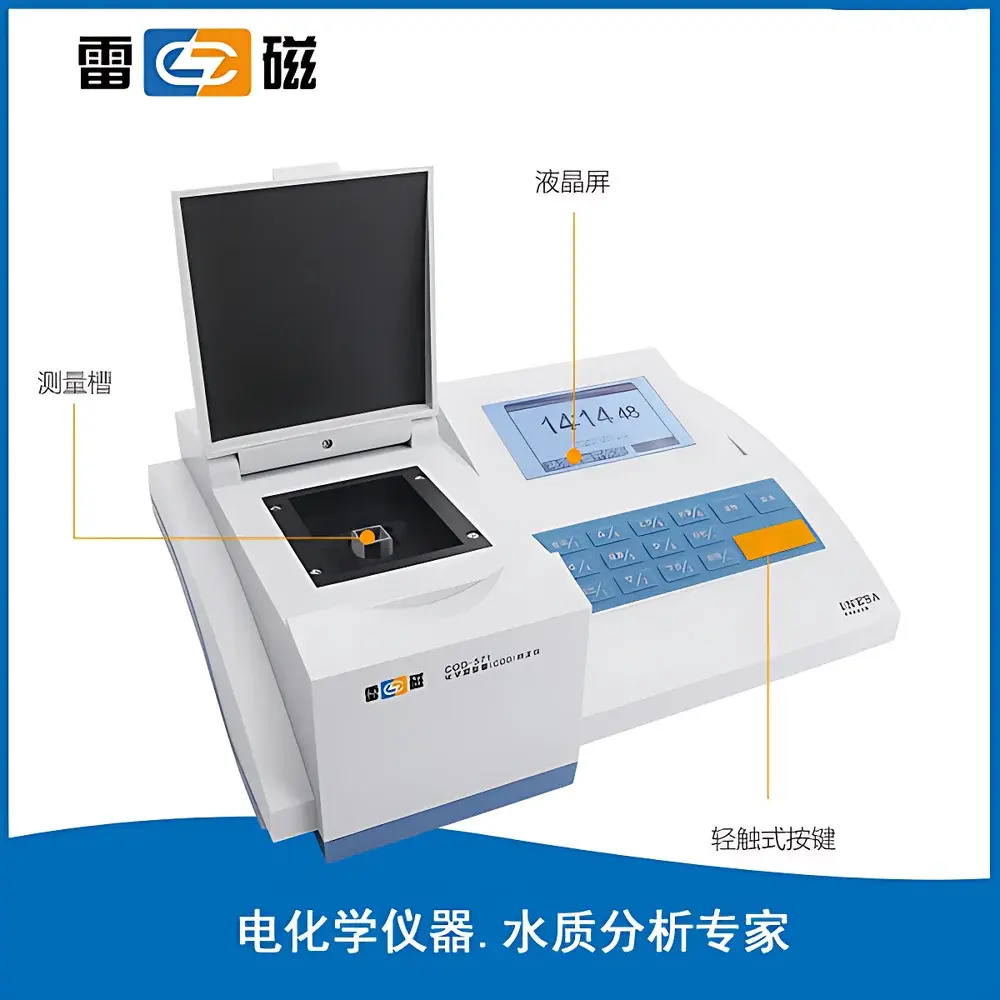
Leici COD-571 Chemical Oxygen Demand Analyzer with Integrated Digestion Unit
| Brand | Leici |
|---|---|
| Origin | Shanghai, China |
| Model | COD-571 |
| Instrument Type | Benchtop Laboratory Analyzer |
| Measurement Principle | Dichromate Reflux Digestion + Photometric Detection (LED-based) |
| Wavelength | 610 nm (standard for Cr(VI) reduction assay) |
| Measurement Range | (0–150) mg/L and (0–1500) mg/L COD |
| Accuracy | ±8% of reading (per ASTM D1252–12 Method B) |
| Repeatability | ≤3% RSD |
| Stability | <6 mg/L drift within 20 min |
| Digestion Capacity | 21 samples simultaneously |
| Digestion Temperature Range | 100–165 °C |
| Digestion Time Range | 0–120 min |
| Data Storage | 200 measurement records |
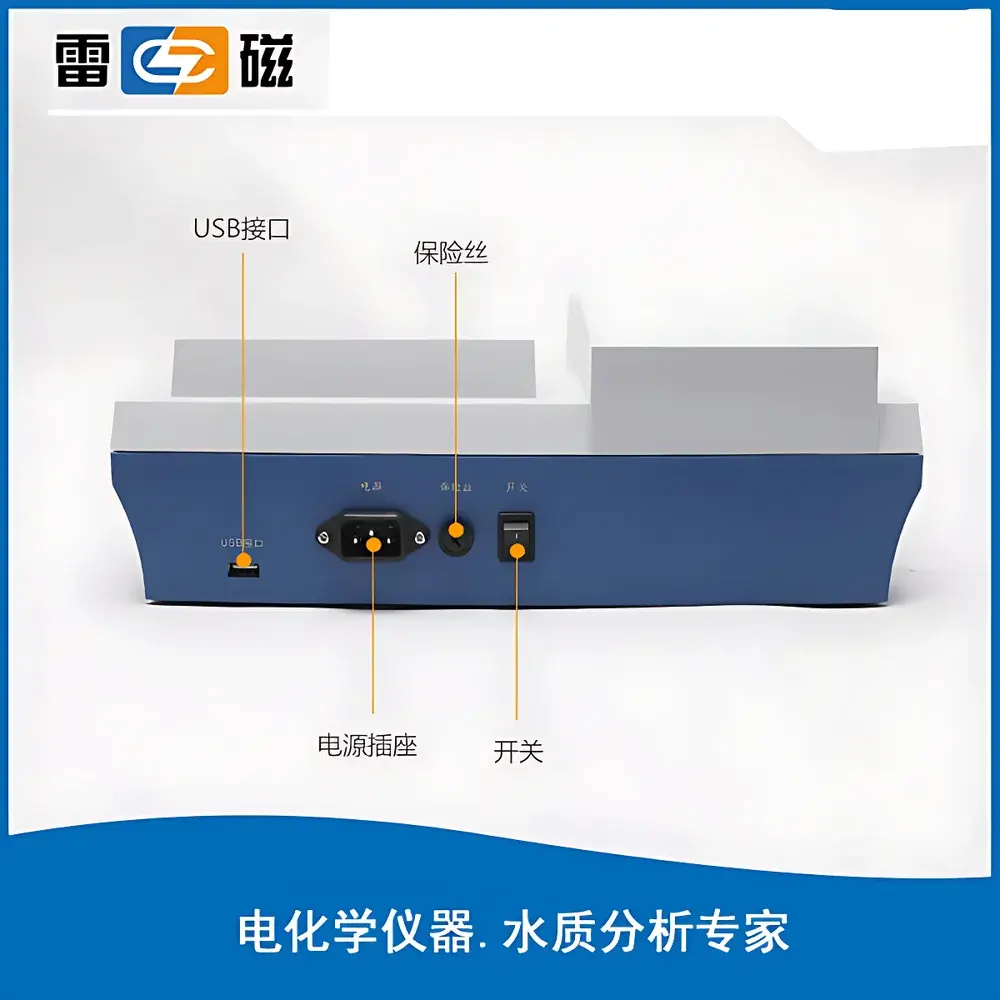
| Interface | USB 2.0 compliant |
| Power Supply | AC 220 V ±10%, 50 Hz |
| Dimensions (Analyzer) | 315 × 225 × 100 mm |
| Weight (Analyzer) | 2.0 kg |
| Compliance | GLP-compliant data handling, supports audit trail via PC software |
Overview
The Leici COD-571 Chemical Oxygen Demand Analyzer is a benchtop laboratory instrument engineered for precise, reproducible quantification of chemical oxygen demand in aqueous environmental samples—primarily wastewater, surface water, and effluent streams. It implements the standardized dichromate reflux digestion method (aligned with ASTM D1252–12 Method B and ISO 6060), followed by photometric detection at 610 nm to quantify residual Cr(VI) after oxidation of organic matter under acidic, high-temperature conditions. Unlike conventional spectrophotometric systems relying on tungsten-halogen lamps and complex optical paths, the COD-571 employs a stable, long-life LED light source and optimized optical geometry, eliminating mechanical alignment drift and reducing maintenance requirements. Its integrated design separates digestion and detection functions: the analyzer unit performs photometric readout, while the companion COD-571-1 digestion block provides uniform, sealed reflux heating for up to 21 samples in parallel—minimizing reagent consumption, cooling water usage, and operator exposure to hazardous fumes.
Key Features
- Benchtop dual-unit architecture: independent photometer (COD-571) and programmable digestion block (COD-571-1), enabling flexible workflow scheduling and simultaneous digestion/readout cycles.
- LED-based photometric system operating at 610 nm—optimized for Cr(VI) absorbance in the post-digestion dichromate assay—with thermal stabilization ensuring signal consistency across ambient temperature fluctuations (15–35 °C).
- Two-range auto-ranging measurement: (0–150) mg/L and (0–1500) mg/L COD, selected manually or via preset method protocols; no manual dilution required for most municipal and industrial wastewater matrices.
- Dual-point calibration support (zero and full-scale) using certified KHP or potassium hydrogen phthalate standards—traceable to NIST SRM 1019a or equivalent reference materials.
- GLP-compliant onboard data management: timestamped storage of 200 measurement records, including sample ID, digestion parameters, calibration history, and operator ID (via optional login protocol).
- USB 2.0 interface compliant with CDC ACM driver standard—enables direct connection to Windows-based laboratory PCs for raw data export, report generation, and remote firmware updates.
- Digestion block with PID-controlled heating, adjustable setpoint (100–165 °C), and programmable timer (0–120 min); includes overtemperature cutoff (<170 °C) and automatic power-off upon cycle completion.
Sample Compatibility & Compliance
The COD-571 is validated for use with clarified, filtered, or centrifuged liquid samples meeting standard pretreatment criteria per EPA 410.4 and ISO 6060 Annex A. It accommodates standard 16-mm round glass digestion tubes (15 mL volume) and supports chloride interference correction via mercury sulfate addition (as specified in ASTM D1252–12). The system complies with Good Laboratory Practice (GLP) requirements for data integrity: all measurements include embedded timestamps, calibration verification logs, and user-action metadata. While not inherently 21 CFR Part 11 compliant out-of-the-box, the USB data export format (.csv) and structured record fields enable integration into validated LIMS environments supporting electronic signatures and audit trails. The analyzer meets IEC 61010-1 safety standards for laboratory electrical equipment and carries CE marking for EMC and low-voltage directive compliance.
Software & Data Management
No proprietary software is bundled with the COD-571; instead, it operates as a HID-class USB device compatible with generic serial terminal emulators or custom Python/Excel VBA scripts for automated data ingestion. Raw output includes ASCII-formatted strings containing sample ID, measured absorbance, calculated COD value (mg/L), range selection flag, and digestion temperature/duration. Onboard memory retains full records even during power interruption (non-volatile EEPROM). For regulated environments, laboratories may deploy third-party validation packages (e.g., LabArchives ELN or Thermo Fisher SampleManager) to import, annotate, and archive COD-571 datasets with full version control and reviewer sign-off workflows. All calibration events—including zero and span checks—are logged with date/time stamps and operator identifiers when entered manually.
Applications
- Wastewater treatment plant (WWTP) process control: real-time monitoring of influent, effluent, and sludge supernatant COD to optimize aeration basin loading and biological treatment efficiency.
- Environmental compliance testing: routine analysis for discharge permits under national regulatory frameworks (e.g., China’s GB 11914–89, EU Directive 2000/60/EC, US Clean Water Act reporting).
- Industrial effluent screening: rapid assessment of COD load from textile, food processing, pharmaceutical, and chemical manufacturing facilities prior to pretreatment.
- Research and education: teaching labs utilize the COD-571’s intuitive interface and robust digestion kinetics to demonstrate redox stoichiometry, reaction kinetics, and method validation principles.
- Field-deployable lab support: compact footprint and low power draw (≤120 W max) allow operation in mobile environmental labs or remote monitoring stations equipped with stable AC supply.
FAQ
Does the COD-571 require daily recalibration?
No—dual-point calibration is recommended before each analytical batch or at least once per 8-hour shift when analyzing heterogeneous samples. Zero-point verification should be performed with deionized water before each series.
Can the digestion block accommodate alternative tube formats?
The COD-571-1 block is mechanically designed for standard 16-mm OD borosilicate glass digestion tubes only. Use of non-standard tubes may compromise thermal uniformity and seal integrity.
Is chloride interference correction automated?
No—chloride masking (e.g., HgSO₄ addition) must be performed manually during sample preparation per ASTM D1252–12 Section 7.3. The instrument does not detect or compensate for chloride concentration.
What is the minimum sample volume required?
10 mL of prepared sample is required per digestion vial to ensure complete oxidation and adequate post-digestion volume for photometric measurement.
How is data security ensured during USB transfer?
Data export is read-only; the instrument does not accept executable commands or firmware uploads via USB. No authentication or encryption is applied—data integrity relies on host-system security policies and network segmentation in regulated labs.
Related Products







