Photonic Lattice PA-300-XL Polarizing Stress Meter
| Brand | Photonic Lattice |
|---|---|
| Origin | Japan |
| Manufacturer Status | Authorized Distributor |
| Origin Category | Imported |
| Model | PA-300-XL |
| Price Range | USD 1–4,999 |
| Output | Retardation (nm), Fast Axis Angle (°), Stress Conversion (MPa, optional) |
| Measurement Wavelength | 520 nm |
| Birefringence Range | 0–130 nm |
| Minimum Resolution | 0.001 nm |
| Repeatability | < 0.1 nm (σ) |
| Field of View | 40 × 48 mm to 240 × 320 mm (standard) |
| Polarization Camera | 2056 × 2464 pixels |
| Optional Features | Real-time Analysis Software, Lens Analysis Module, Data Processing Suite, External Control Interface |
Overview
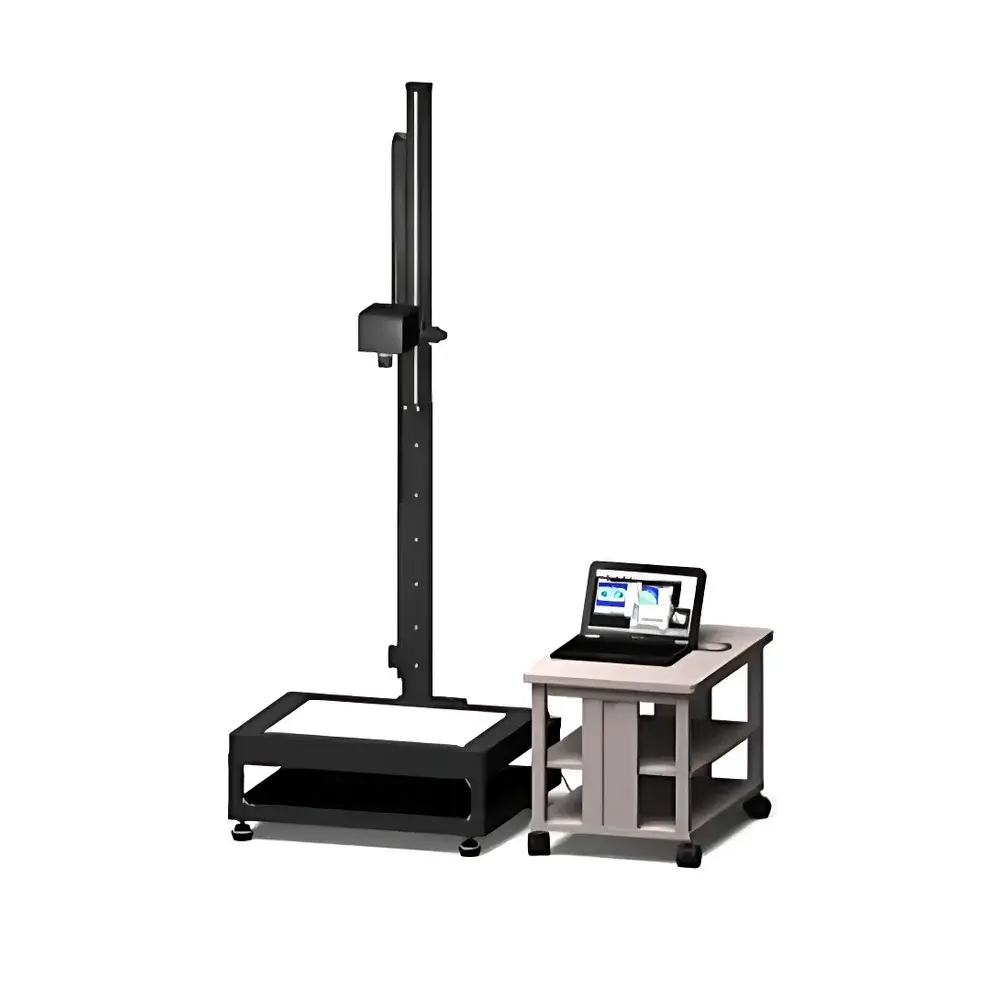
The Photonic Lattice PA-300-XL Polarizing Stress Meter is a high-resolution, full-field birefringence imaging instrument engineered for quantitative measurement of optical retardation and fast-axis orientation in transparent and semi-transparent materials. Based on the principle of polarization-resolved imaging using a patented photonic crystal polarizer array, the PA-300-XL eliminates mechanical rotation of optical elements—replacing traditional rotating-waveplate or photoelastic modulator architectures with a static, multi-channel polarization sensor. This architecture enables single-shot, pixel-level acquisition of both retardation magnitude (in nanometers) and orientation angle (in degrees) across the entire field of view, with no scanning or sequential exposure required. Designed for industrial metrology and R&D laboratories, the system operates at a fixed wavelength of 520 nm—optimized for sensitivity to stress-induced birefringence in glass, polymer optics, and thin-film substrates. Its measurement range of 0–130 nm covers typical residual stress signatures in precision optics, display cover glass, and molded plastic lenses, while its sub-milliradian angular resolution supports rigorous alignment validation in optical assembly workflows.
Key Features
- Static photonic crystal polarizer array—no moving parts, zero mechanical wear, and immunity to vibration-induced misalignment
- Full-field, simultaneous acquisition of retardation and fast-axis orientation at 2056 × 2464 pixel resolution
- Measurement speed of ≤3 seconds per frame—including image capture, on-board computation, and data export
- Calibrated output in physical units: retardation (nm), fast-axis angle (°), and optionally stress (MPa) via material-specific conversion coefficients
- Adjustable field of view from 40 × 48 mm up to 240 × 320 mm using standard lens configurations—enabling analysis of A4-sized substrates and large-area cover glass without tiling
- Repeatability better than ±0.1 nm (1σ) under controlled thermal and illumination conditions—validated per ISO 10110-7 and ASTM E1318 practices
Sample Compatibility & Compliance
The PA-300-XL accommodates planar, flat, or gently curved transparent samples with thicknesses ranging from 0.1 mm to 25 mm—including optical lenses, smartphone cover glass (Gorilla Glass, Dragontrail), fused silica wafers, acrylic injection-molded components, and laminated safety glass. Samples are placed directly on the motorized Z-stage (optional height adjustment ±25 mm), with no contact or vacuum requirement. The system complies with IEC 61000-4-3 (radiated immunity) and IEC 61326-1 (EMC for laboratory equipment). While not a certified medical device, its measurement traceability aligns with ISO/IEC 17025 requirements when operated within an accredited calibration framework. Optional stress conversion modules reference linear photoelastic coefficients per ISO 11431 and ASTM C1357 for common optical glasses.
Software & Data Management
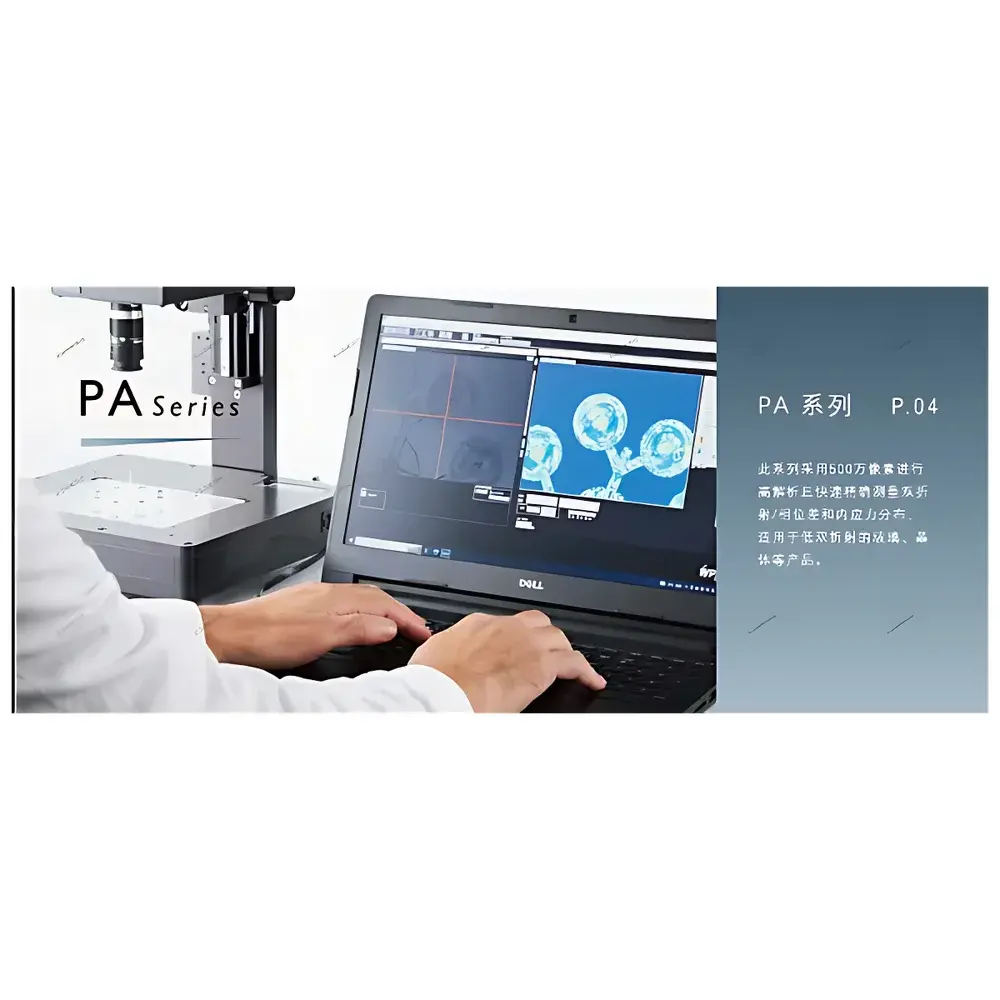
The PA-300-XL is operated via Photonic Lattice’s proprietary Windows-based software suite, supporting real-time visualization, batch processing, and export to CSV, TIFF, and HDF5 formats. The software includes built-in tools for region-of-interest (ROI) statistics, line-profile extraction, false-color mapping with user-defined palettes, and overlay of CAD alignment markers. For regulated environments, optional audit-trail logging and user-access control (UAC) modules comply with FDA 21 CFR Part 11 requirements—including electronic signatures, change history, and immutable raw-data archiving. Data can be integrated into LabVantage, Thermo Fisher SampleManager, or custom MES platforms via TCP/IP or OPC UA interfaces.
Applications
- Residual stress mapping in precision optical lenses prior to coating or mounting
- In-line quality verification of chemically strengthened cover glass for mobile displays
- Process validation of injection-molded polymer optics (e.g., LED collimators, AR/VR waveguide substrates)
- Fundamental research on thermo-mechanical stress evolution during annealing or bonding cycles
- Failure analysis of delamination or edge fracture in laminated safety glass
- Calibration support for interferometric stress evaluation systems
FAQ
What is the minimum measurable retardation, and how is resolution defined?
The system achieves a minimum resolvable retardation of 0.001 nm, defined as the smallest distinguishable step in calibrated phase difference under optimal SNR conditions (≥50:1). This value reflects digitization and noise floor—not absolute uncertainty.
Can the PA-300-XL measure curved or non-planar surfaces?
It is optimized for flat or low-curvature (< ±2 D) surfaces. Significant curvature introduces depolarization and spatially varying path-length errors; for highly curved optics, a dedicated lens-analysis module with surface-normal correction is recommended.
Is NIST-traceable calibration provided with the instrument?
Yes—each unit ships with a factory calibration certificate referencing NIST-traceable quarter-wave and half-wave standards, valid for 12 months. On-site recalibration services are available globally through authorized service centers.
Does the system support automated pass/fail judgment based on user-defined stress thresholds?
Yes—the software allows configurable limit masks per ROI, with binary output signals (TTL or Ethernet) for integration into PLC-controlled inspection lines.
What maintenance is required beyond routine cleaning of optical surfaces?
None. The solid-state polarizer array and CMOS imaging engine require no periodic alignment, lamp replacement, or mechanical recalibration—only annual verification of photometric stability and spatial uniformity.