
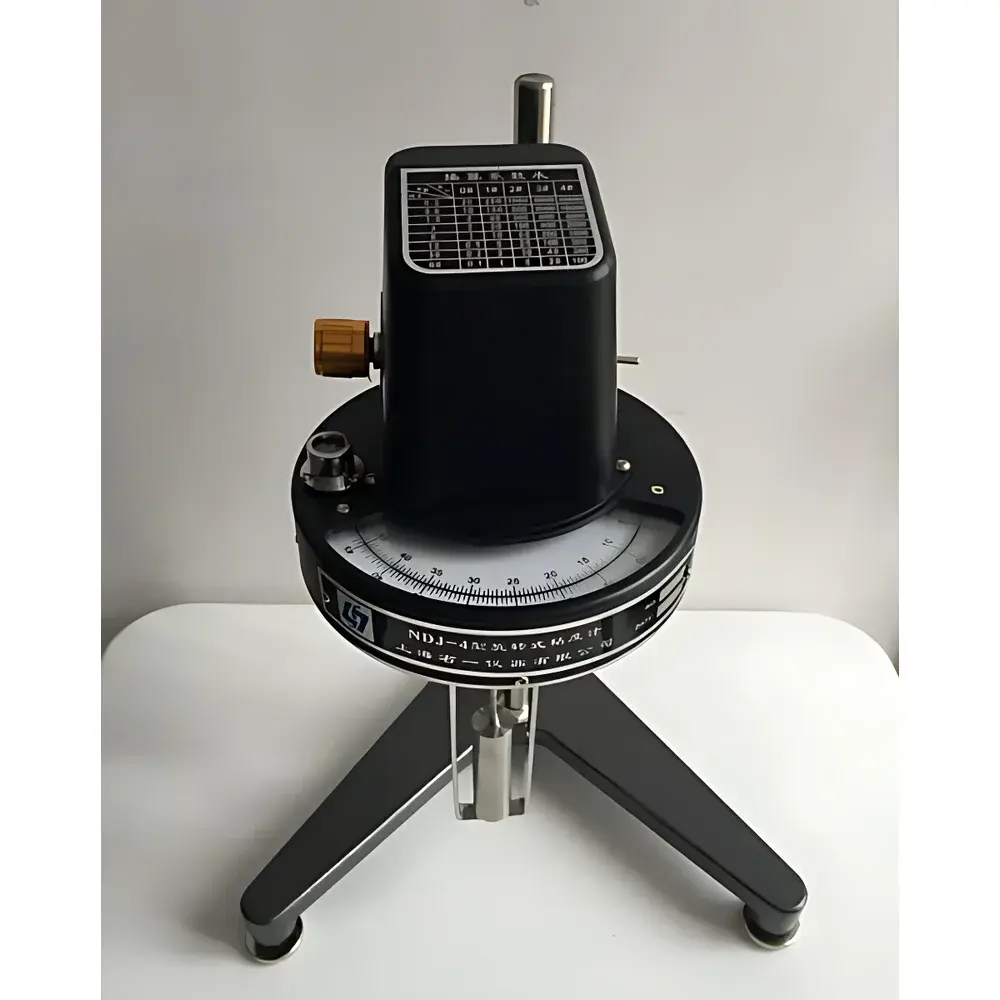
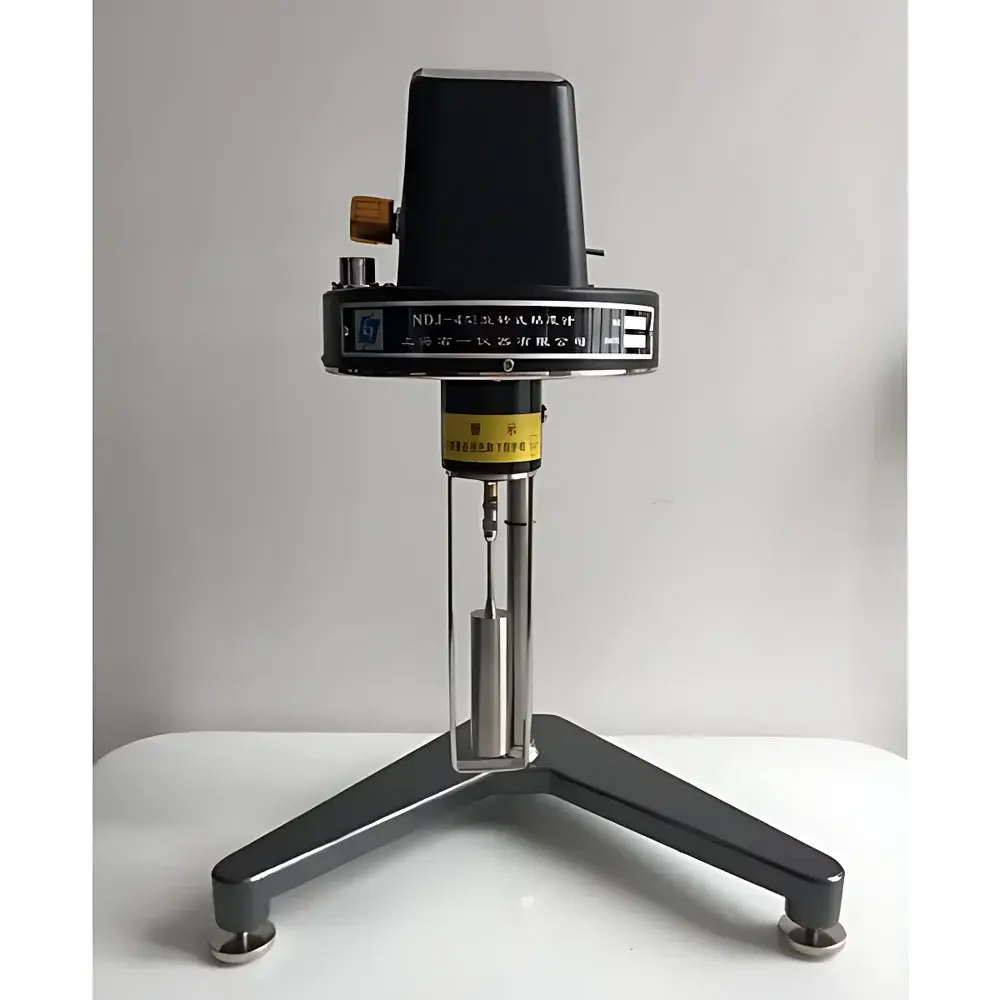
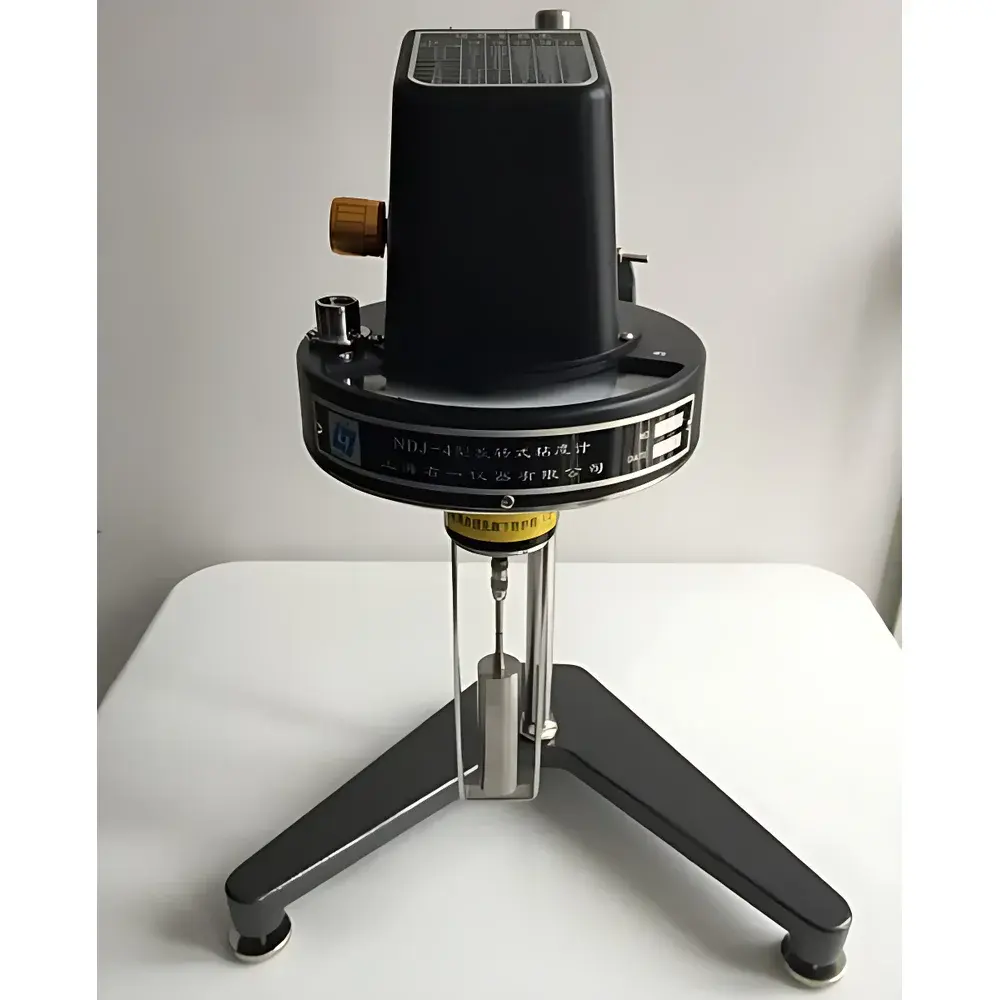
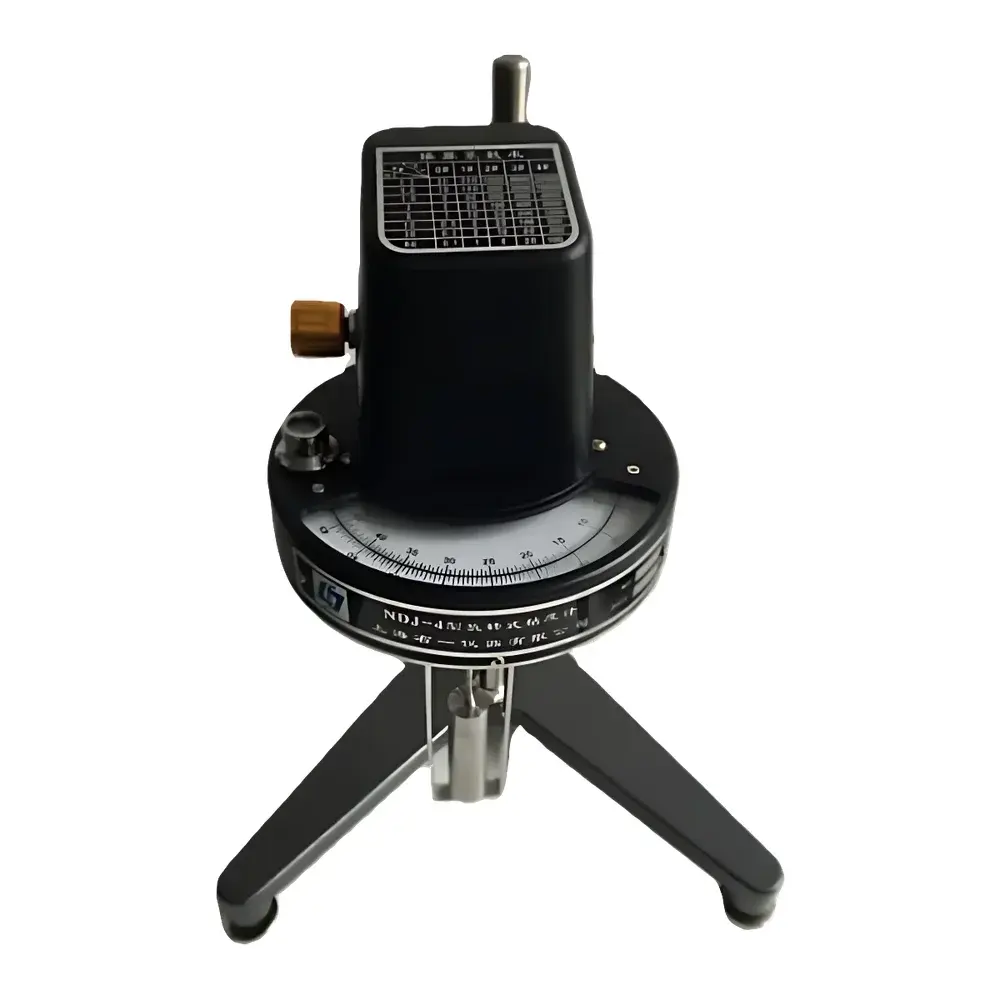
Yoyilab NDJ-4 Dial-Type Rotational Viscometer
| Brand | Yoyilab |
|---|---|
| Origin | Shanghai, China |
| Manufacturer Type | Direct Manufacturer |
| Instrument Type | Fixed-Base Rotational Viscometer |
| Operating Environment | Ambient Temperature (15–30 °C) |
| Viscosity Range | 1–2 × 10⁶ mPa·s |
| Rotors | Standard Set of Four (No. 1–4) |
| Speed Settings | 0.3, 0.6, 1.5, 6, 12, 30, 60 rpm |
| Accuracy | ±5% for Newtonian Liquids |
| Power Supply | 220 V ±10 V, 50 Hz |
| Net Weight | 2.0 kg |
| Dimensions (W×D×H) | 300 × 300 × 450 mm |
Overview
The Yoyilab NDJ-4 Dial-Type Rotational Viscometer is a mechanically driven, analog-display viscometer engineered for reliable viscosity measurement of Newtonian and mildly non-Newtonian liquids and semi-fluids under ambient laboratory conditions. Based on the principle of rotational drag torque measurement—where a spindle immersed in the sample rotates at a defined speed and the resisting torque is translated via calibrated spring mechanism into a dial reading—the NDJ-4 delivers direct kinematic viscosity equivalents in millipascal-seconds (mPa·s). Its fixed-base architecture and manually selected speed settings ensure operational stability and repeatability across routine QC environments in food processing, paint formulation, pharmaceutical excipient development, cosmetic emulsion testing, and adhesive manufacturing. Designed for ISO/IEC 17025-aligned laboratories performing method-defined viscosity checks, the instrument supports standardized test protocols where traceable mechanical calibration and operator-controlled shear history are essential.
Key Features
- Mechanically robust dial-readout system with no dependency on digital electronics or battery power—ensuring long-term reliability and minimal drift over time.
- Seven discrete rotational speeds (0.3–60 rpm), enabling controlled shear rate selection for basic flow curve approximation and consistency evaluation.
- Interchangeable spindle set (Standard No. 1–4; optional No. 0) providing coverage from low-viscosity solvents (0.1 mPa·s) to highly viscous pastes (up to 2 × 10⁶ mPa·s), with each rotor calibrated per ASTM D2196 and GB/T 265–1988.
- Fixed-base design with integrated leveling feet and optional mounting bracket—minimizing vibration-induced torque artifacts and supporting reproducible positioning during sequential sample testing.
- Compliance-ready mechanical calibration traceability: Each instrument ships with a factory calibration certificate referencing NIST-traceable reference oils, and supports periodic verification using certified viscosity standards per ISO 3219 and ASTM D445.
Sample Compatibility & Compliance
The NDJ-4 accommodates samples in standard cylindrical containers (minimum depth ≥ 50 mm, diameter ≥ 60 mm) and is routinely deployed for quality control of edible oils, polymer solutions, suspension-based cosmetics, topical pharmaceutical gels, and water-based coatings. It meets the mechanical performance requirements of ISO 2555 (viscosity determination by rotational methods), GB/T 2794–2013 (adhesives), and USP for semi-solid dosage forms when operated within specified temperature and speed tolerances. While not inherently 21 CFR Part 11 compliant due to its analog interface, audit trails for calibration, maintenance, and operator training can be maintained externally to support GLP/GMP documentation workflows.
Software & Data Management
As a standalone analog instrument, the NDJ-4 does not incorporate embedded firmware, data logging, or USB connectivity. All measurements are recorded manually by the operator and entered into laboratory notebooks or LIMS-compatible spreadsheets. For regulated environments, users implement documented SOPs governing rotor selection, speed assignment, dwell time pre-reading, and temperature monitoring (using external calibrated thermometers per ISO 5627). Calibration records—including dates, reference oil batch numbers, and deviation values—are retained for minimum five-year archival as required by ISO/IEC 17025 Clause 7.7.
Applications
- Batch release testing of vegetable oils and shortening for consistency grading per AOCS Cd 1–25.
- Routine viscosity verification of solvent-borne architectural paints prior to filtration and packaging.
- Stability assessment of shear-thinning hair conditioners and hand sanitizers during accelerated aging studies.
- QC screening of hydroxypropyl methylcellulose (HPMC) aqueous solutions used in tablet film coating.
- Process validation support for hot-melt adhesives in packaging line qualification (per ASTM D1002).
FAQ
What is the recommended sample volume for accurate NDJ-4 measurements?
A minimum volume of 20 mL is required to fully immerse the designated rotor (e.g., No. 2 spindle) to the specified depth mark. Insufficient volume induces wall effects and underestimates true viscosity.
Can the NDJ-4 measure non-Newtonian behavior such as thixotropy?
It does not provide automated time-sweep or oscillatory capability. However, manual sequential readings at fixed speeds—before and after controlled agitation—can indicate gross thixotropic recovery trends when paired with strict timing protocols.
Is temperature control integrated into the NDJ-4?
No. The instrument operates at ambient temperature only. For temperature-dependent measurements, users must employ external thermostatted baths and verify sample temperature at point-of-measurement with a calibrated probe.
How often should calibration verification be performed?
Per ISO/IEC 17025, verification using certified reference oils is recommended before each daily shift or after any mechanical impact, with full recalibration annually or following rotor replacement.
Does the NDJ-4 comply with FDA requirements for pharmaceutical use?
While the device itself is not FDA-cleared, it is widely accepted in pharmaceutical QC labs for compendial viscosity tests (e.g., USP ) when operated within validated procedures, calibrated against traceable standards, and supported by complete equipment history records.
Related Products



