
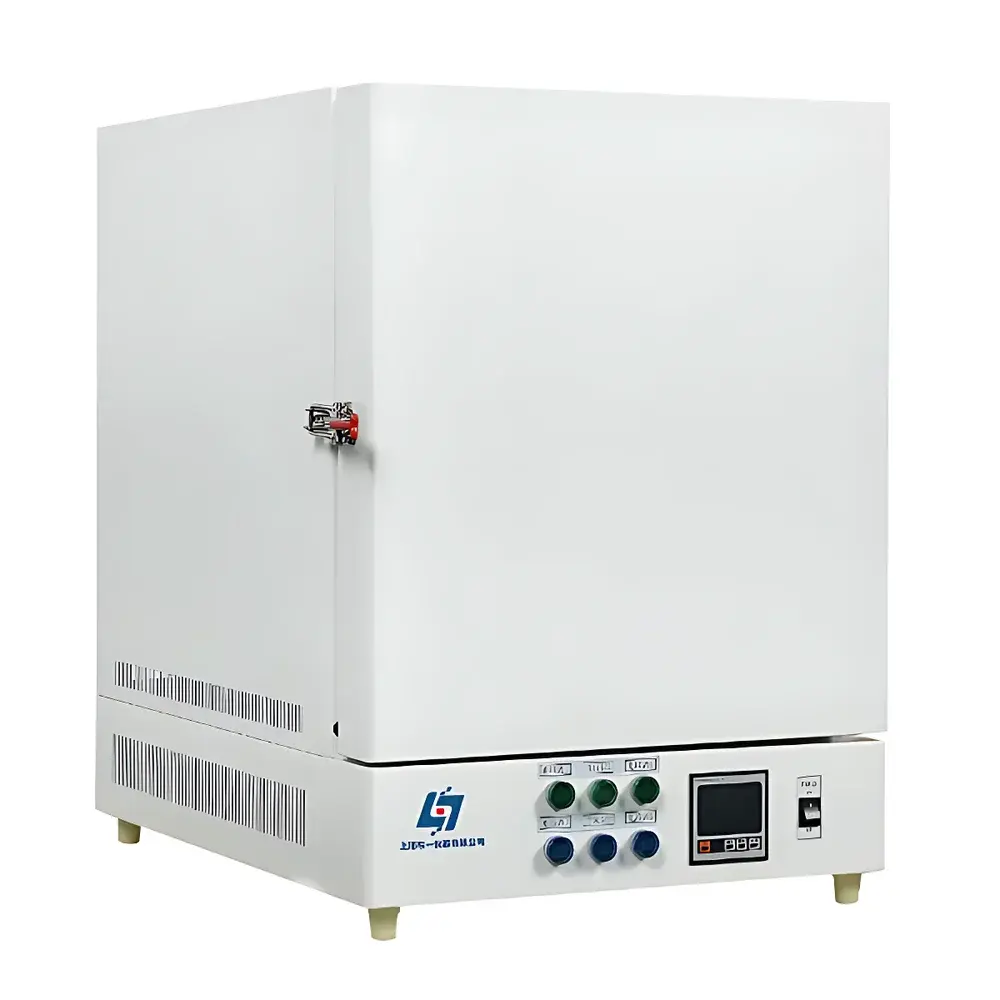
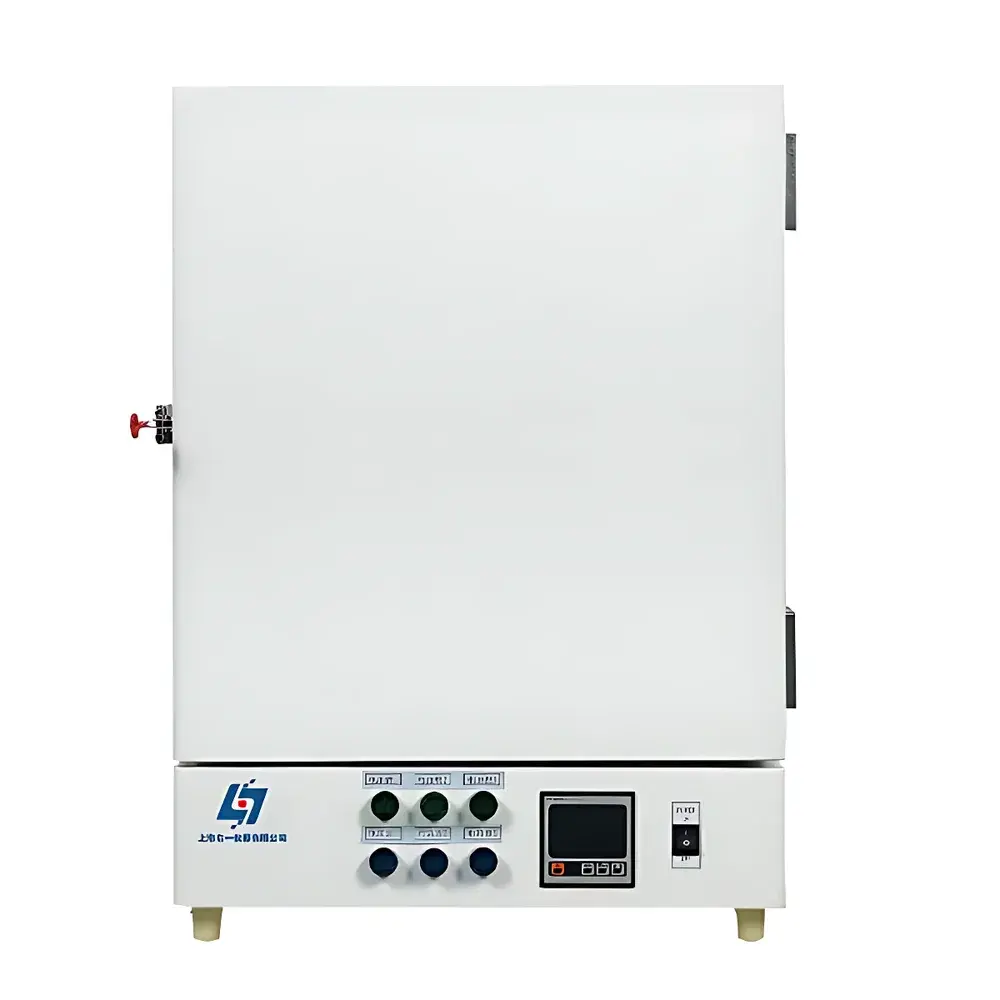
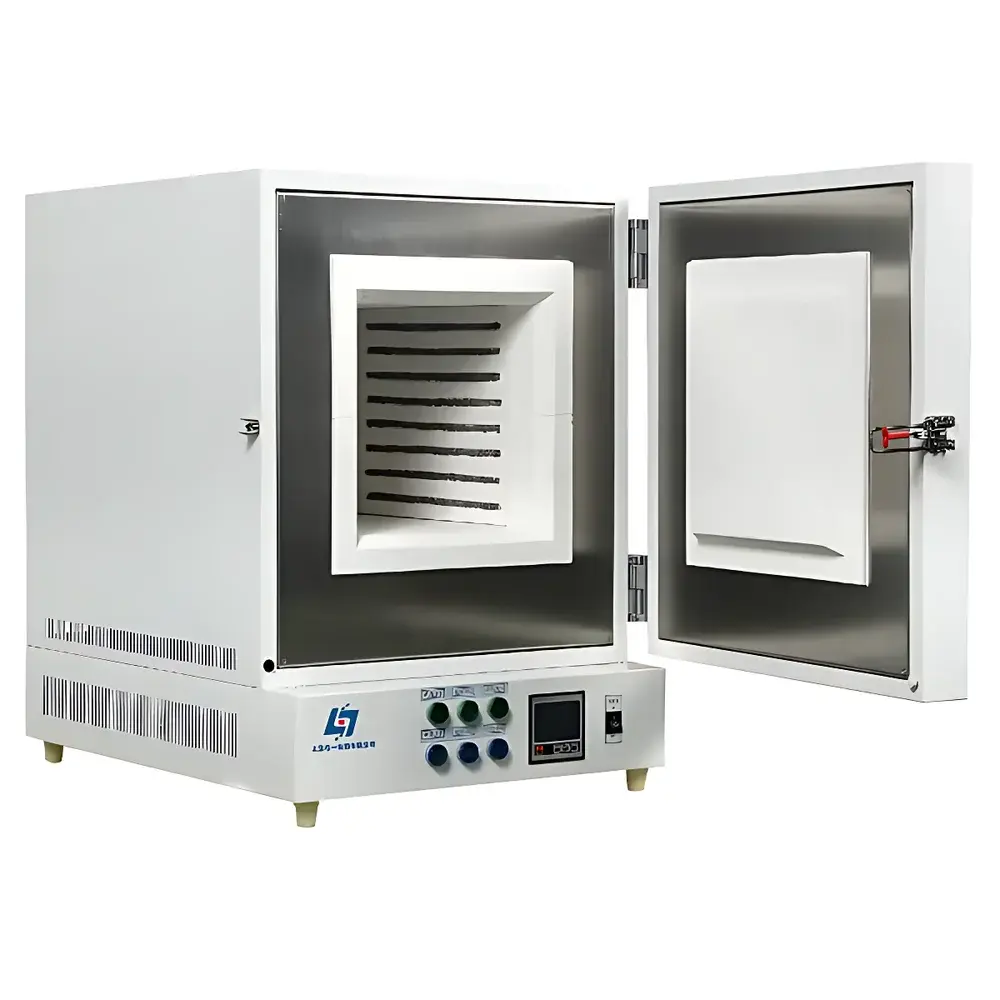
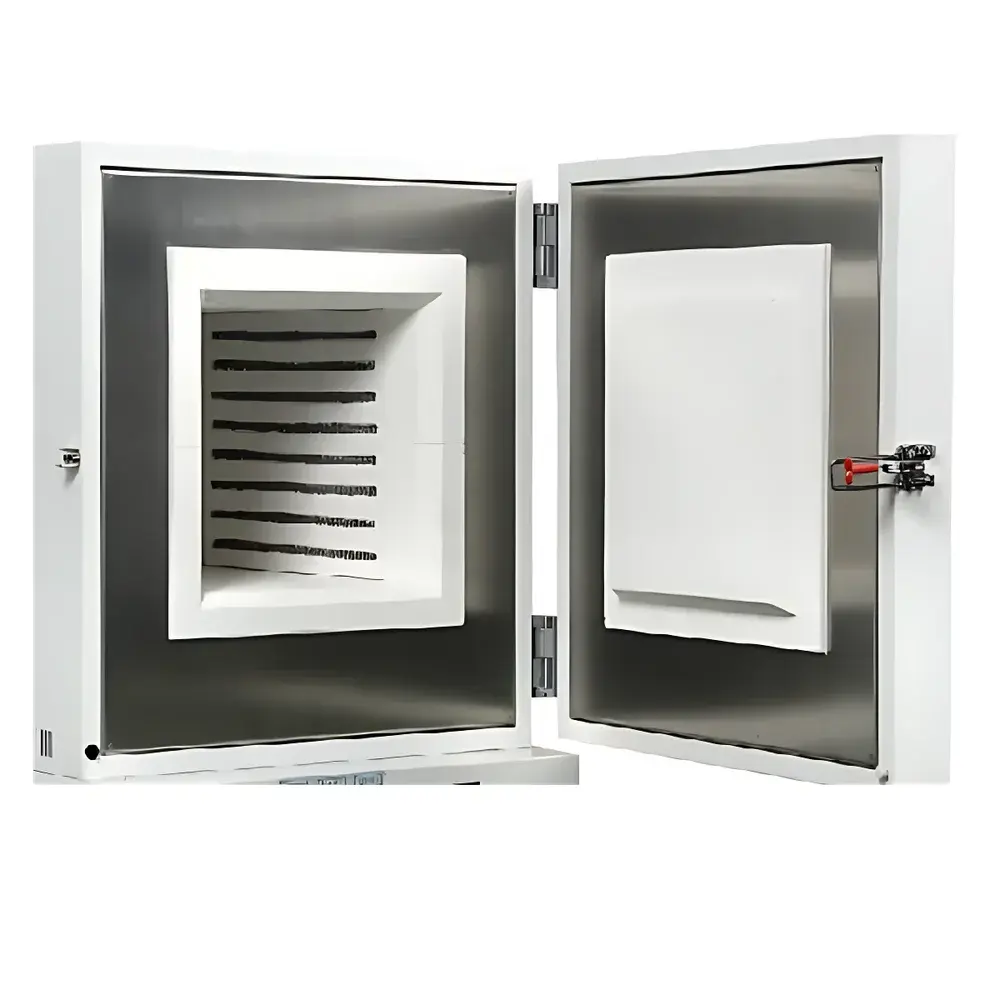
Yoyi SX2-12-12A Ceramic Fiber Muffle Furnace (Box-Type Resistance Furnace, 30 L, 1200 °C)
| Brand | Yoyi |
|---|---|
| Origin | Shanghai, China |
| Manufacturer Type | Direct Manufacturer |
| Product Category | Domestic |
| Model | SX2-12-12A |
| Instrument Type | Box-Type Furnace |
| Maximum Temperature | 1200 °C |
| Temperature Control Accuracy | ±1 °C |
| Rated Power | 12 kW |
| Heating Element | Nickel-Chromium (NiCr) Wire |
| Internal Dimensions (L×W×H) | 300 mm × 500 mm × 200 mm |
| Nominal Chamber Volume | 30 L |
Overview
The Yoyi SX2-12-12A is a high-performance ceramic fiber muffle furnace engineered for precise, rapid, and energy-efficient high-temperature thermal processing in research laboratories, materials science facilities, and industrial quality control environments. Operating on resistive heating principles via embedded nickel-chromium (NiCr) alloy wire elements, the furnace achieves stable operation up to 1200 °C within a fully insulated chamber constructed from low-density, high-purity alumina-silica ceramic fiber modules. Unlike traditional refractory brick-lined furnaces, this design eliminates thermal mass—enabling faster ramp rates (up to 2× faster than conventional units), reduced standby heat loss, and significantly lower specific energy consumption (~60% less than comparable brick-type models). Its box-type architecture ensures uniform radial and axial temperature distribution across the 30 L working volume, validated per ASTM E220 and ISO 9001 calibration protocols under no-load conditions.
Key Features
- Lightweight ceramic fiber insulation (density: ~128 kg/m³) with thermal conductivity ≤0.09 W/(m·K) at 1000 °C, minimizing surface temperature rise—external cabinet remains ≤50 °C even after prolonged operation at maximum setpoint.
- Robust cold-rolled steel outer casing with phosphate conversion coating and electrostatic epoxy powder finish for corrosion resistance and mechanical durability.
- Microprocessor-based PID temperature controller with LCD menu interface supporting multi-segment programmable ramp/soak profiles, real-time temperature logging, and user-configurable alarm thresholds (over-temperature, sensor failure, power interruption).
- Comprehensive electrical safety system including over-current, over-voltage, ground-fault leakage protection, and thermal cut-off switches compliant with IEC 61000-4 immunity standards.
- Non-volatile memory retains all operational parameters—including setpoints, timers, and alarm history—during unexpected power loss; automatic recovery upon re-energization.
- Optimized dual-layer cavity design: inner ceramic fiber module + outer insulating board barrier, ensuring structural integrity and long-term dimensional stability under repeated thermal cycling.
Sample Compatibility & Compliance
The SX2-12-12A accommodates a broad range of inert, semi-reactive, and oxidizing sample types—including ceramic green bodies, metal powders, catalyst precursors, geological specimens, and metallurgical alloys—within its 300 × 500 × 200 mm chamber. It supports standard crucible formats (alumina, quartz, silicon carbide, and stainless steel) and is compatible with controlled-atmosphere accessories (e.g., gas inlet ports, vacuum flanges) when configured as an optional upgrade. The furnace meets essential regulatory expectations for laboratory thermal equipment: CE marking (2014/30/EU EMC Directive, 2014/35/EU LVD Directive), conforms to UL 61010-1 safety requirements for electrical equipment, and supports GLP/GMP documentation workflows through optional RS485 Modbus RTU connectivity and audit-trail-capable software (IEC 62304 Class B compliance for firmware).
Software & Data Management
Equipped with factory-default analog/digital I/O interfaces, the furnace integrates seamlessly with third-party data acquisition systems or SCADA platforms. Optional RS485 communication module enables bidirectional command exchange—including remote setpoint adjustment, real-time PV/SV streaming, and event-triggered data export—using industry-standard Modbus RTU protocol. Bundled PC software (Windows-compatible) provides time-stamped CSV export, graphical trend analysis, and customizable report generation aligned with ISO/IEC 17025 documentation requirements. Firmware supports secure parameter locking, user-level access control (admin/operator modes), and electronic signature logging for FDA 21 CFR Part 11–aligned validation packages.
Applications
This furnace serves critical roles across multiple technical domains: ash content determination (ASTM D3174, ISO 1171), loss-on-ignition (LOI) analysis in cement and soil testing, sintering of advanced ceramics and battery cathode materials (e.g., LiCoO₂, NMC), annealing of optical crystals and semiconductor substrates, heat treatment of tool steels (austenitizing, tempering), and thermal gravimetric method development. Its rapid heating capability makes it especially suitable for iterative process optimization studies requiring >50 thermal cycles per day without performance degradation.
FAQ
What is the typical heating rate from ambient to 1200 °C?
Under no-load conditions, the furnace achieves approximately 10–15 °C/min average ramp rate to 1200 °C, depending on ambient temperature and ventilation.
Can this furnace be used under inert or reducing atmospheres?
Yes—when fitted with optional gas inlet/outlet ports and appropriate sealing hardware, it supports N₂, Ar, H₂/N₂ mixtures, and forming gas environments up to 0.1 MPa gauge pressure.
Is the temperature uniformity verified across the chamber?
Per internal qualification per ISO/IEC 17025, temperature uniformity is ±5 °C within the central 70% volume at 1200 °C, confirmed using calibrated Type S thermocouples at nine spatial points.
What maintenance is required for the ceramic fiber lining?
No routine replacement is needed; however, visual inspection for physical damage or compression-set deformation is recommended annually. Avoid mechanical abrasion or exposure to alkali vapors or molten salts.
Does the unit include calibration documentation?
A factory-as-built temperature calibration certificate (traceable to NIM, China) is supplied with each unit, covering three points (600 °C, 900 °C, 1200 °C) with expanded uncertainty ≤±1.2 °C (k=2).



