
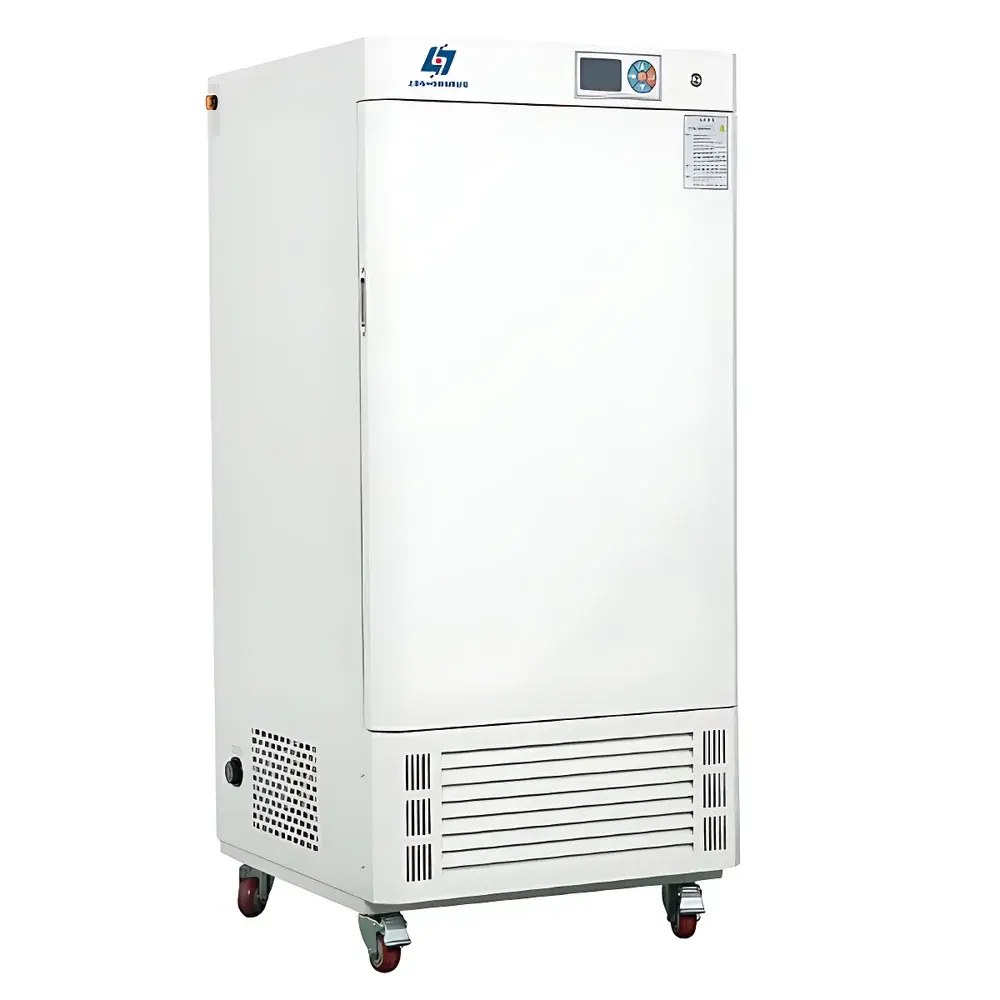
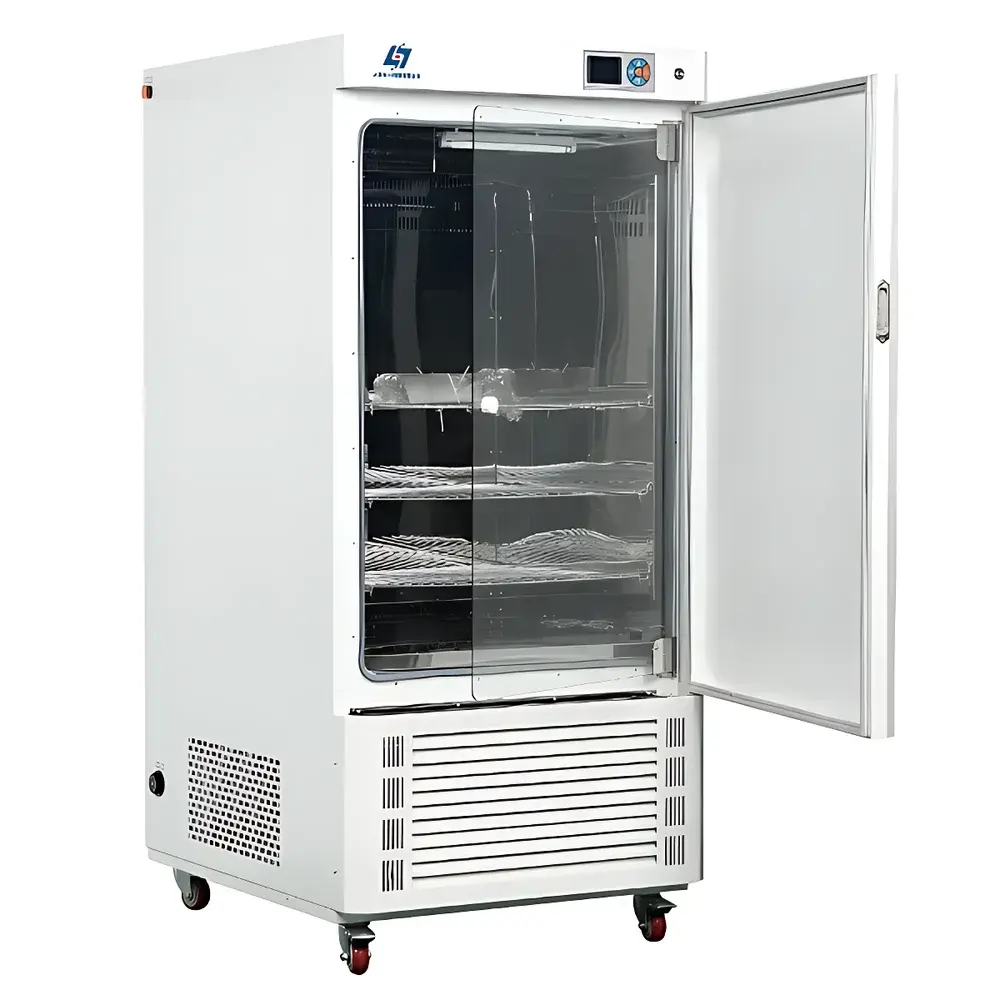
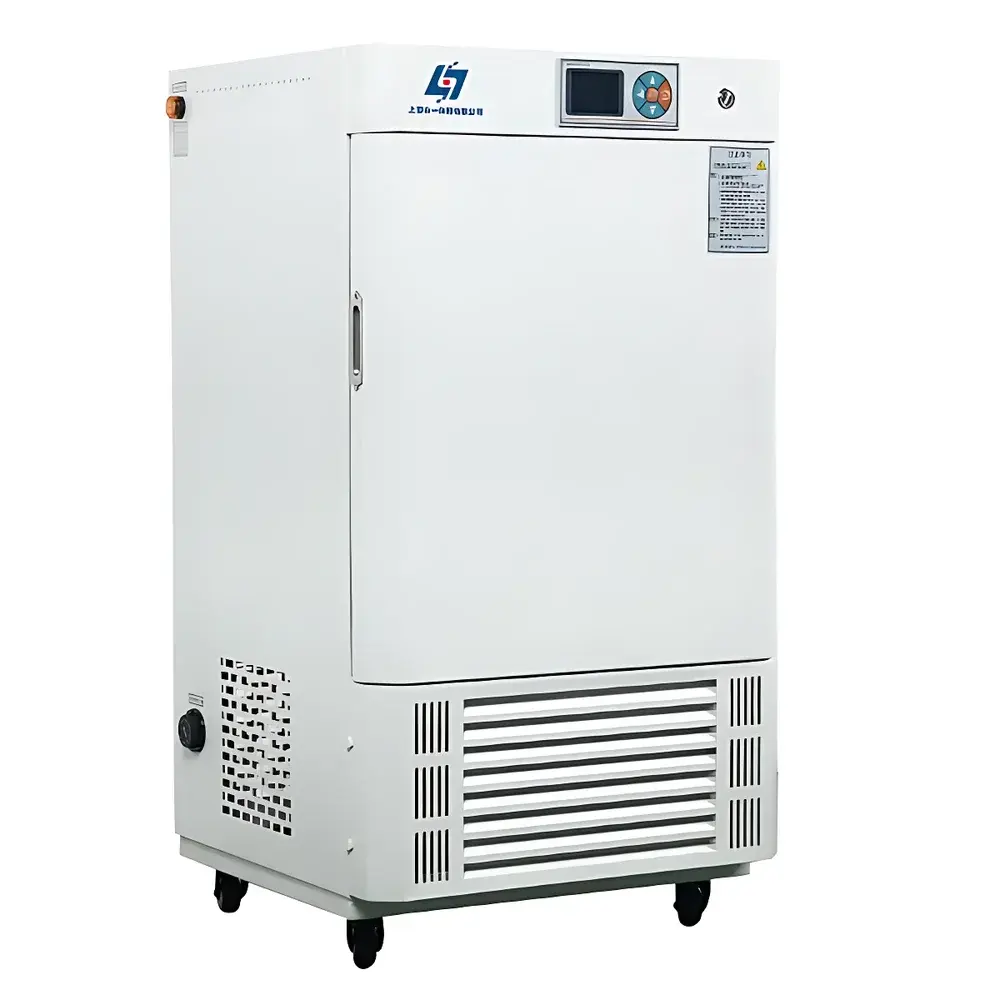
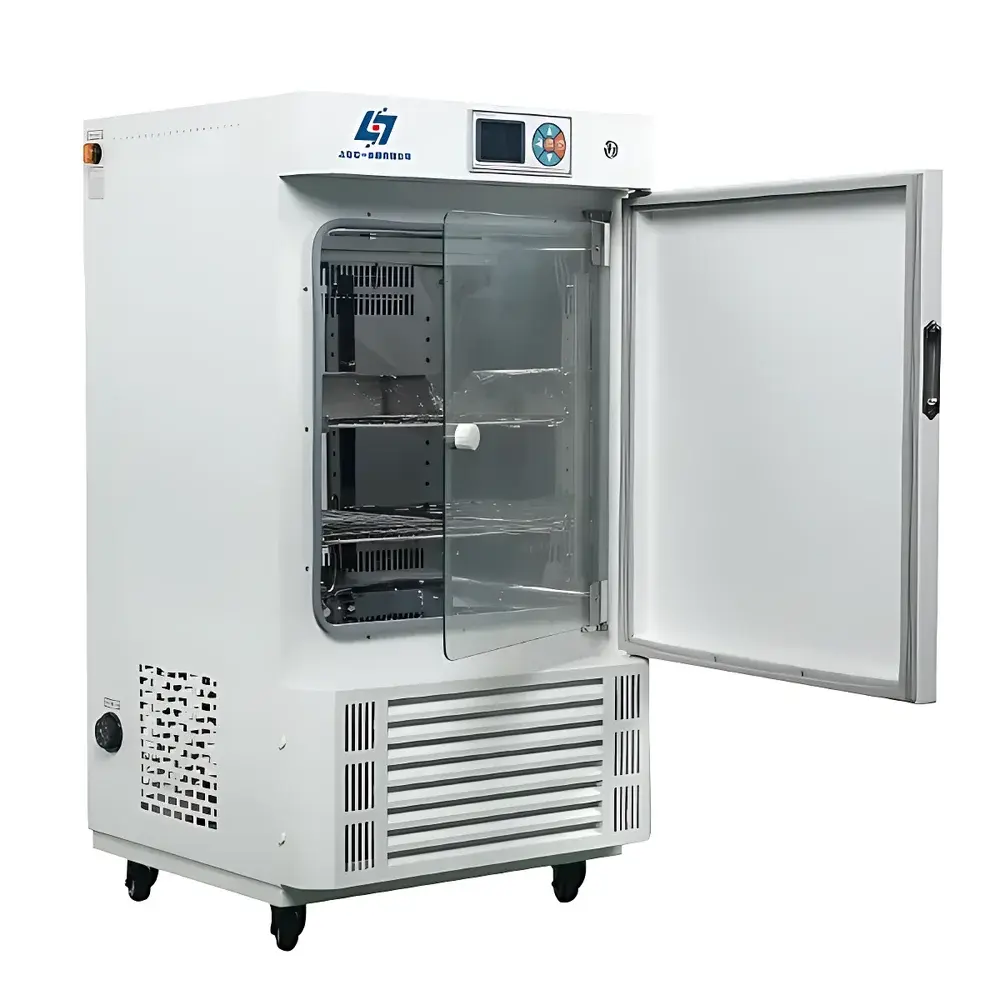
YOYI LRH-800 Biochemical Incubator
| Brand | YOYI / yoyilab |
|---|---|
| Origin | Shanghai, China |
| Manufacturer Type | Direct Manufacturer |
| Region Classification | Domestic (China) |
| Model | LRH-800 |
| Cooling Method | Compressor-based refrigeration |
| Temperature Range | 0–65°C |
| Temperature Accuracy | ±0.1°C |
| Temperature Fluctuation | ±0.5°C (at high temp), ±1.0°C (at low temp) |
| Temperature Uniformity | ±1.5°C (measured at 25°C) |
| Chamber Capacity | 800 L |
| External Dimensions | 1025 × 1145 × 1800 mm (W × D × H) |
Overview
The YOYI LRH-800 Biochemical Incubator is a large-capacity, microprocessor-controlled environmental chamber engineered for precise and stable temperature regulation across life science, pharmaceutical, environmental, and agricultural laboratories. Designed to support static cultivation, preservation, and incubation of bacteria, fungi, yeasts, and other microorganisms—without agitation or gas control—the LRH-800 operates on a dual-mode thermal system combining Peltier-free compressor-based refrigeration with resistive heating elements. This architecture enables seamless bidirectional temperature control from 0°C to +65°C, making it suitable for both mesophilic and psychrophilic culture protocols, BOD incubation, seed germination studies, and long-term sample stabilization. Its robust cold-rolled steel exterior with electrostatic powder coating, combined with a mirror-finish stainless-steel interior and radius-corner design, ensures mechanical durability, chemical resistance, and ease of decontamination—critical for GLP-compliant workflows and routine lab hygiene.
Key Features
- Intelligent PID temperature control algorithm with 0.1°C resolution and real-time deviation compensation, ensuring high reproducibility in extended incubation cycles
- Dual-layer insulated door with tempered glass viewport minimizes thermal leakage during observation—maintaining internal stability without requiring door-opening compensation
- Adjustable stainless-steel shelving system (standard configuration includes multiple load-bearing trays) supports flexible load distribution and unrestricted airflow management
- Integrated power-loss recovery function retains user-defined setpoints and runtime parameters after unexpected outages or system resets
- Over-temperature safety cutoff with independent hardware-level monitoring prevents thermal runaway and safeguards biological samples
- 5.7-inch backlit LCD interface with menu-driven navigation displays setpoint, actual chamber temperature, elapsed time, and remaining timer simultaneously
- Four-directional casters with locking mechanism and leveling feet enable secure positioning on uneven laboratory floors while supporting safe repositioning
Sample Compatibility & Compliance
The LRH-800 accommodates standard microbiological containers—including Petri dishes, test tubes, flasks, and multi-well plates—as well as larger vessels used in BOD5 testing (e.g., 300 mL BOD bottles). Its uniform temperature field (±1.5°C at 25°C reference point, per ISO 15212-1 and ASTM E2875 guidelines for incubator validation) meets requirements for regulatory microbiology applications where thermal consistency directly impacts colony formation kinetics and assay validity. While not certified for ICH Q5A or USP cleanroom use, the unit complies with general electrical safety standards (IEC 61010-1) and electromagnetic compatibility (EN 61326-1). Optional accessories—including RS485 communication modules and external data loggers—support integration into 21 CFR Part 11–compliant environments when paired with validated software platforms.
Software & Data Management
The LRH-800 operates via embedded firmware with no external PC dependency; however, optional RS485 serial interface (sold separately) enables bidirectional communication with LabVIEW, MATLAB, or custom SCADA systems for remote parameter adjustment and real-time temperature logging. When equipped with the optional embedded printer module, users can generate timestamped hardcopy records of temperature profiles and alarm events—facilitating audit readiness under GLP and GMP frameworks. The built-in timer supports programmable hold periods up to 9999 minutes, and the memory retention circuit preserves all operational settings during brief power interruptions, reducing manual reconfiguration overhead in shared-core facilities.
Applications
- Biochemical oxygen demand (BOD5) analysis per APHA Standard Methods 5210B and ISO 5815-1
- Microbial culture maintenance for QC labs in food, water, and pharmaceutical manufacturing
- Seed viability testing and plant tissue pre-incubation in agronomy research
- Long-term storage of reference strains and stock cultures at defined suboptimal temperatures
- Environmental simulation studies requiring stable thermal baselines over multi-day durations
- Educational labs conducting foundational microbiology experiments under controlled conditions
FAQ
What is the recommended calibration frequency for the LRH-800?
Annual verification using NIST-traceable thermistors or PT100 probes is advised; internal sensor drift should be assessed against external reference standards before critical validation runs.
Can the LRH-800 operate continuously at 4°C for cold-adapted organism culture?
Yes—the compressor-based cooling system is rated for sustained operation across the full 0–65°C range, including prolonged low-temperature incubation with minimal condensation accumulation.
Is the unit compatible with CO₂ or humidity control upgrades?
No—the LRH-800 is a temperature-only incubator; humidity and gas modulation require dedicated models such as the YOYI CO₂ series or modular environmental chambers.
Does the LRH-800 meet CE or UL certification requirements?
It conforms to IEC 61010-1 safety specifications and carries CCC certification for domestic China markets; CE marking is available upon request for EU-distributed units with additional EMC testing.
What is the maximum allowable ambient temperature for reliable operation?
The specified operating environment is +5°C to +30°C; performance degradation may occur above 30°C due to reduced heat rejection efficiency in the condenser subsystem.




