
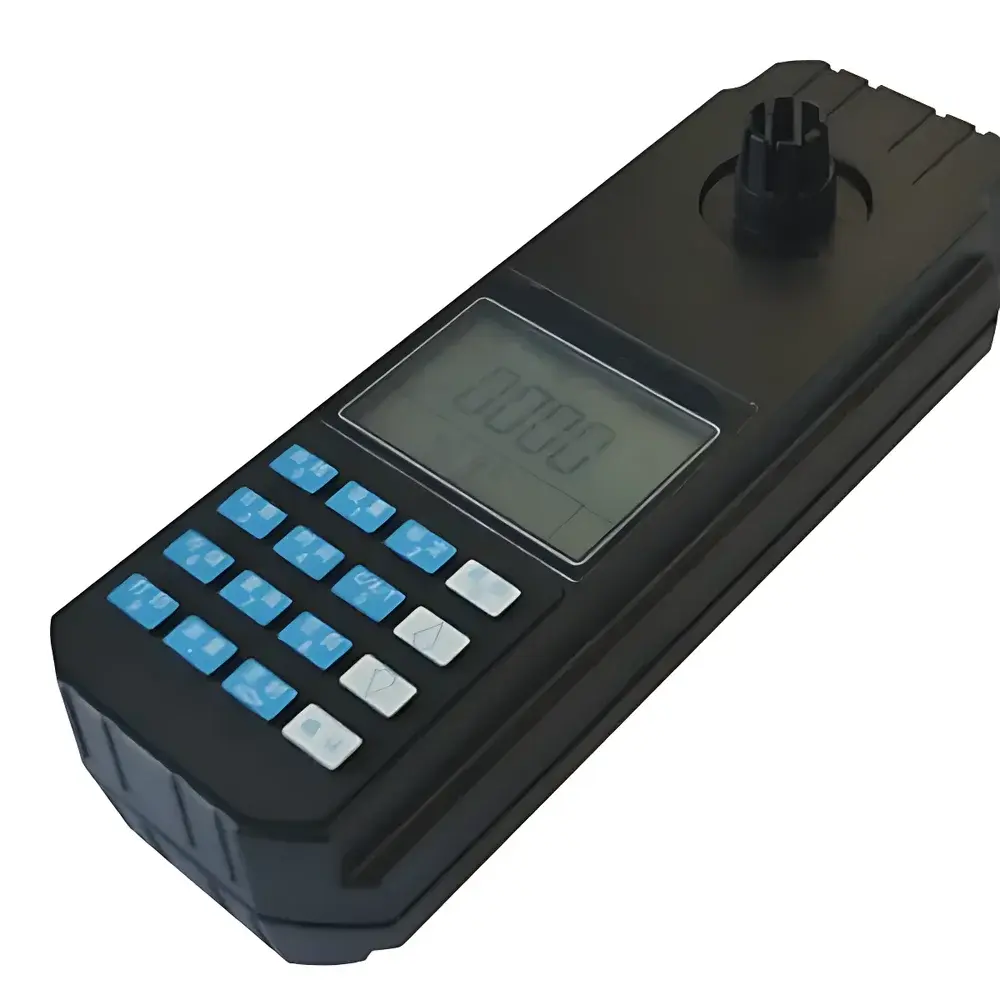
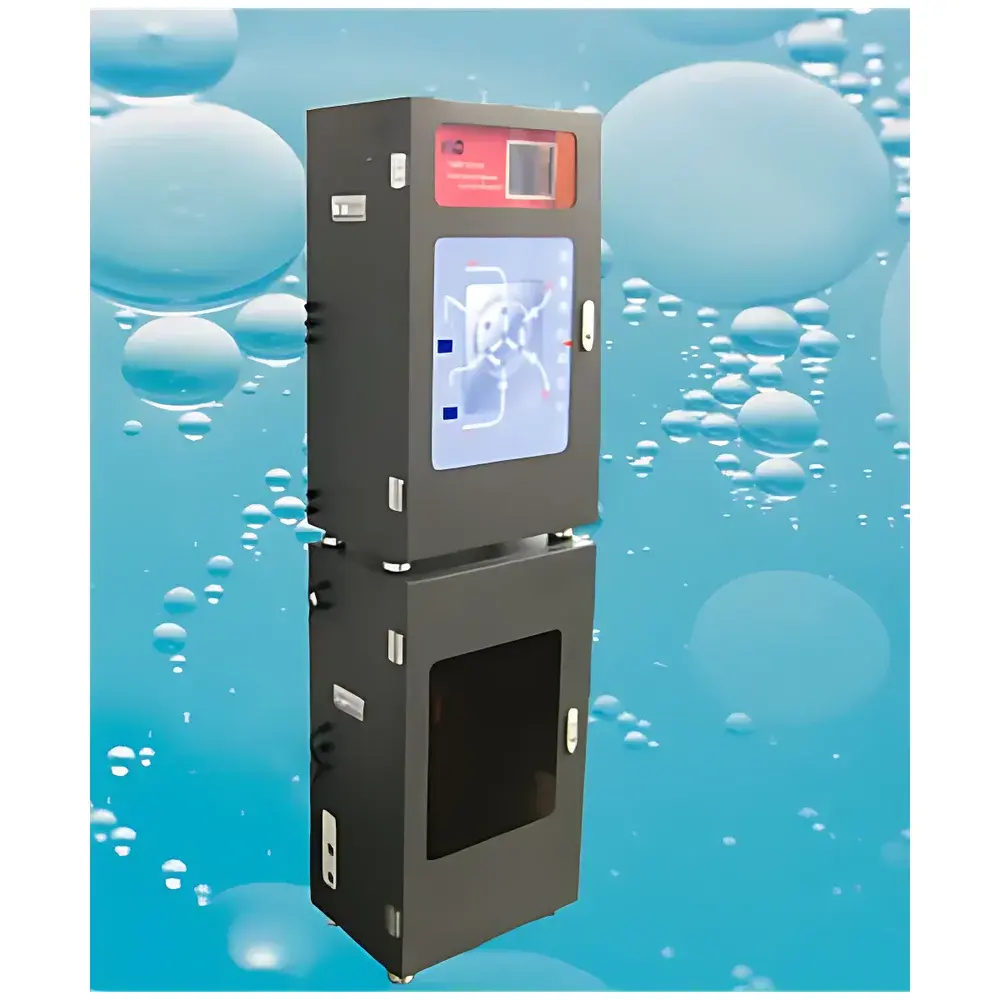
HengaoDe HAD-14A Copper Content Analyzer for Ultra-Pure Water — Compliant with GB/T 14418–1993
| Brand | HengaoDe |
|---|---|
| Origin | Beijing, China |
| Manufacturer Type | Authorized Distributor |
| Country of Origin | China |
| Model | HAD-14A |
| Price | USD 92 (FOB) |
| Measurement Range | 0–200 µg/L |
| Accuracy | ±2% FS |
| Resolution | 0.1 µg/L |
| Repeatability | ≤1% |
| Drift | ±1% FS / 4 h |
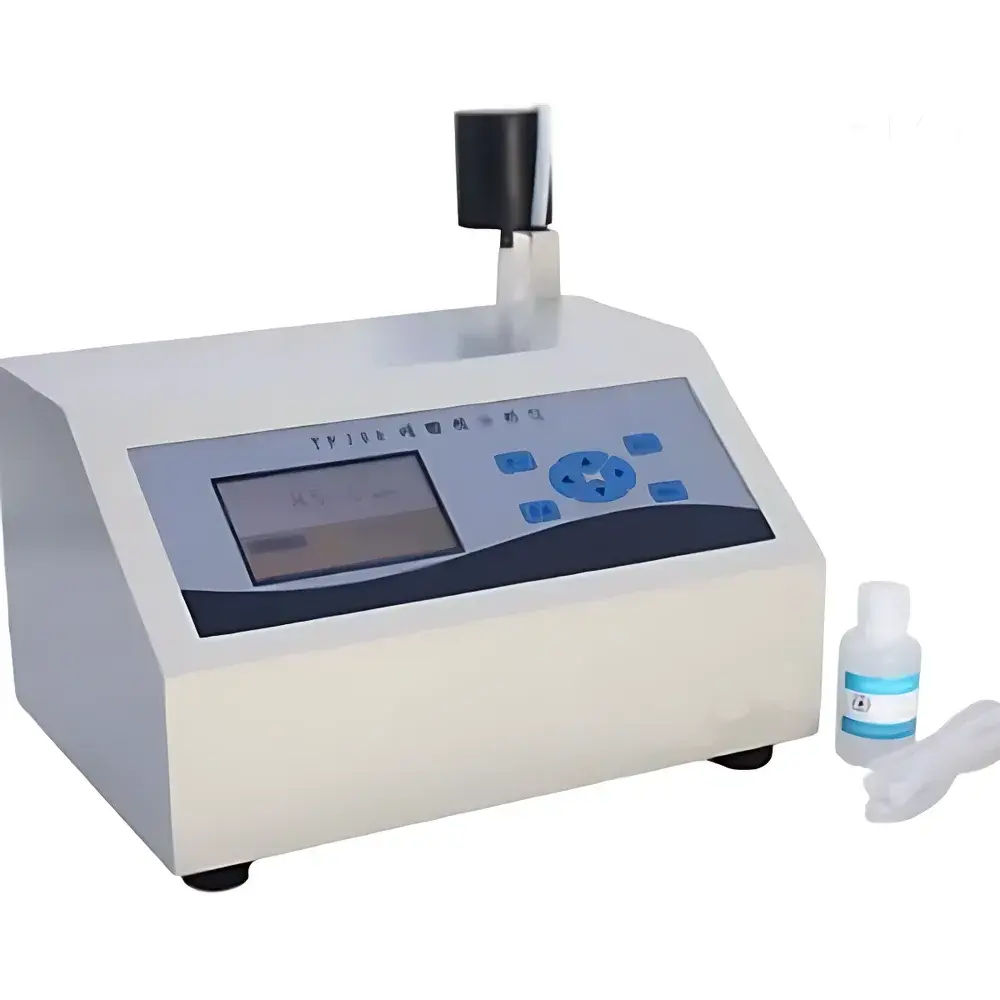
| Display | 480×272 dot-matrix LCD (Chinese/English switchable) |
| Dimensions | 380 × 180 × 255 mm (L×W×H) |
| Weight | 3.8 kg |
| Power Supply | 85–265 VAC, 45–65 Hz, 35 W |
| Operating Environment | 5–55 °C, ≤90% RH (non-condensing) |
Overview
The HengaoDe HAD-14A Copper Content Analyzer is a benchtop photometric analyzer engineered for trace-level quantification of dissolved copper ions (Cu²⁺) in high-purity and ultrapure water systems. It operates on the principle of visible-light spectrophotometry, utilizing a stable monochromatic cold light source and optimized optical path design to ensure high signal-to-noise ratio and minimal baseline drift. The instrument conforms to GB/T 14418–1993 (“Determination of Copper in High-Purity Water”), a national standard aligned with ISO 10523 and ASTM D1068 for metal ion analysis in low-conductivity matrices. Designed specifically for power generation, semiconductor manufacturing, pharmaceutical water systems (PW/WFI), and fine chemical process streams, the HAD-14A delivers reliable, interference-resistant measurements without requiring complex reagent kits—only deionized water is needed for zero calibration.
Key Features
- Monochromatic cold light source: Ensures long-term photometric stability (>10,000 hours lifetime), low power consumption, and immunity to thermal wavelength drift.
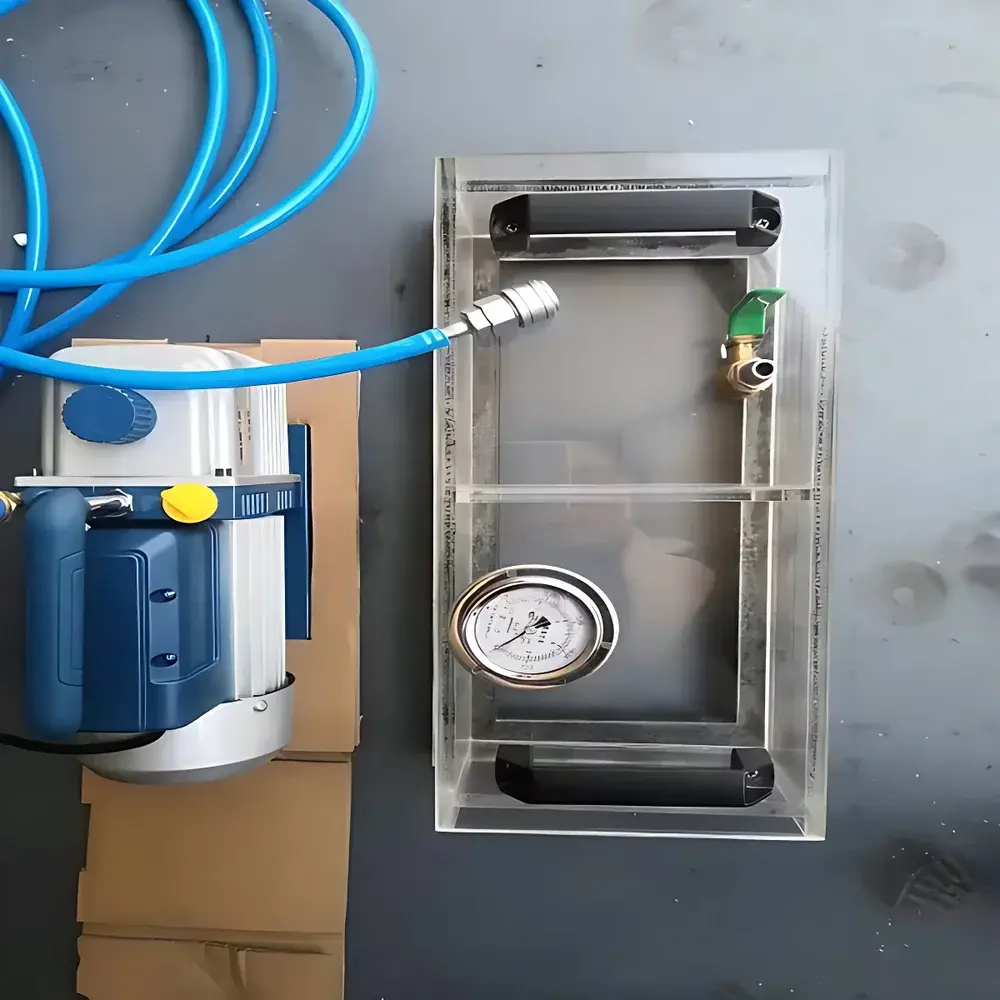
- Air-compression and siphon-based fluidic pathway: Eliminates cross-contamination between sequential samples by physically isolating flow paths—critical for ultra-trace applications where carryover below 0.5 µg/L must be avoided.
- Integrated PID-controlled thermostatic cuvette chamber: Maintains optical cell temperature within ±0.3 °C during measurement cycles, minimizing refractive index variation and improving repeatability.
- Linear calibration algorithm with multi-point adaptive fitting: Supports both single-point zero calibration (using blank DI water) and two-point span calibration, enabling accurate quantification across the full 0–200 µg/L range without manual slope adjustment.
- ARM32-bit embedded architecture with Fujitsu microcontroller: Provides real-time data processing, automatic timing control, and robust error handling—ensuring deterministic response under variable lab conditions.
- IP65-rated waterproof housing with full-touch membrane keypad: Designed for deployment in humid or splash-prone environments such as boiler feedwater labs or cleanroom utility corridors.
- Non-volatile memory with timestamped logging: Stores up to 199 measurement records with full metadata (date, time, concentration, absorbance, transmittance); supports GLP-compliant audit trail export via USB.
Sample Compatibility & Compliance
The HAD-14A is validated for use with conductivity < 1 µS/cm water matrices, including condensate, steam cycle return, nuclear-grade demineralized water, and UPW used in wafer cleaning. It meets the sampling interface requirements of ASTM D4582 (Standard Practice for Determining Trace Metals in Ultrapure Water by Graphite Furnace Atomic Absorption Spectroscopy) for comparative validation. While not a primary reference method, its performance has been verified against ICP-MS (detection limit 0.05 µg/L) per internal QA/QC protocols. The analyzer complies with general electrical safety standards IEC 61010-1 and electromagnetic compatibility per EN 61326-1. Its firmware architecture supports optional 21 CFR Part 11-compliant user access control and electronic signature modules for regulated pharmaceutical or biotech facilities.
Software & Data Management
Data acquisition and reporting are managed through an embedded real-time operating system with dual-language UI (English/Chinese). All calibration events, measurement logs, and system diagnostics are timestamped with millisecond precision and stored in encrypted flash memory. Export is supported via USB 2.0 mass storage mode—no proprietary drivers required. CSV-formatted output includes column headers compatible with LIMS integration (e.g., LabWare, Thermo Fisher SampleManager). Optional PC software (HAD-Link v3.2) provides trend analysis, statistical process control (SPC) charts (X-bar/R), and automated report generation compliant with ISO/IEC 17025 clause 7.8. Audit trail functionality records operator ID, action type, timestamp, and pre-/post-value for every configuration change—meeting GLP/GMP documentation requirements.
Applications
- Thermal power plants: Continuous monitoring of copper in turbine condensate and boiler feedwater to prevent corrosion-induced pitting and stress corrosion cracking (SCC) in copper-alloy condenser tubes.
- Semiconductor fabs: Verification of copper residuals post-rinse in 300 mm wafer cleaning lines—critical for preventing device leakage current and gate oxide integrity failure.
- Pharmaceutical water systems: Routine QC testing of purified water (PW) and water for injection (WFI) per USP elemental impurities guidance and EP 2.4.20.
- Nuclear utilities: Surveillance of primary coolant chemistry in PWR secondary loops, where copper accumulation accelerates FAC (flow-accelerated corrosion) in carbon steel piping.
- Research laboratories: Method development support for speciation studies (e.g., Cu²⁺ vs. organically complexed Cu) when coupled with chelation pretreatment protocols.
FAQ
Does the HAD-14A require hazardous reagents for copper analysis?
No. It uses a proprietary solid-phase colorimetric reaction that is fully integrated into the optical module; only certified deionized water (resistivity ≥18.2 MΩ·cm) is required for calibration and rinsing. No chromogenic agents, reducing agents, or acid digestion steps are needed.
Can the instrument measure other analytes such as silica or phosphate?
The HAD-14A is hardware-optimized for copper detection at 810 nm. While the same platform family (HAD-14 series) includes dedicated models for silica (HAD-14S), phosphate (HAD-14P), and hydrazine (HAD-14H), optical filters and calibration curves are not interchangeable between units. Cross-analyte use voids compliance with GB/T 14418.
Is field recalibration possible without returning to the service center?
Yes. Field recalibration is performed using NIST-traceable copper standard solutions (10 µg/L and 100 µg/L) and the built-in two-point linear calibration routine. Full verification—including photometric linearity and temperature compensation—can be completed in <5 minutes by trained personnel.






