
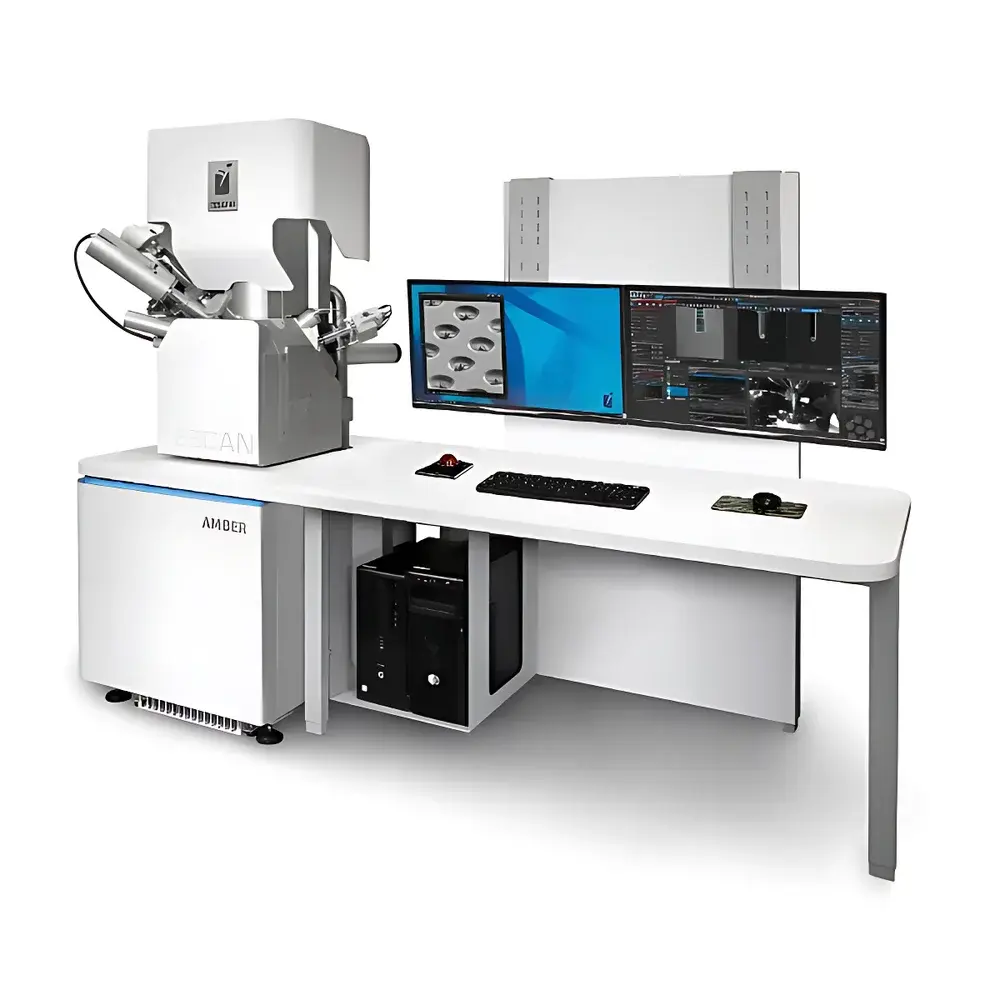
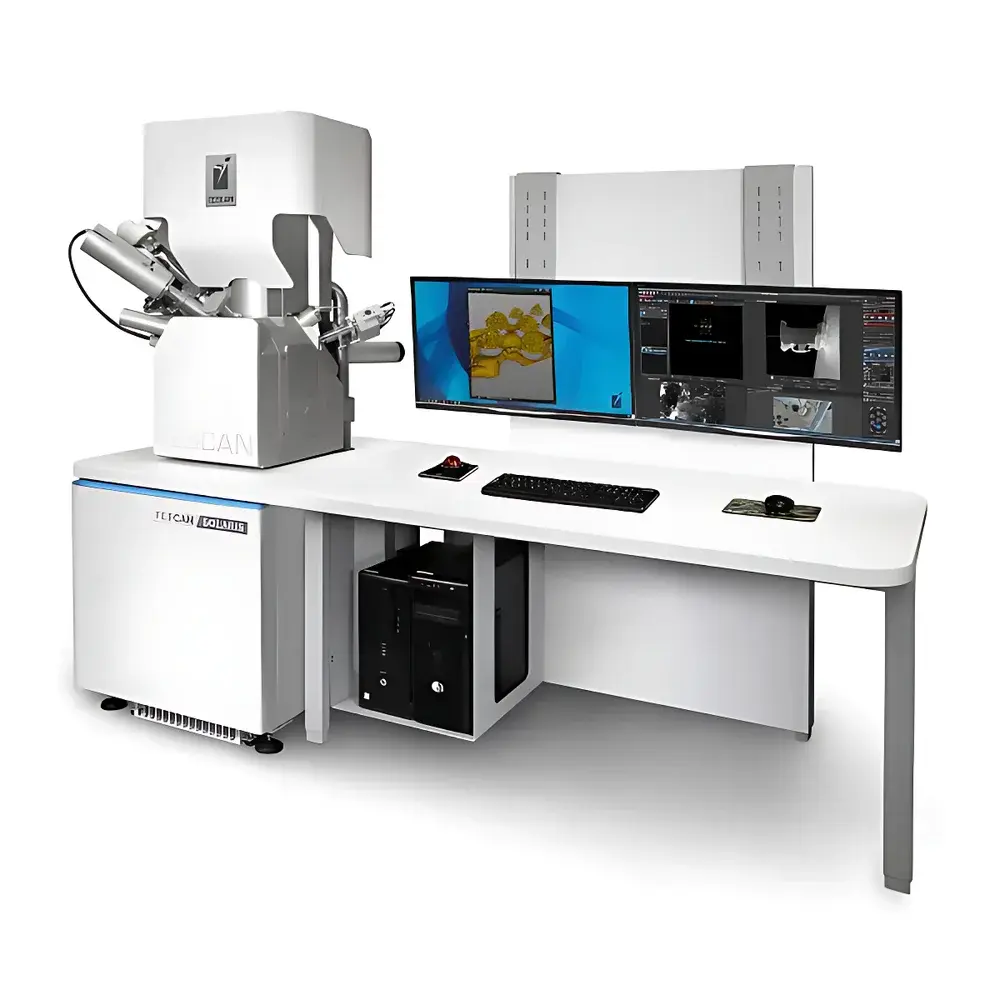
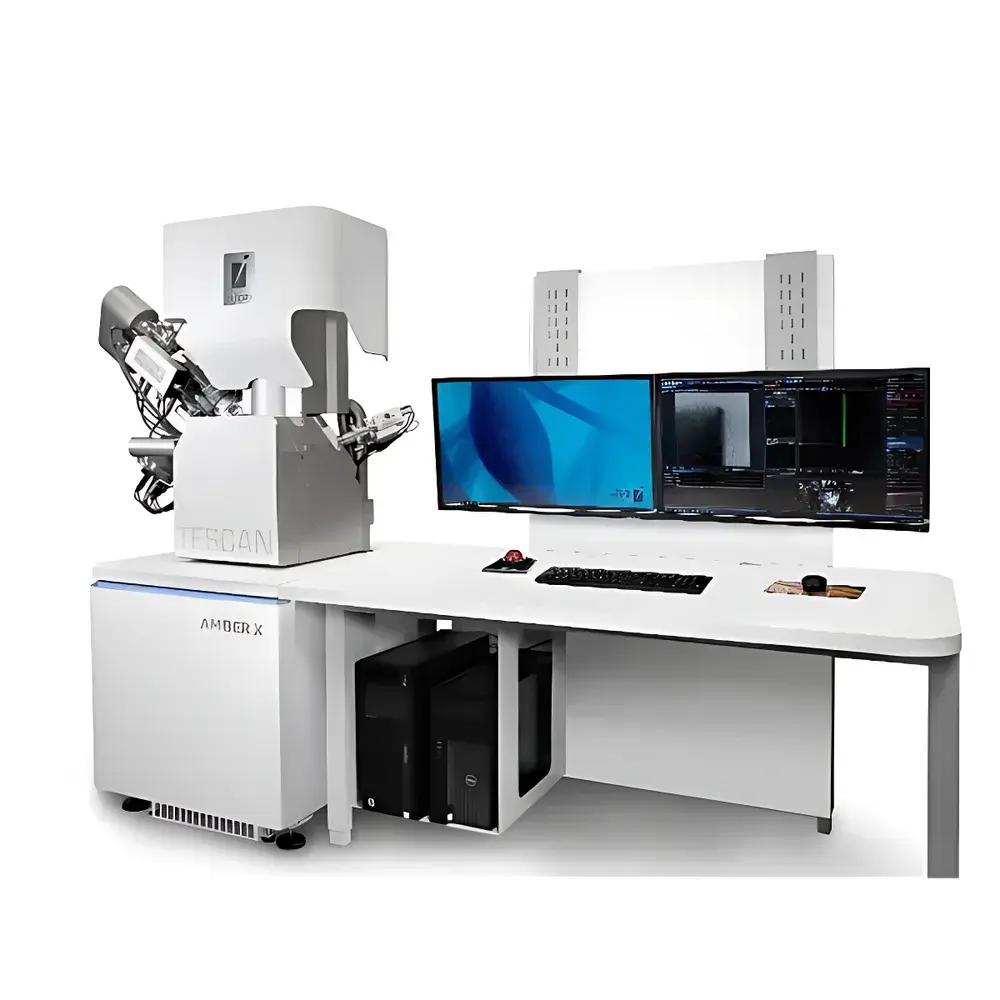
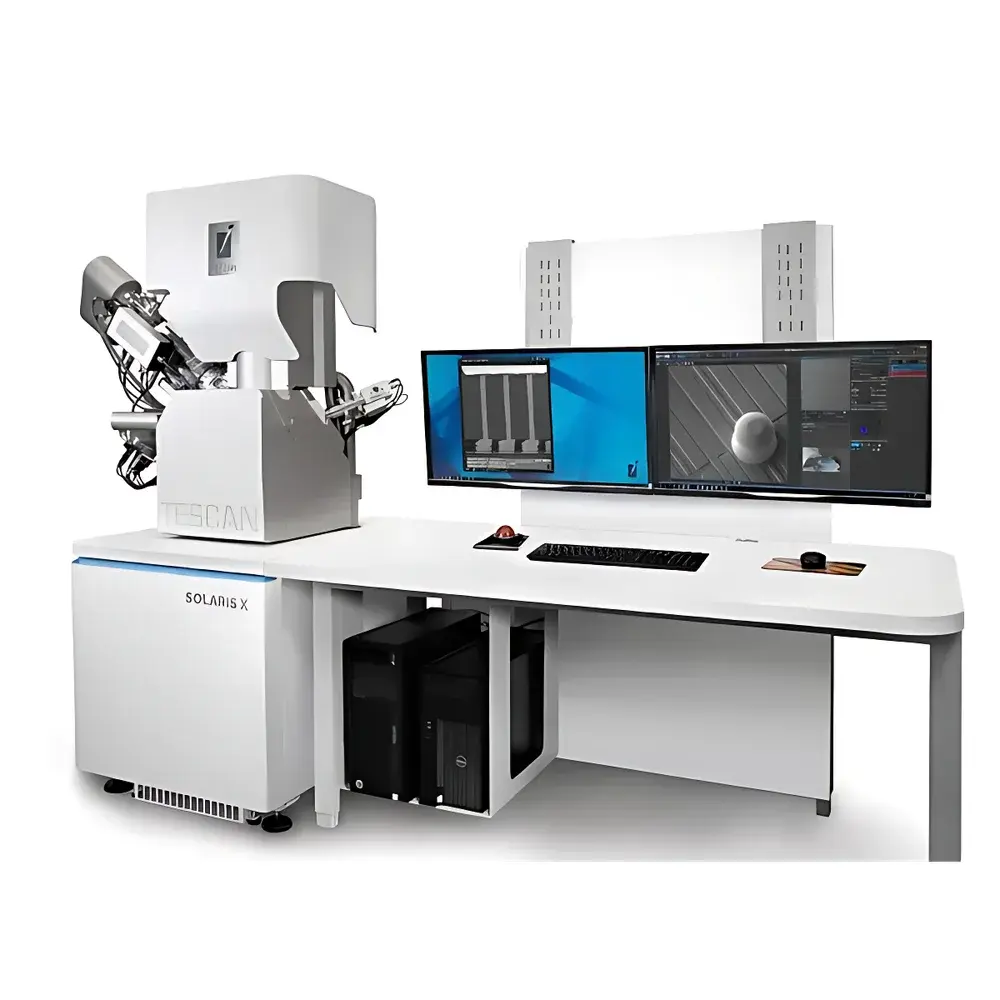
TESCAN AMBER / SOLARIS Series Dual-Beam FIB-SEM Systems
| Brand | TESCAN |
|---|---|
| Origin | Czech Republic |
| Model Variants | AMBER, SOLARIS, AMBER X, SOLARIS X |
| Ion Sources | Liquid Metal Ga⁺ & Plasma Xe⁺ |
| Beam Alignment | Co-located Electron/Ion Optical Axes |
| Resolution (Xe⁺ FIB) | <15 nm |
| Material Removal Rate (Xe⁺) | Up to 50× higher than Ga⁺ FIB |
| Application Domain | Cross-sectioning, TEM lamella preparation, circuit edit, 3D tomography, in-situ nanofabrication |
| Compliance | Designed for ISO/IEC 17025-aligned lab environments, compatible with GLP/GMP workflow documentation requirements |
Overview
The TESCAN AMBER and SOLARIS series represent a class of high-performance dual-beam focused ion beam–scanning electron microscopes (FIB-SEM) engineered for precision nanoscale characterization and manipulation. These systems integrate two independently controlled, co-axially aligned beam columns — a thermally assisted field emission (Schottky) electron column for high-resolution SEM imaging and analysis, and a focused ion column capable of either gallium liquid metal ion source (LMIS) or xenon plasma ion source (Xe⁺ PIL) operation. The optical design ensures precise overlap of the electron and ion probe focal points within the same coordinate system — a fundamental requirement for real-time, feedback-guided milling, deposition, and imaging workflows. This co-location enables sub-15 nm spatial registration accuracy between imaging and modification tasks, making the platform suitable for demanding applications such as site-specific TEM sample preparation, failure analysis of advanced semiconductor nodes, and serial sectioning for 3D electron microscopy reconstruction.
Key Features
- Co-registered electron and ion optical axes with automated alignment calibration routines ensuring long-term positional stability (<5 nm drift over 8 h)
- Dual ion source flexibility: Ga⁺ LMIS for ultra-high spatial resolution milling and nanoscale patterning; Xe⁺ plasma ion source for high-throughput material removal (up to 50× faster than Ga⁺ at equivalent beam energies)
- Integrated multi-detector suite including in-lens SE/BSE detectors, STEM transmission detector, and optional energy-dispersive X-ray spectrometer (EDS) for correlative structural and compositional analysis
- Advanced stage architecture with 5-axis motorized control (X/Y/Z/tilt/rotation), enabling complex tilt-series acquisition and large-area automated milling
- Modular vacuum architecture supporting optional cryo-transfer, gas injection systems (GIS) for Pt/C/W deposition, and in-situ electrical probing stages
- Firmware-level synchronization between beam scanning, stage motion, and detector acquisition for reproducible serial sectioning protocols
Sample Compatibility & Compliance
The AMBER and SOLARIS platforms accommodate a broad range of conductive and non-conductive specimens — from bulk metallurgical samples and polished cross-sections to fragile biological tissues (with appropriate coating or cryo-preparation) and next-generation semiconductor wafers up to 300 mm diameter. All systems operate under ultra-high vacuum conditions (<1×10⁻⁷ mbar in the chamber) with differential pumping for the ion column to maintain optimal source lifetime and beam stability. Instrument firmware and acquisition software are architected to support audit-trail generation and electronic signature capability per FDA 21 CFR Part 11 requirements. System validation packages align with ISO/IEC 17025 guidelines for testing and calibration laboratories, and operational logs meet GLP-compliant data integrity standards for regulated R&D environments.
Software & Data Management
TESCAN’s proprietary iQ+ software provides unified control of both beam columns, stage, detectors, and auxiliary modules via an intuitive, task-oriented interface. The software supports scriptable automation (Python API) for repeatable workflow execution — essential for high-volume TEM lamella preparation or industrial QA/QC metrology. Raw image and stage position data are stored in vendor-neutral HDF5 format with embedded metadata (timestamp, beam parameters, detector gain, stage coordinates). Integrated 3D reconstruction tools enable direct volume rendering from serial sectioning datasets, while EDS spectral maps can be overlaid onto reconstructed volumes for correlative microstructural analysis. Data export complies with MIAME/MINSEQE metadata standards, facilitating integration into institutional LIMS or ELN platforms.
Applications
- Site-specific TEM specimen preparation from IC devices, battery electrodes, and catalyst materials
- Failure analysis of advanced logic and memory chips using cross-sectional imaging and circuit edit capabilities
- 3D nanotomography of porous media, composites, and additively manufactured alloys
- In-situ nanomechanical testing with integrated nanoindenter and heating/cooling stages
- Correlative light-electron microscopy (CLEM) sample targeting using fiducial-based registration
- Microfluidic device prototyping and MEMS structure modification
FAQ
What distinguishes the AMBER from the SOLARIS platform?
The AMBER series emphasizes compact footprint and rapid deployment for industrial QA labs, while SOLARIS offers expanded analytical capabilities — including enhanced EDS sensitivity, larger chamber volume, and optional cryo-workflow integration — tailored for academic and advanced R&D facilities.
Can the system operate with both Ga⁺ and Xe⁺ sources installed simultaneously?
No. The ion column is configured for one source type per installation; switching requires hardware reconfiguration and recalibration by certified service engineers.
Is remote operation supported for multi-user facility environments?
Yes. iQ+ supports secure client-server architecture with role-based access control, enabling simultaneous local and remote session management across institutional networks.
What level of training is provided for new users?
TESCAN delivers comprehensive on-site commissioning, including 3-day operator training, 2-day application specialist workshops, and annual refresher courses covering new software releases and advanced protocol development.




