
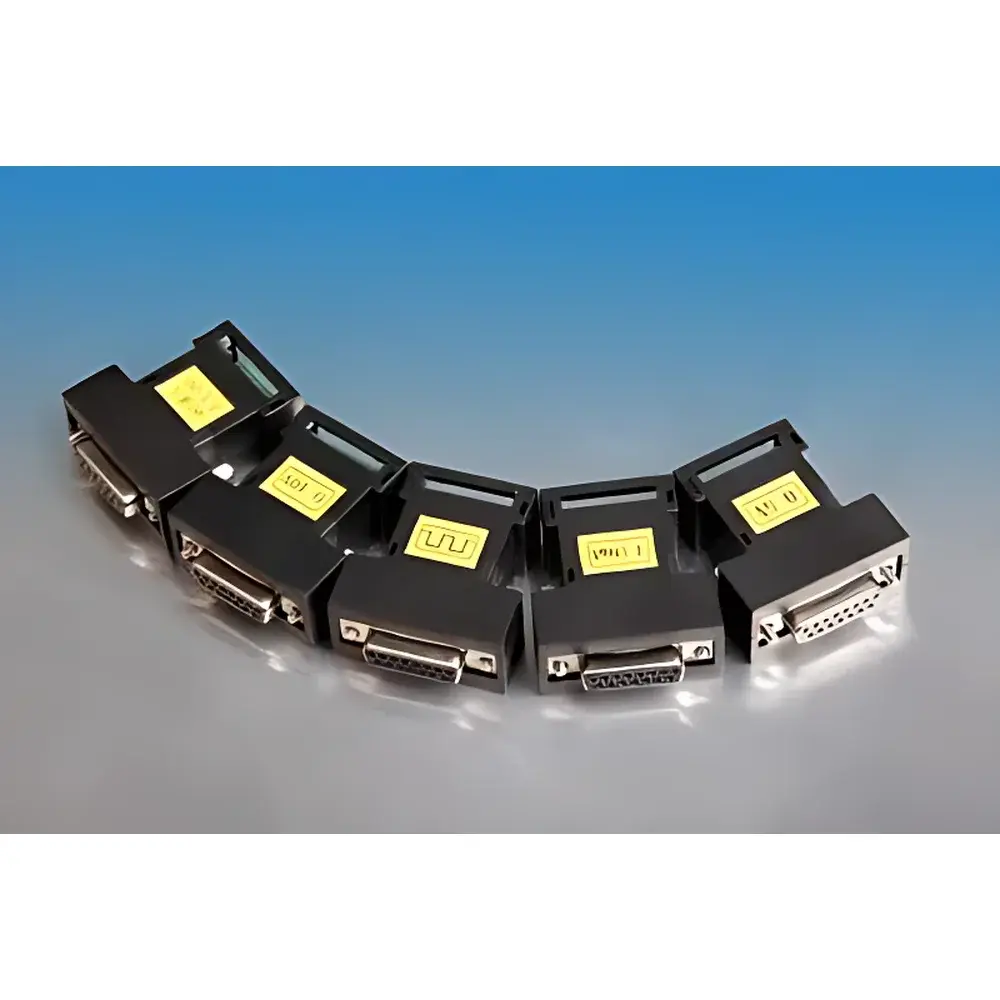
LongerPump Standard External Control Interface for Peristaltic Pumps
| Brand | LongerPump |
|---|---|
| Origin | Hebei, China |
| Manufacturer Type | OEM Manufacturer |
| Product Origin | Domestic (China) |
| Model | Standard External Control Interface |
| Pricing | Available Upon Request |
| Compatible Drivers | BQ50-1J, BT100-1L, BT100-2J, BT100-1F, BT300-2J, BT300-1F, BT600-2J, WT600-2J, LEAD-2, WT600-1F |
| Control Modes | 0–5 V analog input, 0–10 V analog input, 4–20 mA current loop input, pulse frequency input, serial communication control |
Overview
The LongerPump Standard External Control Interface is an industrial-grade signal adaptation module engineered to enable precise, real-time remote operation of LongerPump peristaltic pump drives. Designed in accordance with IEC 61000-6-2/6-4 electromagnetic compatibility standards, this interface bridges legacy and modern automation systems by converting standardized industrial control signals into native motor drive commands. It operates on the principle of proportional voltage/current-to-speed mapping and pulse-width or frequency-to-RPM translation, ensuring deterministic response across distributed laboratory and process environments. Unlike proprietary or software-dependent solutions, this hardware-level interface delivers deterministic latency (<10 ms typical), galvanic isolation (≥1500 VAC), and immunity to protocol stack overhead—making it suitable for integration into PLC-controlled bioreactors, continuous manufacturing lines, and GLP-compliant analytical sample introduction systems.
Key Features
- Five interoperable control modes: 0–5 V DC analog, 0–10 V DC analog, 4–20 mA current loop, TTL-compatible pulse frequency input (1–10 kHz range), and RS-485 Modbus RTU communication (addressable, configurable baud rate up to 115.2 kbps)
- Galvanically isolated analog and digital inputs to prevent ground-loop interference and protect connected instrumentation
- On-board signal conditioning circuitry including anti-aliasing filtering, overvoltage clamping (±15 V max), and current-limiting protection for 4–20 mA channels
- Plug-and-play compatibility with 11 widely deployed LongerPump drive models—including BT, BQ, WT, and LEAD series—without firmware modification or driver reconfiguration
- Compact DIN-rail mountable housing (90 × 55 × 75 mm) with IP20-rated enclosure, operating temperature range: 0–45 °C, relative humidity: ≤80 % non-condensing
Sample Compatibility & Compliance
This interface does not directly contact fluid samples; it functions exclusively as a control signal translator between supervisory systems and peristaltic pump drivers. As such, it complies with ISO 13485:2016 design control requirements for ancillary medical device components and meets CE marking criteria under the EMC Directive 2014/30/EU and Low Voltage Directive 2014/35/EU. For applications governed by FDA 21 CFR Part 11, the interface supports audit-trail-capable control when paired with validated SCADA or LIMS platforms that implement electronic signature and event logging functionality. It is routinely deployed in ISO/IEC 17025-accredited testing laboratories where traceable pump speed modulation is required for method-defined flow delivery (e.g., ASTM D3924–22 for solvent delivery in chromatography sample prep).
Software & Data Management
The interface operates autonomously without host software dependency. Configuration of input mode, scaling factors (e.g., 0–10 V = 0–300 rpm), and communication parameters is performed via DIP switches and jumper settings—eliminating configuration drift and enabling reproducible setup across installations. When used with Modbus RTU, it exposes registers for real-time speed setpoint, actual RPM feedback, direction status, and fault codes (e.g., overload, communication timeout). These registers integrate natively with Ignition SCADA, Siemens SIMATIC WinCC, and LabVIEW via standard Modbus TCP gateways. No proprietary drivers, cloud services, or subscription-based licensing are required. All operational states are accessible via discrete LED indicators (power, input active, communication OK, error), supporting rapid field diagnostics without instrumentation software.
Applications
- Automated liquid handling in pharmaceutical QC labs—synchronizing peristaltic flow with HPLC autosamplers and dissolution testers per USP <711>
- Continuous bioprocessing: integrating pump speed with pH/DO controllers in single-use bioreactors using 4–20 mA cascade loops
- Environmental monitoring stations—using pulse-frequency inputs from flow meters to maintain proportional reagent dosing in wastewater analyzers
- Academic research setups requiring synchronized multi-pump gradients (e.g., solvent mixing in preparative chromatography)
- GMP clean utility systems where validated, lockable analog interfaces replace touchscreens to reduce qualification burden
FAQ
Is firmware update required to use this interface with newer pump models?
No. The interface relies on hardware-level signal translation and requires no firmware updates—even for newly released drives within the supported model list.
Can multiple control inputs be active simultaneously?
No. Only one input mode may be enabled at a time via DIP switch selection to ensure deterministic behavior and avoid signal contention.
Does the interface provide speed feedback to the controller?
Yes—when configured for Modbus RTU mode, it reports actual rotational speed, direction, and operational status via standard holding registers.
What is the maximum cable length supported for analog and pulse inputs?
For 0–10 V and 4–20 mA: up to 100 m with shielded twisted-pair (STP) cable; for pulse input: ≤30 m with 50 Ω coaxial or STP to maintain signal integrity at 10 kHz.
Is explosion-proof certification available?
Not natively—but the unit may be installed in Class I, Division 2 hazardous locations when housed in an appropriately rated NEMA 4X enclosure and wired per NEC Article 500 guidelines.



