
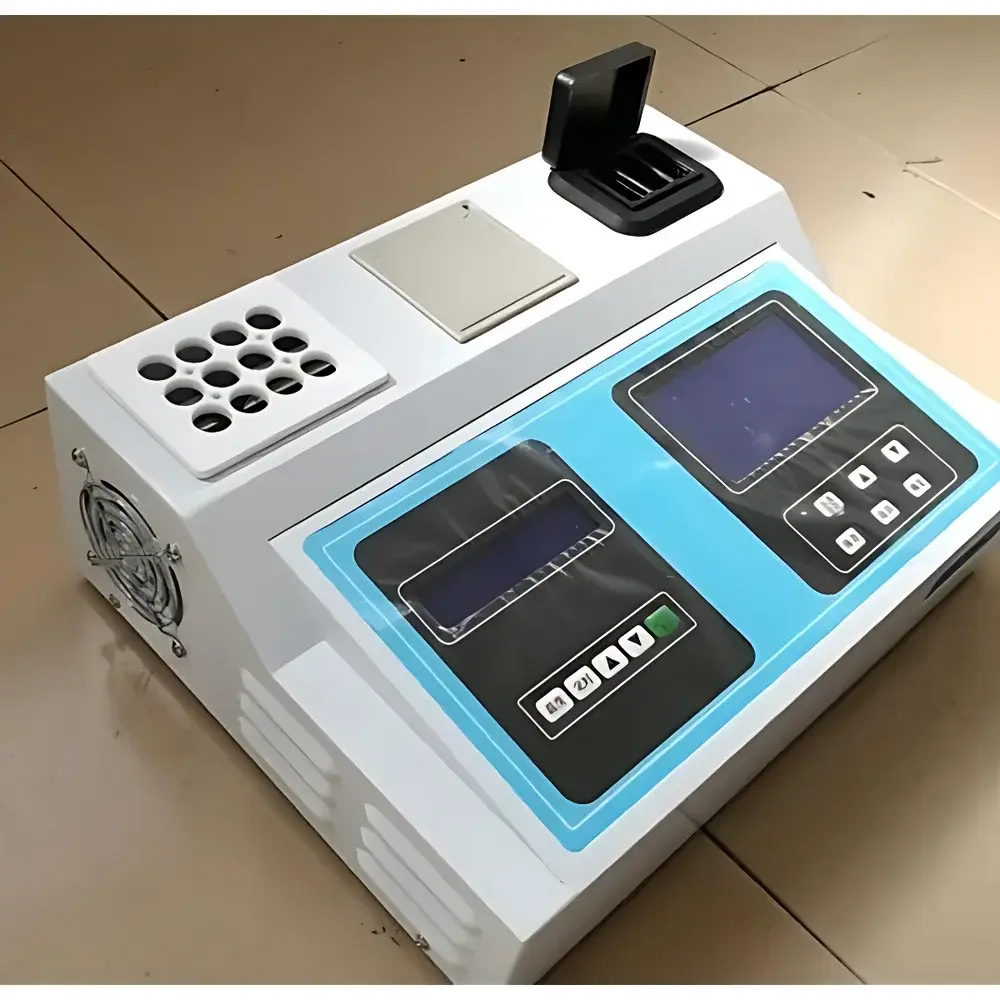
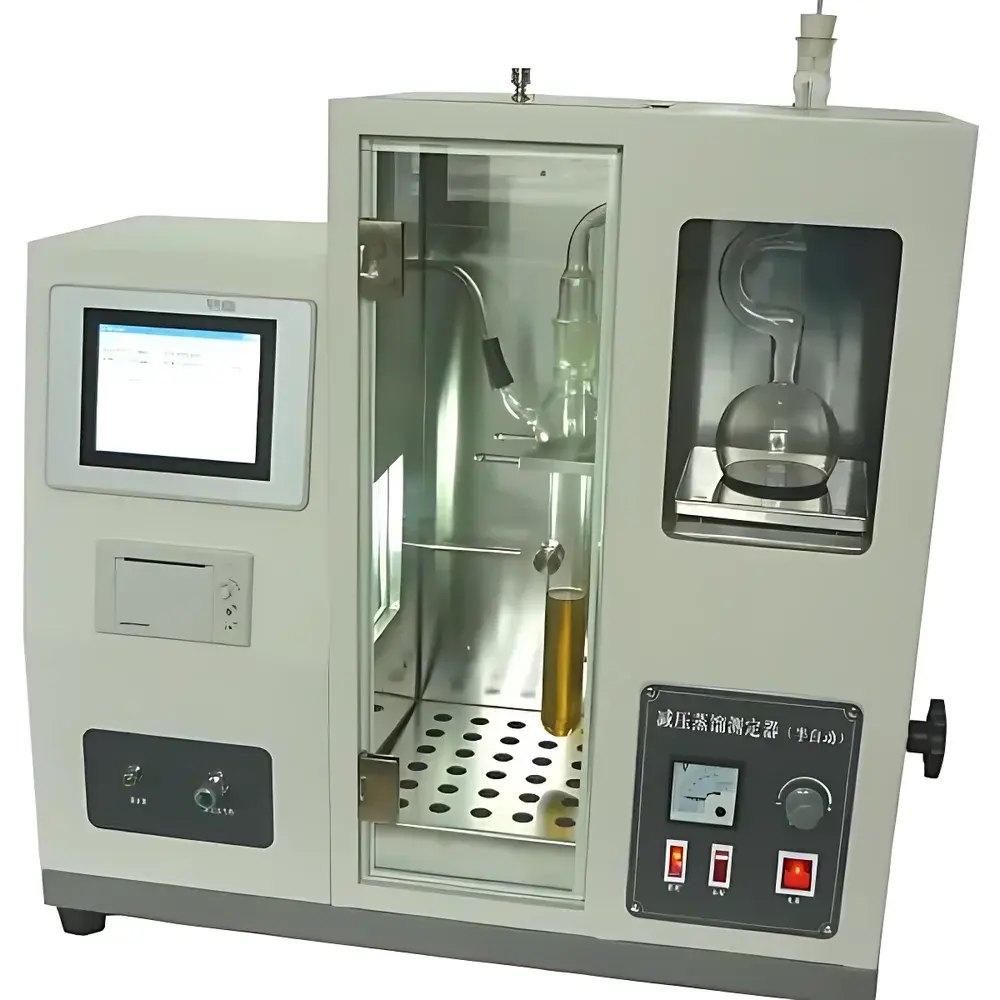
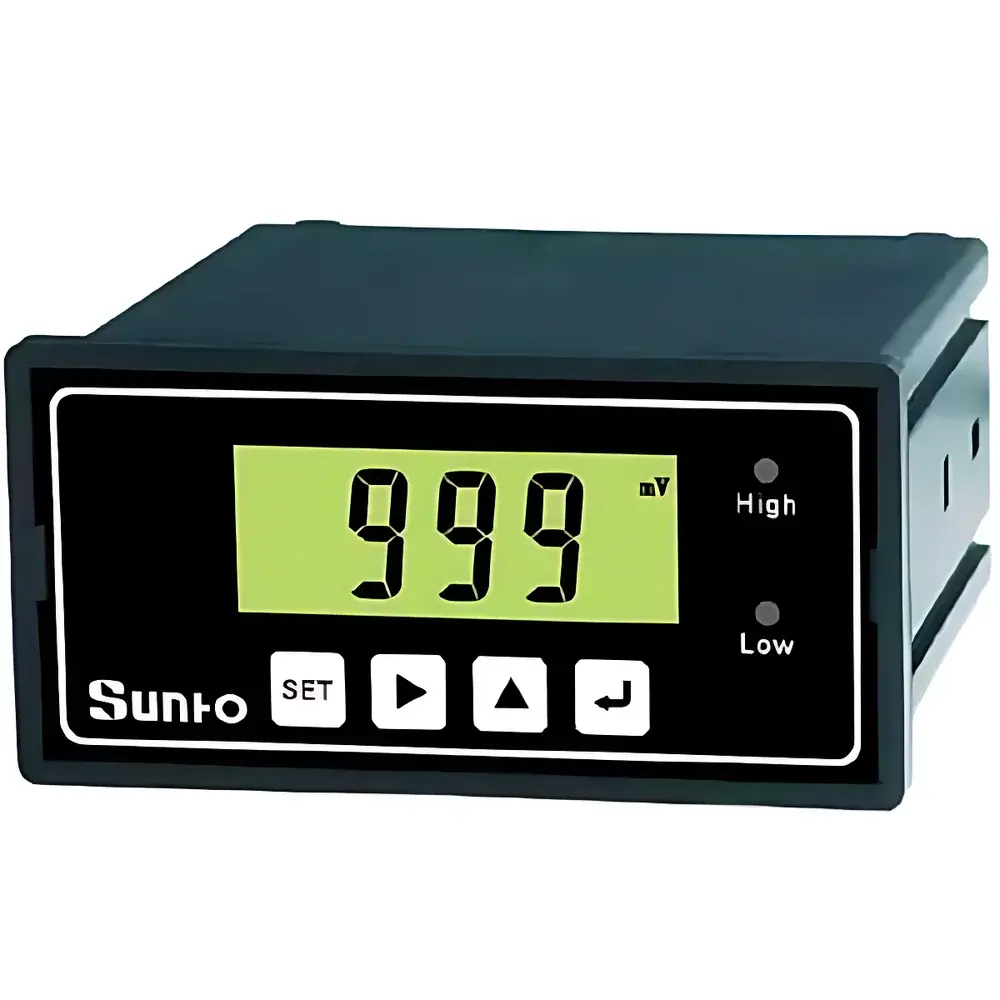
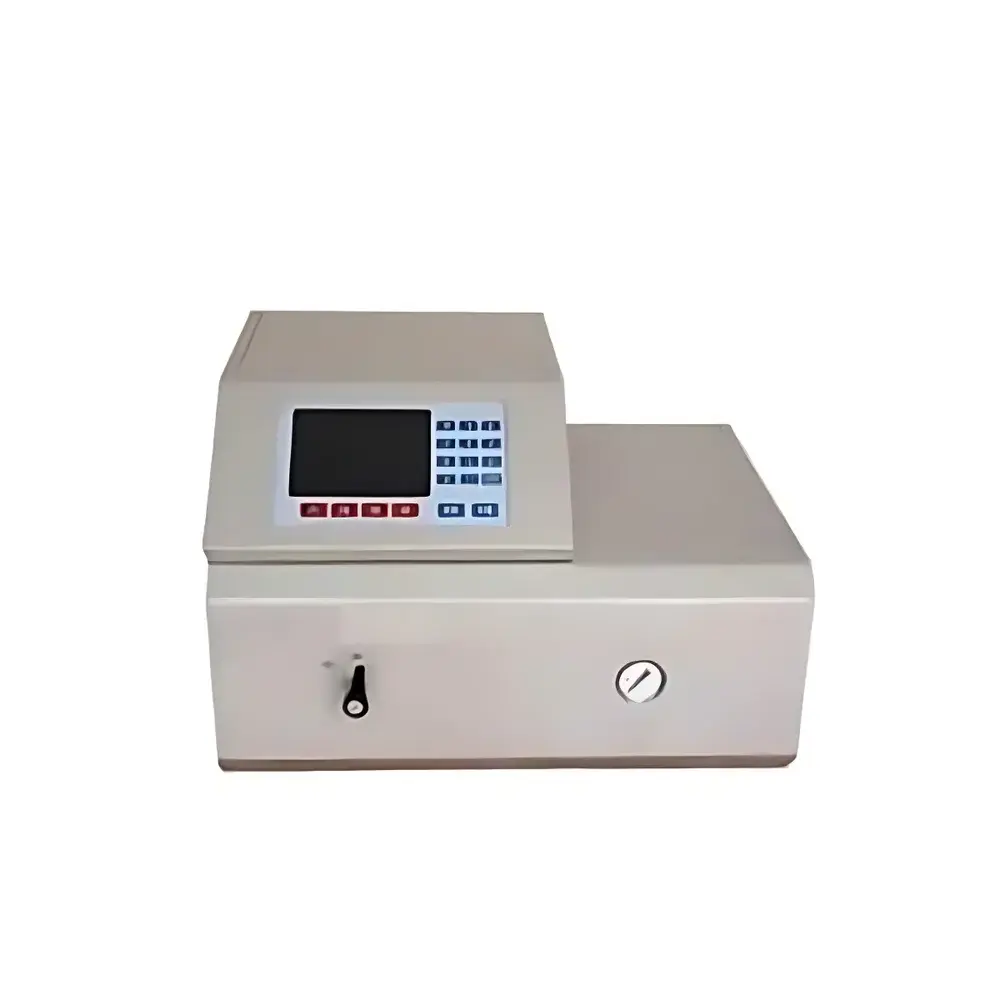
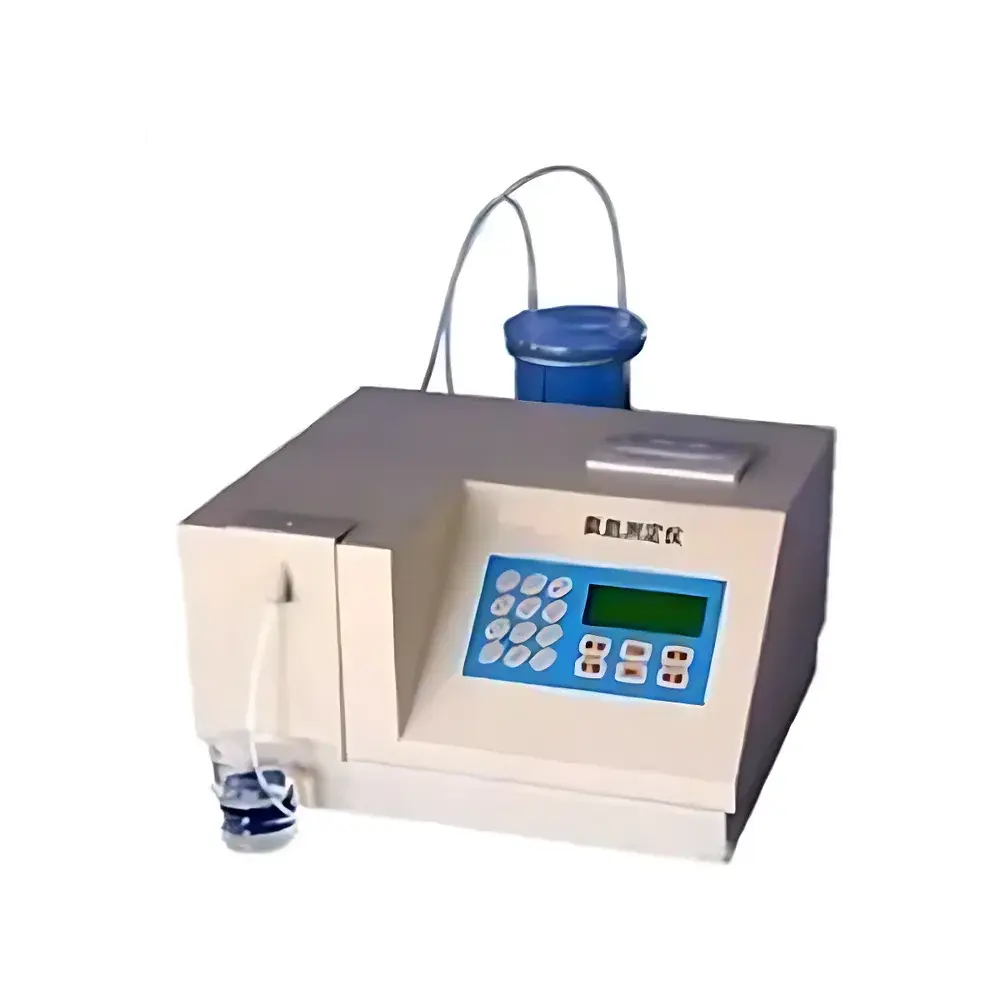
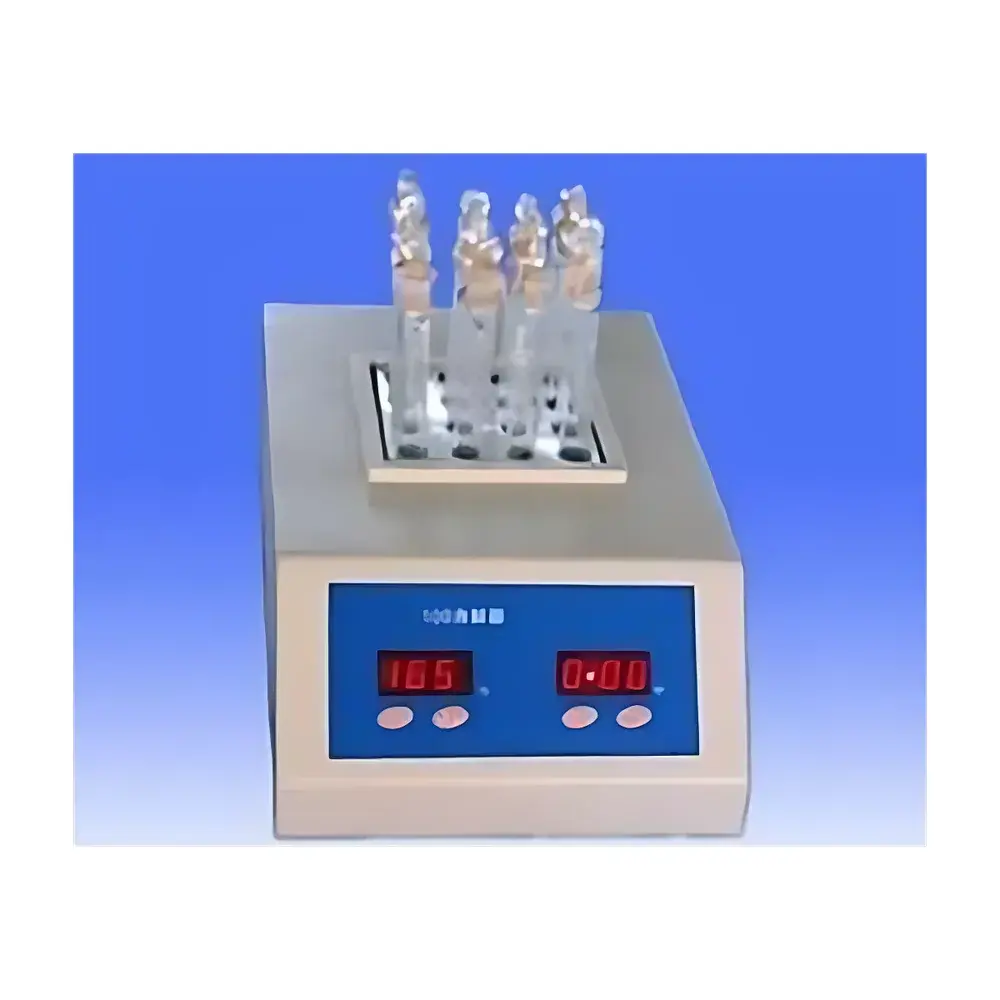
HengaoDe HAD-29008 All-in-One Multi-Parameter Water Quality Analyzer with Integrated Digestion System
| Brand | HengaoDe |
|---|---|
| Origin | Beijing, China |
| Manufacturer Type | Authorized Distributor |
| Country of Origin | China |
| Model | HAD-29008 |
| Price | USD 42.50 (FOB) |
| Digestion Capacity | ≤12 samples |
| Digestion Temp Range | Up to 200 °C |
| Digestion Time Range | Up to 999 min |
| COD Method | Rapid Catalytic Dichromate Oxidation |
| COD Range | 5–5000 mg/L (dual-range optical detection) |
| Ammonia-N Method | Nesslerization |
| Ammonia-N Range | 0.01–50 mg/L |
| Total Phosphorus Method | Ammonium Molybdate Spectrophotometry |
| TP Range | 0.01–12 mg/L |
| Total Nitrogen Method | UV-Persulfate Digestion + Spectrophotometry |
| TN Range | ≤100 mg/L |
| Turbidity Method | Absorption Spectrophotometry |
| Turbidity Range | 0–400 NTU |
| Data Storage | 30,000 entries |
| Calibration Points | 1–7-point auto-calibration |
| Power Supply | AC 220 V ±10%, 50 Hz / DC 16 V, 20 Ah Li-ion battery |
| Dimensions | 420 × 320 × 150 mm |
| Weight | 6 kg |
Overview
The HengaoDe HAD-29008 is an integrated multi-parameter water quality analyzer engineered for routine and regulatory-compliant analysis in environmental monitoring laboratories, municipal wastewater treatment plants, and industrial QC facilities. It combines microprocessor-controlled digestion with dual-wavelength photometric detection based on standardized wet-chemical oxidation and colorimetric reaction principles. Unlike standalone benchtop analyzers, the HAD-29008 embeds digestion and measurement into a single compact platform—eliminating manual transfer steps, reducing contamination risk, and improving inter-operator reproducibility. Its optical architecture employs high-stability LED light sources and precision photodiodes calibrated per ISO 7027 (turbidity), ISO 6060 (COD), ISO 7150-1 (ammonia), and ISO 6878 (total phosphorus), ensuring traceable alignment with international method equivalence. The instrument operates under ambient conditions compliant with ISO/IEC 17025 environmental requirements (5–40 °C, RH <85% non-condensing) and supports both AC mains and field-deployable DC power via integrated lithium battery—enabling use in mobile labs or remote sampling stations.
Key Features
- Integrated digestion and photometric measurement in one chassis—no sample repositioning required between steps
- Dual-wavelength optical detection for COD: 610 nm (low range: 5–150 mg/L) and 420 nm (high range: 100–1000 mg/L), enabling dynamic range extension up to 5000 mg/L via dilution
- PID-controlled digestion block with ±1 °C thermal stability at 120 °C (TP/TN) and 165 °C (COD), programmable for up to 999 minutes
- 100 user-definable calibration curves per parameter, supporting matrix-matched calibration for complex wastewater matrices
- Automatic zero adjustment, real-time drift compensation, and 7-point linear/nonlinear curve fitting with residual error reporting
- Large dual-line LCD display with intuitive icon-driven menu navigation; no specialized training required for operation
- Onboard thermal printer with timestamped output compliant with GLP documentation standards (per ISO/IEC 17025 clause 7.8)
- USB export capability for raw absorbance values, calibration logs, and QC check records—compatible with LIMS integration
Sample Compatibility & Compliance
The HAD-29008 accommodates liquid samples across diverse matrices: raw influent, secondary effluent, surface water, groundwater, and industrial process streams. Its digestion chamber accepts standard 16-mm borosilicate glass tubes (up to 12 simultaneously), while optical cuvette slots accept 10-mm pathlength cells conforming to ASTM D1253 and EPA Method 410.1 specifications. For ammonia-N analysis, the instrument implements Nesslerization per ISO 7150-1 and GB 7479–1987; total phosphorus follows ISO 6878 using ammonium molybdate reagent; total nitrogen utilizes alkaline persulfate digestion per ISO 11908; turbidity complies with ISO 7027 using formazin standards. All methods are validated against reference materials certified to ISO Guide 35, including NIST SRM 2122 (COD), NIST SRM 2123 (ammonia), and EPA WQ-100 (phosphate). Instrument performance meets QC criteria outlined in US EPA Guidance Document QA/G-5 and EU EN ISO/IEC 17025:2017 Annex A.3.
Software & Data Management
Data handling adheres to ALCOA+ principles (Attributable, Legible, Contemporaneous, Original, Accurate, Complete, Consistent, Enduring, Available). Each measurement record includes operator ID, sample ID, date/time stamp, digestion parameters (temp/duration), calibration curve ID, raw absorbance values at both wavelengths, calculated concentration, and uncertainty estimate derived from calibration residuals. Internal storage retains 30,000 records with automatic overwrite protection for flagged QC failures. Export formats include CSV (for Excel/Statistica) and PDF (for audit-ready reports). Audit trails log all parameter changes, calibration events, and user logins—retained for ≥12 months as required by FDA 21 CFR Part 11 Annex 11 and EU GMP Annex 11. Firmware updates are delivered via signed USB firmware packages with SHA-256 checksum verification.
Applications
- Regulatory compliance testing for municipal WWTPs under national discharge permits (e.g., China’s GB 8978–1996, EU Urban Wastewater Treatment Directive 91/271/EEC)
- Industrial pretreatment verification for electroplating, pharmaceutical, and petrochemical facilities subject to local effluent limits
- Field-based rapid screening during environmental incident response (e.g., spill characterization, leak detection)
- Process control in membrane bioreactor (MBR) and activated sludge systems requiring real-time nutrient tracking
- Academic and vocational lab instruction—preloaded with teaching modes demonstrating Beer-Lambert law application and method validation protocols
FAQ
Does the HAD-29008 meet ISO/IEC 17025 traceability requirements for accredited laboratories?
Yes—the instrument’s optical system is factory-calibrated using NIST-traceable neutral density filters, and all digestion temperature profiles are verified with PTB-certified thermocouples. Calibration certificates are provided with each unit.
Can the analyzer handle high-chloride wastewater without interference in COD measurement?
Yes—it incorporates chloride masking via Ag₂SO₄ addition and supports up to 4000 mg/L Cl⁻ without correction, per ISO 6060 Annex B.
Is method validation data available for third-party accreditation submissions?
Yes—HengaoDe provides full validation reports including LOD/LOQ, linearity (r² ≥0.999), precision (RSD ≤3.2%), spike recovery (92–105%), and inter-laboratory reproducibility per ISO 5725-2.
How is firmware updated, and does it require external service?
Firmware updates are self-executed via USB drive using digitally signed packages; no technician visit is needed. Version history and update logs are retained in the audit trail.
What maintenance intervals are recommended for long-term reliability?
Optical path cleaning every 3 months; digestion block inspection annually; photodiode gain recalibration every 6 months using supplied calibration kit (Cat. No. HAD-CAL-KIT-01).




