
HengaoDe HAD-PH1 All-in-One Automatic Weather Station with RS232/RS485 Interface
| Brand | HengaoDe |
|---|---|
| Origin | Beijing, China |
| Manufacturer Type | Authorized Distributor |
| Country of Origin | China |
| Model | HAD-PH1 |
| Instrument Type | Integrated Multiparameter Weather Station |
| Communication | RS232 / RS485 (MODBUS RTU compliant) |
| Power Options | AC 220V, DC 5V/12V, Solar, or Wind-Solar Hybrid |
| Operating Temperature | −50°C to +50°C |
| IP Rating | IP65 (sensor enclosure), IP54 (data logger housing) |
Overview
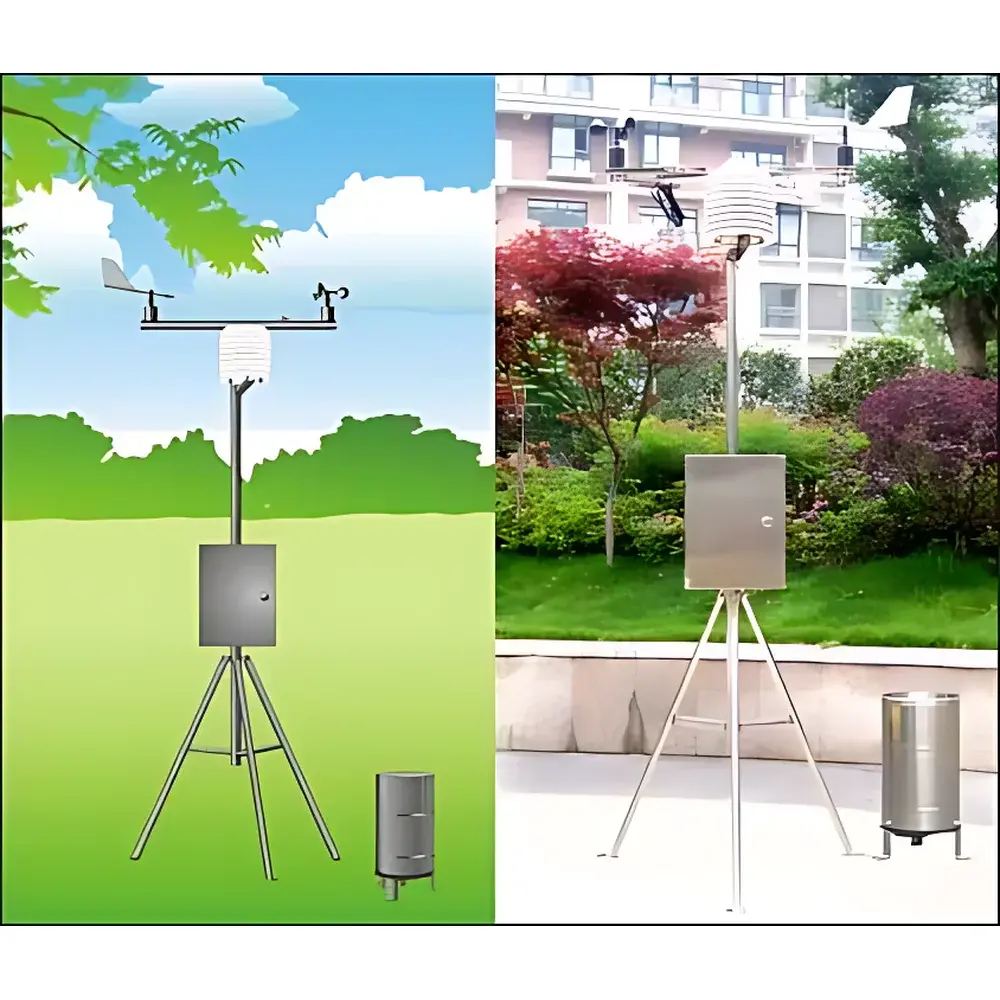
The HengaoDe HAD-PH1 is an integrated, field-deployable automatic weather station engineered for continuous, unattended environmental monitoring across diverse operational environments—including agricultural research plots, ecological reserves, airport perimeters, hydrological basins, and industrial emission monitoring zones. It employs a modular sensor architecture grounded in standardized physical measurement principles: cup-and-vane anemometry for wind speed and direction; capacitive polymer humidity sensing with temperature-compensated output; silicon-based thermistor networks for air and soil temperature; piezoelectric tipping-bucket mechanism for precipitation; silicon MEMS barometric pressure transduction; thermopile-based pyranometry for global solar irradiance; and FDR (Frequency Domain Reflectometry) probes for volumetric soil moisture. All sensors conform to WMO Guide to Meteorological Instruments and Methods of Observation (CIMO Guide, 2022 edition) baseline performance expectations for Class II observational systems.
Key Features
- Simultaneous real-time acquisition of nine core meteorological parameters: wind speed (0–70 m/s), wind direction (0–360°), ambient temperature (−50°C to +50°C), relative humidity (0–100% RH), atmospheric pressure (450–1060 hPa), rainfall (0–999.9 mm), global solar radiation (0–1500 W/m²), soil temperature (−50°C to +80°C), and soil volumetric water content.
- Embedded microcontroller-based data logger with non-volatile memory (16 MB flash), real-time clock (RTC) with ±2 ppm accuracy, and configurable logging intervals from 1 second to 24 hours.
- Robust mechanical construction: stainless-steel mounting mast (≥2.5 m height), UV-stabilized fiberglass outdoor enclosure (IP54 rated), and ventilated radiation-shielded thermohygrometer housing meeting ISO 7726 ergonomics and thermal error mitigation guidelines.
- Dual-mode power architecture supporting AC mains (220 VAC ±10%), regulated DC input (5 V / 12 V), and renewable hybrid (solar panel + LiFePO₄ battery bank) configurations—enabling >12 months autonomous operation under typical mid-latitude insolation conditions.
- Comprehensive electromagnetic compatibility: integrated transient voltage suppression (TVS), galvanic isolation on all analog inputs, and multi-stage surge protection (IEC 61000-4-5 Level 3 compliant) for lightning-prone deployment sites.
Sample Compatibility & Compliance
The HAD-PH1 is designed for long-term exposure in open-field, rooftop, and tower-mounted installations. Sensor calibration traceability aligns with national metrological standards (CNAS-accredited verification reports available upon request). Data integrity meets GLP-aligned field recording requirements: all measurements are time-stamped with UTC-synchronized RTC, stored with CRC-16 checksums, and support audit-trail-enabled firmware updates. The system complies with MODBUS RTU (RS485) protocol specifications (ANSI/EIA-485-A), enabling seamless integration into SCADA platforms used by municipal environmental agencies and national meteorological services. While not certified to IEC 61000-6-2/6-4 for industrial immunity, its EMI hardening exceeds EN 61326-1 Annex A for laboratory and field-use instrumentation.
Software & Data Management
The station communicates via ASCII-based serial protocol over RS232 or MODBUS RTU over RS485. Raw binary or ASCII telemetry frames include header, sensor ID, value, unit code, timestamp, and frame checksum. Third-party software compatibility includes Campbell Scientific LoggerNet, DTN WeatherLink, and open-source platforms such as ThingsBoard and Grafana (with custom Telegraf parser). Local configuration is performed via backlit monochrome LCD with tactile keypad; remote parameter adjustment and firmware upgrades are supported via GPRS modem (optional) using AT-command interface. All historical data remains preserved during power loss due to EEPROM-backed storage with >100,000 write cycles endurance.
Applications
- Agricultural microclimate monitoring for irrigation scheduling and frost-risk forecasting (aligned with FAO-56 evapotranspiration modeling inputs).
- Environmental impact assessment (EIA) baseline studies for wind farm siting and solar PV yield modeling.
- Urban heat island (UHI) research requiring spatially distributed air/soil temperature and humidity gradients.
- Aviation weather observation at general aviation airports lacking full ASOS infrastructure.
- Long-term ecological research (LTER) programs requiring interoperable, low-maintenance sensor nodes with documented uncertainty budgets.
FAQ
What communication protocols does the HAD-PH1 support?
It supports ASCII serial (RS232) and MODBUS RTU (RS485) natively; optional GPRS modules enable TCP/IP transmission using standard MQTT or HTTP POST payloads.
Can sensor configurations be customized post-purchase?
Yes—the modular architecture permits replacement or addition of calibrated sensors (e.g., CO₂, NO₂, leaf wetness) provided they adhere to 4–20 mA, 0–5 V, or pulse-output interfaces compatible with the logger’s analog/digital input specs.
Is the system suitable for coastal or desert deployments?
Affirmative: stainless-steel hardware, conformal-coated PCBs, and IP65-rated sensor housings ensure resistance to salt fog (per ISO 9227 neutral salt spray testing) and sand ingress (per IEC 60529 dust test).
How is time synchronization maintained during extended power outages?
The onboard RTC uses a temperature-compensated crystal oscillator (TCXO) with <±2 ppm drift per year; time drift remains within ±1.5 seconds after 30 days without external sync.
Does the system comply with FDA 21 CFR Part 11 or EU Annex 11 requirements?
No—it is not designed for regulated pharmaceutical or clinical trial environments; however, raw data export formats (CSV, JSON) and immutable timestamping support retrospective validation under internal QA procedures.







