
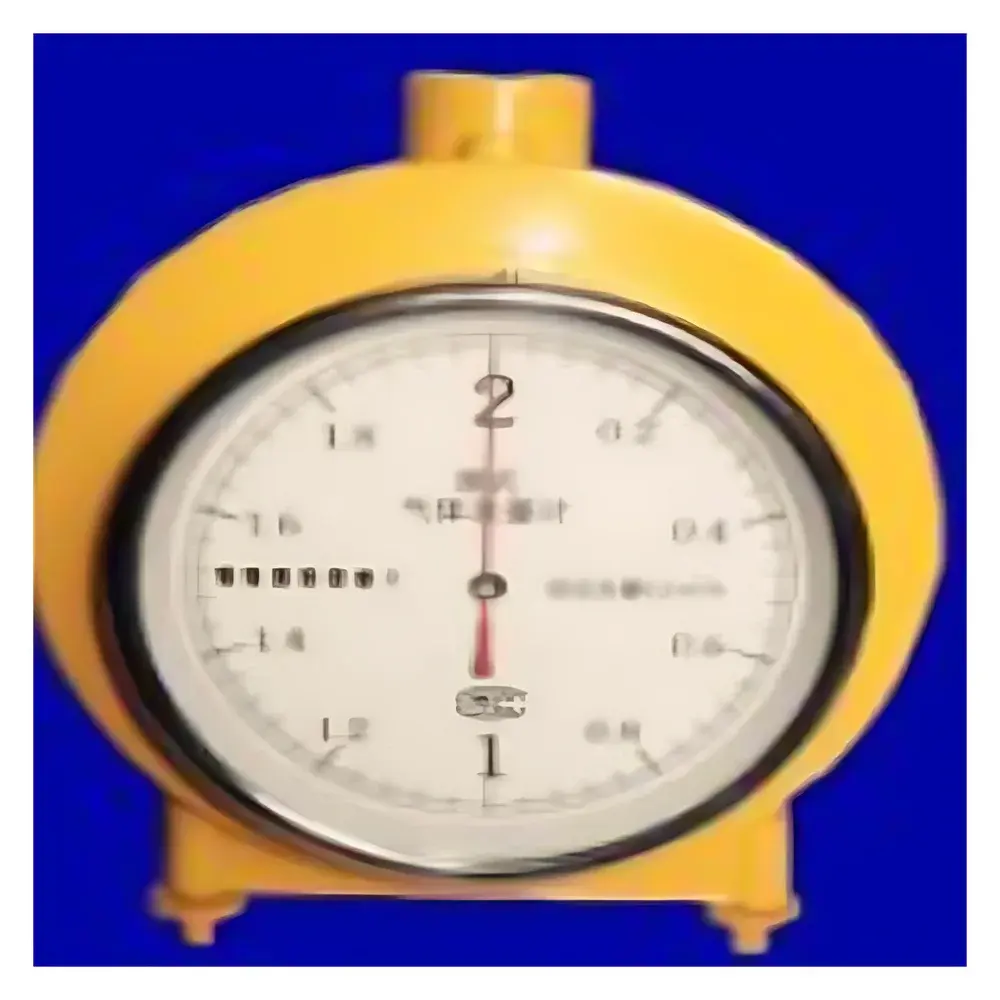
HengAode H14926 Brass Wet-Gas Meter for Laboratory Gas Volume Measurement
| Brand | HengAode |
|---|---|
| Origin | Beijing, China |
| Manufacturer Type | Authorized Distributor |
| Country of Origin | China |
| Model | H14926 |
| Price | USD 92 (FOB) |
Overview
The HengAode H14926 Brass Wet-Gas Meter is a precision volumetric gas flow measurement instrument engineered for laboratory-grade quantification of total gas volume under ambient conditions. It operates on the principle of liquid-sealed displacement: gas entering the meter displaces a known volume of distilled water within a calibrated brass drum chamber, and the rotation of the drum—mechanically linked to a gear-driven counter—is directly proportional to the volume of gas passed. This gravimetric displacement method delivers high accuracy at low to moderate flow rates (typically 0.1–30 L/min), with an expanded uncertainty of ±0.2% (k=2, 95% confidence level) when operated within specified environmental constraints. Unlike thermal or orifice-based meters, the H14926 requires no electronic calibration drift compensation and provides inherently linear, analog readout—making it ideal for validation-critical applications such as gas standardization, combustion efficiency testing, biogas yield verification, and calibration of secondary flow sensors.
Key Features
- Monolithic brass construction (ASTM B124 C23000 alloy) ensures dimensional stability, corrosion resistance to non-acidic, non-sulfurous gases (e.g., air, N₂, O₂, CH₄, CO₂), and long-term mechanical repeatability.
- Integrated water-level control system with capillary wick and sealed fill port enables rapid, bubble-free priming using distilled water—eliminating air entrapment that compromises volumetric fidelity.
- Mechanical counter with direct gear coupling offers tactile, zero-power readout; resolution: 10 mL per drum revolution (calibrated scale engraved on drum surface).
- Equipped with dual 1/8″ NPT inlet/outlet ports and integrated temperature (±0.5°C) and differential pressure (0–6 kPa, 10 Pa/division) measurement ports for real-time correction to standard conditions (e.g., STP or NTP) per ISO 6145-1 and ASTM D1945.
- Pulse output module (open-collector, TTL-compatible) supports automated data logging via PLC or PC interface, enabling integration into GLP-compliant lab information management systems (LIMS).
Sample Compatibility & Compliance
The H14926 is validated for use with dry or saturated non-corrosive gases at temperatures between 15–25°C (±2°C deviation from ambient) and pressures ≤6 kPa gauge. It is not suitable for halogenated, acidic (e.g., HCl, SO₂), or solvent-laden streams. Per ISO/IEC 17025:2017 requirements for volumetric standards, annual recalibration against a traceable bell prover or critical-flow venturi is recommended. The instrument complies with general safety provisions of IEC 61010-1 for laboratory electrical equipment (when used with optional pulse module), and its mechanical design conforms to EN 13485 for metrological integrity in accredited testing environments.
Software & Data Management
While the base H14926 is analog-only, the optional pulse-output variant interfaces seamlessly with third-party data acquisition software (e.g., LabVIEW, MATLAB, or custom Python scripts via USB-to-TTL adapters). Pulse frequency correlates linearly to instantaneous flow rate (1 pulse = 10 mL), enabling time-resolved volumetric integration. All logged data—including timestamped volume totals, temperature, and pressure—can be exported in CSV format for audit trails. When deployed in regulated settings (e.g., EPA Method 2, USP ), the system supports 21 CFR Part 11–compliant electronic signatures if paired with validated acquisition software featuring audit-log functionality, user access controls, and data immutability.
Applications
- Calibration of mass flow controllers (MFCs) and digital flow meters in R&D labs.
- Quantification of biogas production in anaerobic digestion studies (ASTM D5279).
- Verification of gas evolution rates in chemical reaction kinetics (e.g., acid–carbonate decomposition).
- Flow verification for environmental chamber exhaust sampling systems.
- Educational demonstration of gas laws (Boyle’s, Charles’s, and Ideal Gas Law) in university teaching labs.
FAQ
What is the maximum allowable overpressure for continuous operation?
The meter may operate continuously at up to 6 kPa gauge pressure; beyond this, the pressure gauge must be removed and the port sealed with a solid PTFE plug to prevent diaphragm deformation.
Can the H14926 be used with humidified or saturated gases?
Yes—provided condensation does not accumulate in the drum chamber. A desiccant trap upstream is recommended for long-duration runs with high dew-point gases.
How often must the water seal be replenished?
Under stable lab conditions (20 ± 1°C, RH <60%), distilled water loss is negligible (<0.5 mL/week); check weekly via the sight window and top up only when the meniscus falls below the lower calibration mark.
Is traceable calibration documentation provided with shipment?
Each unit ships with a factory verification certificate listing serial-number-specific calibration constants, test date, and reference standard ID (NIST-traceable bell prover, certificate #XXXXX).
What maintenance is required to sustain ±0.2% uncertainty?
Annual recalibration, biannual inspection of gear train backlash, and quarterly cleaning of brass surfaces with ethanol (to remove mineral deposits) are mandatory per ISO 4064-2 Annex C for class B meters.





