
HengaoDe HAD-300 Stainless Steel Cryogenic Liquid Nitrogen Therapy Gun
| Brand | HengaoDe |
|---|---|
| Origin | Beijing, China |
| Manufacturer Type | Authorized Distributor |
| Country of Origin | China |
| Model | HAD-300 |
| Pricing | Upon Request |
Overview
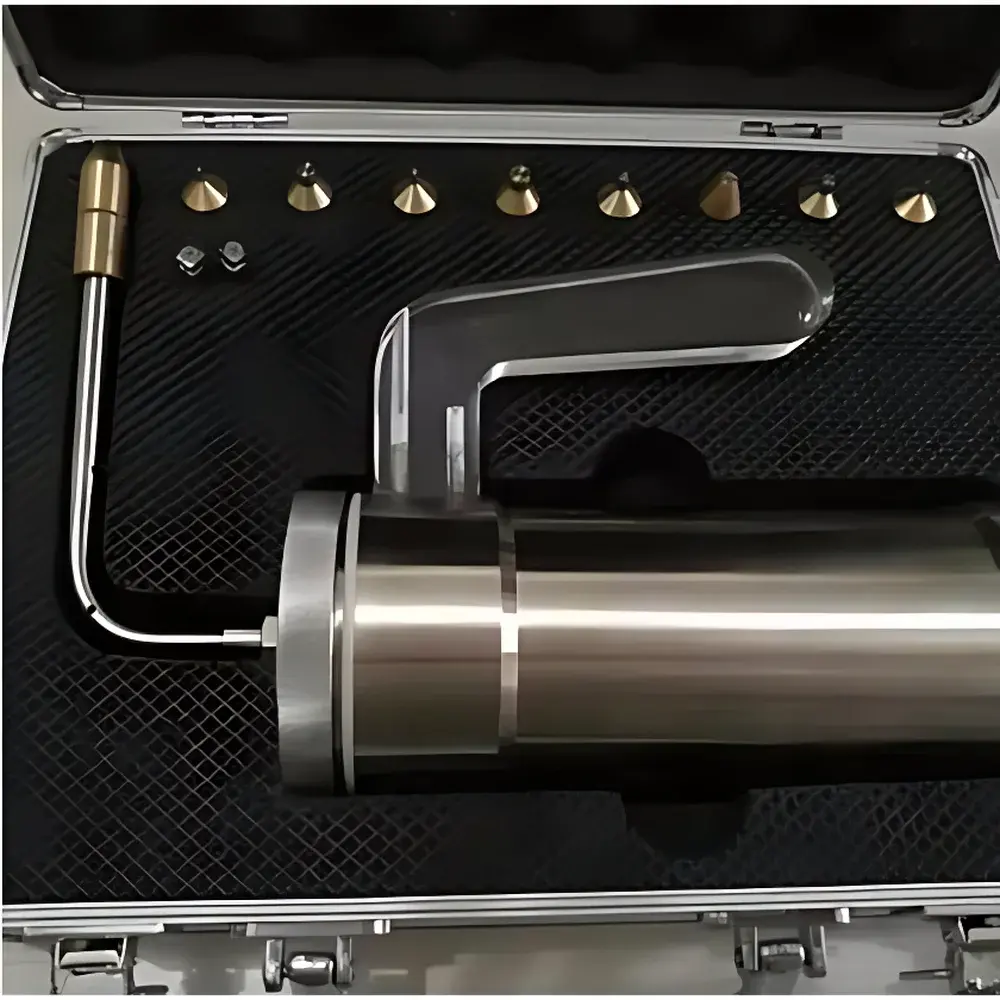
The HengaoDe HAD-300 Stainless Steel Cryogenic Liquid Nitrogen Therapy Gun is a manually operated, portable cryotherapy device engineered for precise, controlled tissue freezing in clinical and dermatological applications. It operates on the principle of phase-change refrigeration: liquid nitrogen (boiling point: −196 °C) is stored under its own vapor pressure in a double-walled stainless steel Dewar vessel; upon actuation, regulated vapor pressure drives liquid nitrogen through a flexible delivery tube to a precision-machined cryoprobe tip. This enables rapid, localized cooling—typically achieving surface temperatures below −50 °C within seconds—inducing intracellular ice crystal formation, cell membrane disruption, and subsequent necrosis of targeted lesions without thermal damage to surrounding healthy tissue. Designed for use in ambient clinical environments, the HAD-300 complies with fundamental safety requirements for medical cryotherapy devices per ISO 13485–aligned quality management systems and supports adherence to GLP-aligned documentation practices in dermatology and outpatient treatment workflows.
Key Features
- Double-walled 304 stainless steel construction ensures structural integrity, corrosion resistance, and long-term thermal stability—eliminating risk of embrittlement or rupture during repeated thermal cycling.
- Compact 300 mL capacity vessel balances portability (net weight < 1.2 kg) with sufficient working duration for multiple treatments per fill.
- Modular cryoprobe assembly includes nine interchangeable stainless steel tips (diameters: 2–5 mm), enabling selective lesion targeting—from discrete verrucae to broad-field epidermal ablation.
- Integrated pressure-regulating cap features a tactile rotary valve (white actuator) for fine-grained control over nitrogen flow rate and freeze duration.
- Ergonomic hand-held design with non-slip grip and balanced center-of-mass reduces operator fatigue during extended procedural sessions.
- No external power source, compressed gas supply, or cryogenic pump required—enabling deployment in resource-constrained clinics, mobile health units, and field-based dermatology programs.
Sample Compatibility & Compliance
The HAD-300 is validated for use with standard medical-grade liquid nitrogen (≥99.999% purity, ASTM D1946-compliant). Its mechanical cryoablation mechanism is compatible with a broad spectrum of benign and pre-malignant cutaneous lesions—including viral warts (verrucas vulgaris, flat warts), seborrheic keratoses, actinic keratoses, lentigines, angiomas, and hypertrophic scars—as well as mucosal lesions in gynecological, ophthalmic, otolaryngological, and oral surgical contexts. While not classified as an FDA-cleared Class II device or CE-marked IVD, the instrument meets foundational biocompatibility and material safety criteria per ISO 10993-1 for short-term skin-contact medical devices. Its design facilitates compliance with hospital infection control protocols: all contact surfaces are autoclavable (134 °C, 3 bar, 5 min), and the closed-loop delivery system prevents nitrogen vapor dispersion into the operator’s breathing zone beyond permissible occupational exposure limits (ACGIH TLV: 87 ppm time-weighted average).
Software & Data Management
As a purely mechanical, non-electronic therapeutic tool, the HAD-300 does not incorporate embedded firmware, connectivity modules, or digital data logging capabilities. Treatment parameters—including probe selection, application duration (typically 5–30 s), freeze-thaw cycle count, and anatomical site—are documented manually in patient records per institutional clinical documentation standards. This analog architecture eliminates cybersecurity vulnerabilities, avoids regulatory complexities associated with SaMD (Software as a Medical Device), and ensures uninterrupted operation in electromagnetic-intensive environments (e.g., MRI suites, electrosurgery-dense ORs). For institutions requiring audit-ready traceability, integration with electronic health record (EHR) systems is achieved via standardized clinical note templates supporting structured entry of cryotherapy events aligned with SNOMED CT codes (e.g., 225352004 — “Cryosurgery of skin lesion”).
Applications
The HAD-300 serves as a first-line modality in evidence-supported dermatologic therapeutics. In outpatient dermatology, it delivers reproducible clearance rates exceeding 75% for common warts after 2–4 sessions (JAMA Dermatol. 2019;155:789–796). Its precision enables conservative treatment of periungual and facial lesions where scarring must be minimized. In gynecology, it provides low-risk ablation of cervical ectropion and low-grade squamous intraepithelial lesions (LSIL) in primary care settings lacking access to loop electrosurgical excision procedure (LEEP) infrastructure. Ophthalmologists utilize ultra-fine probes for cryopexy of retinal tears; ENT specialists apply it for controlled devitalization of recurrent laryngeal papillomas. Beyond clinical medicine, the device supports aesthetic practice protocols for pigmentary lesion removal (e.g., solar lentigines), vascular lesion reduction (e.g., cherry angiomas), and scar remodeling—always under direct visual guidance and with strict adherence to cryotherapy safety margins (minimum 2 mm clearance from critical structures).
FAQ
What is the recommended liquid nitrogen grade for optimal performance?
Medical-grade liquid nitrogen meeting USP/Ph. Eur. specifications (purity ≥99.999%, hydrocarbon content <1 ppm, moisture <5 ppm) is required to prevent probe clogging and ensure consistent thermal output.
How frequently should the stainless steel cryoprobes be sterilized?
Probes must undergo autoclaving (134 °C, 3 bar, 5 min) between patients—or chemical disinfection with 70% ethanol followed by sterile drying—if autoclaving is unavailable.
Can the HAD-300 be used for deep-tissue cryoablation?
No. The device is strictly indicated for superficial and mucosal cryotherapy. It lacks depth control mechanisms or real-time temperature monitoring required for percutaneous or intraoperative ablation.
Is training required prior to clinical use?
Yes. Competency-based training covering cryobiology fundamentals, freeze-thaw kinetics, contraindications (e.g., cold agglutinin disease), and adverse event management (e.g., blistering, hypopigmentation) is mandatory per institutional privileging policies.
What maintenance is required to sustain long-term reliability?
Monthly inspection of O-rings, valve sealing surfaces, and tube integrity; annual pressure testing of the Dewar vessel per ASME BPVC Section VIII guidelines; replacement of worn probes when tip geometry deviates >0.1 mm from nominal dimensions.






