
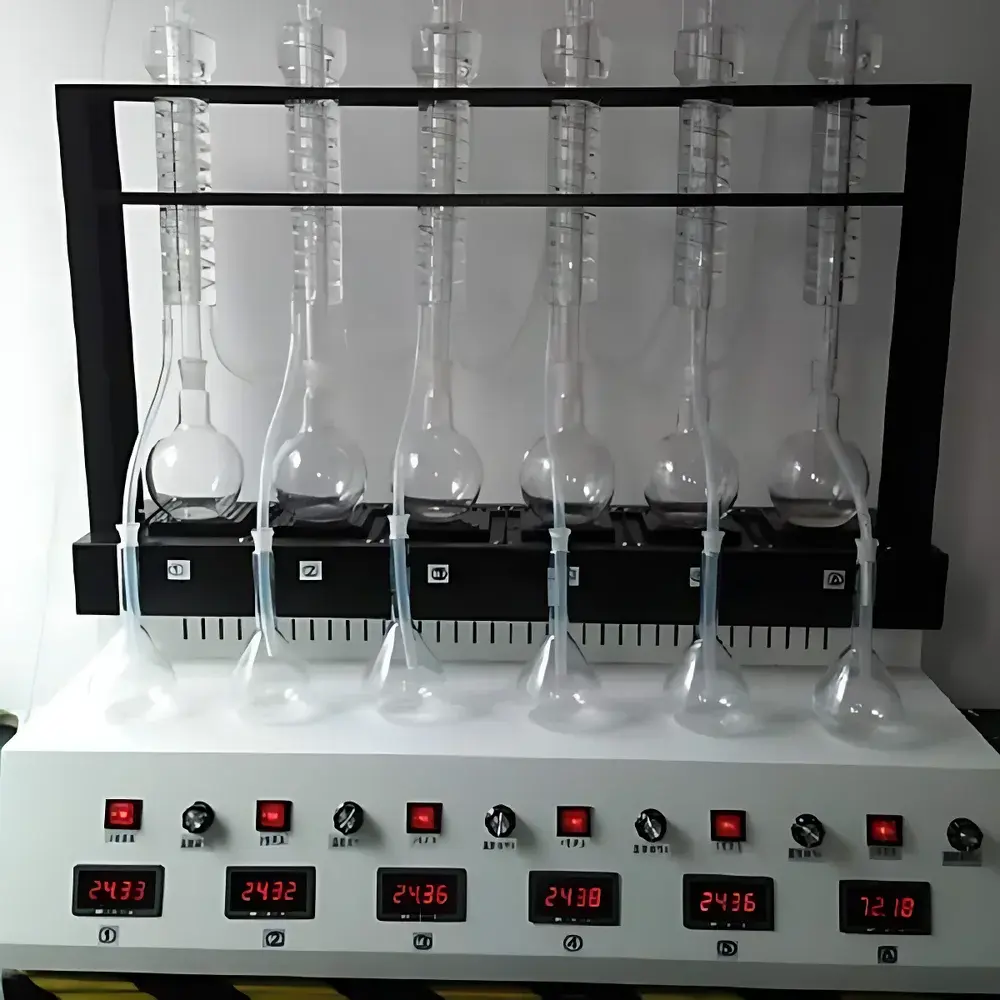
HengaoDe HAD-ZL6 Multi-Function Integrated Distillation System for Ammonia Nitrogen, Phenolic Compounds, and Cyanide Analysis
| Brand | HengaoDe |
|---|---|
| Origin | Beijing, China |
| Manufacturer Type | Authorized Distributor |
| Country of Origin | China |
| Model | HAD-ZL6 |
| Price | USD 42.50 (based on ¥298 at 1 USD ≈ ¥7) |
Overview
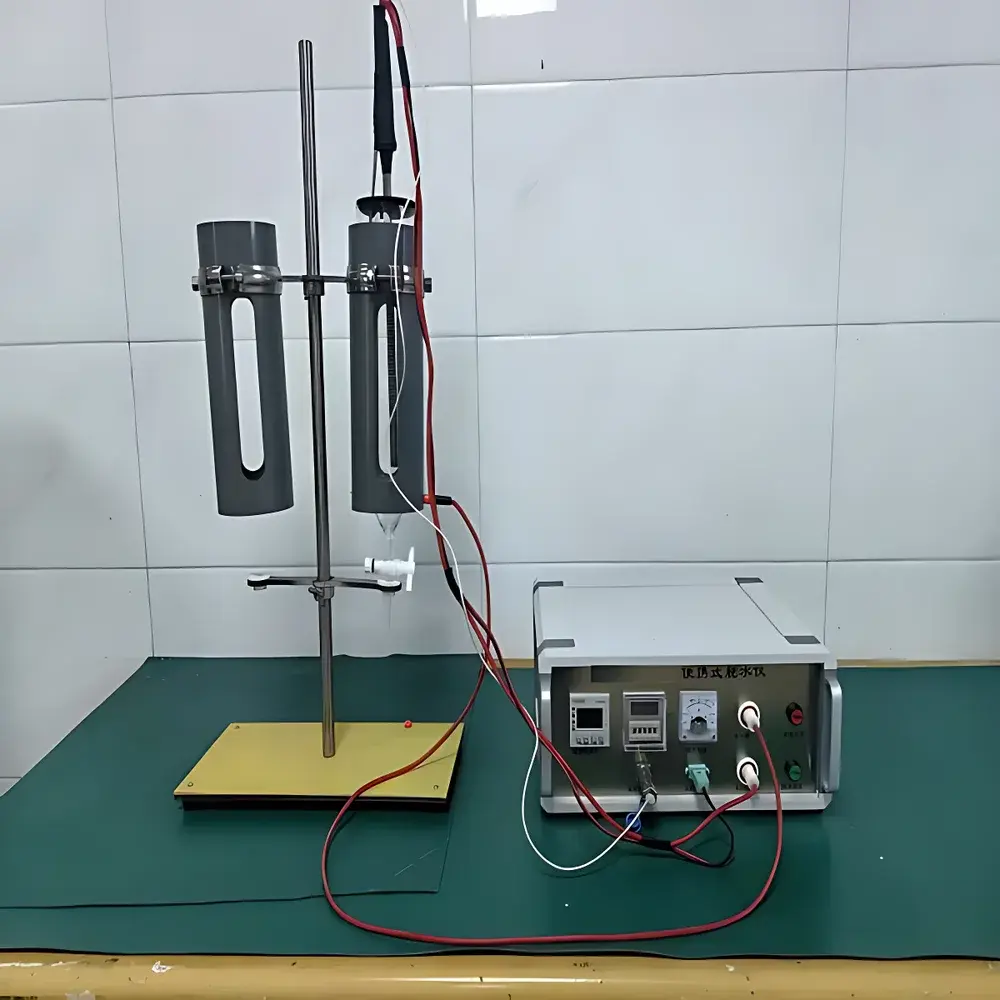
The HengaoDe HAD-ZL6 Multi-Function Integrated Distillation System is an engineered solution for standardized, high-reproducibility sample pretreatment in environmental and regulatory compliance testing. Designed in accordance with Chinese national standard HJ 537–2009 (ammonia nitrogen), HJ 502–2009 (volatile phenols), and HJ 484–2009 (cyanide), the system employs far-infrared ceramic heating technology to deliver precise, flameless thermal energy transfer—eliminating open-flame hazards and minimizing thermal decomposition artifacts. Unlike conventional steam distillation units, the HAD-ZL6 utilizes individually addressable heating modules per distillation position, enabling independent power control (0–1000 W in 100 W increments) and programmable heating duration (1 s–99 min). Its modular architecture supports simultaneous processing of six samples under identical or divergent thermal protocols, making it suitable for method validation, inter-laboratory comparison studies, and routine QC workflows in accredited environmental testing laboratories.
Key Features
- Six independent distillation channels with per-channel power regulation and timing control
- Imported far-infrared ceramic heating elements (no open flame, IPX4-rated water resistance)
- Programmable heating ramp profile: 5–8 min to operational temperature (typical)
- Distillation rate: 12 mL/min at standard condenser coolant flow and ambient conditions
- Optional external recirculating chiller interface for consistent condenser cooling across all six condensers
- Compliant with ISO/IEC 17025:2017 requirements for equipment traceability and calibration management
- Electrical safety certified to GB 4793.1–2019 (equivalent to IEC 61010-1)
Sample Compatibility & Compliance
The HAD-ZL6 accommodates standard 500 mL round-bottom flasks and 250 mL receiving flasks conforming to ASTM D1129 and ISO 5667-3 specifications. It is validated for aqueous matrices including drinking water, wastewater, groundwater, leachates, and digested biological sludge extracts. The system meets analytical prerequisites for EPA Method 350.1 (ammonia), APHA Standard Methods 4500-NH3 F, and ISO 6439 (cyanide). All wetted components are borosilicate glass or PTFE-lined, ensuring chemical inertness toward acidic, alkaline, and oxidizing reagents used in distillation conditioning (e.g., NaOH for ammonia liberation, phosphoric acid for cyanide stabilization). No metallic contact with distillate stream preserves integrity for subsequent colorimetric, ion-selective electrode, or spectrophotometric quantification.
Software & Data Management
While the base HAD-ZL6 operates via front-panel digital controls, optional RS485-to-USB adapter enables integration with LIMS or laboratory data management platforms. All user-defined parameters—including setpoint power, ramp time, hold duration, and cooling activation status—are stored in non-volatile memory and retained after power cycling. The unit logs operational timestamps and fault codes (e.g., overtemperature, dry-run detection) accessible via serial query. For GLP/GMP environments, audit trails may be generated using third-party SCADA software compliant with FDA 21 CFR Part 11 requirements when paired with validated electronic signature modules.
Applications
This distillation system serves as a critical front-end tool in regulated environmental testing laboratories performing analysis for municipal wastewater discharge permits (NPDES), industrial effluent monitoring, and drinking water safety verification. It is routinely deployed in accredited facilities conducting testing under China’s GB 3838–2002 (Surface Water Quality Standards), GB 5749–2022 (Drinking Water Hygiene Standards), and EU Directive 2000/60/EC (Water Framework Directive). Additional use cases include pharmaceutical stability study sample preparation (residual solvent removal), agrochemical residue analysis in soil extracts, and BOD/COD pretreatment where volatile organics must be isolated prior to biochemical oxidation assays.
FAQ
Is the HAD-ZL6 compatible with automated fraction collection systems?
Yes—standard 250 mL Erlenmeyer receivers fit common auto-collector racks; optional silicone tubing adapters enable direct connection to peristaltic fraction collectors.
Can the unit be operated in a fume hood without performance degradation?
Absolutely—the far-infrared heating design is unaffected by ambient airflow; however, ensure condenser coolant lines are routed externally to avoid hood interference.
Does the system support method-specific validation documentation?
HengaoDe provides a Factory Acceptance Test (FAT) report including temperature uniformity mapping, power calibration certificates, and electrical safety test records—sufficient for initial IQ/OQ protocol development.
What maintenance intervals are recommended for long-term reliability?
Ceramic heater surfaces require quarterly inspection for residue buildup; condenser tubes should be cleaned with dilute nitric acid (5% v/v) every 200 operating hours to prevent scaling.
Is remote monitoring capability available via Ethernet or Wi-Fi?
Not natively—but the RS485 interface supports Modbus RTU protocol, allowing integration into existing building automation or lab network infrastructure using commercially available protocol gateways.





