
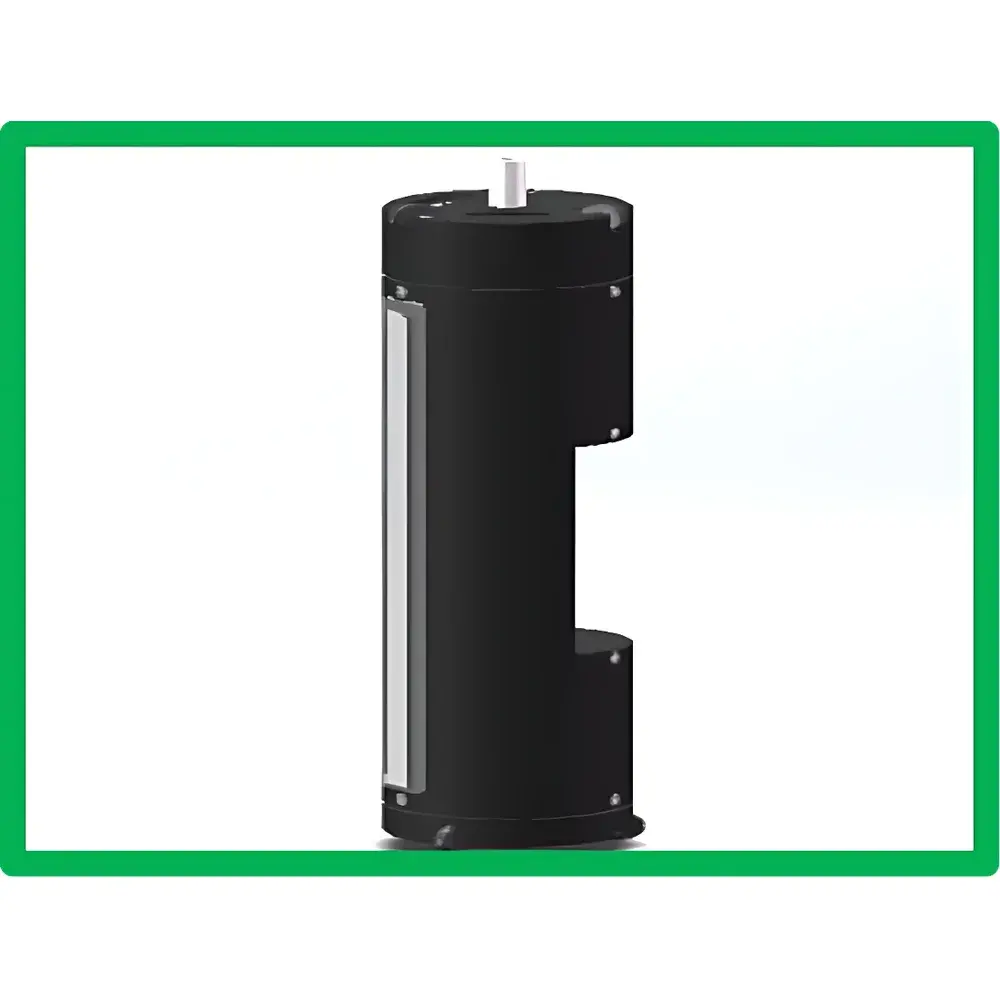
PM-Tech Root900 In Situ Root Growth Monitoring System
| Brand | PM-Tech |
|---|---|
| Origin | Germany |
| Model | Root900 |
| Imaging Modes | Scanning + Single-Camera Capture |
| Max Resolution (Photo Mode) | 4800 DPI |
| Scan Area | ~22 cm × 22 cm |
| Photo Area | ~50 mm × 40 mm |
| Image Acquisition Speed (Photo) | 1 s/frame |
| Light Sources | Programmable White, UV, Red, and Green LEDs with Intensity Control |
| Software | Root-Specific Phenotyping Suite with Pregizer/Topology/Custom Topology Analysis, RHS/UCL Color Space Support, Real-Time Lens Distortion & Color Balance Correction, Soil Background Subtraction, Multi-Document Comparative Analysis |
| Operating Environment | 0–50 °C, 0–100% RH (non-condensing) |
| Power | USB 5 V DC |
| Data Storage | Local on Windows-based Host Device |
| Compliance | Designed for GLP-aligned field and greenhouse phenotyping workflows |
Overview
The PM-Tech Root900 In Situ Root Growth Monitoring System is a non-destructive, high-resolution imaging platform engineered for longitudinal, quantitative assessment of root architecture and dynamics in natural soil environments. Unlike destructive excavation or hydroponic-based methods, the Root900 enables true in situ observation through transparent minirhizotron tubes (included: ten 1-m stainless steel micro-rhizotrons), permitting repeated imaging of the same root system over days, weeks, or seasonal cycles. The system integrates two complementary optical acquisition modalities—precision linear scanning and high-magnification single-frame capture—each optimized for distinct analytical objectives. Scanning mode delivers full-field, 1:1 scale images (up to 1200 DPI) across a 22 cm × 22 cm window, ideal for mapping lateral root distribution, branching density, and spatial occupancy. Photo mode provides ultra-high-resolution snapshots (up to 4800 DPI) within a 50 mm × 40 mm field, enabling detailed morphometric analysis of fine roots, root hairs, lesions, and pathogen interactions. Both modes operate under programmable multi-spectral illumination (white, UV-A, red, green), supporting spectral contrast enhancement for root-soil differentiation and physiological status inference (e.g., UV-induced autofluorescence for cell viability indicators).
Key Features
- Dual-mode optical architecture: Motorized linear scanner + fixed-focus macro camera—no mechanical reconfiguration required between modes.
- Real-time optical correction: On-the-fly lens distortion compensation and color channel balancing ensure geometric fidelity and inter-session repeatability.
- Programmable multispectral LED array: Independently controllable white, UV (365 nm), red (630 nm), and green (525 nm) sources with calibrated intensity ramping; all settings auto-logged per image metadata.
- Depth-precise deployment: Modular stainless-steel extension rod with millimeter刻度 and friction-locking depth stops enables reproducible positioning within rhizotron tubes.
- USB-powered plug-and-play operation: Direct connection to Windows laptops or tablets—no external power supplies, control boxes, or battery packs required.
- Soil-background agnostic analysis: Proprietary background subtraction algorithm isolates root pixels without manual thresholding, preserving root continuity across heterogeneous soil matrices.
Sample Compatibility & Compliance
The Root900 is validated for use in mineral soils, peat-based substrates, and hydroponic gels, accommodating root systems from herbaceous annuals (e.g., Arabidopsis thaliana, maize, wheat) to woody perennials (e.g., grapevine, poplar). Micro-rhizotron tubes (1 m length, 60 mm OD) are inserted at standardized angles (typically 45°) using auger-assisted installation to minimize soil disturbance. All hardware components comply with IP54 environmental rating for greenhouse and semi-field deployment. Software output adheres to FAIR data principles (Findable, Accessible, Interoperable, Reusable); image metadata includes EXIF-compliant timestamps, illumination parameters, DPI settings, and spatial calibration coefficients. The system supports audit-ready workflows aligned with OECD Test Guidelines 208 (Root Elongation) and ISO 17402:2021 (Soil quality — Guidance on root observation methods), and its structured data export (CSV, TIFF, JSON) facilitates integration into LIMS or ELN platforms compliant with 21 CFR Part 11 requirements.
Software & Data Management
The bundled Root Phenotyping Software (v4.2+) provides a modular, scriptable analysis environment. Three topology engines—Pregizer (for primary/secondary root classification), Topology (graph-theoretic branching hierarchy), and Custom (user-defined node rules)—enable rigorous architectural quantification. Color analysis operates in both RHS (Red-Hue-Saturation) and UCL (University College London) color spaces to distinguish root age gradients, necrotic zones, or mycorrhizal colonization patterns. XY-resolution independence allows accurate pixel-to-mm conversion even when scan/photo axes differ. Advanced editing tools include non-destructive root annotation layers, multi-node selection with inverse masking, drag-to-pan navigation, and synchronized side-by-side comparison of time-series datasets. All processing steps generate immutable audit logs, including software version, operator ID, timestamp, and parameter history—critical for GLP/GMP traceability.
Applications
- Long-term drought response studies: Quantify root elongation rate, deep rooting index, and lateral proliferation under controlled water deficit.
- Salinity stress phenotyping: Monitor root tip browning, cortical collapse, and aerenchyma formation via UV+green spectral fusion.
- Root-microbe interaction dynamics: Track colonization fronts of Bradyrhizobium or Trichoderma using fluorescence-enhanced contrast.
- Crop ideotype validation: Benchmark root architecture traits (e.g., shallow vs. deep rooting angle, crown root number) across breeding populations.
- Ecological restoration monitoring: Assess native species root establishment in degraded soils over multi-year intervals.
FAQ
What is the maximum recommended burial depth for the micro-rhizotron tubes?
Standard deployment depth is 0.3–1.2 m, depending on target root zone; tubes are rated for static soil pressure up to 200 kPa.
Can the system be used in flooded or saturated soils?
Yes—the stainless-steel tube construction and sealed optical head permit operation in waterlogged conditions, though prolonged submersion (>72 h) requires post-retrieval desiccation before scanning.
Is batch processing supported for time-series image stacks?
Yes—software includes CLI mode and Python API for automated processing of hundreds of images with consistent parameter sets and metadata tagging.
Does the system support third-party root analysis plugins (e.g., EZ-Rhizo, WinRHIZO)?
Raw TIFF exports are fully compatible; however, proprietary topology models require native software due to embedded calibration matrices.
How is spatial calibration maintained across field deployments?
Each scan/photo session embeds a physical reference scale (included calibrator ruler) and records thermal drift compensation values—enabling cross-site metric normalization.




