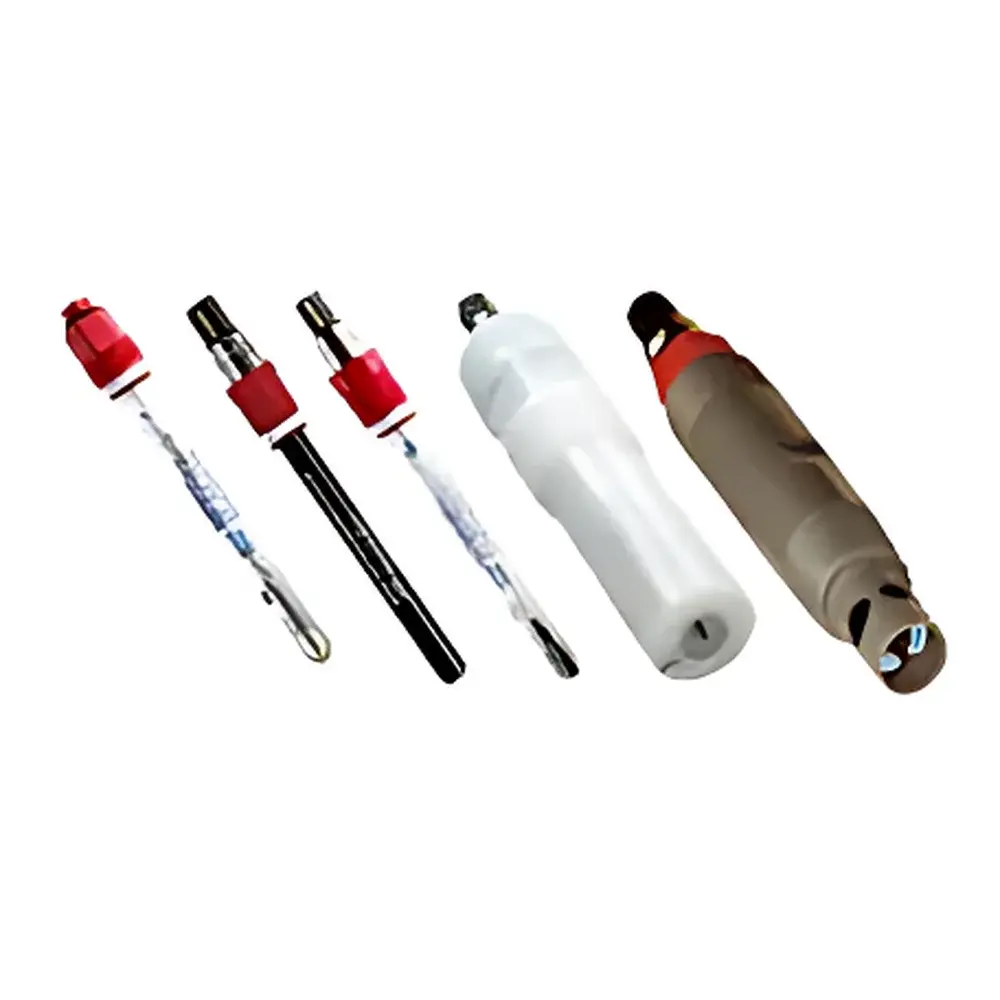
METTLER TOLEDO pH-ORP Electrode for Industrial Online Process Monitoring
| Brand | METTLER TOLEDO |
|---|---|
| Origin | Switzerland |
| Type | pH and ORP (Redox) Combination Electrode |
| Connector | VP (Versatile Plug) |
| Construction | Gel-Filled or Solid-State Reference System |
| Temperature Compensation | Integrated Pt1000 or NTC Sensor |
| Compliance | Designed for ASTM D1293, ISO 10523, USP <791>, FDA 21 CFR Part 11 (when used with compliant transmitters) |
| Application Environment | Continuous online measurement in industrial process streams, wastewater, pharmaceutical water systems, and ultrapure water (UPW) |
Overview
The METTLER TOLEDO pH-ORP Electrode is an industrial-grade combination sensor engineered for continuous, high-reliability measurement of hydrogen ion activity (pH) and oxidation-reduction potential (ORP/Redox) in demanding process environments. Based on potentiometric principle, the electrode utilizes a pH-sensitive glass membrane and a stable reference system to generate a millivolt signal proportional to the logarithmic activity of H⁺ ions—per Nernst equation—while the ORP function measures the electrochemical potential difference between a noble metal sensing element (typically platinum or gold) and the integrated reference electrode. Designed specifically for integration into METTLER TOLEDO THORNTON inline analyzers and transmitters, this electrode operates under dynamic flow conditions and supports real-time process control in regulated industries including pharmaceutical manufacturing, semiconductor ultrapure water (UPW) distribution, chemical processing, and municipal wastewater treatment.
Key Features
- VP (Versatile Plug) connector interface ensures secure, waterproof, and polarity-protected connection to THORNTON preamplifiers and analytical transmitters—eliminating wiring errors and enabling hot-swappable maintenance.
- Optimized glass membrane geometry with smooth, low-adhesion surface minimizes fouling in suspended-solids-laden or viscous process streams; suitable for applications ranging from activated sludge to fermentation broth.
- Reference system options include polymer-gel electrolyte (for general-purpose use) and solid-state reference (for chloride-free or low-maintenance operation), both engineered for long-term stability and reduced electrolyte leakage.
- Integrated temperature sensor (Pt1000 or NTC) mounted directly at the measurement tip enables fast thermal equilibration and accurate automatic temperature compensation (ATC) without external probes.
- Specialized UPW variant features a shielded flow-through reference chamber with continuous electrolyte outflow, maintaining stable junction potential in low-conductivity (<1 µS/cm) water systems per ASTM D5127 and SEMI F63 standards.
Sample Compatibility & Compliance
The electrode is validated for use across a broad pH range (0–14) and ORP range (−1500 to +1500 mV), with operational pressure up to 10 bar and temperature tolerance from 0 °C to 100 °C (depending on housing material). It meets mechanical and electrical requirements of IP68-rated process housings and complies with electromagnetic compatibility (EMC) per IEC 61326-1. When deployed with METTLER TOLEDO THORNTON 3000/4000-series transmitters operating in audit-trail-enabled mode, the system supports data integrity requirements under FDA 21 CFR Part 11 and EU Annex 11, including electronic signatures, change history, and user-access controls. Calibration traceability aligns with ISO/IEC 17025-accredited procedures when performed using NIST-traceable buffer standards.
Software & Data Management
While the electrode itself is analog-signal output (mV), its full metrological capability is realized only when paired with THORNTON Smart Sensor Technology (SST)–enabled transmitters. These devices provide digital configuration via IO-Link or HART, automated calibration logging, drift diagnostics, and predictive maintenance alerts based on impedance monitoring and response time analysis. All calibration events, sensor diagnostics, and measurement data are timestamped and exportable in CSV or XML formats—supporting integration into LIMS, MES, and SCADA platforms. Audit trail functionality records operator identity, timestamp, parameter changes, and calibration verification results, fulfilling GLP and GMP documentation expectations.
Applications
- Pharmaceutical Water Systems: Real-time monitoring of purified water (PW), water for injection (WFI), and ultrapure water (UPW) per USP and EP 2.2.48.
- Chemical Process Control: pH and redox control in neutralization reactors, chlorine dosing loops, and electroplating baths.
- Biotechnology: In-situ pH and ORP tracking during upstream bioreactor cultivation and downstream purification steps.
- Municipal & Industrial Wastewater: Continuous monitoring of influent/effluent streams for regulatory reporting and biological treatment optimization.
- Semiconductor Fab Water Loops: Sub-ppb-level contamination control through stable redox potential trending in UPW recirculation lines.
FAQ
What is the expected service life of the reference system in gel-filled vs. solid-state configurations?
Gel-filled references typically deliver 12–24 months of stable operation in moderate-ionic-strength streams; solid-state variants extend service intervals beyond 36 months in chloride-free or low-flow applications.
Can this electrode be calibrated in situ without removal from the process line?
Yes—two-point pH calibration and single-point ORP verification can be performed online using automated calibration sequences supported by compatible THORNTON transmitters.
Is the electrode suitable for steam-in-place (SIP) or clean-in-place (CIP) cycles?
Standard models are rated for intermittent exposure to saturated steam up to 135 °C for ≤30 minutes; SIP/CIP compatibility requires optional high-temperature housing and ceramic body construction.
How does the electrode handle low-conductivity samples such as deionized water?
The UPW-optimized version employs a pressurized, continuously flowing reference electrolyte stream across a porous PTFE junction, preventing reference potential drift caused by junction polarization in conductivities below 0.1 µS/cm.
Does METTLER TOLEDO provide validation documentation for GMP environments?
Yes—IQ/OQ protocols, as-delivered calibration certificates, and material compliance declarations (e.g., USP Class VI, REACH, RoHS) are available upon request for regulated installations.
Related Products