
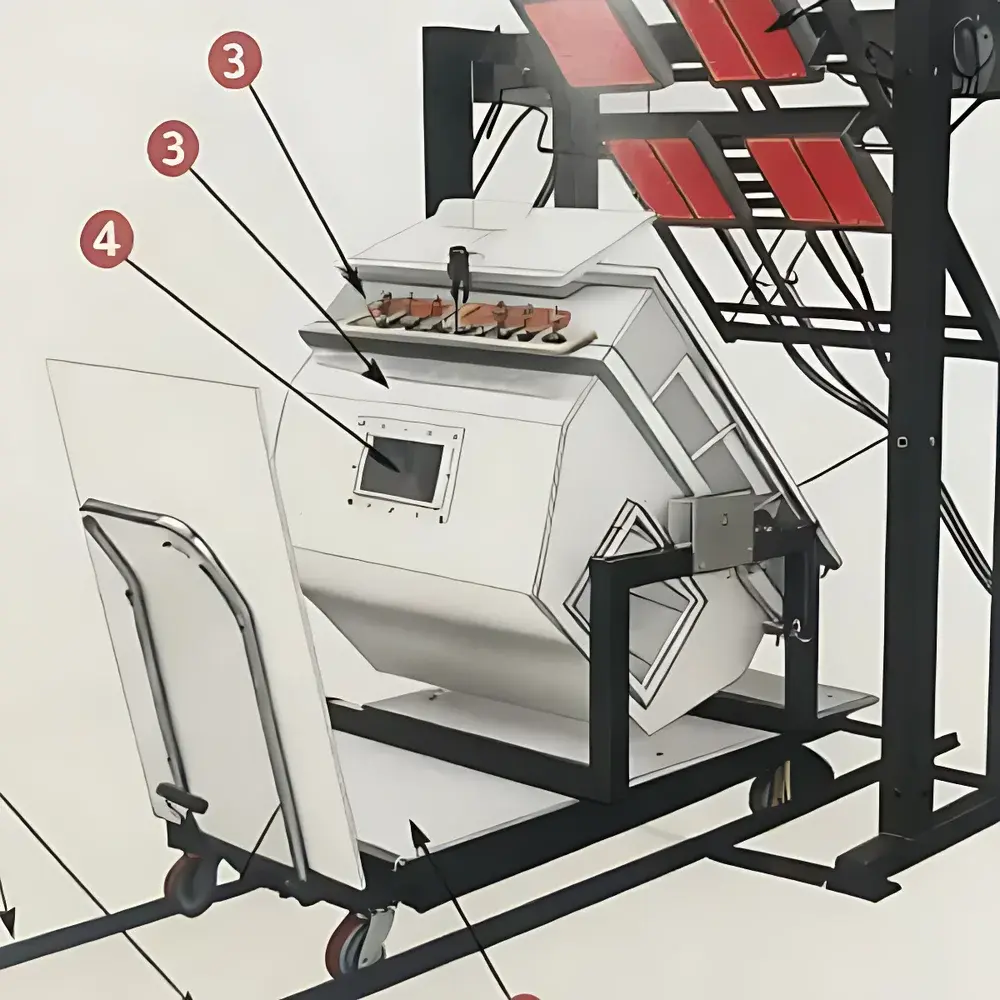
TESTech TTech-GBT30735-B External Fire Exposure Tester for Roofing Products – Test Method B
| Brand | TESTech |
|---|---|
| Origin | Jiangsu, China |
| Manufacturer Type | Direct Manufacturer |
| Product Category | Domestic |
| Model | TTech-GBT30735-B |
| Price Range | USD 1,400 – 2,800 (FOB) |
| Application | Assessment of roofing material performance under external fire exposure |
| Configuration | PV-compatible test platform |
Overview
The TESTech TTech-GBT30735-B External Fire Exposure Tester is a standardized combustion testing system engineered for the quantitative evaluation of roofing products subjected to realistic external fire scenarios. It implements the principles of convective and radiative heat transfer, flame impingement, and forced-air interaction—core physical mechanisms defined in GB/T 30735–2014, BS EN 13501-5:2016, and prEN 1187:2021. Unlike generic flame spread apparatuses, this instrument replicates four distinct fire exposure configurations—including burning brand ignition with and without wind, combined thermal radiation, and two-stage heating sequences—to simulate real-world roof fire initiation and propagation pathways. The system operates on a robust, modular architecture with integrated metrology, enabling repeatable, traceable, and auditable test execution compliant with regulatory fire classification frameworks used by building authorities, insurance underwriters, and certification bodies (e.g., CE marking, CCC, and UL recognition pathways).
Key Features
- Multi-mode fire exposure capability: Supports all four test configurations per GB/T 30735 Method B—Test 1 (burning brand only), Test 2 (burning brand + wind), Test 3 (burning brand + wind + auxiliary radiant panel), and Test 4 (two-phase heating cycle).
- Automated, adjustable specimen stage: Stainless steel frame with motorized tilt mechanism (0°–30° range), accommodating specimens up to 1200 mm wide × 2100 mm long; includes anti-slip wooden stops and horizontal translation for precise alignment.
- Calibrated dual-wind delivery system: Comprising lower and upper stainless steel ducts (≥1000 mm × ≥250 mm outlet), fitted with HEPA-grade inlet filters, variable-frequency centrifugal blower (0–12 m/s linear control), directional vanes, and turbulence-dampening flow straighteners to ensure ISO 5801-compliant velocity uniformity across the test zone.
- Traceable ignition source: 600 mm × 600 mm × 700 mm open-front stainless steel burner enclosure housing a five-tube vertical line burner (stainless steel, 316 grade); flame height and gas flow rate independently adjustable via mass flow controllers; automatic piezo ignition with fail-safe gas shutoff.
- Integrated metrology suite: Dual-sensor wind velocity monitoring (propeller anemometer: ±0.1 m/s at 2 m/s; hot-wire anemometer: ±0.2 m/s at 6 m/s), thermocouple arrays (Type K, Class 1), and synchronized data acquisition via LabVIEW-based real-time control software.
- Modular I/O architecture: Separate signal conditioning modules for airflow, temperature, actuator position, and ignition status; all data timestamped with millisecond resolution and stored in CSV/Excel-compatible format for post-test analysis and audit trail generation.
Sample Compatibility & Compliance
The TTech-GBT30735-B accommodates full-scale roofing assemblies—including bituminous membranes, polymer-modified bitumen, EPDM, TPO, PVC, metal decking, and photovoltaic-integrated systems (PV-roof hybrids)—without size reduction or edge trimming. Specimen mounting follows strict dimensional tolerances outlined in Annex A of GB/T 30735 and Clause 6 of BS EN 13501-5. All mechanical, thermal, and airflow subsystems are calibrated against NIST-traceable references prior to commissioning and verified annually per ISO/IEC 17025 requirements. Test reports generated meet documentation standards for GLP-compliant laboratories and support submissions to national fire testing accreditation schemes (e.g., CNAS, UKAS, DAkkS). The system is designed to operate within standard laboratory ventilation infrastructure (customer-supplied), with exhaust ducting rated for continuous 200°C operation.
Software & Data Management
Control and data handling are managed through a dedicated LabVIEW Real-Time application running on an embedded industrial PC (19″ touchscreen display). The software provides role-based access control (operator, technician, administrator), electronic signature capability, and automated generation of test logs compliant with FDA 21 CFR Part 11 Annex 11 requirements. All sensor inputs—including wind speed profiles, surface thermography (optional IR camera integration), flame duration, and ignition delay—are time-synchronized and stored with checksum-verified integrity. Raw datasets include metadata such as ambient temperature/humidity, calibration certificate IDs, operator ID, and test method version. Export functions support direct import into statistical analysis tools (Minitab, JMP) and LIMS platforms via OPC UA or REST API interfaces. Audit trails record every parameter change, manual override, or calibration event with immutable timestamps.
Applications
This tester serves critical roles in R&D, quality assurance, and regulatory compliance workflows for roofing material manufacturers, third-party testing laboratories, and fire safety consultants. Typical use cases include: evaluating fire resistance classifications (e.g., BROOF(t), CROOF(t), DROOF(t) per EN 13501-5); validating flame retardant formulations in polymer-based membranes; assessing interface behavior between solar panels and underlying substrates during fire exposure; supporting fire risk assessments for building code compliance (IBC, NFPA 256, AS 1530.8.1); and generating evidence for product certification (CE, CCC, FM Global Approval). Its PV-compatible platform enables direct testing of integrated photovoltaic roofing systems—a growing requirement under IEC 61215-2 and UL 1703 amendments addressing fire propagation from module edges.
FAQ
What standards does the TTech-GBT30735-B fully support?
It is configured and validated for GB/T 30735–2014, BS EN 13501-5:2016, and prEN 1187:2021. Optional firmware updates can extend coverage to ASTM E108 and CAN/ULC-S107 where applicable.
Is the system suitable for testing photovoltaic-integrated roofing assemblies?
Yes—the specimen stage dimensions (≥1200 × 2100 mm) and structural rigidity accommodate full-size PV-roof modules; wind and flame exposure zones are positioned to replicate edge-initiated fire spread per IEC TS 63209.
Does the system include calibration documentation and traceability?
Each unit ships with a factory calibration report referencing NIST-traceable standards; annual recalibration services and uncertainty budgets are available under TESTech’s ISO/IEC 17025-accredited service program.
Can test data be exported for regulatory submission?
Yes—raw CSV files, summary PDF reports, and XML-formatted audit logs are exportable; optional validation packages (IQ/OQ/PQ) support GxP-regulated environments.
What laboratory infrastructure is required?
A minimum 5 m × 3 m floor space, 220 V / 50–60 Hz single-phase power (10 kW), and customer-supplied exhaust ventilation capable of handling 10,000 m³/h at 200°C peak temperature.



