
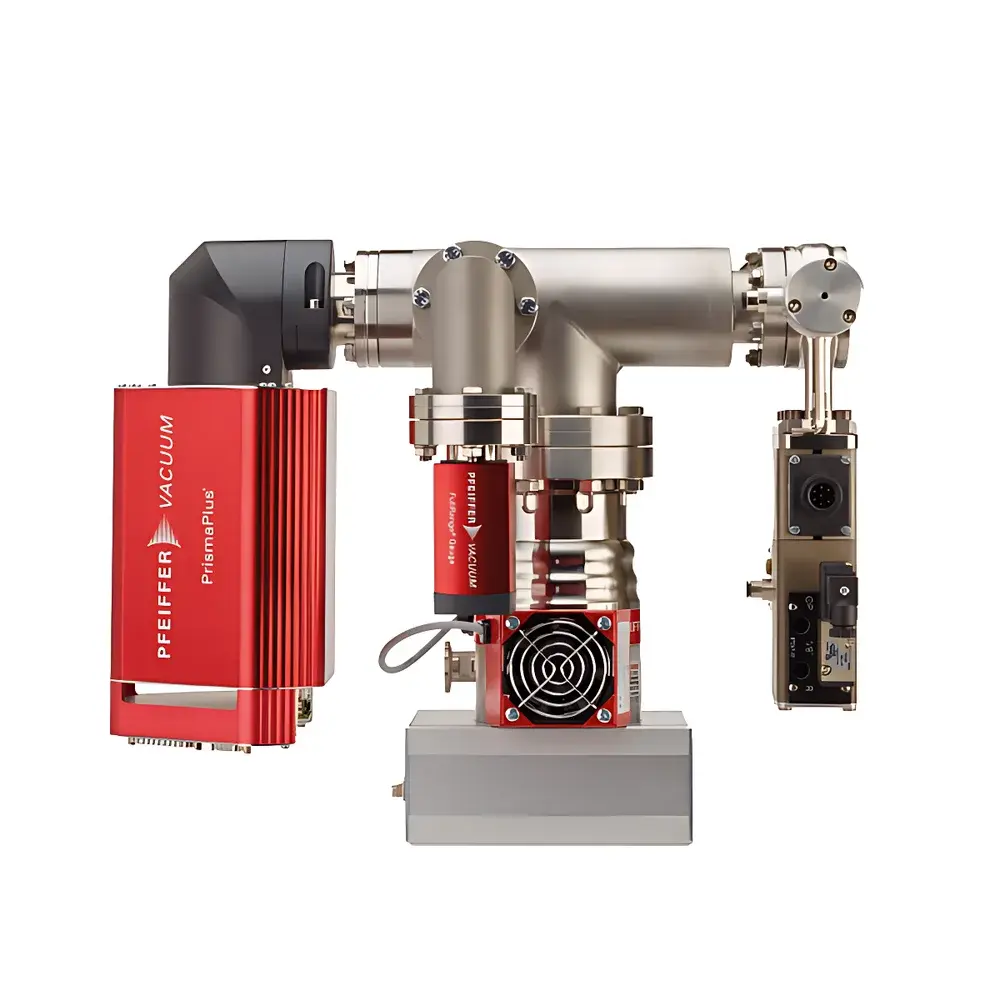
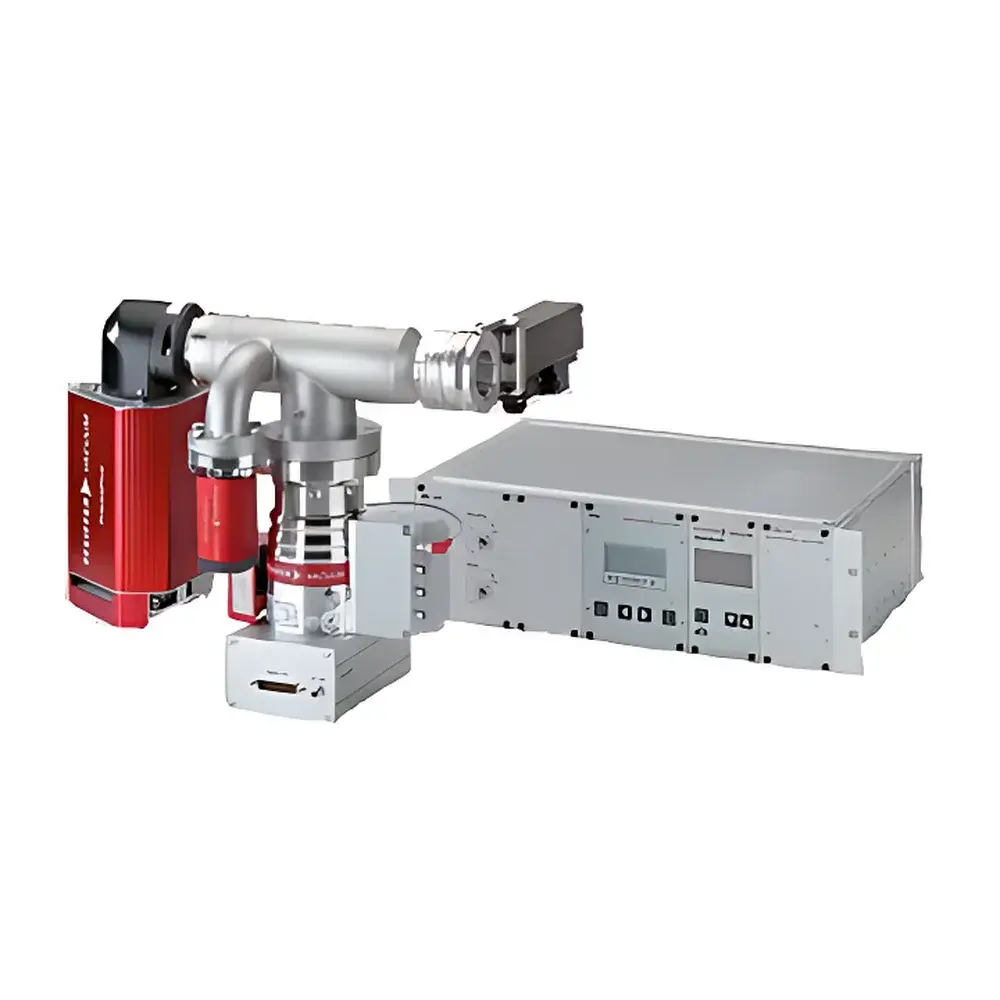
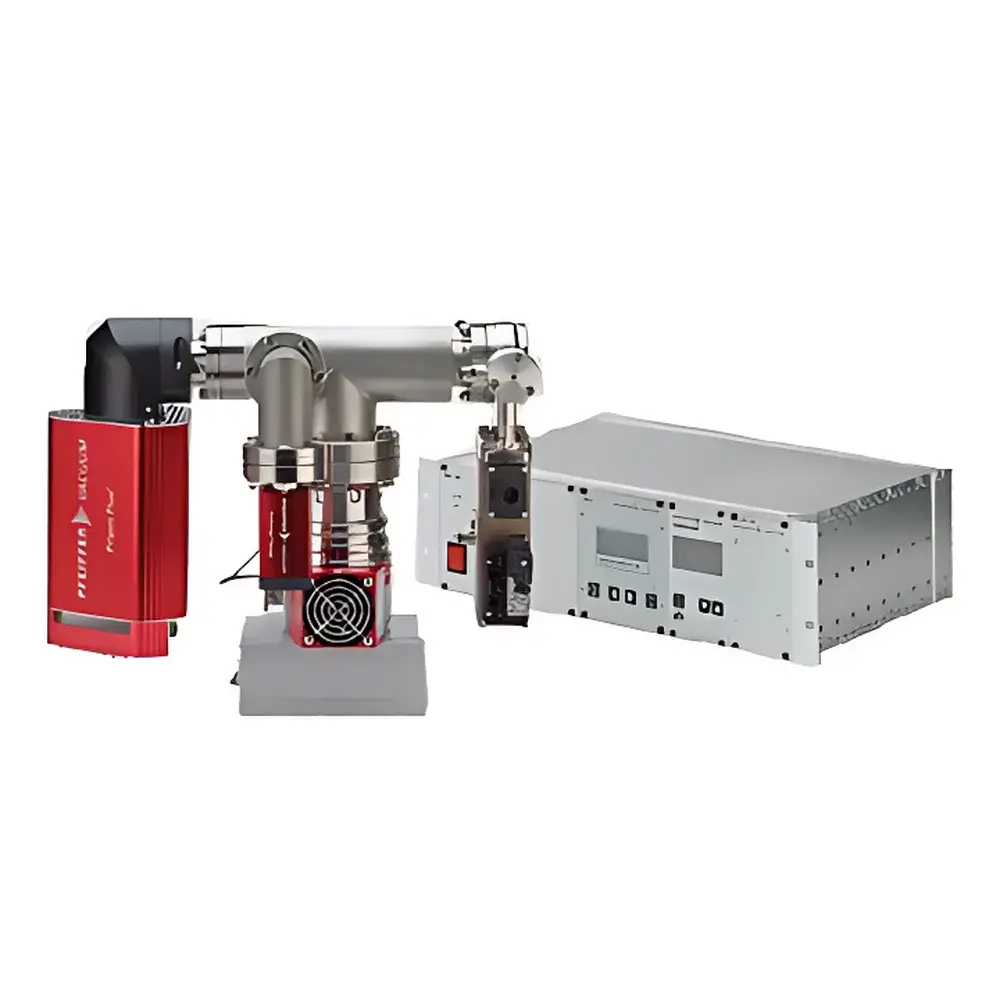
Pfeiffer Vacuum HPA 220 / SPM 220 Process Mass Spectrometer
| Brand | Pfeiffer Vacuum |
|---|---|
| Origin | Germany |
| Manufacturer Type | Original Equipment Manufacturer (OEM) |
| Product Category | Imported Instrument |
| Model | HPA 220 / SPM 220 |
| Pricing | Upon Request |
Overview
The Pfeiffer Vacuum HPA 220 and SPM 220 are benchtop process mass spectrometers engineered for real-time, quantitative gas analysis in dynamic vacuum environments. Based on quadrupole mass filter technology with electron ionization (EI), these instruments operate across an extended pressure range—from ultra-high vacuum (UHV) at 1 × 10⁻⁷ hPa up to process-relevant pressures of 50 hPa (HPA 220) or 10 hPa (SPM 220 with differential pumping option). Unlike conventional laboratory MS systems requiring high-vacuum inlet conditions, the HPA/SPM series integrates a dry HiPace turbomolecular pump system and purpose-built ion sources—enabling direct sampling from industrial process streams without extensive sample conditioning. The HPA 220 is optimized for general-purpose process monitoring in vacuum coating, metallurgical furnaces, and R&D vacuum systems, while the SPM 220 features a dedicated thin-film deposition ion source with enhanced sensitivity for reactive gases (H2, O2, H2O, CO2) and sub-minute temporal resolution during sputtering or evaporation cycles.
Key Features
- Modular architecture supporting field-upgradable hardware options including five interchangeable inlet valves (manual, pneumatic, and electrically actuated variants)
- Dry pumping system: HiPace turbomolecular pump backed by a diaphragm forepump—eliminating oil contamination and enabling clean, maintenance-lean operation
- Extended pressure operation: HPA 220 analyzes gases directly at pressures up to 50 hPa; SPM 220 achieves stable ion transmission up to 10−2 hPa (standard) or 10 hPa (with differential aperture flange option)
- Real-time data acquisition: Scan speeds down to 100 ms per mass spectrum, synchronized via TTL triggers and programmable dwell times
- Multi-instrument control: Single PC can manage up to 16 HPA/SPM units simultaneously using Quadera software platform
- Industrial I/O interface: 8-channel analog inputs (0–10 V / 4–20 mA), 4 digital inputs, 4 digital outputs, and Ethernet-based communication (TCP/IP, Modbus TCP)
- Compact footprint: 320 × 420 × 390 mm (W × D × H), designed for integration into tool-side cabinets or inline process skids
Sample Compatibility & Compliance
The HPA 220 and SPM 220 are validated for continuous operation in chemically aggressive process atmospheres common in physical vapor deposition (PVD), chemical vapor deposition (CVD), and plasma etching. Gas compatibility includes inert species (Ar, N2, He), reactive precursors (O2, NH3, SiH4), and byproducts (CO, CO2, H2O, NOx). Both models comply with CE marking requirements under EU Machinery Directive 2006/42/EC and EMC Directive 2014/30/EU. For regulated manufacturing environments, the Quadera software supports audit trails, electronic signatures, and configurable user access levels aligned with FDA 21 CFR Part 11 and ISO/IEC 17025 traceability frameworks. Optional GLP/GMP configuration packages include instrument qualification documentation (IQ/OQ/PQ templates) and calibration certificate traceability to NIST standards.
Software & Data Management
Quadera is the native control and evaluation software for all Pfeiffer Vacuum process MS systems. It provides real-time mass spectral visualization, peak integration, background subtraction, and multi-component quantification using internal standard or partial pressure calibration methods. Users define custom gas libraries with isotopic patterns and fragmentation behavior, enabling automated identification of unknown peaks during transient events. Data export supports CSV, ASCII, and HDF5 formats; time-stamped datasets include full metadata (instrument state, valve positions, pump status, I/O signals). Remote monitoring is enabled via web-based dashboard (HTML5) accessible through standard browsers—supporting secure HTTPS and role-based authentication. Integration with SCADA and MES platforms is facilitated through OPC UA and RESTful API interfaces.
Applications
- Real-time endpoint detection and stoichiometry control in sputter deposition (e.g., TiN, Al2O3, ITO) and thermal evaporation processes
- Leak detection and residual gas analysis (RGA) in semiconductor fabrication tools and UHV research chambers
- In-situ monitoring of reactive gas consumption and byproduct evolution in plasma-enhanced CVD reactors
- Process fingerprinting and fault diagnostics in roll-to-roll flexible electronics coating lines
- Qualitative and quantitative analysis of outgassing profiles during vacuum furnace heat treatment and brazing cycles
- Gas purity verification and impurity tracking in high-purity process gas delivery systems (e.g., for EUV lithography)
FAQ
What pressure ranges are supported by the HPA 220 versus the SPM 220?
The HPA 220 operates continuously from 1 × 10⁻⁷ hPa to 50 hPa. The SPM 220 operates from 1 × 10⁻⁷ hPa to 10−2 hPa in standard configuration; with the optional differential pumping flange, it extends to 10 hPa.
Can the same Quadera software control both HPA 220 and SPM 220 units?
Yes—Quadera is a unified platform supporting mixed fleets of HPA and SPM instruments, with model-specific calibration and ion source parameter sets stored in device profiles.
Is helium leak detection possible with this system?
Helium detection is fully supported; the system achieves typical detection limits of ≤1 × 10⁻¹² mbar·L/s when coupled with optimized inlet conductance and background compensation algorithms.
How is calibration performed for quantitative analysis?
Calibration uses certified gas mixtures introduced via a precision leak valve or calibrated flow controller; response factors are stored per gas per mass channel and corrected for ion source aging and detector gain drift.
Are service contracts and spare parts available globally?
Pfeiffer Vacuum maintains authorized service centers in North America, EMEA, and Asia-Pacific; critical spares—including ion sources, quadrupole rods, and turbomolecular pump controllers—are stocked with ≤5 business day lead time under standard terms.
Related Products




