
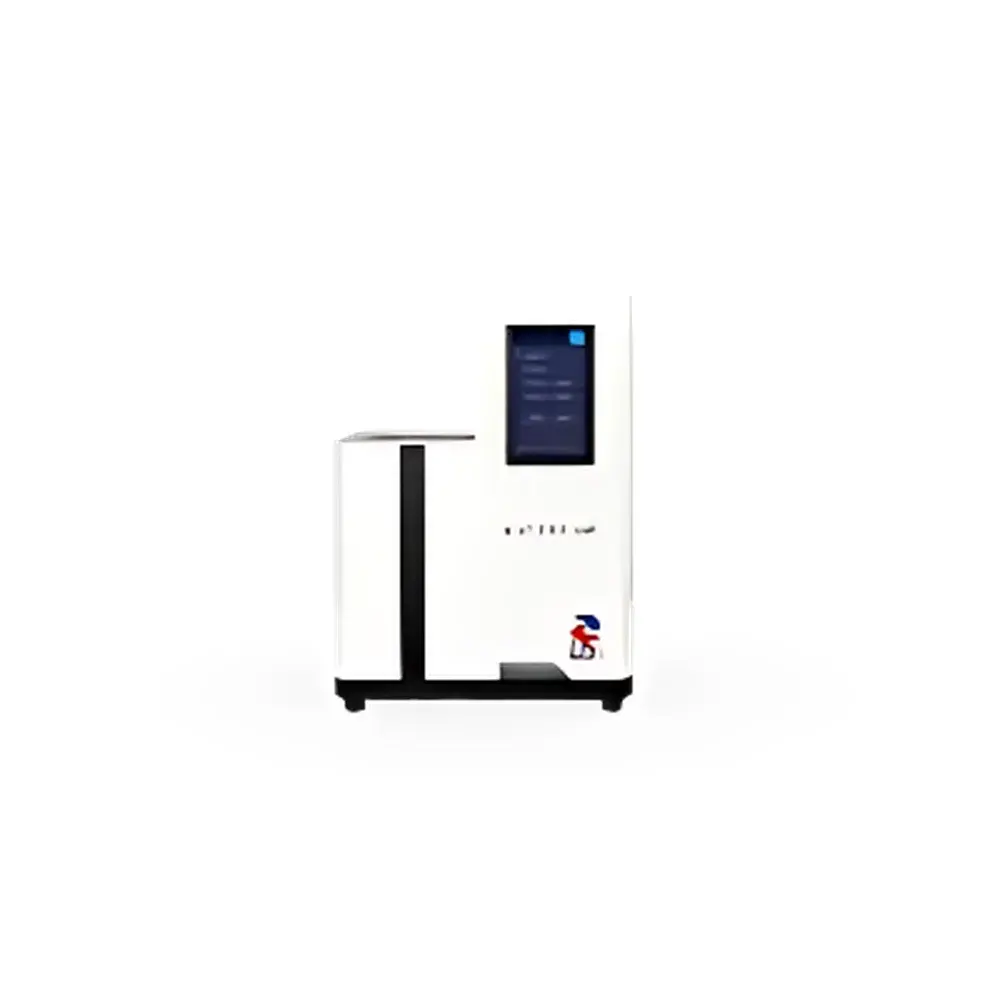
HuaShengPuXin HS-20A Fully Automated Static Headspace Sampler
| Brand | HuaShengPuXin (HSPX) |
|---|---|
| Origin | Beijing, China |
| Manufacturer Type | Original Equipment Manufacturer (OEM) |
| Instrument Type | Static Headspace Sampler |
| Automation Level | Fully Automated |
| Sample Tray Capacity | 20 positions |
| Vial Sizes Supported | 10 mL and 20 mL standard crimp-top headspace vials |
| Valve & Loop Temperature Range | Ambient to 200 °C |
| Quantitative Loop Volume | 1 mL |
| Temperature Control Accuracy | < ±0.1 °C |
| Sample Zone Temperature Range | Ambient to 260 °C |
| Transfer Line Temperature Range | Ambient to 200 °C |
| Power Supply | 220–240 V AC, 50–60 Hz |
| Operating Environment | 10–35 °C, 10–90% RH (non-condensing) |
Overview
The HuaShengPuXin HS-20A Fully Automated Static Headspace Sampler is an engineered solution for precise, reproducible volatile organic compound (VOC) and semi-volatile analysis in gas chromatography (GC) workflows. Based on the equilibrium static headspace principle, the instrument heats sealed sample vials to establish a vapor-phase equilibrium between the liquid/solid matrix and the headspace gas above it. A precisely temperature-controlled sampling valve then injects a fixed volume (1 mL) of equilibrated headspace gas directly into the GC inlet via a thermostatted transfer line. This method eliminates matrix interference, reduces column contamination, and enables robust quantitation of target analytes without solvent extraction or derivatization—making it ideal for environmental, pharmaceutical, food safety, and forensic laboratories adhering to regulatory-driven analytical protocols.
Key Features
- Fully automated 20-position sample carousel with programmable vial recognition for 10 mL and 20 mL standard crimp-top headspace vials
- Independent three-zone temperature control: sample incubation zone (ambient to 260 °C), transfer line (ambient to 200 °C), and valve/loop assembly (ambient to 200 °C), each adjustable in 1 °C increments
- High-stability thermal architecture delivering < ±0.1 °C temperature accuracy and uniformity across all zones—critical for method reproducibility and inter-laboratory comparability
- Integrated pressure-balanced sampling valve with inert, low-dead-volume 1 mL quantitative loop to ensure consistent injection volume and minimize carryover
- Robust mechanical design compliant with ISO 9001 manufacturing standards; CE-marked for electromagnetic compatibility (EMC) and low-voltage directive (LVD) compliance
- Front-panel touchscreen interface with intuitive method editor, real-time status monitoring, and event logging (start/stop times, temperature deviations, error codes)
Sample Compatibility & Compliance
The HS-20A supports aqueous, solid, and viscous matrices—including wastewater, soil extracts, pharmaceutical tablets, polymer pellets, beverages, and clinical specimens—provided they are sealed in certified headspace vials with PTFE-silicone septa. It meets the thermal and timing specifications required by over 15 Chinese national and industry standards, including HJ 620–2011 (VOCs in water), HJ 642–2013 (soil VOCs), GB/T 42430–2023 (residual solvents in pharmaceuticals), and SN/T 4148–2015 (food packaging migration testing). While not pre-certified for FDA 21 CFR Part 11, its audit-trail-capable firmware architecture and user-accessible method logs support GLP/GMP-aligned validation when deployed with compatible LIMS or chromatography data systems (CDS).
Software & Data Management
The HS-20A operates as a standalone unit or integrates seamlessly with major GC platforms (Agilent, Thermo Fisher, Shimadzu, PerkinElmer) via RS-232 or USB virtual COM port. Its embedded firmware stores up to 100 user-defined methods with full parameter sets (equilibration time, oven ramp profiles, valve timing, temperature setpoints). All run logs—including timestamps, actual vs. setpoint temperatures, vial position IDs, and system alerts—are exportable as CSV files for traceability. When paired with validated CDS software, method parameters can be triggered remotely, enabling unattended overnight sequencing and full chain-of-custody documentation per ISO/IEC 17025 requirements.
Applications
- Environmental monitoring: quantification of BTEX, chlorinated hydrocarbons, and PAHs in water and soil per HJ 642–2013 and HJ 736–2015
- Pharmaceutical quality control: residual solvent analysis in active pharmaceutical ingredients (APIs) and final dosage forms per GB/T 42430–2023 and USP <467>
- Food and packaging safety: migration testing of acetaldehyde, limonene, and ethanol from PET containers per GB/T 16886.7–2015 and SN/T 4148–2015
- Forensic toxicology: detection of ethanol, acetone, and isopropanol in blood and urine specimens under standardized headspace conditions
- Materials science: outgassing profiling of adhesives, coatings, and composites during thermal aging studies
FAQ
Is the HS-20A compatible with third-party GC data systems?
Yes—it supports ASCII-based command protocols via RS-232 or USB CDC emulation, enabling bidirectional communication with Agilent OpenLab, Thermo Chromeleon, and Shimadzu GCsolution when configured with appropriate driver templates.
What vial types and closures are supported?
Standard 10 mL and 20 mL crimp-top headspace vials (e.g., Thermo Scientific 9 mm or 20 mm formats) with PTFE-faced silicone septa; magnetic crimpers and vial racks are sold separately.
Can equilibration time and temperature be programmed independently per vial?
No—equilibration parameters are method-wide; however, users may define multiple methods and assign them sequentially to different vial groups using external scheduling software.
Does the instrument include validation documentation?
Factory calibration certificates for temperature sensors (NIST-traceable) and loop volume verification reports are provided; IQ/OQ protocols are available upon request for GxP environments.
What maintenance intervals are recommended?
Valve seal replacement every 10,000 injections; transfer line cleaning quarterly; annual thermocouple verification using external reference probes per ISO/IEC 17025 guidelines.




