
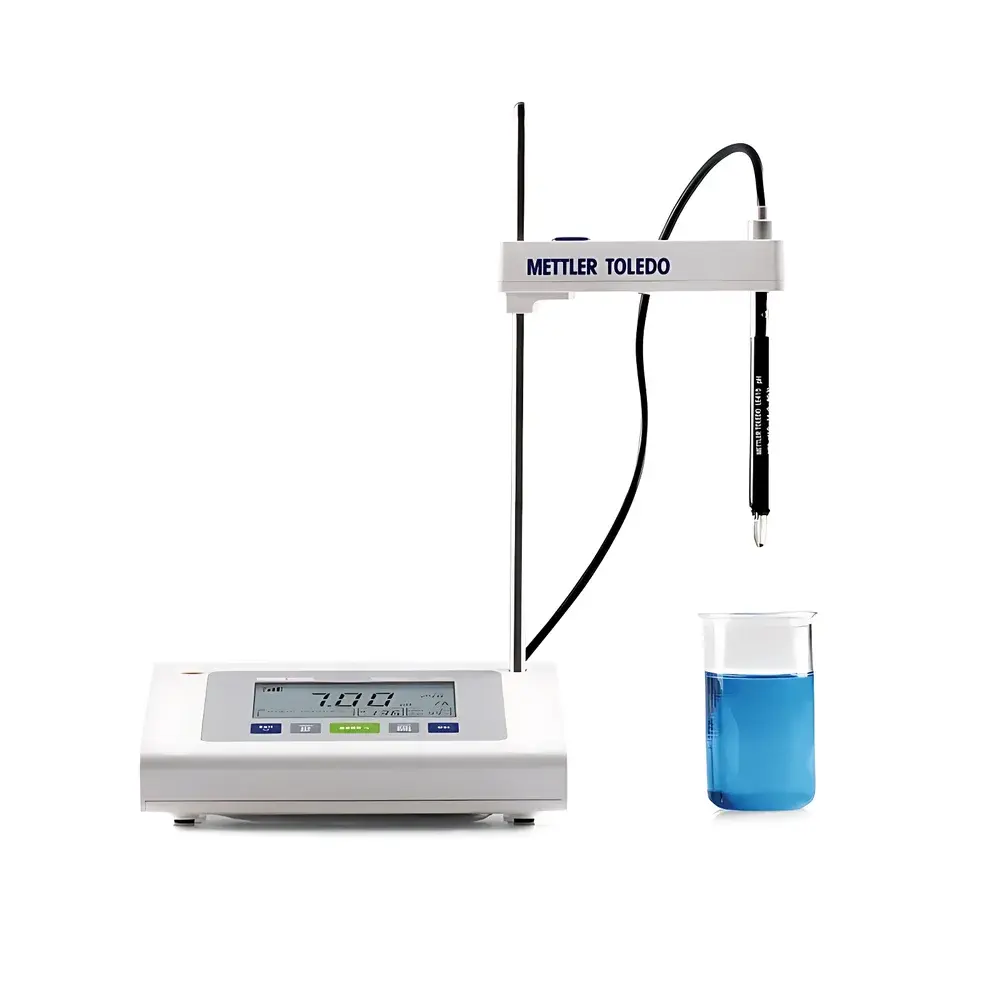
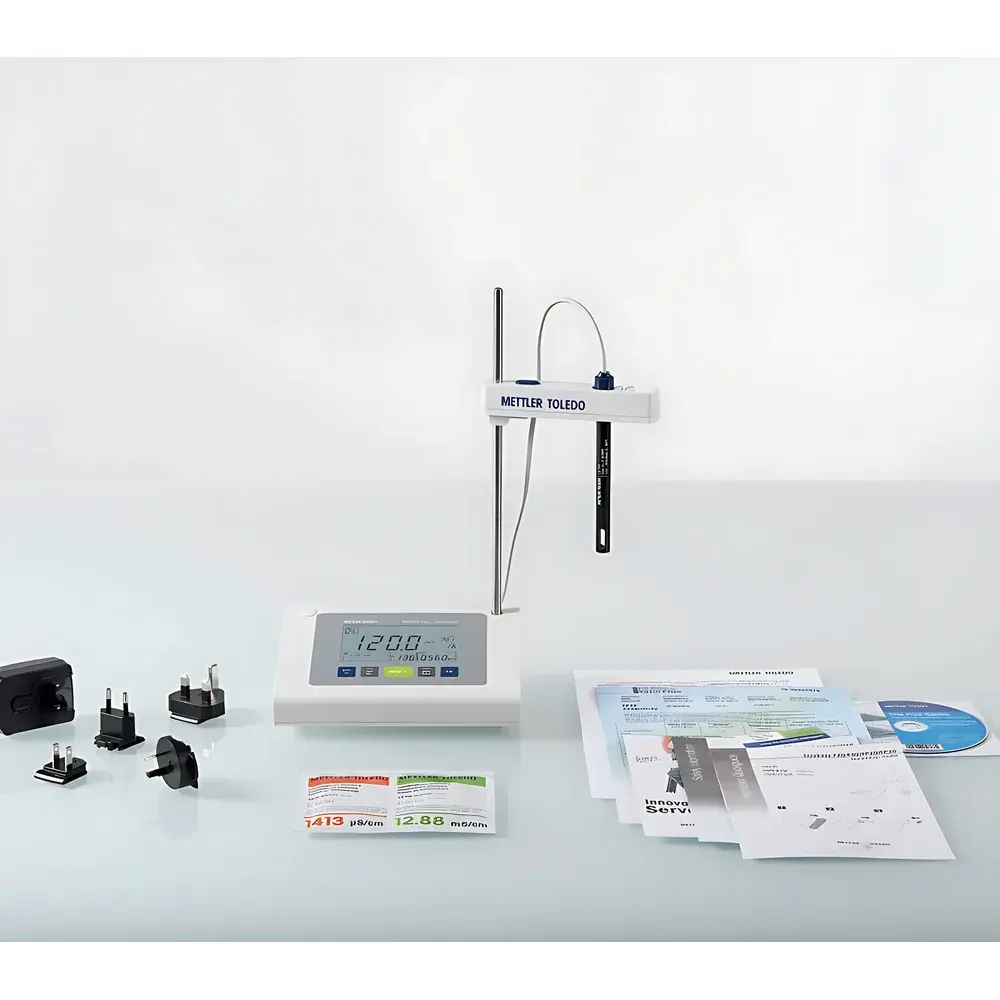
METTLER TOLEDO FiveEasy FE28 Benchtop pH Meter
| Brand | METTLER TOLEDO |
|---|---|
| Origin | Shanghai, China |
| Instrument Type | Benchtop |
| Parameter Type | Single-Parameter (pH) |
| Measurement Range | −2.00 to 16.00 pH |
| Resolution | 0.01 pH |
| Accuracy | ±0.01 pH |
| Calibration Standards | Chinese JJG 119 / USP |
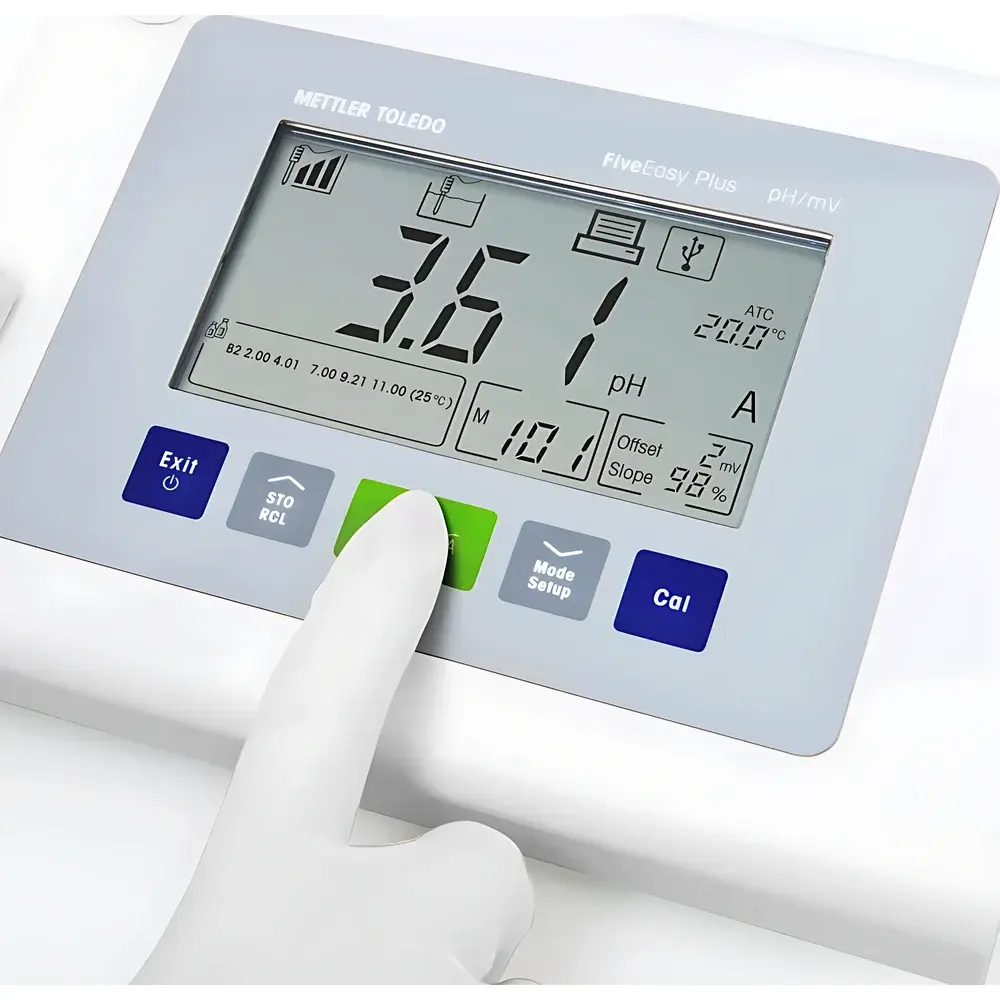
| Display | Large backlit LCD |
| Connectivity | RS232 and USB ports |
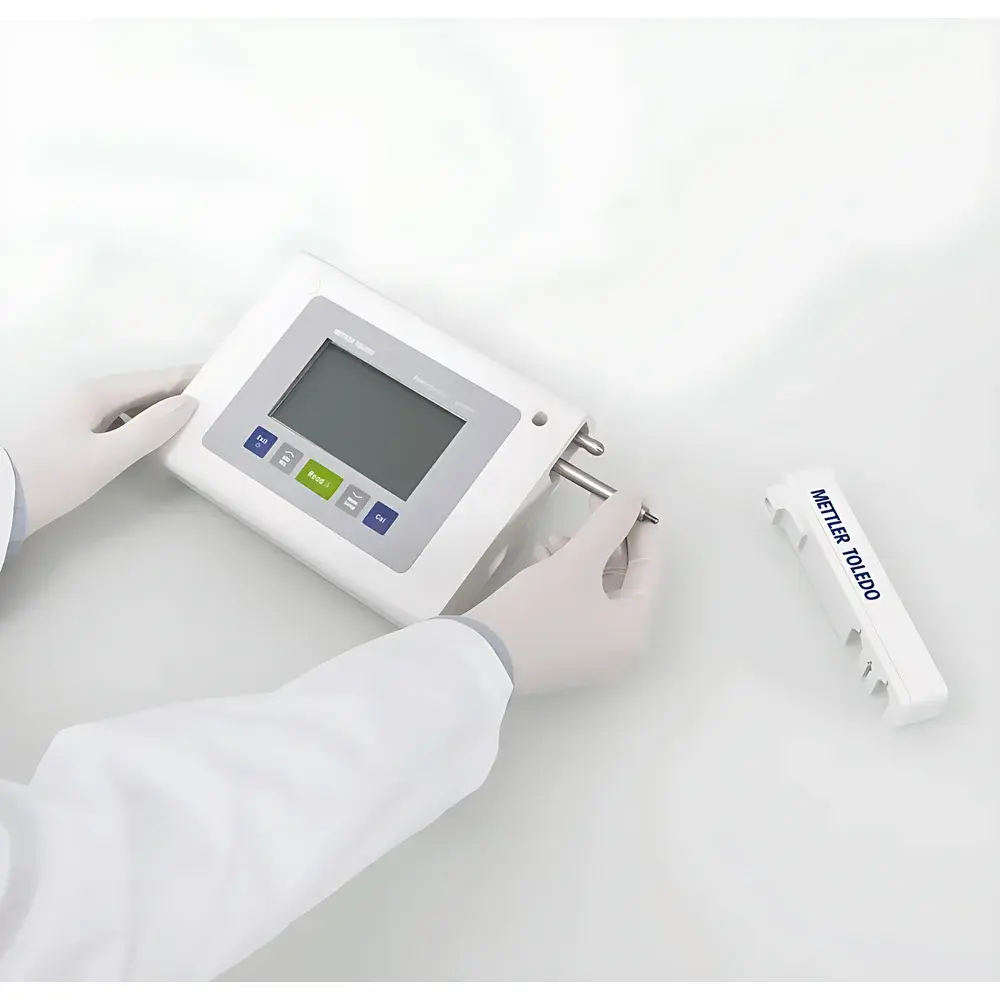
| Electrode Holder | Removable and stowable |
| Dimensions | 227 × 147 × 70 mm |
| Weight | 0.63 kg |
| Compliance | Designed for GLP-compliant workflows |
Overview
The METTLER TOLEDO FiveEasy FE28 is a precision-engineered benchtop pH meter designed for routine laboratory applications requiring reliable, repeatable, and traceable pH measurements. Based on potentiometric measurement principles—where the electromotive force (EMF) generated at the interface between a glass pH electrode and sample solution is converted into a pH value—the FE28 delivers high reproducibility across diverse sample matrices. Its architecture integrates a stable reference system, low-drift amplifier circuitry, and temperature-compensated measurement algorithms to ensure consistent performance under variable ambient conditions. Engineered for simplicity without compromising metrological integrity, the FE28 meets fundamental requirements of ISO/IEC 17025-accredited laboratories and supports quality control workflows aligned with pharmaceutical cGMP, food safety (HACCP), and water quality standards (e.g., EPA Method 150.1, ASTM D1293).
Key Features
- Intuitive large backlit LCD display with clear numeric readout and status icons for pH, temperature, electrode condition, and calibration status
- One-touch measurement initiation and auto-ranging functionality to minimize user input errors
- Removable, foldable electrode holder that stows flush against the instrument body—reducing footprint by up to 30% when not in use
- Compact rectangular chassis (227 × 147 × 70 mm) and lightweight construction (0.63 kg) enabling flexible placement on crowded lab benches or transport between workstations
- Dual connectivity options: RS232 serial interface for legacy printers and USB port for direct PC connection and data capture via METTLER TOLEDO LabX Lite software (optional)
- GLP-compliant calibration management with automatic timestamping, operator ID entry (via optional keyboard), and storage of up to 5 calibration records including slope, offset, and buffer values
- Robust housing rated IP20 for protection against dust ingress and accidental splashes during standard lab operation
Sample Compatibility & Compliance
The FE28 is optimized for aqueous and mildly buffered solutions typical in QC/QA environments—including cell culture media, buffer preparations, boiler feedwater, beverage extracts, and pharmaceutical formulations. It supports two- or three-point calibration using NIST-traceable buffers compliant with Chinese JJG 119 and United States Pharmacopeia (USP) and . While not intended for highly viscous, non-aqueous, or strongly oxidizing samples, its compatibility extends to common industrial electrolytes when paired with appropriate METTLER TOLEDO InLab® electrodes (e.g., InLab® Routine Pro for general-purpose use or InLab® Science for low-conductivity samples). All calibration and measurement data adhere to basic ALCOA+ principles (Attributable, Legible, Contemporaneous, Original, Accurate), forming a foundational layer for regulatory audits under FDA 21 CFR Part 11 when used with validated software extensions.
Software & Data Management
The FE28 operates as a standalone instrument but interfaces seamlessly with METTLER TOLEDO’s LabX Lite software—a free, lightweight application enabling real-time data streaming, automated report generation (PDF/CSV), and basic statistical analysis (mean, SD, %RSD). Raw measurement logs include date/time stamps, temperature readings, electrode identification (if RFID-enabled probe is used), and calibration metadata. For laboratories implementing full digital quality systems, the FE28 can be integrated into LabX Full Edition or third-party LIMS platforms via ASCII-based RS232 output or USB virtual COM port emulation. Audit trail functionality is available through LabX configurations supporting electronic signatures and change control per ICH GCP and ISO 13485 requirements.
Applications
- Pharmaceutical manufacturing: pH verification of injectables, excipient solutions, and cleaning validation rinsates
- Biotechnology: Monitoring of fermentation broths, harvest buffers, and formulation stability studies
- Food & beverage: Quality assurance of dairy products, fruit juices, sauces, and brewing wort
- Power generation: Condensate and demineralized water pH monitoring per ASTM D4582 and EPRI guidelines
- Environmental testing: Surface water, wastewater effluent, and drinking water compliance checks per ISO 10523 and APHA Standard Methods 4500-H+B
- Academic teaching labs: Foundational electrochemistry experiments emphasizing Nernst equation validation and electrode response kinetics
FAQ
Does the FE28 support automatic temperature compensation (ATC)?
Yes—it accepts input from a built-in Pt1000 temperature sensor or external ATC probe (e.g., InLab® Temperature Probe) to apply real-time correction based on the Nernst equation.
Can the FE28 store measurement data internally?
No—the FE28 does not feature onboard memory for sample results. Data export requires active connection to a printer or PC via RS232/USB.
Is the FE28 compatible with METTLER TOLEDO’s RFID-enabled electrodes?
Yes—when used with InLab® RFID electrodes, the FE28 automatically reads and displays electrode type, serial number, and calibration history upon connection.
What buffer standards are supported for calibration?
The FE28 supports calibration with pH 4.01, 7.00, and 10.01 buffers traceable to NIST, as well as custom buffers defined per JJG 119 or USP specifications.
Does the FE28 meet any international regulatory requirements out-of-the-box?
It provides the hardware foundation for GLP and ISO/IEC 17025 compliance; however, full 21 CFR Part 11 compliance requires validated software (e.g., LabX Full Edition), documented SOPs, and periodic instrument qualification (IQ/OQ/PQ).
Related Products






