
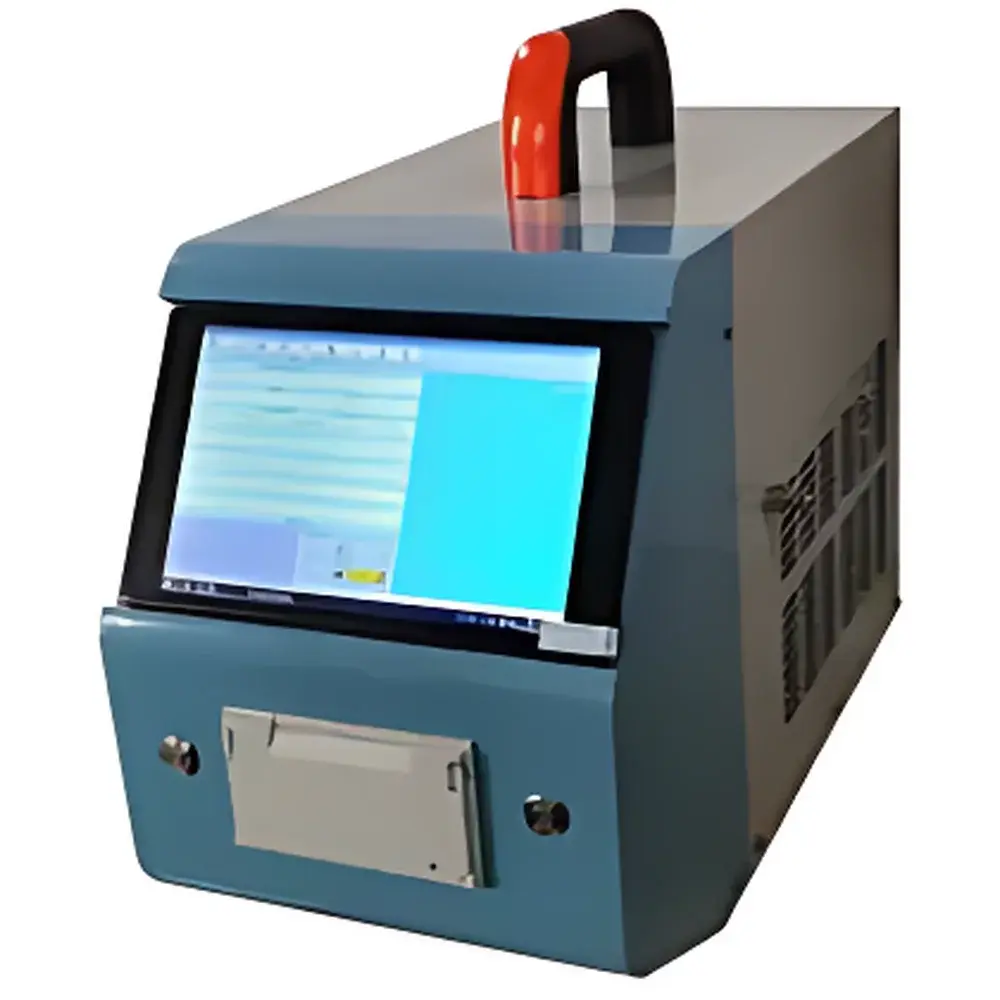
Xufeng XF-2430 ASTM D7153 Automated Microscale Aviation Fuel Freezing Point Analyzer (Laser Detection Method)
| Brand | Xufeng |
|---|---|
| Origin | Shanghai, China |
| Model | XF-2430A / XF-2430B |
| Temperature Range | –75 °C |
| Standards Compliance | ASTM D7153, GB/T 2430 |
| Detection Method | Automated Laser-Based Phase Transition Detection |
| Cooling System | Multi-stage Peltier + Compressor-Assisted Cold Trap |
| Temperature Resolution | 0.1 °C |
| Sensor Type | Calibrated Platinum Resistance Thermometer (PRT) + Imported German Optical Sensor (KMC-620) |
| Control System | Embedded Microprocessor with RS-232C Interface |
| Power Supply | AC 220 V, 50/60 Hz, 1500 W |
| Dimensions (W×D×H) | 400 × 210 × 250 mm |
| Weight | ~25 kg |
Overview
The Xufeng XF-2430 is a fully automated, microscale freezing point analyzer engineered specifically for aviation turbine fuels in accordance with ASTM D7153 and GB/T 2430. It employs a laser-based optical detection principle to identify the onset of solid phase formation during controlled cooling—leveraging high-sensitivity photometric monitoring of light scattering changes induced by ice crystal nucleation in the fuel matrix. Unlike manual or thermistor-based methods, this laser detection approach eliminates subjectivity, reduces operator dependency, and delivers high reproducibility (< ±0.3 °C repeatability per ASTM D7153 Annex A2). The instrument operates across two configurations: XF-2430A (–68 °C minimum) and XF-2430B (–75 °C minimum), enabling precise characterization of low-freezing jet fuels including Jet A, Jet A-1, JP-5, and JP-8 under stringent cold-climate certification requirements.
Key Features
- Integrated dual-stage thermal management: Multi-stage Peltier elements combined with a compressor-assisted cold trap ensure rapid, stable, and uniform temperature ramping (typical cooling rate: 1.5–2.0 °C/min from ambient to –70 °C).
- Automated sample handling: Precision syringe-driven auto-sampling and post-test solvent rinse cycle minimize carryover and eliminate manual chamber purging—critical for maintaining measurement integrity across consecutive runs.
- Real-time process visualization: High-resolution LCD interface displays dynamic cooling curves, temperature stabilization status, detection event timestamps, and cumulative test count—all synchronized with internal thermometric logging.
- Optical ice detection architecture: Utilizes a factory-calibrated KMC-620 photodiode sensor (Germany) mounted at optimal incident angle to detect minute changes in light transmission caused by initial crystallite formation—enabling unambiguous freezing point identification without mechanical stirring interference.
- Embedded diagnostics and fault resilience: Self-checking firmware continuously monitors sensor health, refrigeration performance, and electrical integrity; faults trigger audible alerts and on-screen diagnostic codes compliant with IEC 61508 functional safety principles.
- Regulatory-ready data output: RS-232C serial port supports direct integration into LIMS environments; optional ASCII-formatted data export includes test ID, ambient conditions, cooling profile timestamps, detected freezing point, and operator ID fields.
Sample Compatibility & Compliance
The XF-2430 accepts standard 1–2 mL samples of undiluted aviation turbine fuels, including hydroprocessed esters and fatty acids (HEFA)-blended sustainable aviation fuel (SAF) formulations. Its sealed, inert sample chamber prevents oxidation and moisture ingress during testing—essential for preserving fuel integrity per ASTM D1655 Annex B. The system meets full technical equivalence to ASTM D7153 Section 7 (Apparatus Requirements) and Clause 9 (Precision Statements), and is validated for use in laboratories operating under ISO/IEC 17025:2017 accreditation frameworks. All temperature measurements traceably reference NIST-traceable Pt100 sensors calibrated per ISO 17025 Clause 6.5. Calibration verification is supported via certified reference materials (CRM) such as NIST SRM 1638c (freezing point standard oil) and in-house secondary standards verified annually against primary standards.
Software & Data Management
While the XF-2430 operates autonomously via its embedded control module, its RS-232C interface enables seamless connection to laboratory PCs running Windows-based data acquisition software (provided separately). Raw temperature vs. time datasets are timestamped and stored with metadata including instrument serial number, user login ID, ambient lab temperature/humidity (if externally logged), and calibration certificate expiry date. Audit trails comply with FDA 21 CFR Part 11 requirements when paired with validated third-party software supporting electronic signatures, role-based access control, and immutable record retention. Export formats include CSV and PDF reports with embedded digital signatures—suitable for GLP/GMP documentation workflows and regulatory submissions to EASA, FAA, or CAAC.
Applications
- Freezing point verification of aviation turbine fuels prior to aircraft refueling operations (per IATA Guidance Material and ICAO Annex 16 Vol II).
- Quality assurance testing in refinery off-gas condensate streams and hydrotreated feedstocks.
- R&D evaluation of cold-flow improvers and additive packages in jet fuel formulations.
- Batch release testing in SAF production facilities meeting ASTM D7566 Annex A5 specifications.
- Third-party certification testing for military fuel procurement (e.g., MIL-DTL-83133H, DEF STAN 91-91).
FAQ
What is the minimum detectable freezing point for the XF-2430B configuration?
The XF-2430B achieves reliable detection down to –75 °C, validated using NIST SRM 1638c and commercial Jet A-1 samples exhibiting confirmed freezing points below –60 °C.
Does the instrument require external chiller or dry gas purge?
No—integrated compressor-assisted cold trap and sealed optical path eliminate need for external nitrogen purge or chilled water supply.
How is calibration traceability maintained?
Each unit ships with a factory calibration certificate referencing NIST-traceable Pt100 sensors; annual recalibration is recommended using certified reference oils traceable to national metrology institutes.
Can the XF-2430 be integrated into a networked lab environment?
Yes—RS-232C interface supports Modbus RTU protocol for SCADA integration; optional Ethernet-to-serial converters enable TCP/IP connectivity for centralized instrument monitoring.
Is method validation support available for ISO/IEC 17025 accreditation?
Xufeng provides IQ/OQ documentation templates, uncertainty budget worksheets aligned with EURACHEM/CITAC Guide CG4, and on-site validation assistance upon request.






