
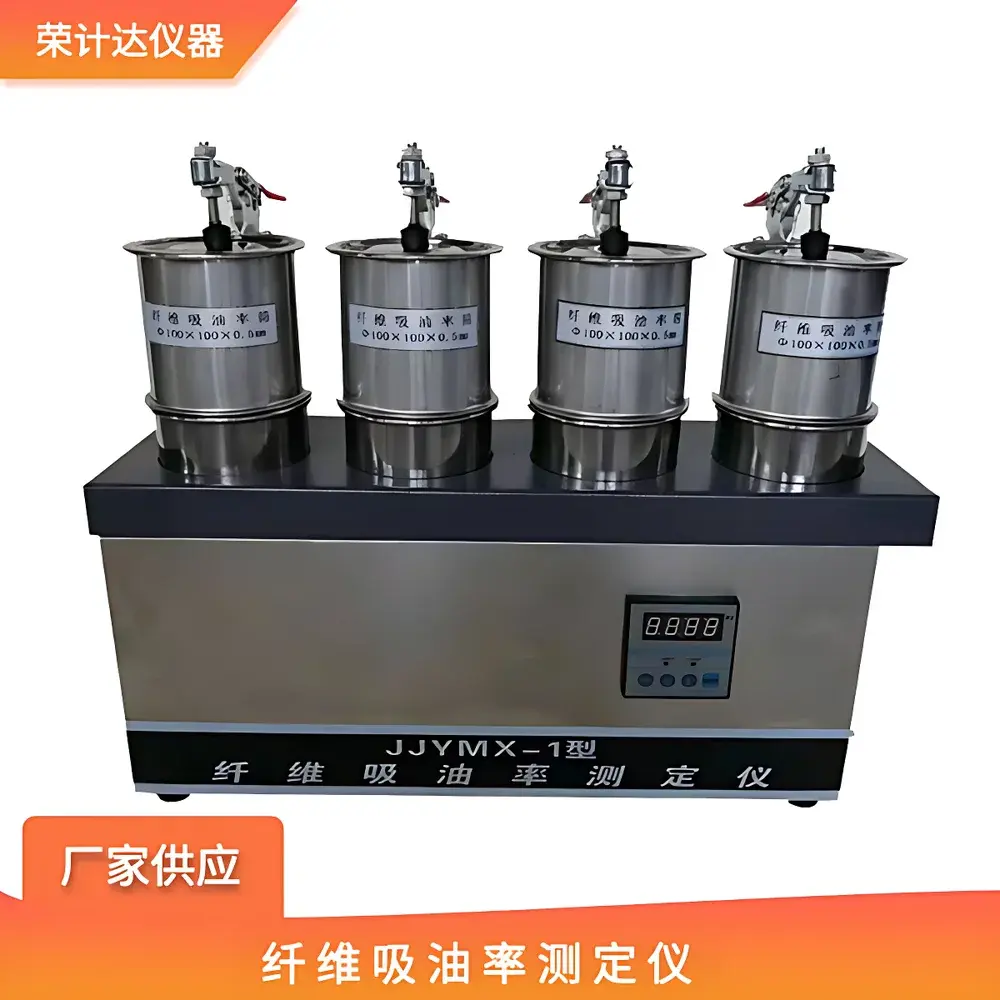
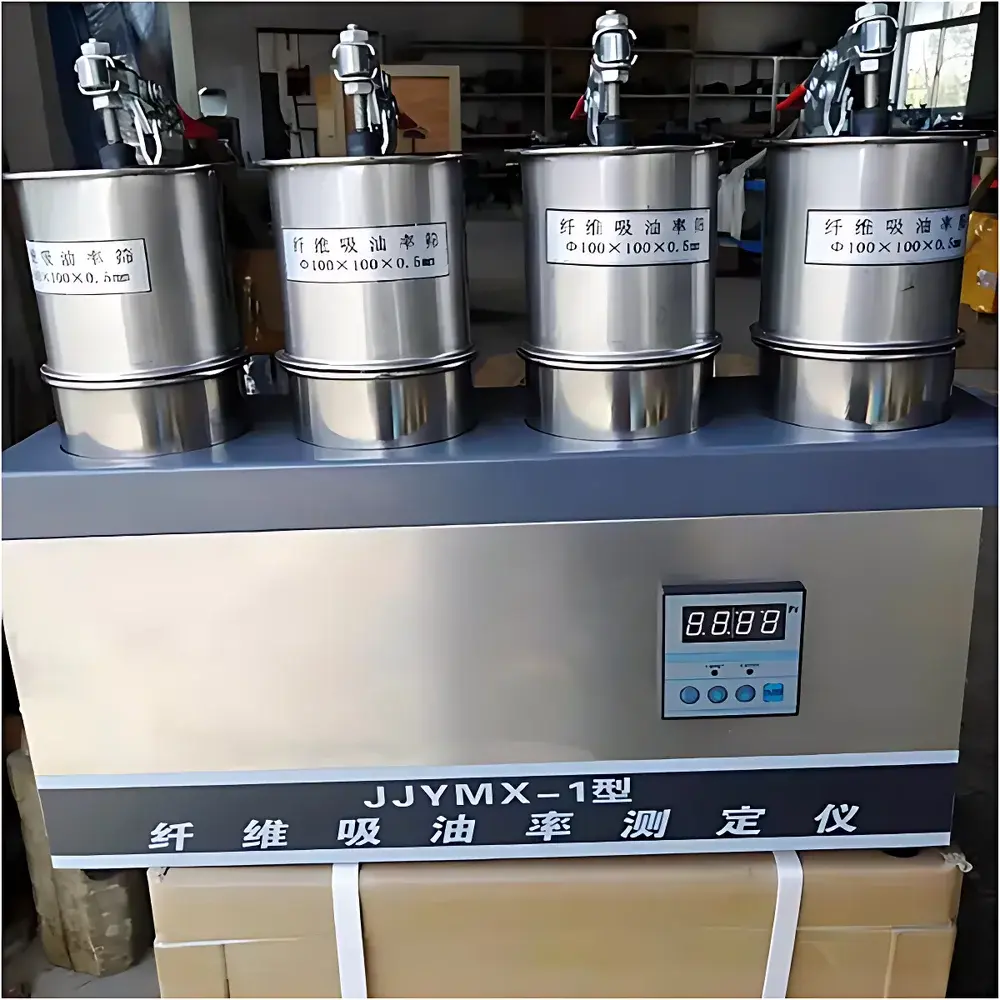
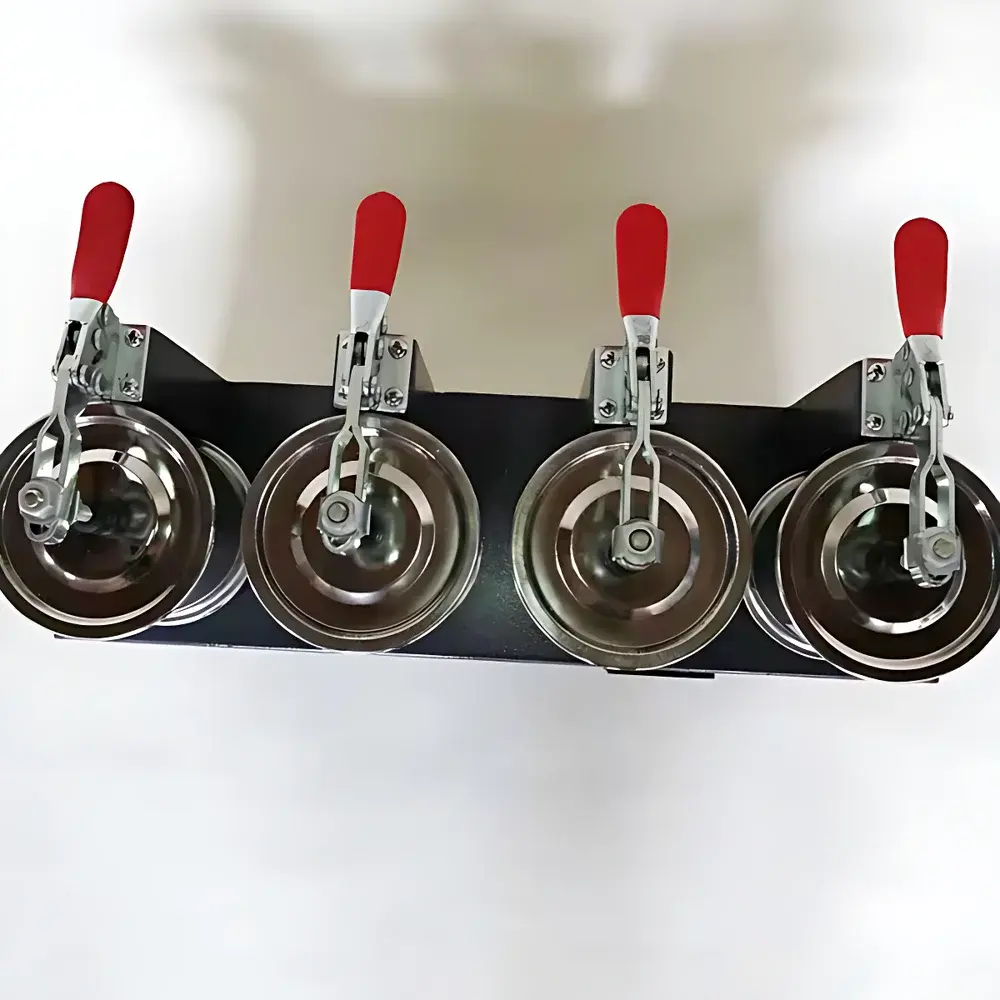
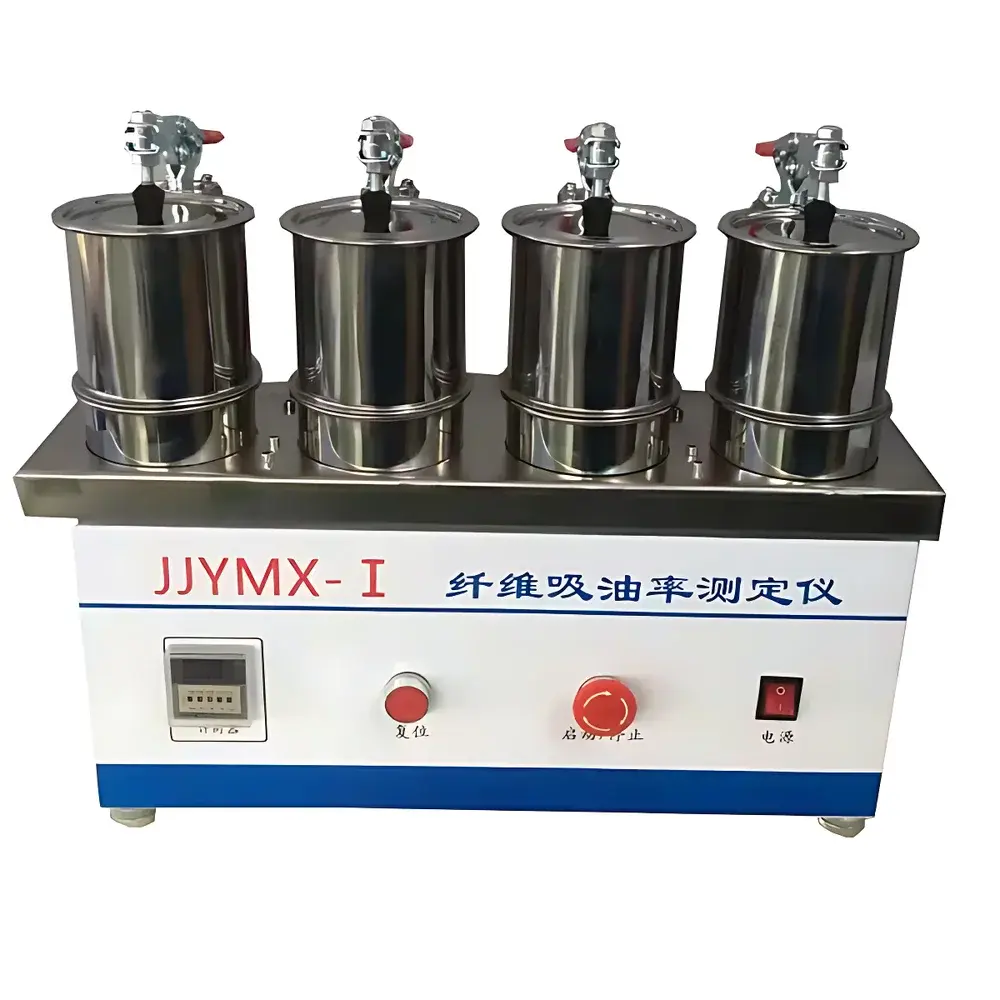
Rongjida JJYMX-1 Fiber Oil Absorption Tester
| Brand | Rongjida |
|---|---|
| Origin | Shanghai, China |
| Manufacturer Type | Direct Manufacturer |
| Region of Origin | Domestic (China) |
| Model | JJYMX-1 |
| Pricing | Upon Request |
| Vibration Time Range | 0–60 min |
| Power Supply | 220 V, 50 Hz |
| Sieve Specifications | 100 mm diameter, 0.5 mm aperture |
| Vibration Frequency | 240 cycles/min |
| Vibration Amplitude | 32 mm |
| Vibration Control | Manual ON/OFF + Timer-Based Auto-Stop |
Overview
The Rongjida JJYMX-1 Fiber Oil Absorption Tester is a dedicated mechanical testing instrument engineered for the quantitative determination of oil absorption capacity in mineral and synthetic fibers used in asphalt pavement applications. It operates on the principle of standardized mechanical vibration-assisted saturation—where fibers are subjected to controlled oscillatory motion while immersed in a defined volume of mineral oil, enabling uniform wetting and interstitial oil retention measurement. This method aligns with established empirical protocols employed in road construction material qualification, particularly for evaluating the oil-binding performance of cellulose, polyester, basalt, and lignin-based reinforcing fibers. The device is not a gravimetric or solvent-extraction system; rather, it implements a reproducible dynamic compaction protocol to simulate capillary-driven uptake under vibrational energy input—critical for correlating fiber morphology and surface energy with binder compatibility in hot-mix asphalt (HMA) design.
Key Features
- Stable, constant-frequency vibration mechanism delivering 240 cycles per minute with a fixed 32 mm amplitude—ensuring consistent mechanical energy transfer across test batches.
- Dual-mode vibration control: programmable timer (0–60 minutes) with audible end-of-cycle alert, plus manual override via front-panel power switch for operator-initiated start/stop sequences.
- Standardized 100 mm diameter stainless steel sieve with precisely laser-cut 0.5 mm apertures—designed to retain fiber specimens while permitting free drainage of unabsorbed oil during post-vibration settling.
- Robust electromechanical architecture with sealed motor housing and reinforced base frame—optimized for laboratory durability and long-term repeatability in QC environments.
- No heating, vacuum, or fluid pumping components—minimizing maintenance requirements and eliminating variables associated with thermal degradation or pressure-induced fiber deformation.
Sample Compatibility & Compliance
The JJYMX-1 accommodates loose, cut, or milled short fibers (typically 3–12 mm length) including but not limited to wood pulp cellulose, polypropylene, polyester, aramid, and mineral fibers such as rock wool or slag wool. It is compatible with standard ASTM D3418-22 referenced procedures for polymer characterization where oil absorption serves as a proxy for surface area and porosity. While not certified to ISO/IEC 17025 calibration standards out-of-the-box, the instrument’s mechanical repeatability supports internal method validation per AASHTO T 304 and EN 13108-1 compliant quality assurance workflows. Users are advised to perform periodic verification using reference fiber batches and documented oil mass balance checks to maintain traceability in GLP-regulated pavement materials laboratories.
Software & Data Management
The JJYMX-1 is a standalone electromechanical tester with no embedded microprocessor or digital interface. All operational parameters—including vibration duration—are set manually via analog time relay and physical toggle switch. Data acquisition and calculation remain external to the instrument: users record initial fiber mass, post-test saturated mass (after controlled drip-drain per standard procedure), and compute oil absorption ratio (%) using the formula: [(Msaturated − Mdry) / Mdry] × 100. Laboratories implementing electronic records may integrate results into LIMS platforms via manual entry or spreadsheet import. No firmware, driver, or regulatory-compliant audit trail (e.g., FDA 21 CFR Part 11) is provided—consistent with its classification as a Class I mechanical test apparatus under international instrumentation categorization frameworks.
Applications
- Quality control of fiber additives prior to incorporation into asphalt binder blends.
- Comparative evaluation of surface-modified vs. untreated fibers for enhanced bitumen adhesion.
- Batch-to-batch consistency verification in fiber manufacturing facilities supplying highway infrastructure projects.
- Research-level screening of novel bio-based fibers for sustainable pavement applications.
- Supporting specification compliance for national road authority tender documents requiring verified oil absorption thresholds (e.g., ≥150% for cellulose, ≥80% for polyolefin).
FAQ
What standard test methods does the JJYMX-1 support?
It is designed to execute procedures aligned with Chinese GB/T 29047–2012 and supplementary practices referenced in JTG E20–2011 (Highway Engineering Asphalt and Asphalt Mixture Test Procedures), as well as adaptable to AASHTO TP 103–14 conceptual frameworks.
Can the vibration amplitude or frequency be adjusted?
No—the unit operates at a fixed 240 cycles/min and 32 mm amplitude to ensure method consistency; these parameters are mechanically locked and non-user-configurable.
Is calibration required before each test?
While no formal calibration certificate is issued, users must verify sieve aperture integrity (0.5 mm), confirm timer accuracy ±5 s over 5-minute intervals, and validate balance resolution ≤0.01 g used for mass measurements.
Does the instrument include oil containment or spill mitigation features?
The base tray beneath the sieve collects excess oil during vibration; however, users must provide secondary containment (e.g., stainless steel drip pan) and follow local chemical handling regulations for mineral oil disposal.
What maintenance is recommended for long-term reliability?
Monthly inspection of motor coupling tightness, annual lubrication of camshaft bearings, and biannual verification of electrical grounding continuity per IEC 61000-6-3 EMC guidelines.




