
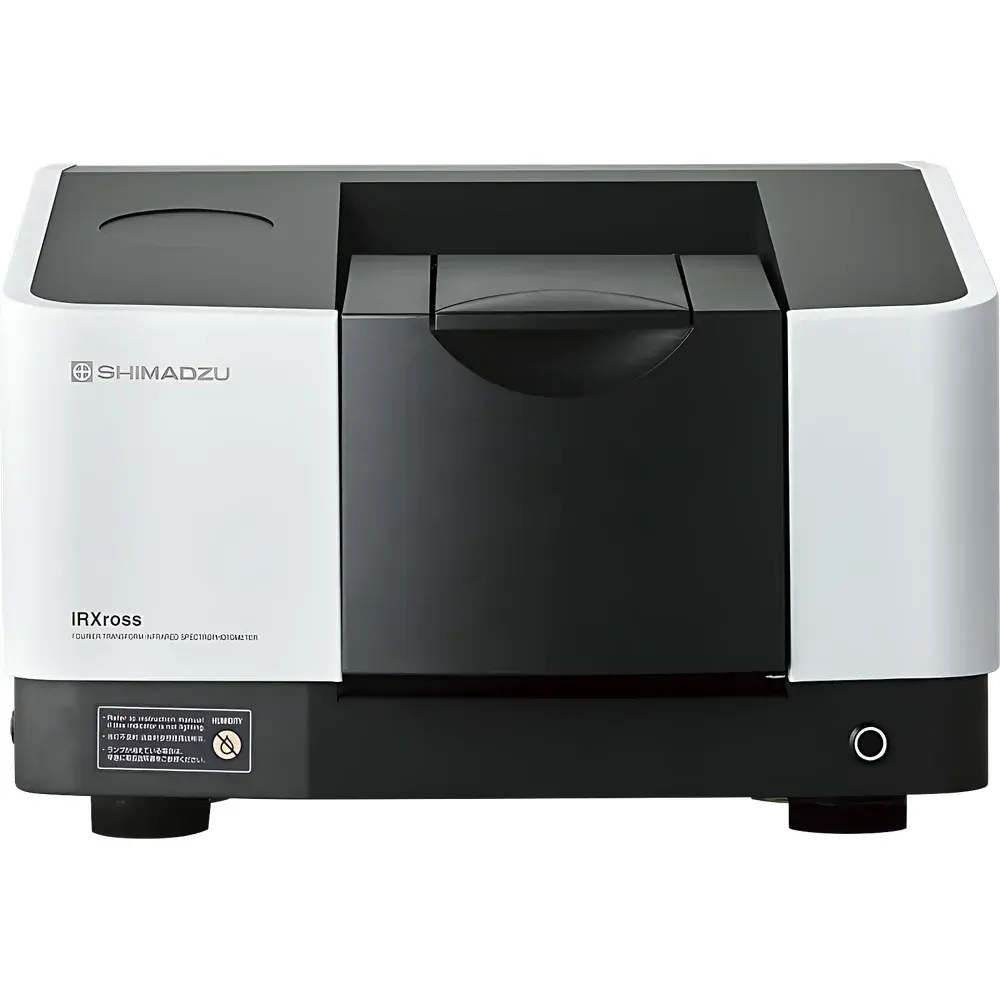
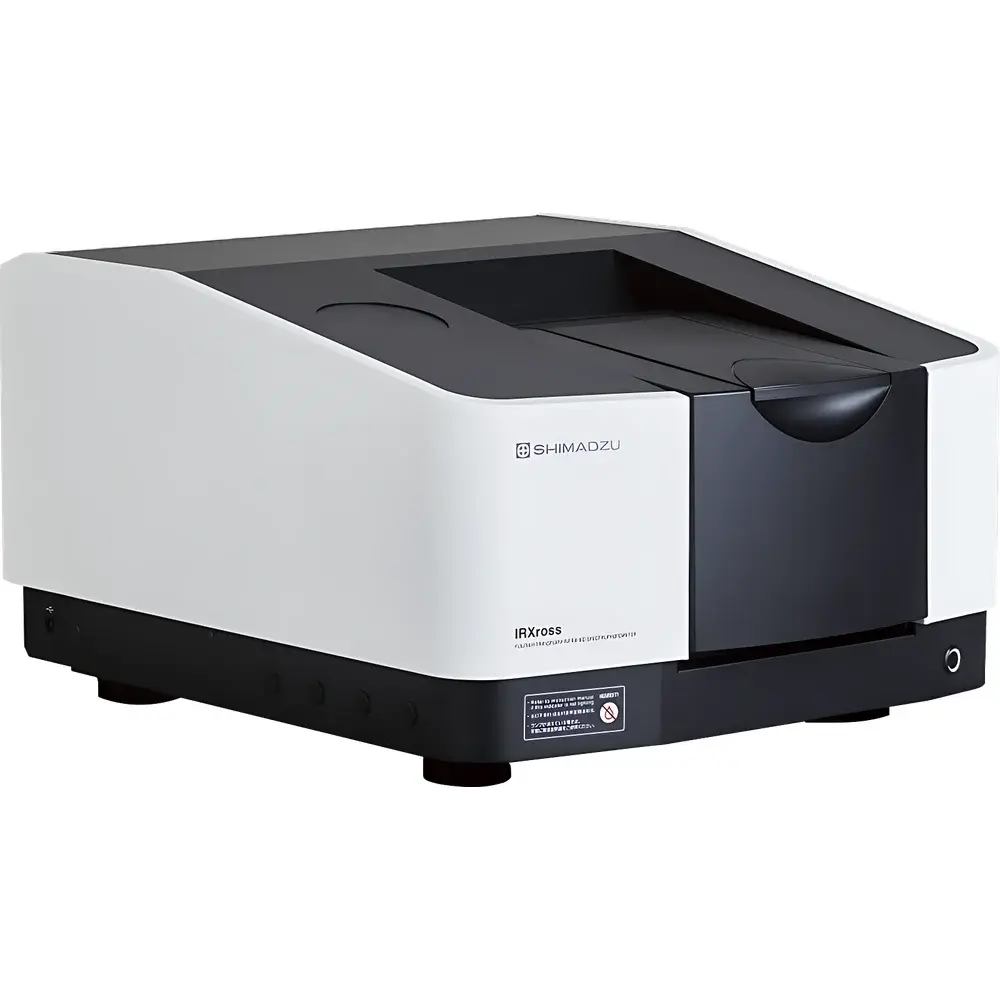
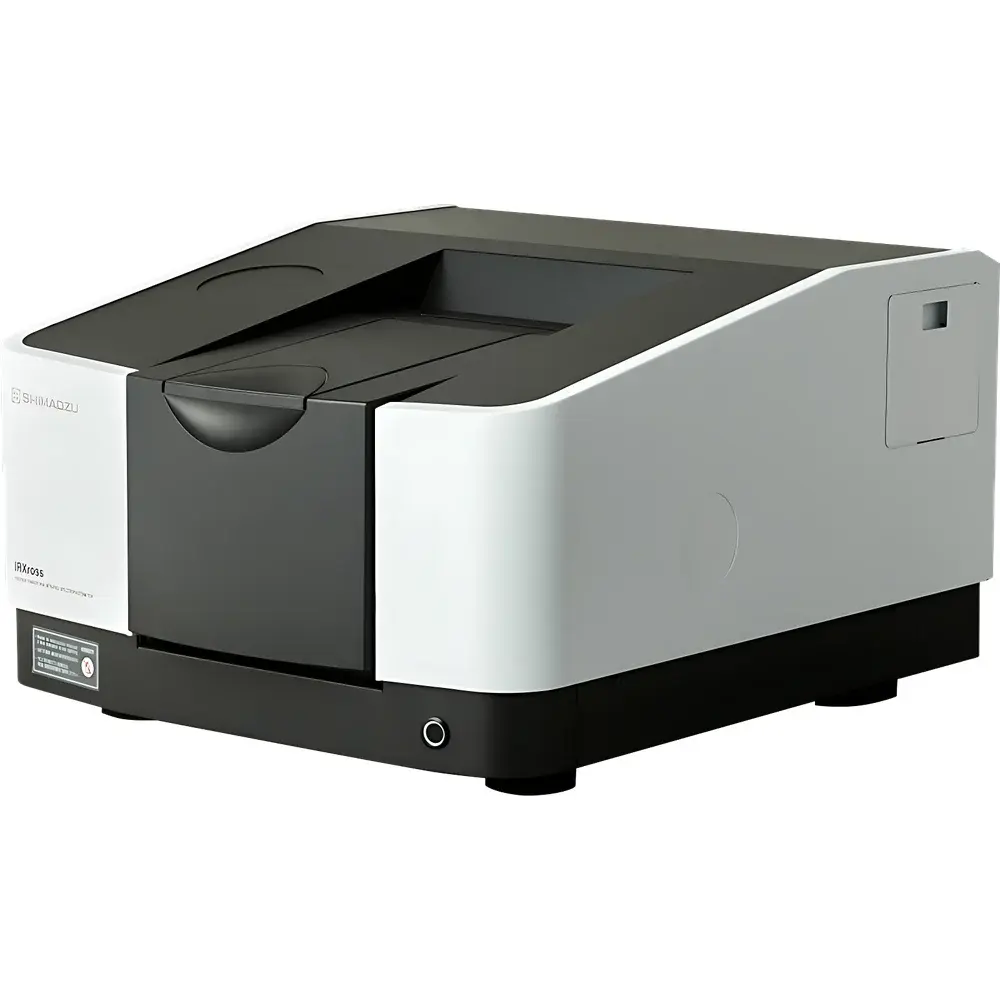
Shimadzu IRXross Fourier Transform Infrared (FTIR) Spectrometer
| Brand | Shimadzu |
|---|---|
| Origin | Japan |
| Manufacturer Type | Original Equipment Manufacturer (OEM) |
| Import Status | Imported |
| Model | IRXross |
| Instrument Type | Laboratory FTIR Spectrometer |
| Wavenumber Range | 7800–350 cm⁻¹ |
| Spectral Resolution | 0.25 cm⁻¹ |
| Signal-to-Noise Ratio (S/N) | 55,000:1 |
Overview
The Shimadzu IRXross is a high-performance laboratory-grade Fourier Transform Infrared (FTIR) spectrometer engineered for precision molecular identification, quantitative analysis, and dynamic process monitoring across pharmaceutical, polymer, materials science, and quality control laboratories. Based on Michelson interferometry with a permanently aligned optical path and thermally stabilized KBr beam splitter, the IRXross delivers exceptional spectral fidelity and long-term measurement reproducibility. Its broad wavenumber coverage (7800–350 cm⁻¹) supports characterization of functional groups from high-energy overtones (e.g., O–H stretch near 3600 cm⁻¹) to low-frequency skeletal vibrations (e.g., metal–ligand bonds below 600 cm⁻¹). The instrument employs a high-stability globar source, liquid-nitrogen-cooled MCT detector, and an optimized optical bench design to achieve a measured S/N ratio of 55,000:1 (at 4 cm⁻¹ resolution, 1-minute scan), enabling detection of trace components and subtle spectral deviations in complex matrices.
Key Features
- Ultra-high spectral resolution of 0.25 cm⁻¹ — suitable for resolving closely spaced rotational–vibrational lines in gas-phase spectra and distinguishing structurally similar isomers.
- Real-time acquisition at up to 20 spectra per second — enables time-resolved monitoring of chemical reactions, thermal degradation, or solvent evaporation kinetics.
- Integrated electronic desiccation system and hygroscopic-resistant optical windows — significantly reduce moisture-induced interference in humid environments without requiring external purge gas.
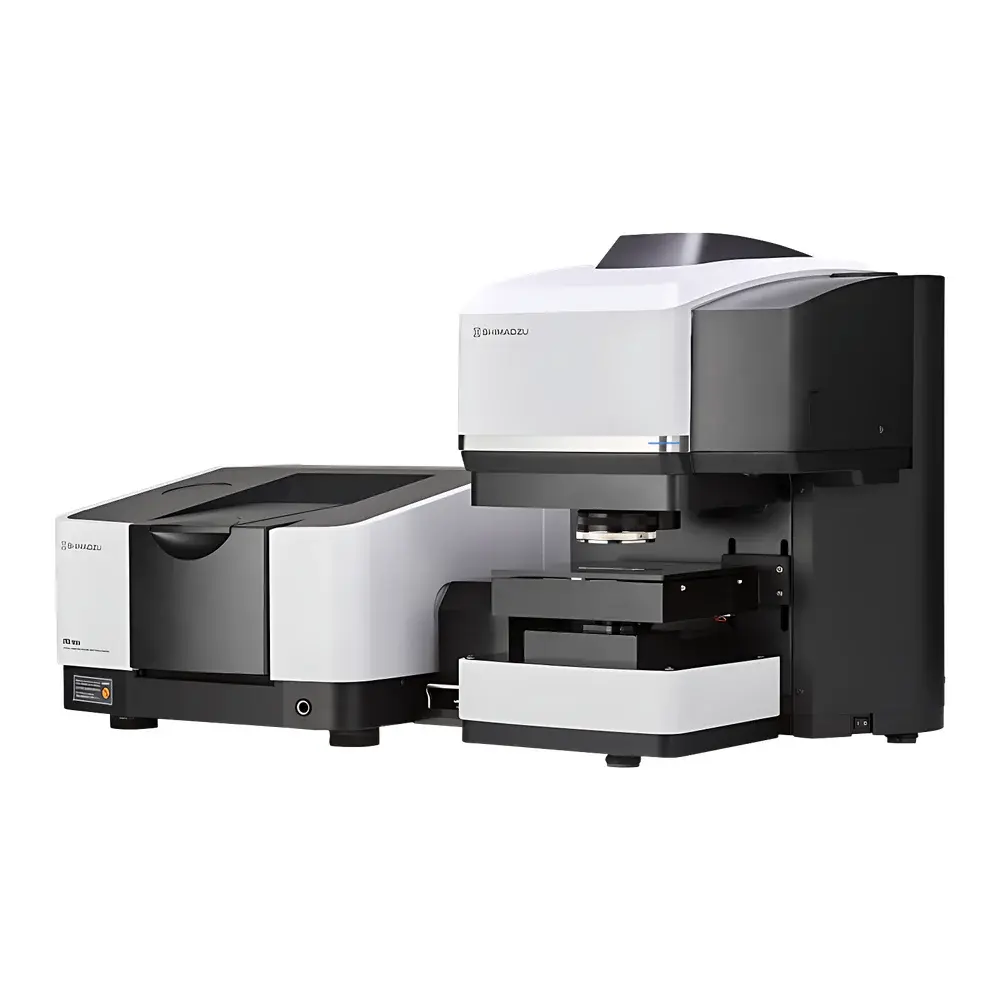
- Modular compatibility with the AIM-9000 infrared microscope — supports μm-scale spatial mapping and ng-level microsampling via transmission, reflection, or ATR modes.
- Pre-aligned, maintenance-free interferometer with active alignment compensation — ensures consistent optical performance across extended operational cycles and temperature fluctuations.
Sample Compatibility & Compliance
The IRXross accommodates diverse sample forms including solids (KBr pellets, films, powders), liquids (neat, solution, thin films), gases (in sealed cells with variable pathlengths), and heterogeneous mixtures. Optional accessories include diamond ATR units, high-temperature reaction cells, and environmental chambers (−10 to 200 °C). From a regulatory standpoint, the system complies with ISO/IEC 17025 requirements for analytical instrumentation validation. When configured with LabSolutions DB IR or CS IR software, it meets FDA 21 CFR Part 11, EU Annex 11, and ALCOA+ data integrity principles — including electronic signatures, audit trails with immutable timestamps, role-based access control, and full traceability of raw data, processing parameters, and report generation history.
Software & Data Management
The IRXross operates under Shimadzu’s LabSolutions IR platform, offering three deployment options: standalone (LabSolutions IR), local database-enabled (LabSolutions DB IR), and networked enterprise (LabSolutions CS IR). IR Pilot — a context-aware, workflow-guided interface — simplifies method setup, spectral acquisition, and routine QA/QC checks through intuitive step-by-step prompts. Advanced algorithms include automated peak search, spectral subtraction, library search against >10,000 reference spectra (including polymer, pharmaceutical, and contaminant libraries), and proprietary mixture deconvolution routines for unknown foreign material analysis. The AIMsolution software — used with the AIM-9000 microscope — integrates seamlessly with DB/CS editions, supporting batch processing, spectral clustering, and hyperspectral image export (e.g., false-color distribution maps). All software versions support PDF/A-compliant reporting and export to ASTM E1447, ASTM E2534, and ISO 18384-compliant formats.
Applications
- Pharmaceutical: Polymorph screening, excipient compatibility studies, counterfeit drug detection, and residual solvent quantification per ICH Q2(R2).
- Polymers & Plastics: Identification of base resin, additives, plasticizers, and oxidation products; aging assessment via carbonyl index calculation (1710 cm⁻¹/1460 cm⁻¹ ratio).
- Materials Science: Surface contamination analysis on semiconductors, catalyst characterization, and thin-film thickness determination via interference fringe analysis.
- Forensics & Failure Analysis: Micro-spectroscopic identification of paint chips, fibers, adhesives, and particulate contaminants.
- Environmental: Quantitative analysis of atmospheric pollutants (e.g., CO, NO₂, CH₄) using multicomponent least-squares fitting in gas cell measurements.
FAQ
What is the minimum detectable sample mass when using the AIM-9000 infrared microscope with IRXross?
Typical detection limits are in the range of 1–10 ng for homogeneous organic samples under optimal ATR or transmission conditions.
Does the IRXross support ASTM E1252 or ISO 18384 spectral data exchange standards?
Yes — all exported spectra comply with JCAMP-DX v5.01 and can be imported into third-party chemometric platforms supporting ASTM E1252-98 and ISO 18384:2016.
Can LabSolutions DB IR be validated for GxP environments?
Yes — Shimadzu provides IQ/OQ documentation templates, installation qualification checklists, and a comprehensive validation support package aligned with GAMP 5 guidelines.
Is real-time spectral processing available during acquisition?
Yes — baseline correction, smoothing, and peak integration can be applied in real time via customizable processing chains within IR Pilot.
How does the electronic desiccation system differ from traditional purge-based moisture control?
It actively removes water vapor from the optical compartment using solid-state Peltier dehumidification — eliminating reliance on dry air or nitrogen gas supplies while maintaining stable humidity below 5% RH.




