
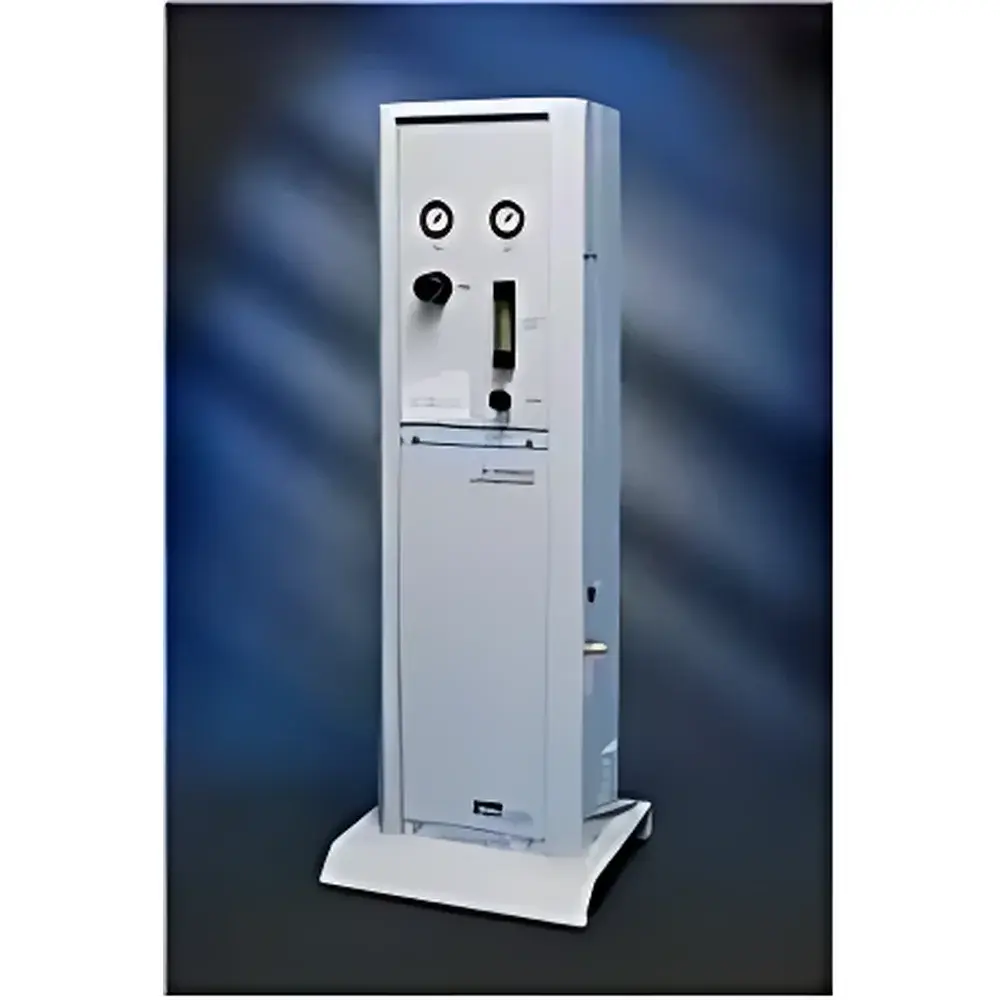
Parker NitroFlow Lab Series Membrane-Based Nitrogen Generator for LC/MS
| Brand | Parker |
|---|---|
| Origin | USA |
| Model Series | NitroFlow Lab, N2-04 / N2-14 / N2-22 / N2-35 / N2-45 / N2-80 / N2-135 |
| Flow Rate Range | 4–467 L/min |
| Nitrogen Purity | ≥99.5% (standard models), up to 99.999% (LCMS-SF series) |
| Technology | Hollow-Fiber Membrane Separation |
| Power Requirement | None (for air-fed split-system configurations) |
| Compliance | Phthalate-free, VOC-free, MS-compatible design |
Overview
The Parker NitroFlow Lab Series is a dedicated membrane-based nitrogen generator engineered specifically for liquid chromatography–mass spectrometry (LC/MS) applications. Unlike pressure swing adsorption (PSA) systems, which generate oxygen-rich off-gas and may introduce trace contaminants that interfere with electrospray ionization (ESI) or atmospheric pressure chemical ionization (APCI) sources, the NitroFlow Lab employs proprietary hollow-fiber membrane technology to separate nitrogen from compressed ambient air with high selectivity and stability. This process yields continuous, on-demand nitrogen gas with consistent purity (>99.5% N₂ for standard models; up to 99.999% for ultra-high-purity LCMS-SF variants), eliminating reliance on high-pressure cylinders—reducing safety hazards, logistical overhead, and operational downtime associated with cylinder handling, storage, and certification renewal.
Key Features
- Membrane separation architecture ensures zero suppression of corona discharge in APCI sources and no adverse impact on ESI source stability—validated across major OEM LC/MS platforms including Thermo Fisher, Waters, Agilent, Sciex, and Shimadzu.
- Phthalate-free and VOC-free construction meets stringent laboratory material compatibility requirements for trace-level analysis and regulated environments (e.g., GLP, ISO/IEC 17025).
- Zero electrical consumption for air-fed split-system configurations (N2-xx models)—compressor located remotely, generator unit operates passively via air pressure differential.
- Modular scalability: Seven standard flow-rate tiers (4–467 L/min) accommodate single-quadrupole, triple-quadrupole, Q-TOF, and Orbitrap-based systems—from benchtop LC/MS to high-throughput core facilities.
- Integrated particulate and coalescing filtration upstream of the membrane module ensures long-term membrane integrity and resistance to oil aerosol and moisture ingress.
- Compact footprint (as low as 28 × 38 × 56 cm for N2-04) optimizes bench or under-bench installation in space-constrained analytical labs.
Sample Compatibility & Compliance
The NitroFlow Lab series delivers nitrogen gas compliant with critical LC/MS auxiliary gas specifications: nebulizer gas (sheath gas), drying gas, and curtain gas. All models meet or exceed ASTM D6349-21 requirements for instrument-grade nitrogen used in analytical instrumentation. The ultra-high-purity LCMS-SF5000UK/LCMS-SF5001UK variants (99.999% N₂, <1 ppm O₂, <0.5 ppm H₂O) satisfy USP and ICH Q5C recommendations for biopharmaceutical characterization workflows. Units are CE-marked and designed to support 21 CFR Part 11-compliant data integrity when integrated with validated lab information management systems (LIMS) via optional analog/digital I/O modules.
Software & Data Management
While the core NitroFlow Lab units operate autonomously without embedded firmware or user interface, Parker provides optional monitoring kits (e.g., NitroView™ Sensor Pack) enabling real-time logging of inlet pressure, outlet flow, dew point, and purity proxy metrics (via O₂ sensor integration). Data export supports CSV and Modbus RTU protocols for seamless ingestion into ELN platforms or centralized facility monitoring systems. Audit trails, user access logs, and configuration change records are maintained externally in accordance with GLP/GMP documentation standards when deployed in regulated QC/QA laboratories.
Applications
- Routine LC/MS method development and validation in pharmaceutical R&D and quality control laboratories.
- High-sensitivity metabolomics and proteomics workflows requiring stable, low-particulate nitrogen supply for extended acquisition periods.
- Environmental testing labs performing EPA Method 8270/8321 analyses where cylinder logistics impede field-deployable or mobile lab operations.
- Clinical toxicology labs operating under CAP or CLIA accreditation—reducing gas-related instrument downtime and audit findings related to cylinder certification gaps.
- Academic core facilities supporting multi-user LC/MS infrastructure with predictable, maintenance-light nitrogen provisioning.
FAQ
Does the NitroFlow Lab require an external air compressor?
Yes—except for the integrated NitroFlow Lab model (with built-in oil-free scroll compressor). All N2-xx series units are designed for split-system operation and require connection to a clean, dry, oil-free compressed air source meeting ISO 8573-1 Class 1.3.1 specifications.
How often does the membrane module require replacement?
Under typical lab conditions (24/7 operation, properly filtered feed air), membrane service life exceeds 15,000 operating hours. Parker recommends annual verification of outlet O₂ content using calibrated electrochemical sensors.
Can the N2-135 support dual LC/MS systems simultaneously?
Yes—its rated 467 L/min output supports two high-flow triple-quadrupole systems (e.g., two Waters Xevo TQ-S micro units) with margin for future expansion or peak demand surges.
Is the LCMS-SF5000UK compatible with hydrogen-sensitive detectors?
Yes—the ultra-high-purity variant includes catalytic deoxygenation and deep desiccation stages, achieving <100 ppb residual H₂, making it suitable for GC/MS interfaces and hyphenated techniques requiring inert carrier gas integrity.
What regulatory documentation is provided with shipment?
Each unit ships with Factory Acceptance Test (FAT) report, Certificate of Conformance (CoC), ISO 9001-certified manufacturing documentation, and full technical datasheets aligned with IEC 61000-6-3 EMC compliance standards.



