
GILL WindSonic Ultrasonic Anemometer & Wind Vane Sensor
| Brand | GILL |
|---|---|
| Origin | United Kingdom |
| Model | WindSonic |
| Instrument Type | Ultrasonic Anemometer |
| Resolution | 0.01 m/s (wind speed), 1° (wind direction) |
| Measurement Range | 0–60 m/s (wind speed), 0–359° (wind direction) |
| Accuracy | ±2% @ 12 m/s (wind speed), ±3° @ 12 m/s (wind direction) |
| Response Time | 0.25 s |
| Startup Wind Speed | 0.01 m/s |
| Operating Temperature | −40 to +70 °C |
| Storage Temperature | −40 to +80 °C |
| Humidity Range | 0–100 % RH |
| IP Rating | IP65 |
| Power Supply | 5–30 V DC (varies by output option) |
| Average Time Between Failures (MTBF) | 15 years |
| Housing Material | Luran S KR 2861/1C (ASA/PC blend) |
| Dimensions | 142 mm × 160 mm |
| Weight | 0.5 kg |
| Calibration | Traceable to UK National Standards |
| EMC Compliance | EN 61326:1998 |
Overview
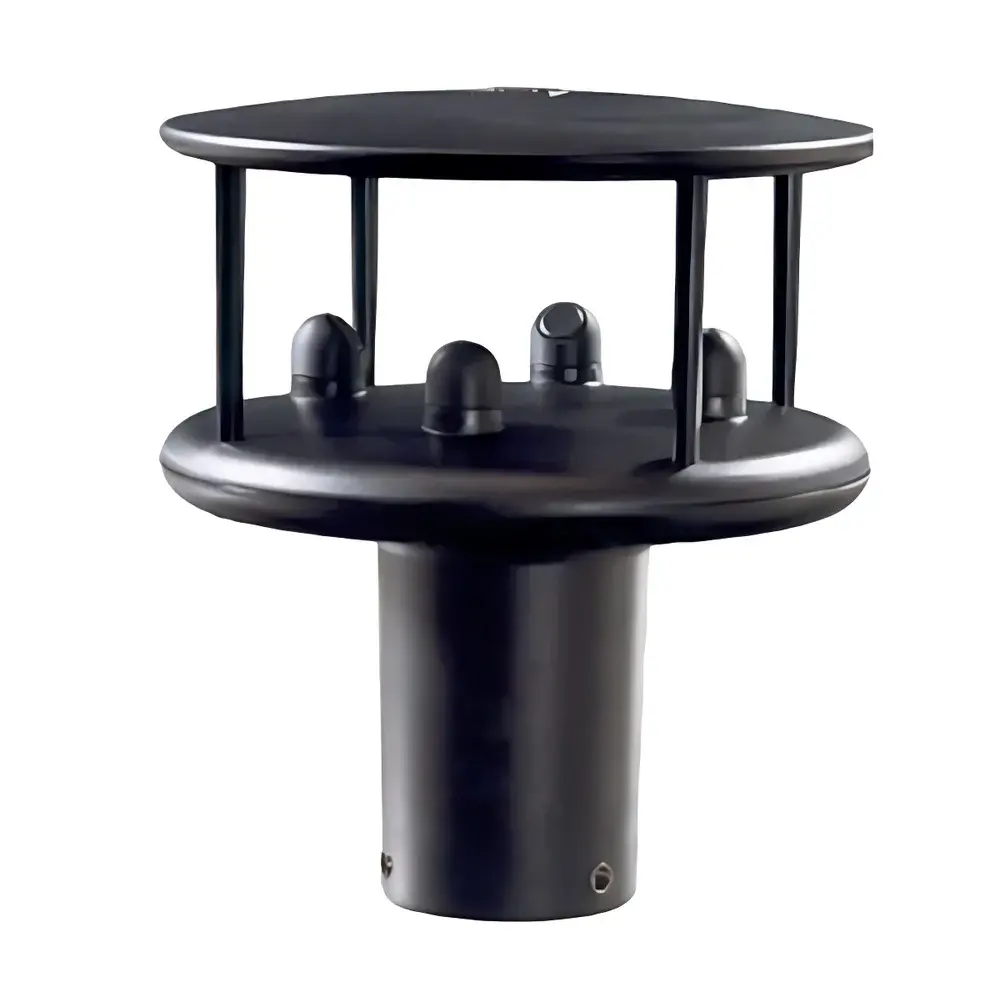
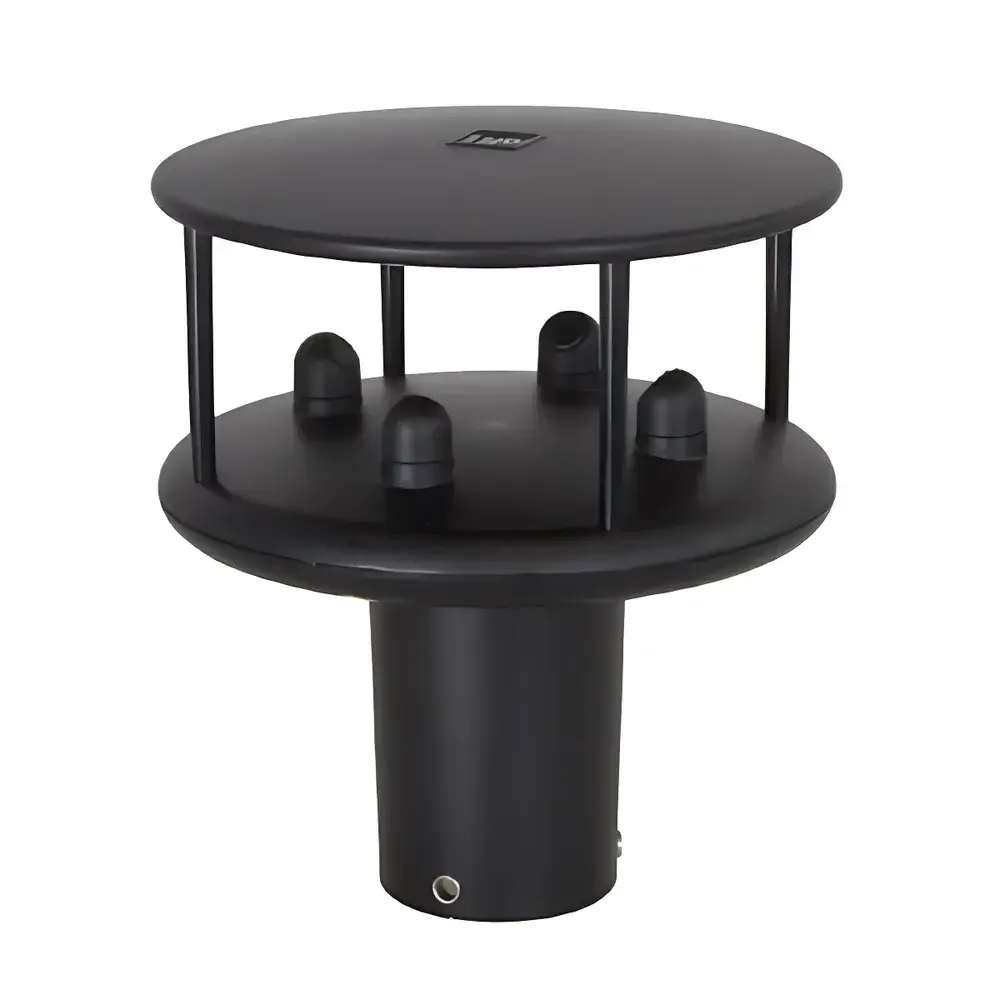
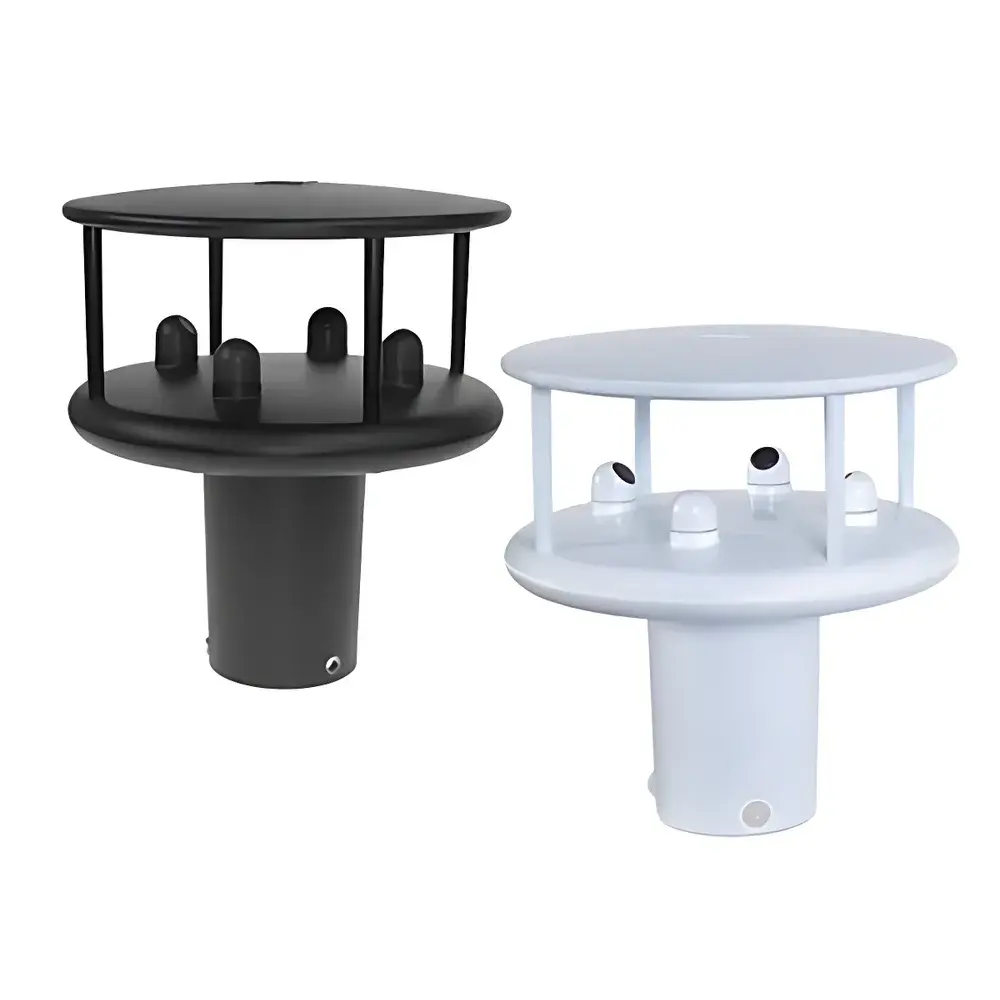
The GILL WindSonic Ultrasonic Anemometer & Wind Vane Sensor is a solid-state, maintenance-free instrument engineered for continuous, high-reliability measurement of horizontal wind speed and direction using time-of-flight ultrasonic transit-time principles. Unlike mechanical cup-and-vane or propeller-based anemometers, the WindSonic employs four precisely aligned transducers arranged in a diamond configuration. By measuring the differential time-of-flight of ultrasonic pulses traveling between opposing transducer pairs—both with and against the wind vector—the device computes orthogonal wind components (U and V) and derives true wind speed and direction without moving parts. This architecture eliminates mechanical wear, inertia-induced lag, and directional dead zones, enabling true 0–359° azimuth resolution and sub-threshold detection down to 0.01 m/s. Designed for long-term deployment across diverse environmental regimes—from coastal marine installations to arid inland sites—the WindSonic delivers metrologically traceable performance validated against UK National Standards, with factory calibration documented per ISO/IEC 17025–aligned procedures.
Key Features
- Solid-state design with no moving parts: Eliminates mechanical failure modes, bearing wear, and ice accumulation susceptibility common in rotating sensors.
- True 0–359° wind direction measurement: No blind spots or null zones; continuous angular resolution at 1° increments.
- Low-startup threshold: Detects wind onset at 0.01 m/s, supporting boundary-layer and low-turbulence monitoring applications.
- Corrosion-resistant housing: Molded from Luran S KR 2861/1C—a UV-stabilized ASA/PC polymer engineered for marine-grade chemical and salt-spray resistance (tested per ASTM B117).
- Multi-protocol digital outputs: Configurable RS232, RS422, RS485, NMEA 0183, SDI-12, and analog (0–5 V, 0–20 mA, 4–20 mA) options support integration into SCADA, data loggers, and IoT telemetry platforms.
- Embedded status reporting: Each data packet includes a diagnostic status code indicating sensor health, signal quality, temperature validity, and internal self-test results.
- Low power consumption: Draws only 9 mA at 12 V DC, enabling solar-battery operation in remote deployments.
- Ruggedized mechanical construction: IP65-rated enclosure withstands dust ingress and water jets; operational over −40 to +70 °C ambient range.
Sample Compatibility & Compliance
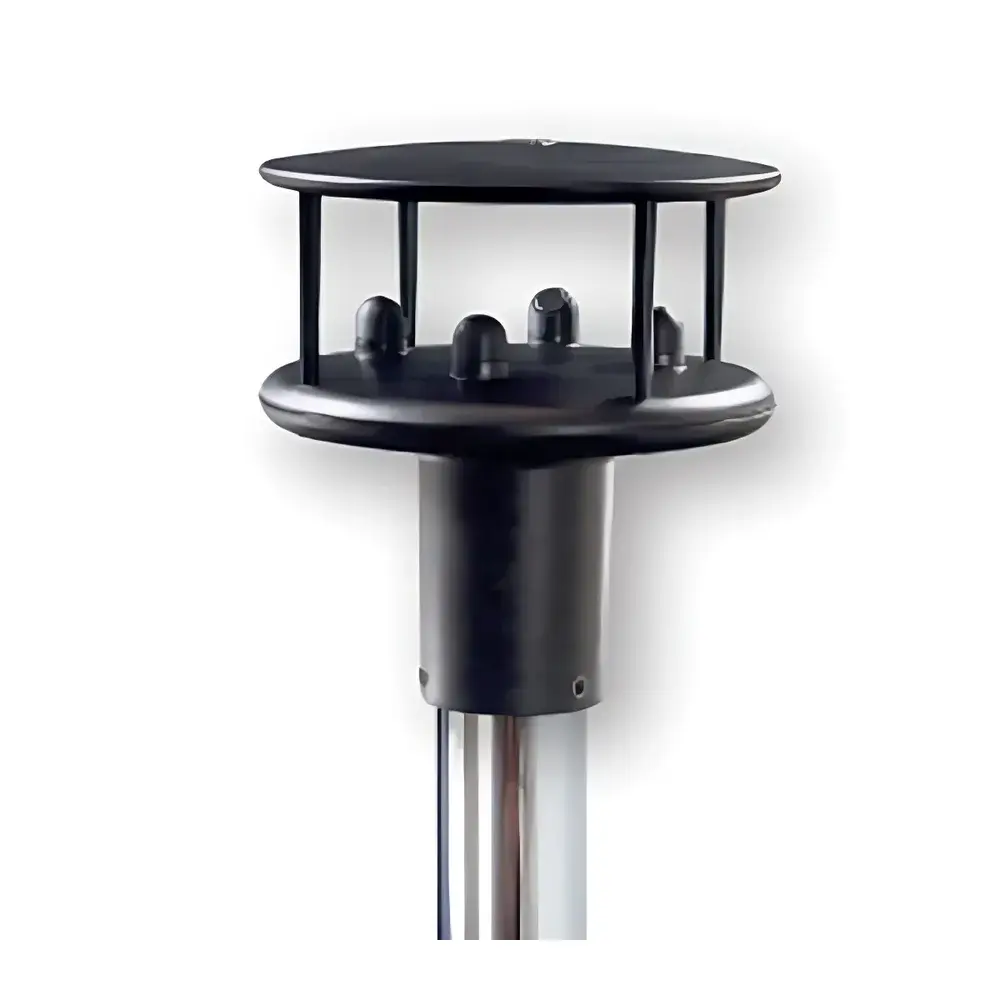
The WindSonic is compatible with standard meteorological mounting hardware (e.g., 25 mm or 1-inch NPT pole adapters) and requires no site-specific recalibration post-installation. Its ultrasonic measurement principle ensures consistent performance across variable air densities, humidity levels (0–100 % RH), and atmospheric pressure gradients—making it suitable for elevation-varying networks and maritime environments. The sensor conforms to electromagnetic compatibility requirements per EN 61326:1998 (industrial environment class), and its calibration documentation supports traceability to the UK’s National Physical Laboratory (NPL) standards. While not certified for safety-critical aviation or nuclear-grade applications, the WindSonic meets functional requirements for environmental compliance monitoring under EPA Method 9, ISO 16000-22 (indoor air quality), and WMO Guide to Meteorological Instruments and Methods of Observation (CIMO Guide) Chapter 12 on wind measurement.
Software & Data Management
The WindSonic operates autonomously without proprietary host software but is fully supported by industry-standard data acquisition systems including Campbell Scientific CR-series loggers, Onset HOBO UX120, and DT80 series controllers. Configuration—including output rate (0.25 Hz to 4 Hz), measurement mode (wind speed/direction or U/V components), units (m/s, knots, mph, km/h, ft/min), and serial protocol parameters—is performed via ASCII command set over RS232. Output data packets include timestamped wind vectors, status flags, and optional internal temperature readings. For regulatory or QA/QC workflows, the device’s deterministic response time (0.25 s) and fixed update intervals facilitate synchronization with external reference instruments. Although the WindSonic does not natively support FDA 21 CFR Part 11 audit trails or encrypted data signing, its stable firmware and deterministic I/O behavior enable integration into GLP/GMP-compliant environmental monitoring systems when paired with compliant data loggers and validation protocols.
Applications
- Agricultural microclimate monitoring: Optimizing irrigation scheduling and frost protection through real-time wind-driven evapotranspiration modeling.
- HVAC system commissioning and building energy audits: Quantifying outdoor air intake dynamics and stack effect ventilation rates.
- Industrial emission dispersion modeling: Providing boundary-condition inputs for AERMOD and CALPUFF simulations under EPA regulatory frameworks.
- Offshore wind farm site assessment: Supporting long-term resource evaluation campaigns where mechanical sensor reliability is compromised by salt corrosion and vibration.
- Urban air quality networks: Deploying dense sensor arrays for street-canyon flow characterization and pollutant transport analysis.
- Transportation infrastructure: Tunnel ventilation control, bridge deck wind loading assessment, and railway line gust monitoring.
- Educational and portable weather stations: Low-power, lightweight design enables battery-operated field deployments and student-led atmospheric science projects.
FAQ
Does the WindSonic require periodic recalibration?
No. The WindSonic is factory-calibrated against traceable national standards and designed for zero-maintenance operation throughout its service life. Field recalibration is neither recommended nor necessary under normal operating conditions.
Can the WindSonic be used in freezing or snowy conditions?
Yes. Its solid-state architecture avoids ice jamming issues inherent in mechanical sensors. However, prolonged snow accumulation on transducer faces may attenuate signals; periodic visual inspection or passive heating accessories (not included) are advised in persistent icing environments.
What is the maximum cable length for RS485 output?
Up to 1,200 meters at 9,600 bps, per TIA/EIA-485-A specifications. Signal integrity should be verified with termination resistors and shielded twisted-pair cabling in electrically noisy environments.
Is the WindSonic compatible with Modbus RTU?
No. It does not implement Modbus natively, but third-party protocol converters can translate its ASCII output to Modbus registers for PLC integration.
How is sensor health monitored in real time?
Each data frame includes a 2-byte status code indicating transducer fault, temperature out-of-range, signal-to-noise ratio degradation, and internal voltage anomalies—enabling automated fault detection in supervisory systems.







