

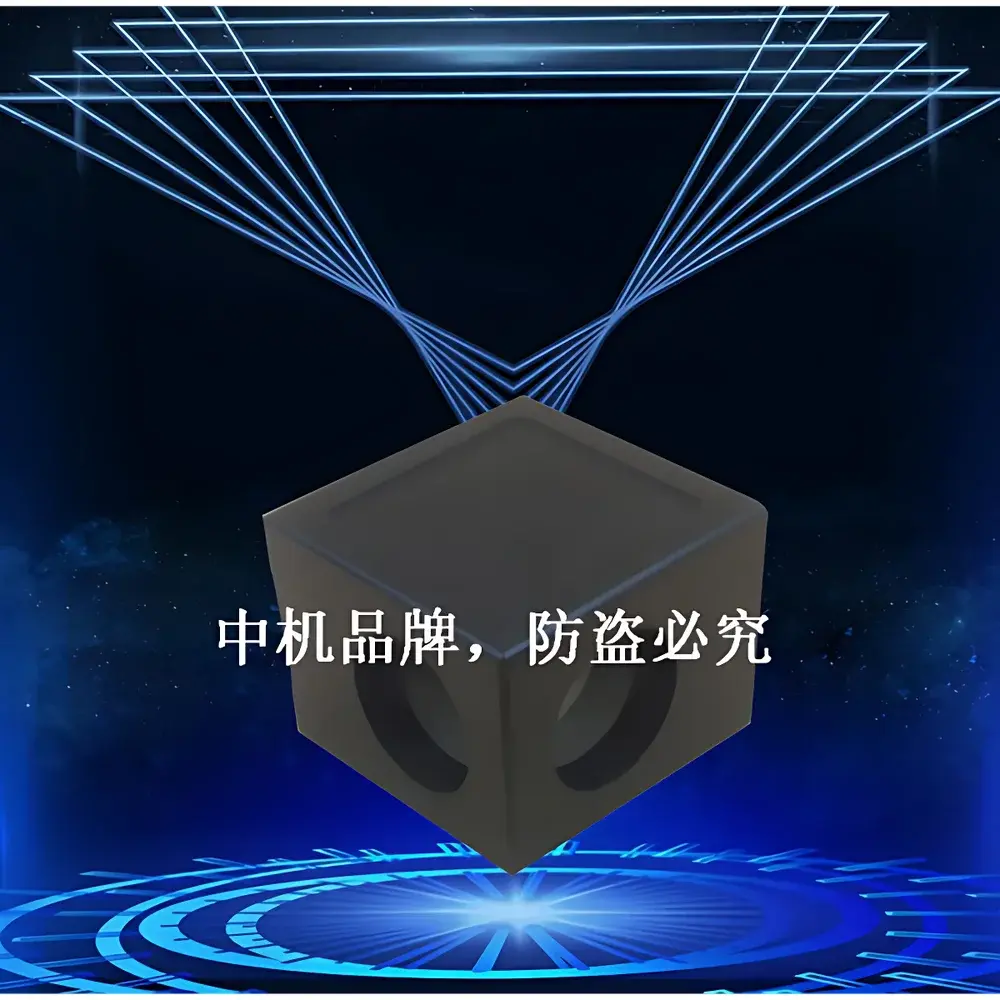
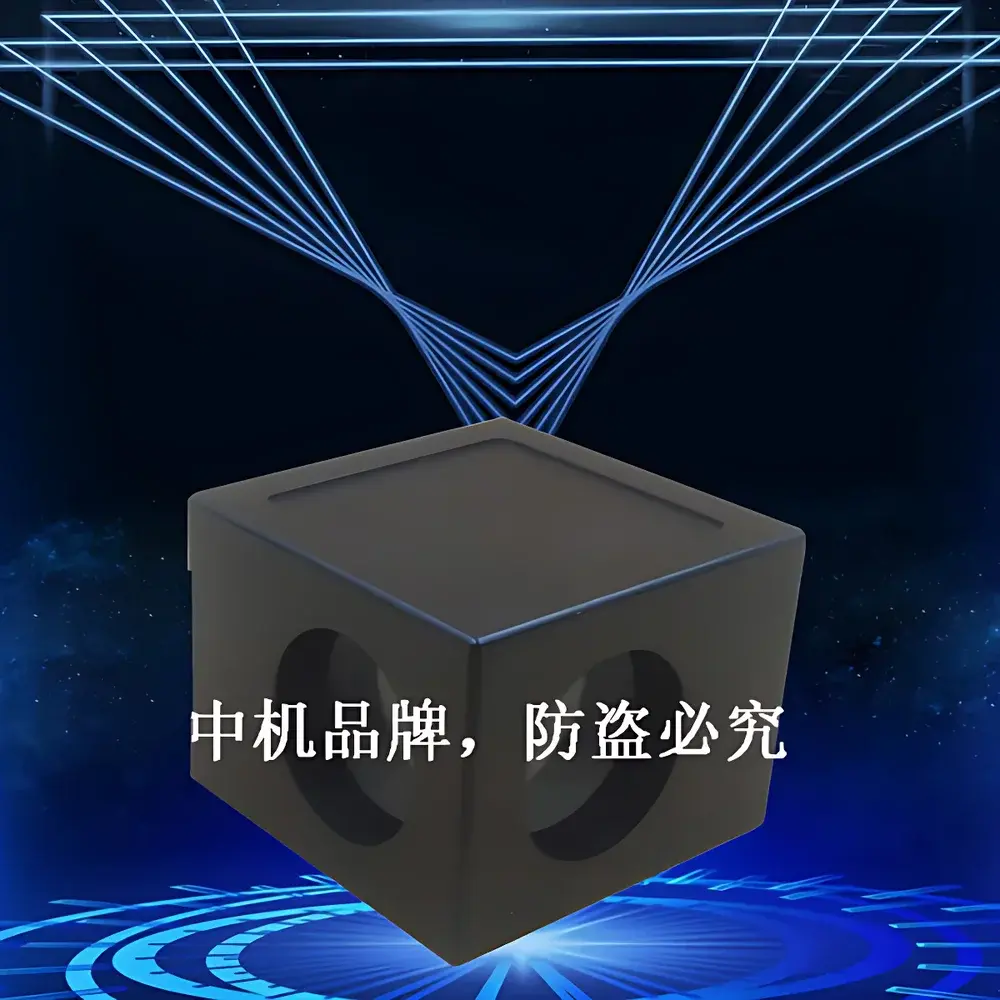
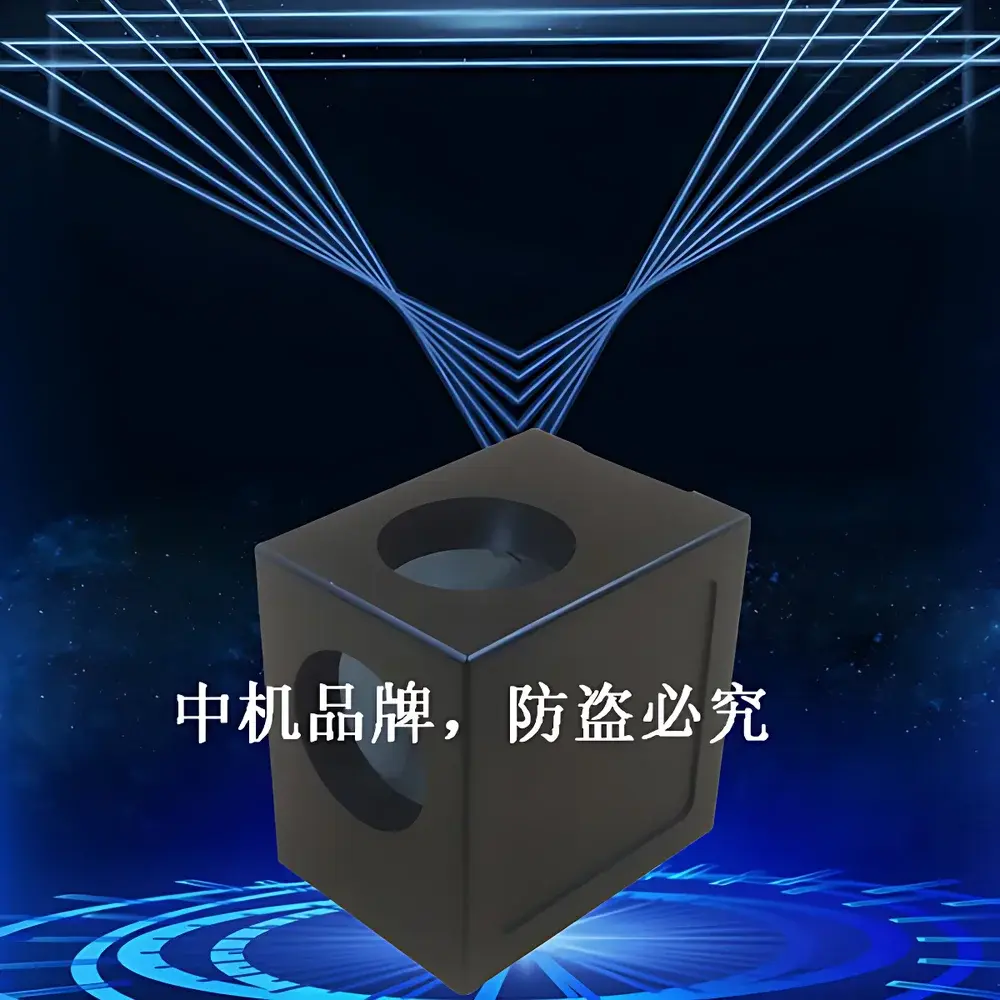
YANRUN WJS-2 Optical Square (2 Arcseconds)
| Brand | YANRUN |
|---|---|
| Origin | Shanghai, China |
| Manufacturer Type | Direct Manufacturer |
| Product Category | Domestic |
| Model | WJS-2 |
| Component Type | Precision Optical Alignment Component |
| Angular Accuracy | ±2″ (arcseconds) |
| Mounting Interface | Standard Kinematic or Adjustable Base Compatible |
| Optical Aperture | ≥Φ25 mm |
| Beam Deviation Tolerance | ≤1″ per 100 mm Path Length |
| Material | Invar-Invar Hybrid Structure with Low-Thermal-Expansion Housing |
| Surface Quality | λ/20 @ 632.8 nm (He–Ne Wavelength) |
Overview
The YANRUN WJS-2 Optical Square is a high-precision angular reference instrument engineered for metrological-grade alignment and geometric error evaluation in optical and mechanical metrology laboratories. Based on the principle of autocollimation using a collimated He–Ne laser beam (632.8 nm), the WJS-2 establishes a stable, orthogonal reference plane with traceable angular accuracy of ±2 arcseconds. Unlike conventional mechanical squares, it eliminates thermal drift and mechanical hysteresis by relying on an optically defined right angle generated through internal retroreflection and beam recombination. Its core function is to serve as a primary angular standard for verifying perpendicularity between motion axes (e.g., X–Y stages), calibrating coordinate measuring machines (CMMs), validating multi-axis CNC machine tool squareness, and supporting ISO 10360 and ASME B89.4.1 compliance testing.
Key Features
- Precision angular reference with certified deviation ≤±2″ (arcseconds), calibrated against NIM-traceable interferometric standards.
- Invar–Invar hybrid structural design minimizes thermal expansion coefficient (<0.5 µm/m·°C over 15–25°C), ensuring long-term stability during extended measurement cycles.
- Optical aperture ≥Φ25 mm supports integration with large-aperture position-sensitive detectors (PSDs) or CCD-based autocollimators for extended working distances (up to 3 m).
- Kinematic mounting interface compatible with standard optical breadboards (M6/M4 tapped holes) and adjustable leveling bases for rapid setup and repeatability <0.3″ across five consecutive installations.
- Surface quality specified at λ/20 @ 632.8 nm, enabling diffraction-limited performance when used with He–Ne or red diode laser sources.
- No internal electronics or power requirement — fully passive operation ensures immunity to electromagnetic interference (EMI) and zero calibration drift between uses.
Sample Compatibility & Compliance
The WJS-2 is designed for use with standard optical metrology platforms including laser interferometers (e.g., Keysight 5530, Renishaw XL-80), electronic autocollimators (e.g., Thorlabs ACL2521, Zygo A300), and digital theodolites operating in the visible spectrum. It complies with foundational requirements of ISO 230-1 (machine tool geometric accuracy), ISO 10791-6 (test conditions for machining centers), and GB/T 17421.1–2019 (Chinese national standard equivalent to ISO 230-1). While not a standalone measuring device, its angular fidelity supports GLP-aligned calibration records when deployed within documented measurement procedures satisfying ISO/IEC 17025 Clause 6.4.3 (reference material traceability).
Software & Data Management
As a passive optical reference, the WJS-2 does not incorporate embedded firmware or native software. However, it is fully interoperable with third-party metrology software suites such as Metrology Studio (API), QuickGrid (Zygo), and MCA (Renishaw), where its orthogonal reference enables automated calculation of verticality residuals, axis coupling errors, and volumetric error mapping. When integrated into a full autocollimator system, raw angular deviation data (in arcseconds) is exported via ASCII or CSV formats, supporting audit trails compliant with FDA 21 CFR Part 11 when paired with validated acquisition software and electronic signature protocols.
Applications
- Verification of perpendicularity between linear axes in multi-axis coordinate measuring machines (CMMs) and gantry systems.
- Calibration of vertical spindles and Z-axis squareness in precision milling and grinding machines per ISO 230-7 Annex C.
- Establishment of orthogonal reference frames in photolithography stepper alignment and wafer stage calibration.
- Validation of mirror mount orthogonality in interferometric gravitational wave detection test benches (e.g., LIGO-style prototypes).
- Supporting ISO 1101 geometric tolerance verification workflows for GD&T-conforming part inspection.
- Teaching laboratory use in university-level courses on optical metrology, precision engineering, and coordinate metrology fundamentals.
FAQ
Is the WJS-2 suitable for in-situ machine tool calibration?
Yes — its compact form factor (120 × 80 × 65 mm), passive operation, and kinematic base allow direct mounting on machine ways or granite tables without external power or cooling.
Does it require periodic recalibration?
While inherently stable due to its all-metal, zero-electronics construction, annual verification against a NIST-traceable autocollimator is recommended per ISO/IEC 17025 Clause 6.6.2 for accredited labs.
Can it be used with green or blue lasers?
Yes — angular performance is wavelength-independent; however, surface flatness specification (λ/20) is referenced to 632.8 nm. For non-He–Ne sources, ensure detector sensitivity matches the operating wavelength.
What mounting accessories are available?
Standard options include M6-threaded kinematic base plates, adjustable tilt platforms (±5° fine adjustment), and vacuum-compatible variants upon request.
Is technical documentation provided in English?
Yes — full English-language user manual, calibration certificate (with uncertainty budget), and dimensional drawings (STEP and PDF) are included with each unit.




