
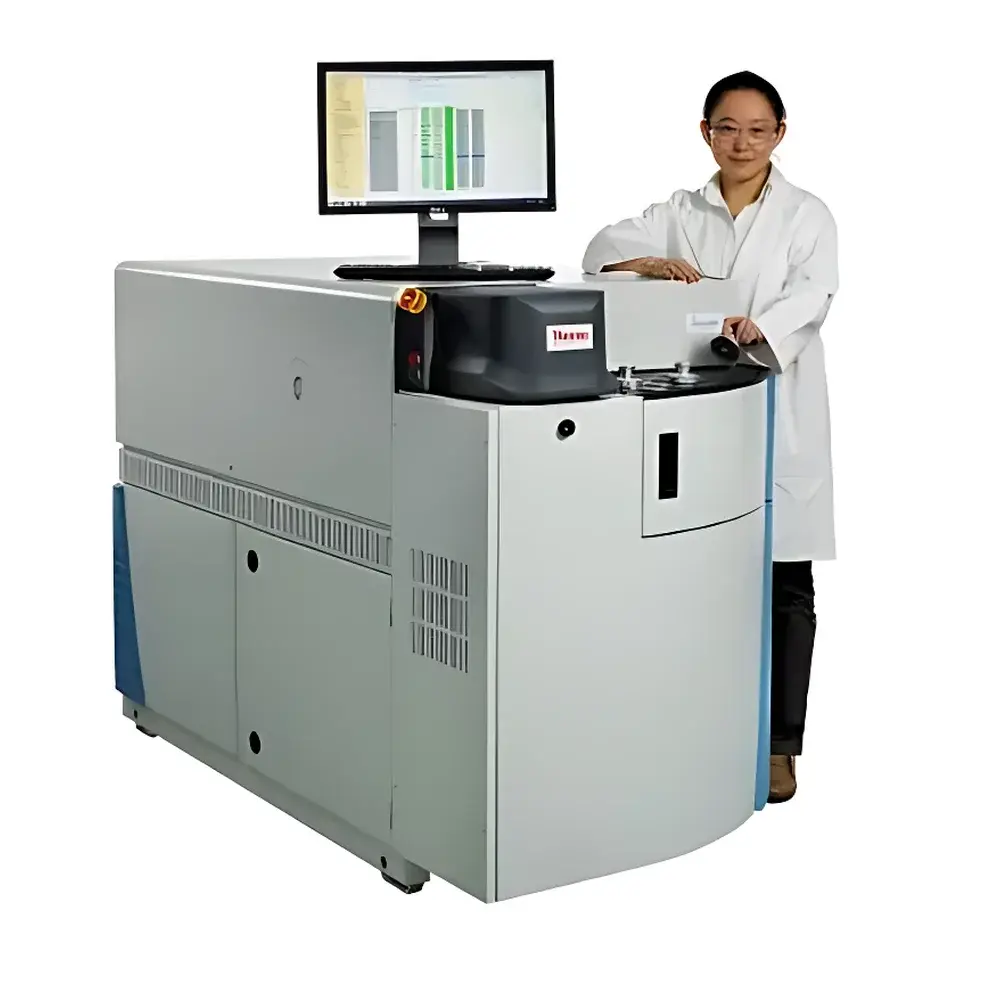
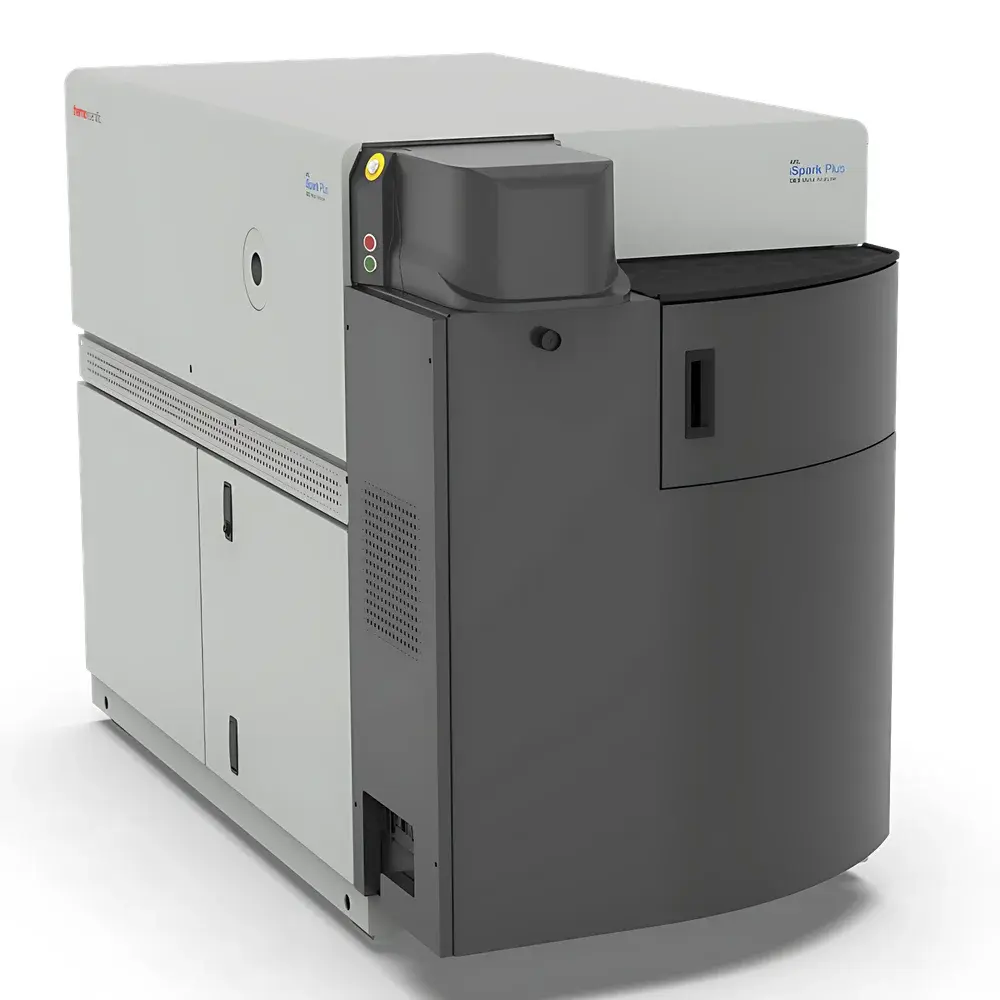
Thermo Scientific ARL iSpark Plus Direct-Reading Optical Emission Spectrometer
| Brand | Thermo Fisher |
|---|---|
| Origin | Switzerland |
| Manufacturer | Thermo Fisher Scientific |
| Instrument Type | Floor-standing |
| Excitation Source | Spark |
| Detector Type | Photomultiplier Tube (PMT) |
| Focal Length | 1000 mm |
| Grating Line Density | 1080, 1667, and 2160 lines/mm |
| Wavelength Range | 200–760 nm |
| Number of Analytical Channels | 80 |
Overview
The Thermo Scientific™ ARL™ iSpark Plus is a high-performance floor-standing optical emission spectrometer (OES) engineered for precise, reproducible elemental analysis of metallic materials. Based on the well-established spark discharge excitation principle, it vaporizes and atomizes solid metal samples under controlled argon atmosphere, generating characteristic atomic emission spectra that are dispersed via a high-resolution Czerny-Turner optical system with a 1000 mm focal length. The instrument utilizes discrete photomultiplier tube (PMT) detectors—each optimized for a specific spectral line—to deliver exceptional signal-to-noise ratio, long-term stability, and low detection limits across a broad wavelength range (200–760 nm). Designed for continuous operation in demanding production and quality control environments—including 24/7 shift-based foundries, metallurgical laboratories, and incoming inspection facilities—the ARL iSpark Plus integrates robust mechanical architecture, thermal stabilization, and rigorous optical alignment protocols to ensure metrological integrity over decades of service.
Key Features
- High-fidelity PMT-based optical system with three interchangeable gratings (1080, 1667, and 2160 lines/mm) enabling flexible resolution and sensitivity trade-offs per application
- Digital spark generator with real-time pulse shaping and adaptive energy delivery—ensuring consistent ablation across diverse alloy matrices (e.g., Al-, Fe-, Cu-, Mg-, Ni-, and Ti-based)
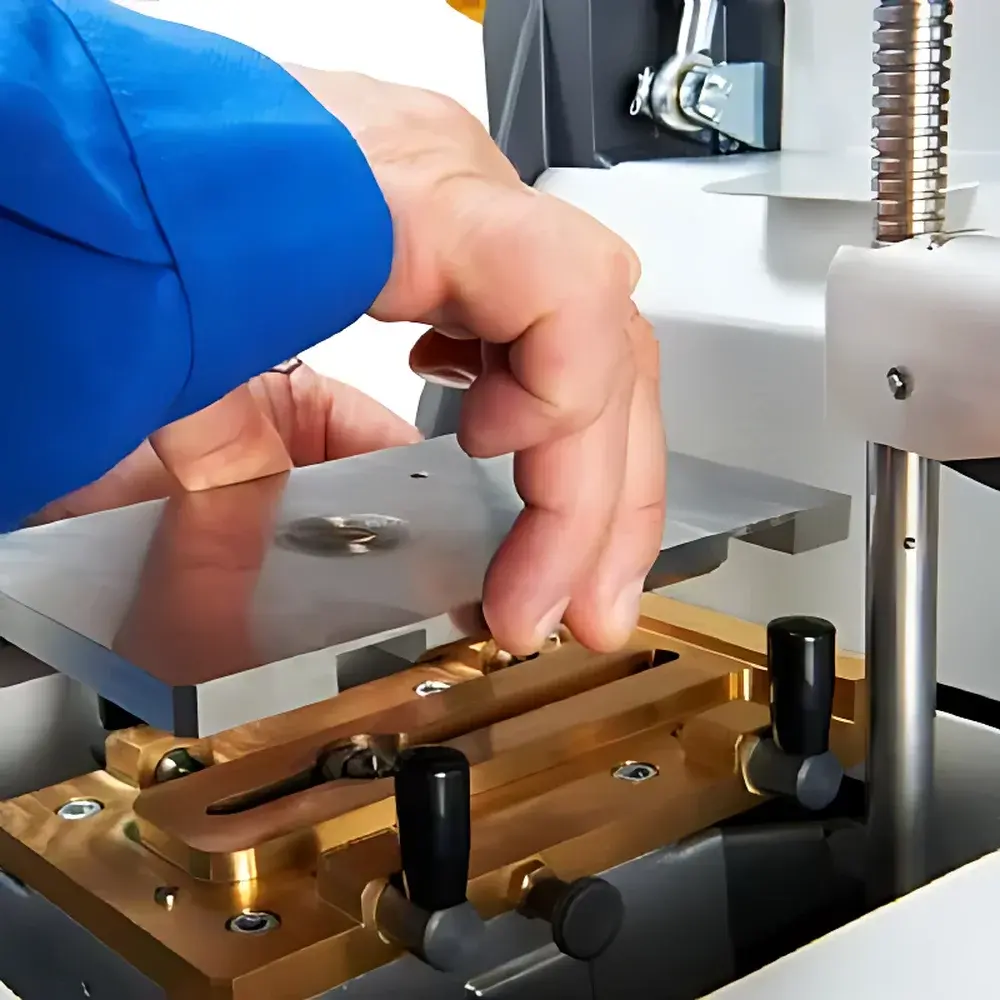
- Optimized spark stand with integrated sample height compensation, pressure-controlled argon purge, and automatic electrode cleaning sequence to minimize downtime and inter-sample contamination
- Single-spark acquisition with discrete intensity deconvolution algorithm—enabling accurate quantification even for heterogeneous or segregated microstructures
- Intelligent argon management system that dynamically modulates gas flow based on spark frequency, sample type, and analytical mode—reducing consumption by up to 40% versus conventional OES platforms
- Advanced inclusion analysis module compliant with ASTM E45 and ISO 4967 methodologies, supporting automated classification and sizing of non-metallic inclusions in steel
Sample Compatibility & Compliance
The ARL iSpark Plus accommodates standard solid metallic specimens (diameter ≥ 10 mm, thickness ≥ 4 mm), including castings, forgings, rolled products, and machined coupons. It supports standardized sampling protocols per ASTM E1086, ISO 11577, and JIS G 1253. The system meets electromagnetic compatibility (EMC) requirements per IEC 61326-1 and safety standards per IEC 61010-1. Its software architecture supports audit trails, electronic signatures, and data integrity controls aligned with FDA 21 CFR Part 11 and EU Annex 11 for regulated environments. Routine calibration verification follows ISO/IEC 17025-compliant procedures, and performance qualification includes repeatability testing per ISO 11577 Annex B.
Software & Data Management
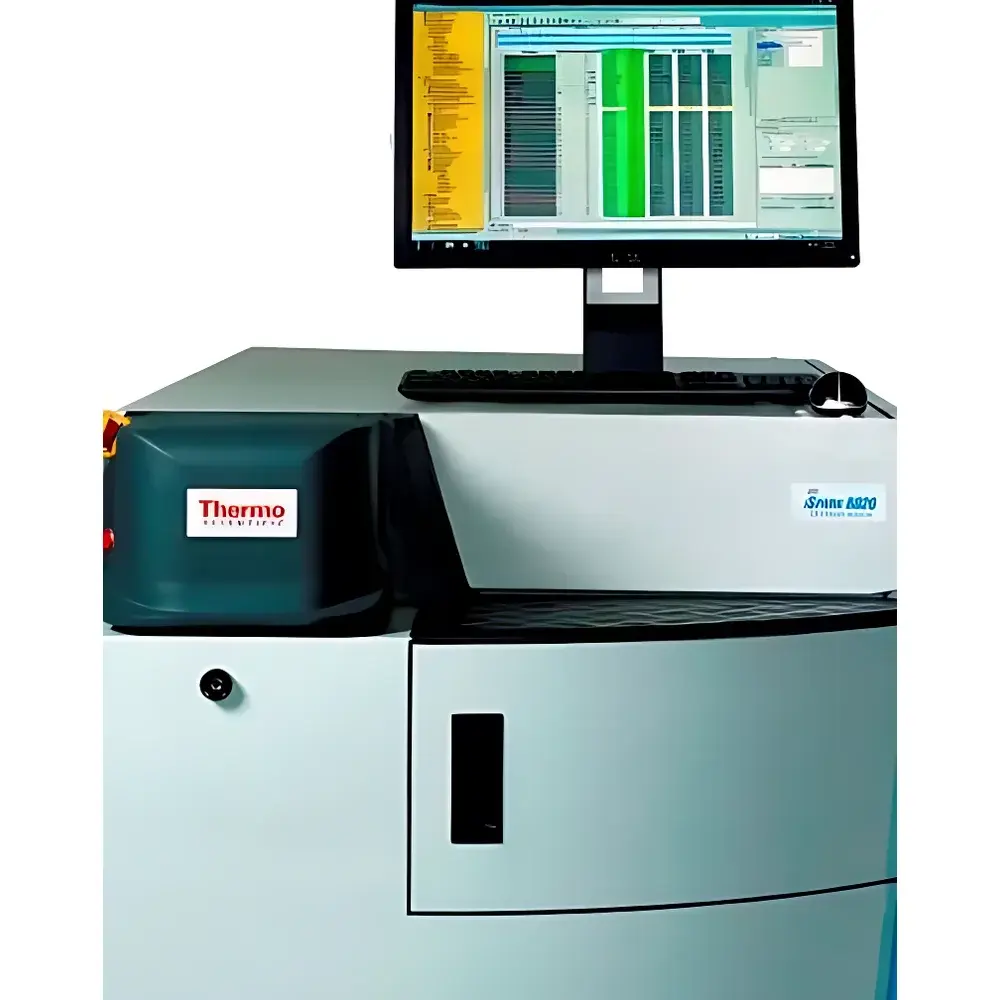
Controlled by Thermo Scientific ARL SpectraGraph™ software, the platform provides full method development, calibration management, QC trending, and report generation. All raw spectral data—including individual spark intensities, background-corrected net signals, and integration windows—are retained in vendor-neutral formats (e.g., ASCII, CSV) for third-party statistical analysis. The software implements role-based access control, versioned method storage, and automated backup to network drives or cloud repositories. Calibration models support multi-point linear and non-linear regression, matrix-matched standards, and drift correction using internal reference lines. Data export modules integrate seamlessly with LIMS (e.g., LabWare, STARLIMS) and ERP systems via OPC UA or RESTful API interfaces.
Applications
- Routine grade identification and certification of ferrous and non-ferrous alloys in foundry and casting operations
- In-process control of melt composition during primary and secondary steelmaking
- Verification of trace element compliance (e.g., Pb, Sn, As, Sb) in automotive and aerospace aluminum alloys per AMS and EN standards
- Analysis of wear-resistant coatings and surface-modified components requiring depth-resolved spark mapping
- Research-grade investigation of segregation behavior, phase distribution, and inclusion morphology in advanced high-strength steels
- Regulatory release testing of medical device-grade stainless steels (e.g., ASTM F138/F139) and implantable titanium alloys (ASTM F136)
FAQ
What types of metals can be analyzed with the ARL iSpark Plus?
It is validated for all major industrial metals and alloys—including carbon steels, stainless steels, tool steels, aluminum, copper, magnesium, nickel, titanium, and zinc-based alloys—with appropriate calibration sets.
Does the system support automated calibration verification?
Yes—through built-in check standards and scheduled QC routines that monitor detector gain, wavelength accuracy, and plasma stability in accordance with ISO 11577 Annex C.
Is the instrument compatible with existing laboratory IT infrastructure?
Yes—it supports secure LDAP/Active Directory integration, TLS 1.2 encrypted communications, and configurable audit log retention policies compliant with ISO/IEC 27001.
How is argon consumption minimized during operation?
Via dynamic flow modulation linked to spark count, inter-spark delay, and sample geometry—verified through independent gas metering per ISO 11577 Annex D.
Can the ARL iSpark Plus perform inclusion analysis without additional hardware?
Yes—the inclusion module leverages the same PMT array and spark source; no external imaging system or separate software license is required.





