
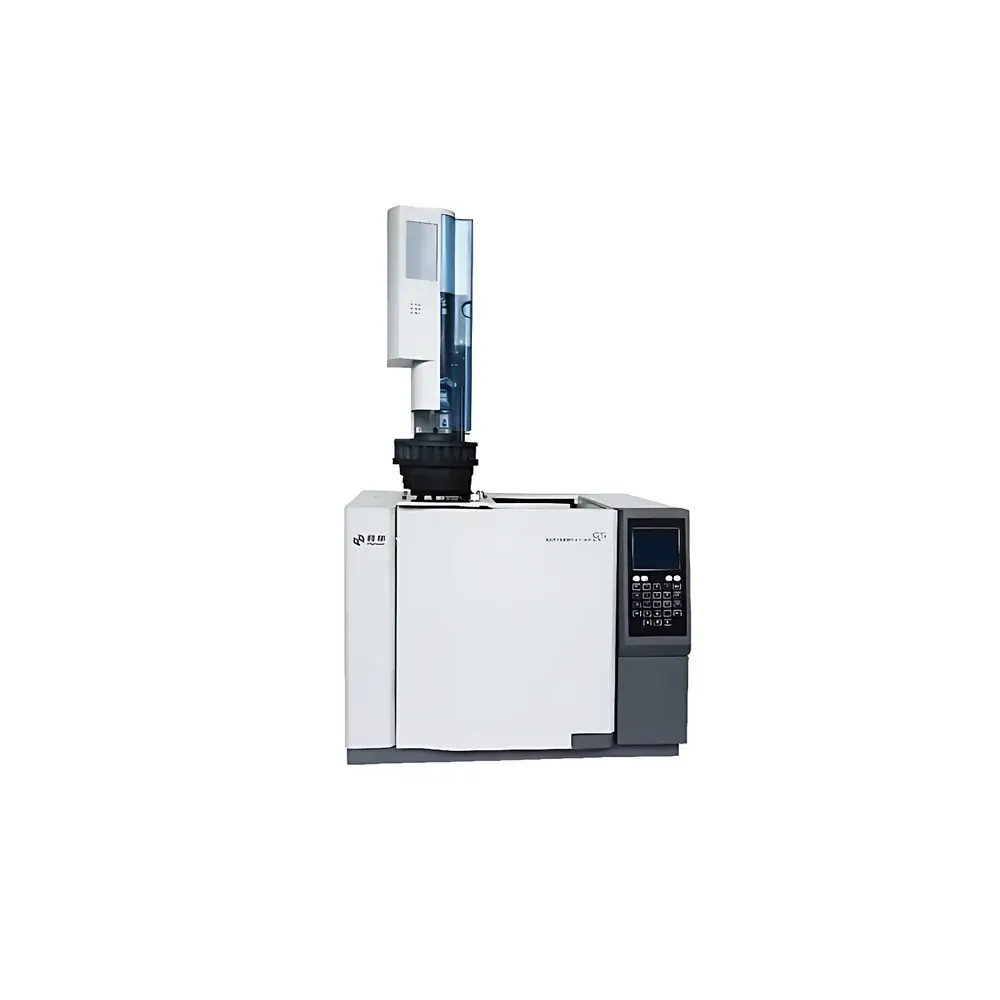
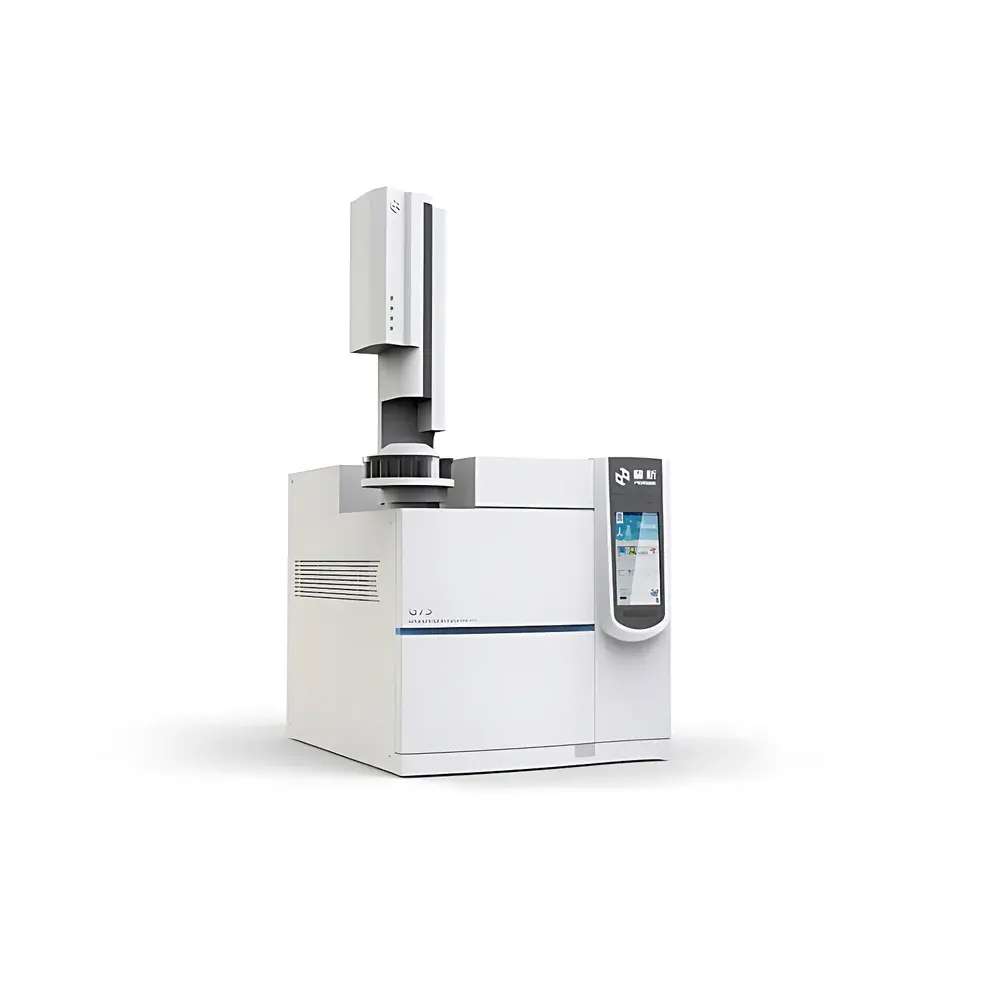
Purkinje GC1100 Series Laboratory Gas Chromatograph
| Brand | Purkinje |
|---|---|
| Origin | Beijing, China |
| Manufacturer Type | Direct Manufacturer |
| Instrument Type | Laboratory Gas Chromatograph |
| Model | GC1100 |
| Temperature Control Range | Ambient +6°C to 399°C |
| Oven Ramp Rate | 0–30°C/min |
| Carrier Gas Flow Range | 0–1200 mL/min |
| Carrier Gas Pressure Range | 0–970 kPa |
| Injector Maximum Temperature | 200°C |
| Injector Pressure Setting Range | 0–970 kPa |
| Injector Total Flow Setting Range | 0–1200 mL/min |
| Column Oven Temperature Accuracy | ±0.1°C |
| Column Oven Temperature Gradient | ±1.5% |
| TCD Sensitivity | ≥4000 mV·mL/mg (n-hexadecane) |
| TCD Noise | ≤0.04 mV |
| TCD Baseline Drift | ≤0.2 mV/30 min |
| FID Detection Limit | ≤8×10⁻¹² g/s (n-hexadecane) |
| FID Noise | ≤0.02 mV |
| FID Baseline Drift | ≤0.2 mV/30 min |
| Dimensions (L×W×H) | 562×550×492.5 mm |
| Weight | 44 kg |
Overview
The Purkinje GC1100 Series Laboratory Gas Chromatograph is a robust, dual-detector-capable analytical platform engineered for precision separation and quantitative analysis of volatile and semi-volatile organic compounds. Based on the fundamental principle of differential partitioning between a mobile gas phase (carrier gas) and a stationary liquid or polymer phase coated inside a capillary or packed column, the GC1100 delivers high-resolution chromatographic separations under precisely controlled thermal and flow conditions. Its modular oven architecture supports multi-zone temperature programming—including four independent temperature-controlled zones (column oven, two injectors, and detector)—enabling complex method development for routine QC, environmental monitoring, petrochemical profiling, and food safety screening. Designed and manufactured in Beijing under ISO 9001-aligned production protocols, the system integrates digital electronics for enhanced signal stability and long-term baseline reproducibility—critical for compliance with GLP, ISO/IEC 17025, and FDA 21 CFR Part 11 data integrity requirements when paired with validated software.
Key Features
- Digital microprocessor-based temperature and flow control with real-time parameter display on a high-contrast LCD interface
- Four independently programmable temperature zones: column oven (50–399°C), dual injectors (50–350°C), and detector compartments
- Multi-step oven ramp programming with up to 10 temperature segments per method, supporting complex sample matrices
- Automated back-flush and post-run oven cooling via motorized rear door actuation
- Simultaneous support for dual detection configurations: thermal conductivity detector (TCD) and flame ionization detector (FID)
- Flexible inlet configuration accommodating two packed-column inlets plus one split/splitless capillary inlet
- Compatibility with wide-bore capillary columns (up to 0.53 mm ID), stainless steel, borosilicate glass, and fused-silica columns
- Carrier gas pressure and flow regulation with electronic pneumatic control (EPC) across 0–970 kPa and 0–1200 mL/min ranges
Sample Compatibility & Compliance
The GC1100 accommodates a broad spectrum of sample types—including hydrocarbons, alcohols, esters, pesticides, residual solvents, and volatile organic compounds (VOCs)—across liquid, gaseous, and headspace formats. Its injector design permits both manual and autosampler-ready operation, with selectable liner configurations for optimal vaporization efficiency. The system meets core performance criteria outlined in ASTM D3606 (benzene/toluene in gasoline), USP (residual solvents), and EPA Method 8021B (halogenated hydrocarbons). All thermal and flow parameters are traceable to NIST-certified references; temperature calibration is performed using certified reference materials (e.g., n-hexadecane), ensuring alignment with ISO 17025 method validation frameworks. The hardware architecture supports audit-trail-enabled data acquisition when integrated with compliant chromatography data systems (CDS).
Software & Data Management
The GC1100 operates with Purkinje’s GC-Station software—a Windows-based CDS compliant with 21 CFR Part 11 requirements when deployed in secure network environments. The software provides full instrument control, real-time chromatogram visualization, peak integration with customizable baselines and retention time windows, and automated calibration curve generation (linear, quadratic, or weighted). Raw data files (.GCX) store complete acquisition metadata—including method parameters, detector voltages, temperature logs, and EPC setpoints—for full forensic traceability. Export options include CSV, PDF, and AIA/ANDI formats compatible with third-party LIMS and ELN platforms. Optional modules support spectral library searching (when coupled with mass spectrometry), regulatory report templates (e.g., EPA Form 8021), and electronic signature workflows.
Applications
- Petrochemical QA/QC: hydrocarbon group-type analysis (HTA), benzene content in reformulated gasoline (ASTM D3606)
- Environmental testing: VOCs in air/water (EPA TO-17, Method 8260), pesticide residues in soil (EPA 8081)
- Food & beverage: ethanol quantification, flavor compound profiling, solvent residue screening (USP )
- Pharmaceutical manufacturing: residual solvent testing in APIs and excipients per ICH Q3C guidelines
- Public health laboratories: blood alcohol analysis (forensic toxicology), disinfectant byproduct monitoring
- Academic research: reaction kinetics studies, polymer degradation product identification, metabolite profiling
FAQ
Does the GC1100 support method transfer from other GC platforms?
Yes—the system accepts standard AIA/ANDI method files and allows manual import of retention time windows, temperature ramps, and detector settings to facilitate cross-platform method portability.
Can the GC1100 be upgraded to include an electron capture detector (ECD) or nitrogen-phosphorus detector (NPD)?
No—the GC1100 hardware architecture is configured exclusively for TCD and FID detectors at time of manufacture. Detector module replacement is not supported.
What carrier gases are compatible with the GC1100’s EPC system?
Helium, hydrogen, and nitrogen are fully supported; gas-specific calibration curves are stored in firmware and selectable via software.
Is remote instrument monitoring possible?
Yes—via Ethernet connection and GC-Station’s optional Remote Access Module, enabling real-time status viewing, method upload, and basic run initiation from authorized client stations.
How often does the system require preventive maintenance?
Purkinje recommends quarterly inspection of septa, liners, and detector components; annual verification of oven temperature accuracy and detector response linearity using certified standards.
Related Products






