
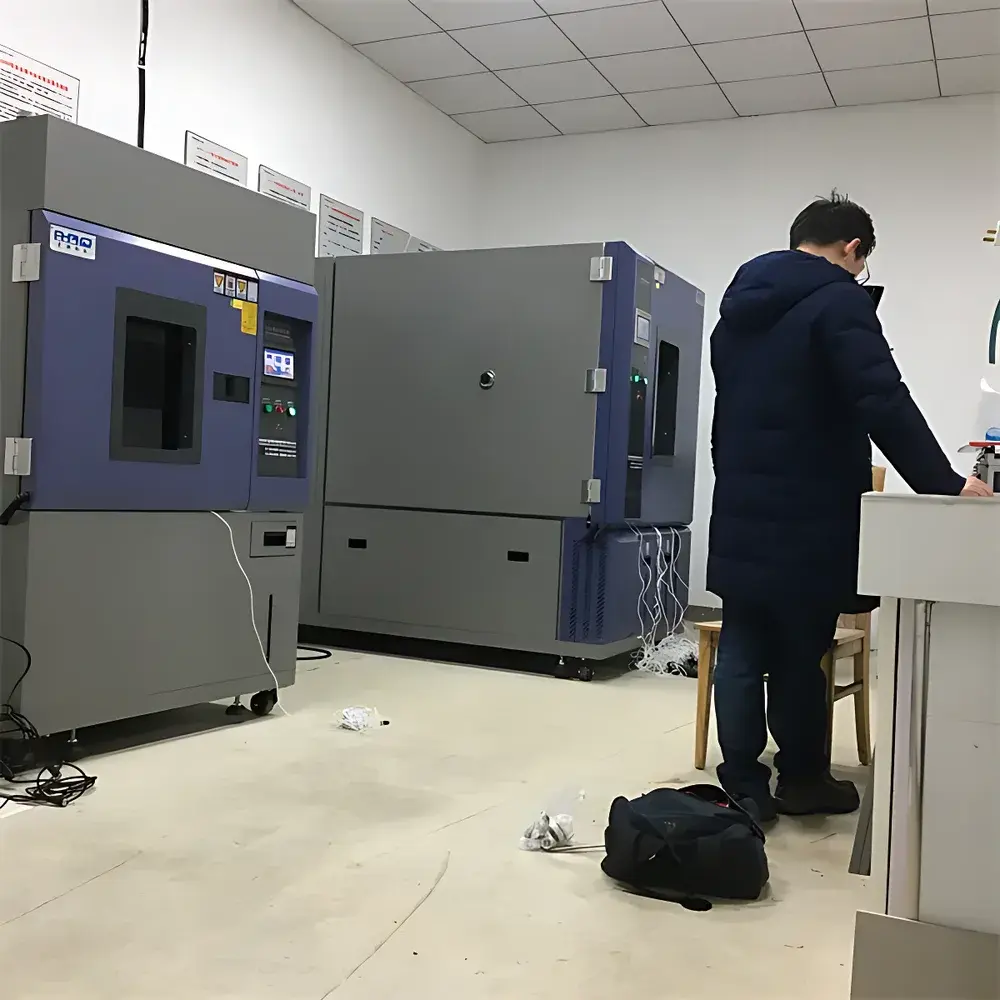
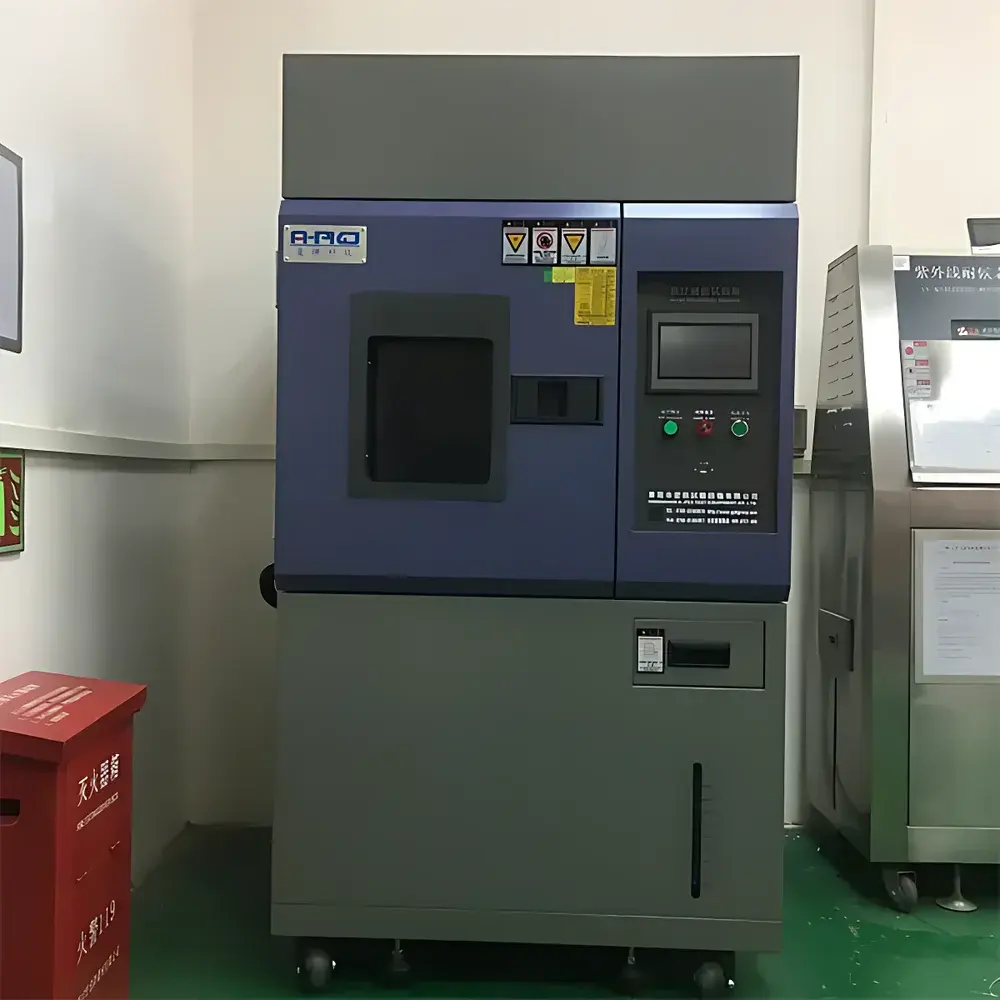
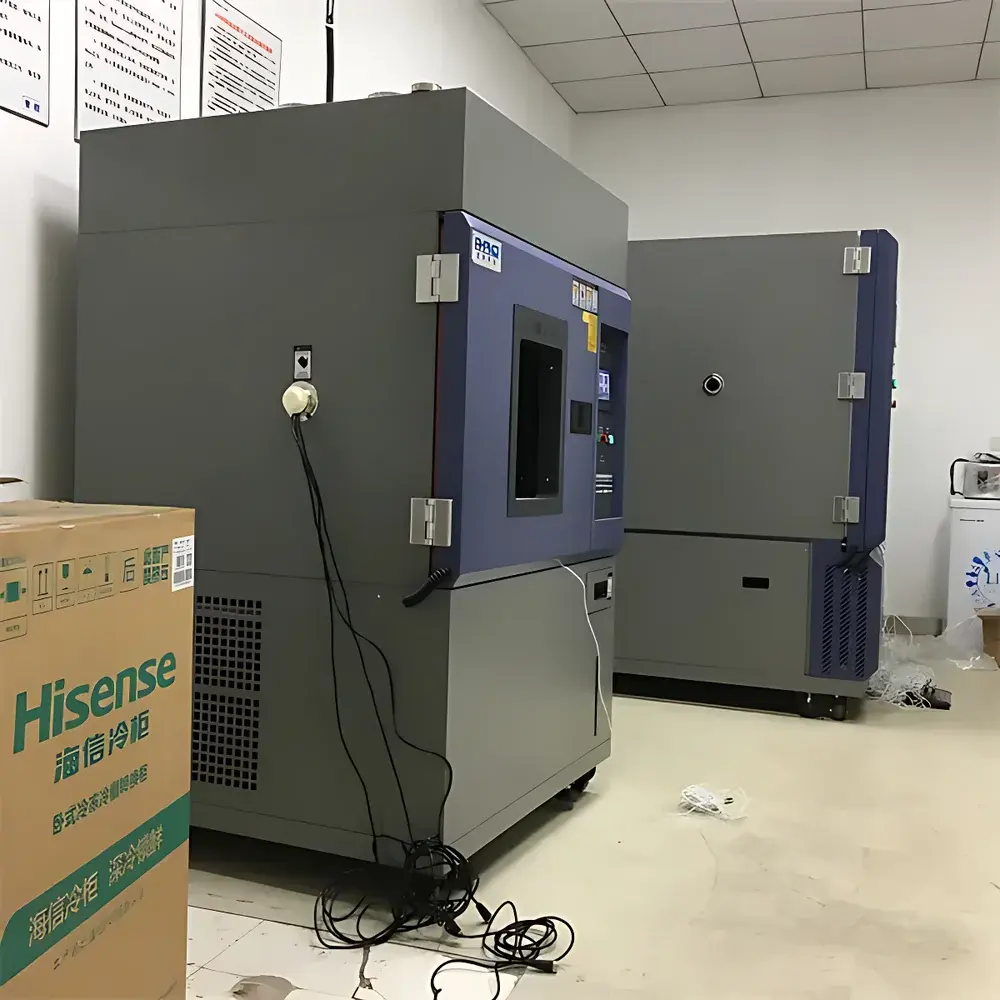
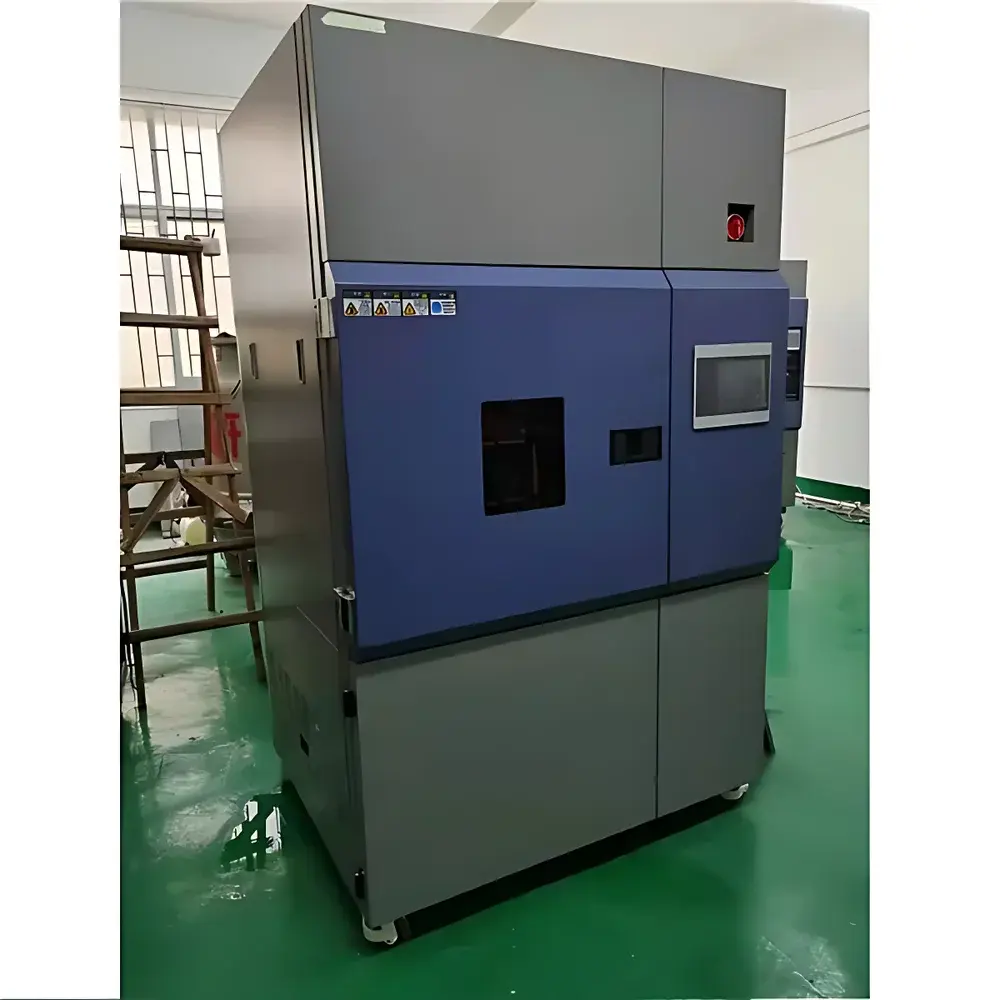
Apkji AP-XD-15 Xenon Arc Weathering Test Chamber
| Brand | Apkji |
|---|---|
| Origin | Guangdong, China |
| Manufacturer Type | OEM/ODM Manufacturer |
| Country of Origin | China |
| Model | AP-XD-15 |
| Xenon Lamp Power | 6 kW (single lamp) |
| Irradiance Range | 0.30–0.65 W/m² @ 340 nm |
| Illumination Cycle | 1–9999 h/min/sec adjustable |
| Black Panel Temperature Range | (Ambient +10)–100 °C |
| Temperature Uniformity | ±3.0 °C |
| Humidity Range | 10–70 %RH (irradiation phase) |
| Humidity Accuracy | ±5.0 %RH |
| Sample Rack | Rotating turntable, Ø ≈ 400 mm |
| Internal Volume | 150 L |
| Inner Dimensions (W×H×D) | 500 × 600 × 500 mm |
| Overall Dimensions (W×H×D) | 1100 × 1850 × 1000 mm |
| Lamp Type | Long-arc xenon lamp |
| Spectral Range | 290–800 nm |
| Filter System | S1 quartz filter (matching terrestrial solar spectrum) |
| Irradiance Control | PID-controlled digital power supply with “Sun Eye” closed-loop radiometer feedback |
| Cooling System | Single-stage hermetic compressor (French Tecumseh), R404A/R23 refrigerant blend, independent heating/cooling circuits |
| Compliance | GB/T 16422.1, ASTM G155, ASTM C1442, AATCC TM16 |
Overview
The Apkji AP-XD-15 Xenon Arc Weathering Test Chamber is an engineered environmental simulation system designed to replicate full-spectrum solar radiation under controlled temperature and humidity conditions. It employs a high-intensity long-arc xenon lamp as its primary radiation source, delivering spectral output from 290 nm to 800 nm—closely approximating natural sunlight when paired with the standard S1 quartz filter. This spectral fidelity enables accelerated weathering evaluation per internationally recognized test protocols including ASTM G155, ISO 4892-2, GB/T 16422.2, and AATCC TM16. The chamber operates on the principle of controlled photodegradation: materials are exposed to calibrated irradiance levels, cyclic thermal loading, and programmed humidity profiles to simulate years of outdoor exposure in weeks or months. Its 150 L test volume accommodates diverse sample geometries on a motorized rotating turntable (Ø ≈ 400 mm), ensuring uniform irradiance distribution across specimens. Designed for laboratory-grade reproducibility, the AP-XD-15 supports both irradiation-only and irradiation/dark cycling modes, with independent control over black panel temperature (BPT), relative humidity, and spectral irradiance intensity.
Key Features
- High-fidelity solar simulation using a 6 kW long-arc xenon lamp with S1 quartz optical filtering to match terrestrial AM1.5G spectral irradiance distribution.
- Closed-loop irradiance regulation via integrated “Sun Eye” broadband radiometer and PID-controlled digital power supply—enabling precise maintenance of user-defined irradiance setpoints at 340 nm, 420 nm, or broadband (300–800 nm).
- Dual-phase environmental control: independent adjustment of irradiation cycles (1–9999 hours) and dark cycles (0–9999 hours), each with distinct humidity ranges (10–70 %RH for light phase; 20–98 %RH for dark phase).
- Black panel temperature control from (ambient +10) °C to 100 °C with ±3.0 °C uniformity across the test area.
- Robust climate control architecture featuring a hermetic Tecumseh compressor, eco-friendly R404A/R23 refrigerant blend, and segregated heating/cooling circuits for stable thermal management.
- Modular optical design allows rapid lamp replacement and optional filter configurations—including window-glass transmission simulation (e.g., for automotive glazing testing)—without system recalibration.
- Comprehensive safety interlocks prevent operation with incompatible samples: prohibited categories include flammable, explosive, corrosive, radioactive, toxic, volatile, or biologically active substances.
Sample Compatibility & Compliance
The AP-XD-15 is validated for non-hazardous solid materials requiring standardized weathering assessment per ISO, ASTM, and GB/T regulatory frameworks. Common application domains include automotive exterior components (paints, plastics, trim), architectural cladding (aluminum composite panels, sealants), aerospace polymer composites, coated glass, textile colorfastness validation, and photovoltaic encapsulant durability. All operational parameters comply with GLP-aligned data integrity requirements: irradiance setpoints, BPT, RH, and cycle timing are logged with timestamped audit trails. While not inherently 21 CFR Part 11 compliant out-of-the-box, the system’s programmable logic controller (PLC) architecture supports integration with validated LIMS or electronic lab notebook (ELN) platforms for regulated environments. The chamber meets electromagnetic compatibility (EMC) Class B limits per EN 61326-1 and is constructed to IEC 61000-4 immunity standards.
Software & Data Management
The AP-XD-15 utilizes an embedded industrial PLC with a 7-inch TFT touchscreen HMI interface supporting multilingual operation (English default). All test parameters—including irradiance targets, BPT setpoints, humidity ramps, and cycle sequencing—are programmable via intuitive menu navigation. Real-time graphs display irradiance deviation, BPT drift, and RH fluctuation against user-defined thresholds. Data export is supported via USB 2.0 to CSV format, enabling traceable post-processing in MATLAB, Python, or statistical analysis packages. Optional RS485/Modbus RTU or Ethernet/IP connectivity permits remote monitoring and centralized fleet management in multi-chamber laboratories. Calibration logs, lamp usage hours, and maintenance alerts are retained onboard for ISO 17025 audit readiness.
Applications
This chamber serves critical roles in formulation development, quality assurance, and regulatory submission workflows. In R&D labs, it facilitates comparative degradation studies of UV stabilizers, pigment systems, and polymer matrix additives. For QC/QA departments, it validates batch-to-batch consistency of coated substrates and verifies conformance to OEM specifications (e.g., Ford CETP, GMW14124, VW TL226). In academic and government research, it supports fundamental studies on photo-oxidation kinetics, hydrolytic degradation mechanisms, and spectral sensitivity mapping of organic semiconductors. Its ability to decouple UV dose from thermal stress enables mechanistic dissection of failure modes—such as chalking versus cracking in acrylic coatings—under repeatable boundary conditions.
FAQ
What standards does the AP-XD-15 support for xenon arc weathering?
It complies with ASTM G155, ISO 4892-2, GB/T 16422.2, AATCC TM16, and ASTM C1442 for irradiance control, spectral filtering, and cycle definition.
Can the chamber simulate through-glass sunlight exposure?
Yes—optional secondary filters (e.g., borosilicate glass equivalent) can be installed to emulate interior-facing automotive or architectural glazing exposure profiles.
Is lamp calibration traceable to NIST or other national metrology institutes?
The built-in “Sun Eye” radiometer is factory-calibrated against reference spectroradiometers traceable to NIM (China National Institute of Metrology); annual recalibration services are available.
What is the expected service life of the xenon lamp under typical operating conditions?
At nominal 6 kW power and continuous operation, the lamp maintains spectral stability for approximately 1,500 hours before requiring replacement to sustain irradiance accuracy within ±5% of setpoint.
Does the system support automated pass/fail criteria based on colorimetric or gloss measurements?
While the chamber itself does not integrate spectrocolorimeters or glossmeters, its digital I/O ports allow hardware-triggered external measurement devices to synchronize with irradiance milestones or cycle endpoints.



