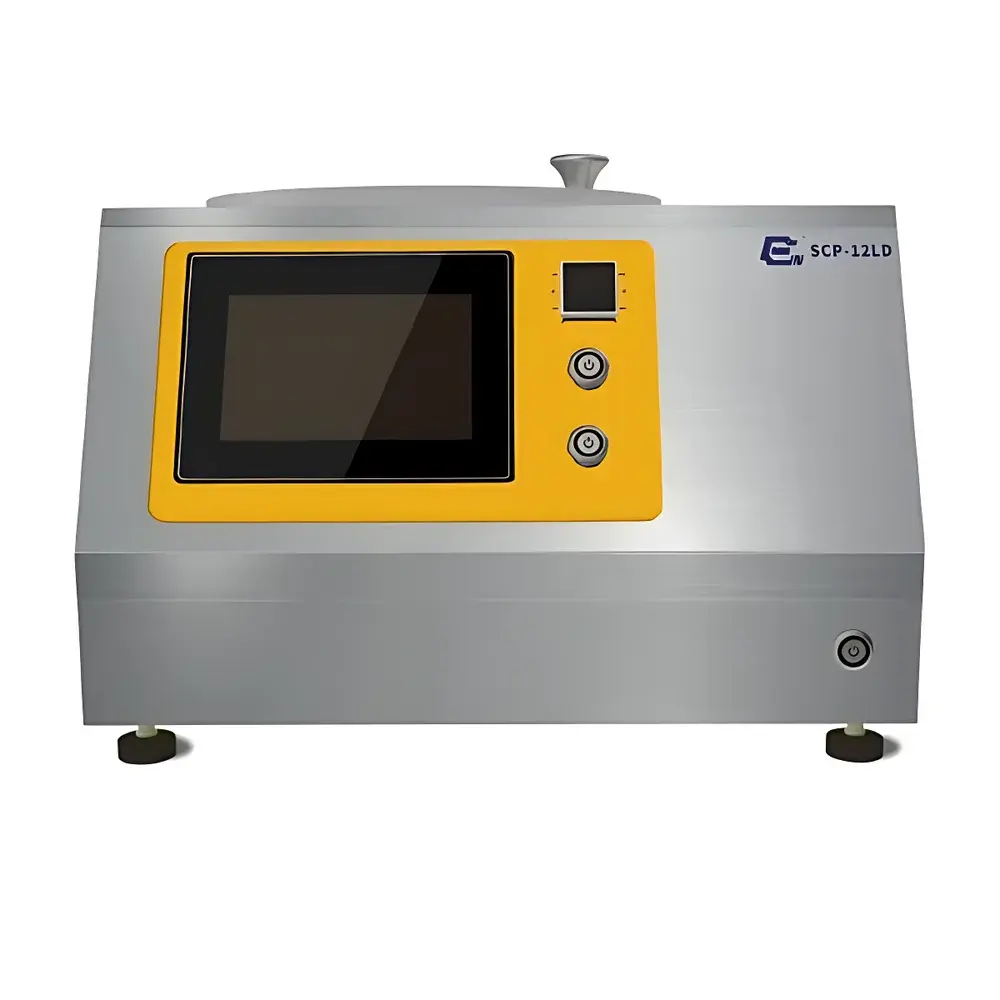
Analysis HCH300P Programmable Hotplate with Pin-Lift Function for Photolithography Post-Apply Bake
| Brand | Analysis |
|---|---|
| Origin | Beijing, China |
| Model | HCH300P |
| Maximum Substrate Size | 220 × 220 mm (compatible with ≤8-inch wafers) |
| Temperature Range | Ambient to 300 °C |
| Temperature Resolution | 0.1 °C |
| Temperature Uniformity | <1% across surface |
| Temperature Accuracy | ±0.5 °C |
| Timer Range | 0.1–100,000 s |
| Timer Resolution | 0.1 s |
| Pin-Lift Stroke | 0–30 mm |
| Pin-Lift Resolution | 0.1 mm |
| Heating Power | 1000 W |
| Weight | 25 kg |
| Dimensions (L×W×H) | 450 × 300 × 295 mm |
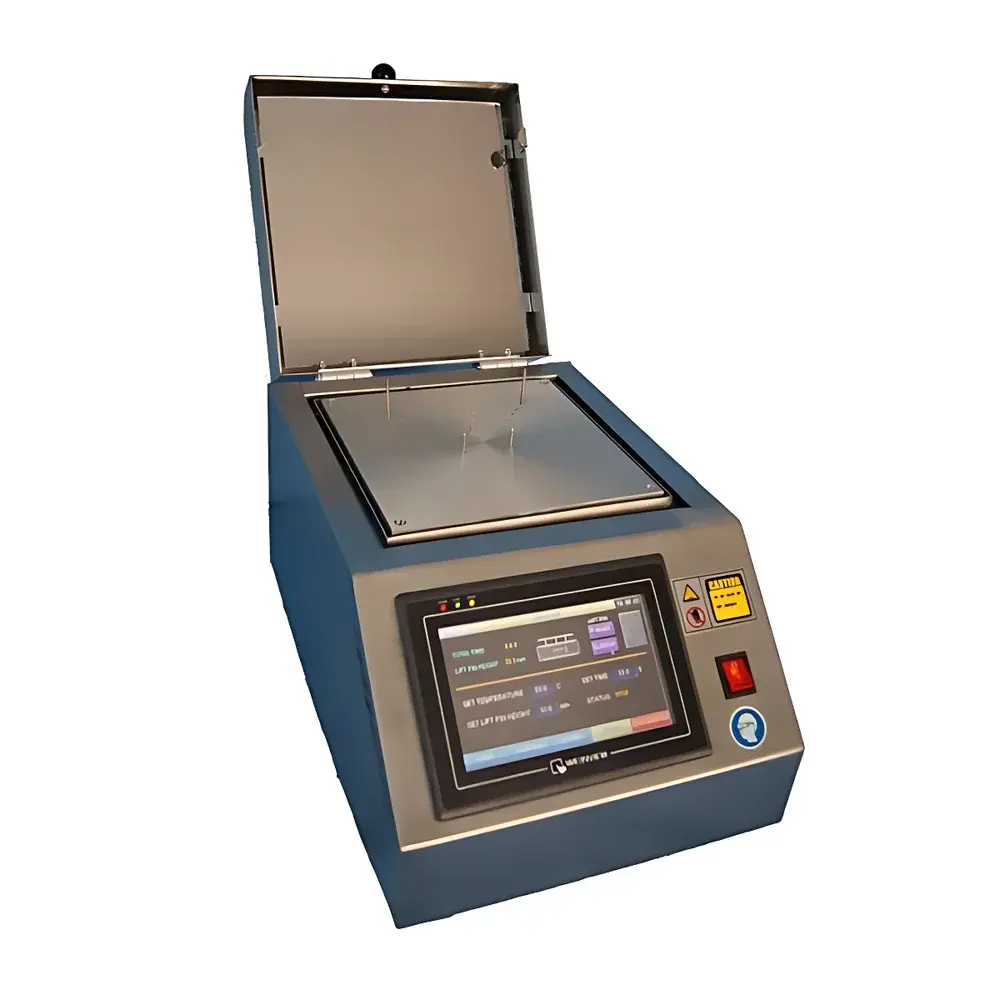
| Control Interface | 7-inch full-color capacitive touchscreen |
| Heating Plate Material | Anodized aluminum or PTFE-coated corrosion-resistant surface |
| Programmable Lift Steps | 5 per recipe |
| Stored Recipes | 100 user-defined programs |
| Safety Features | Radiant heat shielding cover, stainless steel chassis, thermal insulation design |
Overview
The Analysis HCH300P is a high-precision programmable hotplate engineered specifically for post-apply bake (PAB) and post-exposure bake (PEB) processes in semiconductor photolithography workflows. It operates on resistive conduction heating with proximity-based thermal transfer—enabling rapid, repeatable, and spatially uniform thermal treatment of photoresist-coated substrates. Unlike conventional convection ovens, the HCH300P delivers direct conductive heating via a thermally stabilized aluminum or PTFE-coated plate, minimizing thermal lag and ensuring tight process control critical for sub-micron lithographic patterning. Its architecture supports precise dwell-time management, ramp-rate programming, and synchronized lift sequencing—essential for reproducible resist crosslinking, solvent evaporation, and acid diffusion kinetics in chemically amplified resists (CARs). Designed for laboratory and pilot-line environments, the system complies with foundational thermal process requirements aligned with SEMI S2-0201 safety guidelines and supports integration into GLP-compliant documentation frameworks.
Key Features
- Programmable pin-lift mechanism with 0.1 mm resolution and five independent height steps per recipe—enabling controlled substrate approach/retraction for proximity-mode baking and safe wafer handling;
- Thermally optimized 220 × 220 mm heated surface, accommodating square substrates up to 220 mm or circular wafers up to 200 mm (8-inch equivalent), with surface temperature uniformity better than ±1% across the active zone;
- High-stability temperature control system achieving ±0.5 °C accuracy and 0.1 °C resolution over the full 25–300 °C operating range;
- Seven-inch industrial-grade capacitive touchscreen interface supporting intuitive recipe navigation, real-time parameter monitoring, and multi-level user access control;
- Dual-surface heating plate options: hard-anodized aluminum for general-purpose use or PTFE-coated variant for enhanced chemical resistance during solvent-rich bake cycles;
- Integrated radiant heat shield and multi-layer thermal insulation to suppress lateral heat loss and improve energy efficiency without compromising thermal response time;
- Robust stainless-steel chassis construction with ESD-safe grounding provisions and CE-compliant electrical architecture;
- Onboard storage for 100 user-defined recipes, each configurable with up to five sequential lift-and-hold stages, temperature setpoints, ramp rates, and dwell times.
Sample Compatibility & Compliance
The HCH300P accommodates rigid planar substrates including silicon, quartz, glass, and compound semiconductor wafers (e.g., GaAs, SiC) up to 220 mm square or 200 mm diameter. Its flat, low-particulate surface and non-stick coating options prevent adhesion-related defects during lift-off or manual loading. The system meets mechanical and electromagnetic compatibility requirements per IEC 61000-6-2/6-4 and incorporates overtemperature cutoff, open-circuit detection, and thermal runaway protection per UL 61010-1. While not certified to ISO 14644 cleanroom classifications out-of-the-box, its sealed heater assembly and absence of internal fans make it suitable for Class 1000 (ISO 6) or better environments when installed with appropriate air filtration. Process traceability is supported through timestamped event logging and exportable CSV reports—facilitating alignment with internal QA protocols and FDA 21 CFR Part 11 audit readiness when paired with validated external data capture systems.
Software & Data Management
The embedded firmware provides deterministic real-time control of all thermal and mechanical parameters without reliance on external PCs. All operational events—including power-on, setpoint changes, lift actuation, timer expiration, and fault conditions—are logged with millisecond-resolution timestamps and stored in non-volatile memory. Users may export logs via USB 2.0 port in standardized CSV format for offline analysis in MATLAB, Python pandas, or LIMS platforms. The touchscreen UI supports dual-language operation (English/Chinese) and includes password-protected administrator mode for calibration offset adjustment and system diagnostics. No proprietary drivers or cloud connectivity are required; all configuration and execution occur locally—ensuring data sovereignty and eliminating cybersecurity exposure vectors common in networked lab equipment.
Applications
- Post-apply bake (PAB) of spin-coated photoresists (e.g., AZ® series, Shipley S18xx, TOK TMMR) on 4–8 inch wafers;
- Post-exposure bake (PEB) for chemically amplified resists in mask aligner or stepper-based lithography;
- Thermal stabilization of metal oxide precursor films (e.g., sol-gel TiO₂, ZnO) prior to annealing;
- Controlled solvent removal from polymer thin films (e.g., PMMA, PS-b-P4VP) in nanoimprint or self-assembly studies;
- Pre-bake conditioning of MEMS packaging substrates prior to die attach or underfill dispensing;
- Calibration reference platform for thermal sensor validation in cleanroom metrology labs.
FAQ
What wafer sizes does the HCH300P support?
The system accepts substrates up to 220 × 220 mm square or circular wafers up to 200 mm (8-inch) diameter. Larger formats require custom plate configurations.
Is vacuum chucking available as an option?
Yes—vacuum-assisted substrate retention is available as a factory-installed option, compatible with standard 220 mm plate dimensions and fully integrated into the lift sequence logic.
Can the HCH300P be integrated into automated track systems?
While the unit operates as a standalone tool, its RS-232 and digital I/O ports support basic handshake signaling (e.g., “ready”, “busy”, “complete”) for semi-automated material handling integration.
Does the system include NIST-traceable calibration documentation?
Factory calibration certificates are provided upon request; however, end-user periodic verification against accredited standards (e.g., ASTM E220, ISO/IEC 17025) is recommended for GMP-aligned processes.
What maintenance is required for long-term thermal stability?
Annual verification of thermocouple offset and plate flatness is advised. No consumables or scheduled heater replacements are specified within the first 10,000 operating hours under nominal load conditions.