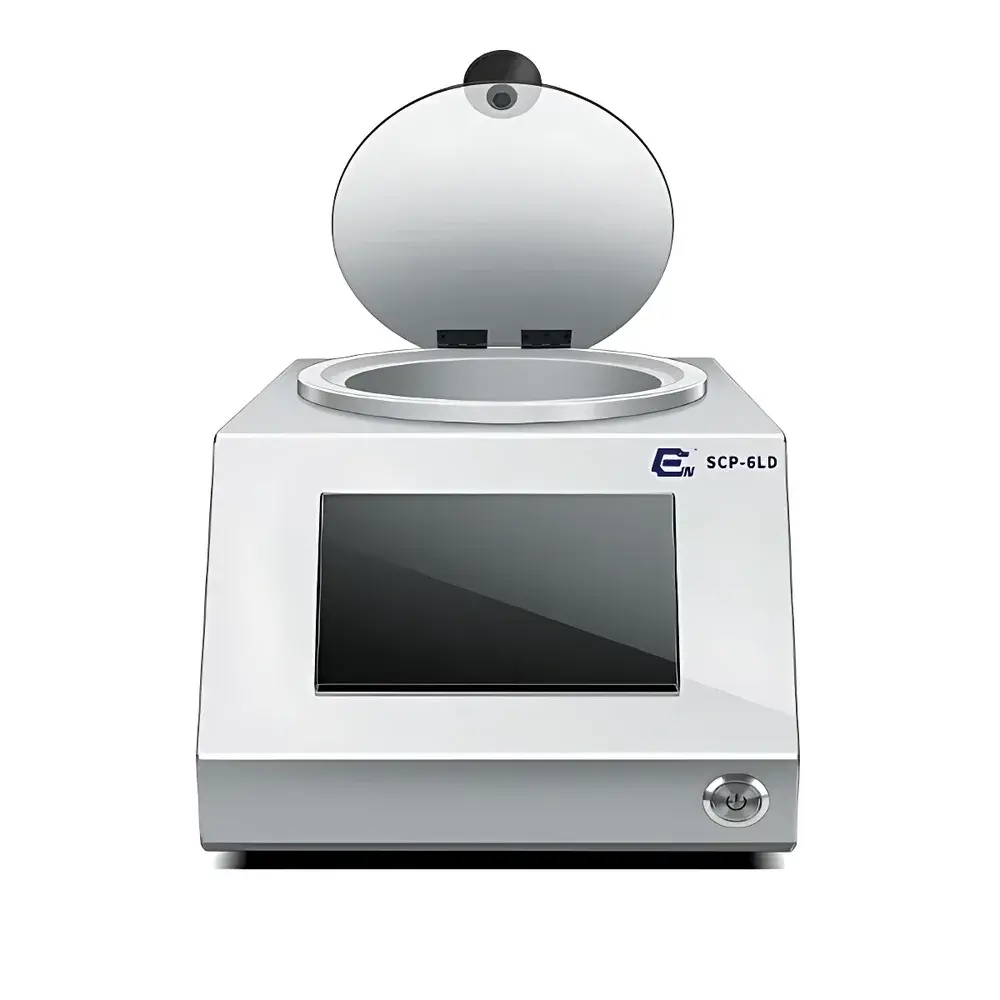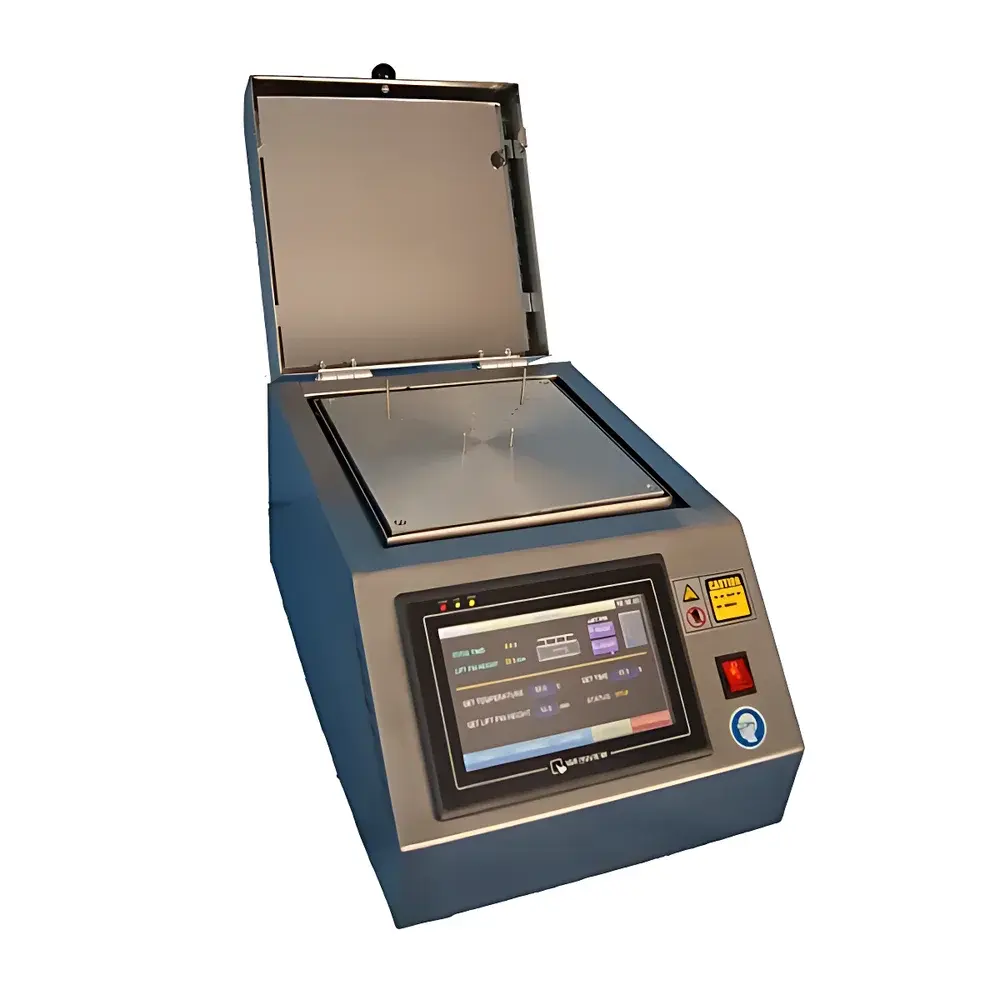
Analysis HCH300P Precision Hotplate with Programmable Lift Pins and Linear Temperature Ramp Control
| Brand | Analysis |
|---|---|
| Origin | Beijing, China |
| Model | HCH300P |
| Temperature Range | Ambient to 300 °C |
| Temperature Resolution | 0.1 °C |
| Temperature Uniformity | <1% across surface |
| Temperature Accuracy | ±0.5 °C |
| Ramp Rate | 0.1–15 °C/min (10-segment programmable) |
| Lift Stroke | 30 mm |
| Lift Resolution | 0.1 mm |
| Lift Steps | 5 per program |
| Program Storage | 100 user-defined lift + thermal profiles |
| Heating Power | 1000 W |
| Platen Size | 220 mm × 220 mm |
| Weight | 25 kg |
| Dimensions (D×W×H) | 450 × 300 × 295 mm |
| Control Interface | 7-inch full-color capacitive touchscreen |
| Surface Options | Anodized aluminum or PTFE-coated corrosion-resistant platen |
| Vacuum Adsorption | Integrated, triggered automatically during pin lift engagement |
Overview
The Analysis HCH300P is a high-precision semiconductor-grade hotplate engineered for post-apply bake (PAB) and post-exposure bake (PEB) processes in photolithography workflows. It operates on resistive heating principles with closed-loop PID temperature control, delivering stable thermal output across the entire platen surface. Designed specifically for wafers up to 200 mm (8-inch), the system integrates three critical process-enabling functions: programmable lift-pin actuation, vacuum-assisted wafer immobilization, and multi-segment linear temperature ramping. Unlike conventional hotplates relying on fixed-setpoint heating, the HCH300P supports dynamic thermal profiling—enabling precise replication of process-critical soak times, ramp rates, and dwell conditions required for advanced photoresist chemistries (e.g., CAR, DUV, EUV resists). Its thermal architecture minimizes edge-to-center gradients through optimized heater zoning and low-thermal-mass anodized or PTFE-coated platens, ensuring uniform solvent evaporation and cross-linking kinetics across the wafer.
Key Features
- Programmable lift-pin mechanism with 5-step height sequencing per recipe, enabling reproducible wafer loading/unloading and accurate timing initiation upon contact
- Vacuum adsorption activated automatically when lift pins approach the platen surface—preventing lateral slippage and ensuring consistent thermal contact
- Linear temperature ramp control with up to 10 independently defined segments; ramp rates adjustable from 0.1 to 15 °C/min with 0.1 °C resolution
- 7-inch industrial-grade capacitive touchscreen interface supporting intuitive recipe creation, real-time parameter monitoring, and event logging
- Platen options: hard-anodized aluminum for general-purpose use or PTFE-coated surface for enhanced chemical resistance against developer solvents and strippers
- Thermal uniformity better than ±1% across the 220 mm × 220 mm active heating area, validated per ASTM E220 and ISO/IEC 17025 traceable calibration protocols
- Integrated thermal radiation shield and insulated housing reduce ambient heat loss and improve energy efficiency during extended bake cycles
- Stainless steel chassis with IP54-rated enclosure ensures long-term reliability in cleanroom environments (Class 100–1000 compatible)
Sample Compatibility & Compliance
The HCH300P accommodates standard silicon, SOI, glass, and compound semiconductor wafers up to 200 mm diameter. Its lift-pin clearance and vacuum port configuration are compatible with standard FOUP/SMIF load ports and manual cassette handling. The system meets CE safety directives (2014/30/EU EMC, 2014/35/EU LVD) and complies with SEMI S2-0215 safety guidelines for semiconductor manufacturing equipment. Temperature control algorithms are designed to support GLP/GMP-aligned process validation—full audit trails, user access levels, and timestamped parameter logs are available for FDA 21 CFR Part 11 compliance when paired with optional software modules.
Software & Data Management
All operational parameters—including temperature setpoints, ramp profiles, lift sequences, vacuum activation thresholds, and dwell durations—are stored in non-volatile memory. The embedded controller retains 100 fully editable recipes, each containing up to five lift steps and ten thermal segments. Event logs record start/stop timestamps, actual vs. setpoint deviations, and fault codes (e.g., overtemperature, vacuum failure, communication timeout). Optional Ethernet or RS-485 interfaces enable integration into factory MES systems via Modbus TCP or SECS/GEM protocols. Data export is supported in CSV format for offline SPC analysis and statistical process control.
Applications
- Post-apply bake (PAB) of spin-coated photoresists to remove residual solvent and stabilize film morphology
- Post-exposure bake (PEB) for acid-catalyzed chemically amplified resists (CARs) in DUV and EUV lithography
- Hard bake processes for permanent polymer films, polyimide curing, and MEMS release layer stabilization
- Thermal annealing of thin-film metal oxides and chalcogenide layers in R&D prototyping
- Controlled dehydration and stress-relief baking of microfluidic substrates and bio-sensor chips
FAQ
What wafer sizes does the HCH300P support?
The system is optimized for wafers up to 200 mm (8-inch) in diameter, with a 220 mm × 220 mm heated platen providing ample margin for edge exclusion and alignment tolerance.
Can the lift-pin height be calibrated per recipe?
Yes—each of the five programmable lift steps supports independent height definition (0.1 mm resolution) and dwell time, allowing fine-tuned control over wafer contact onset and thermal transfer initiation.
Is vacuum level adjustable?
Vacuum is activated at a fixed threshold pressure (<−70 kPa) upon pin descent; optional analog pressure sensor feedback is available for closed-loop vacuum regulation in custom configurations.
How is temperature uniformity verified?
Uniformity is measured using a 9-point thermocouple array per SEMI F47-0201 methodology, with results documented in the factory acceptance test (FAT) report supplied with each unit.
Does the system support remote monitoring?
Standard Ethernet connectivity enables remote status polling and alarm notification via SNMP or HTTP API; full remote control requires optional software license and secure VPN configuration.