
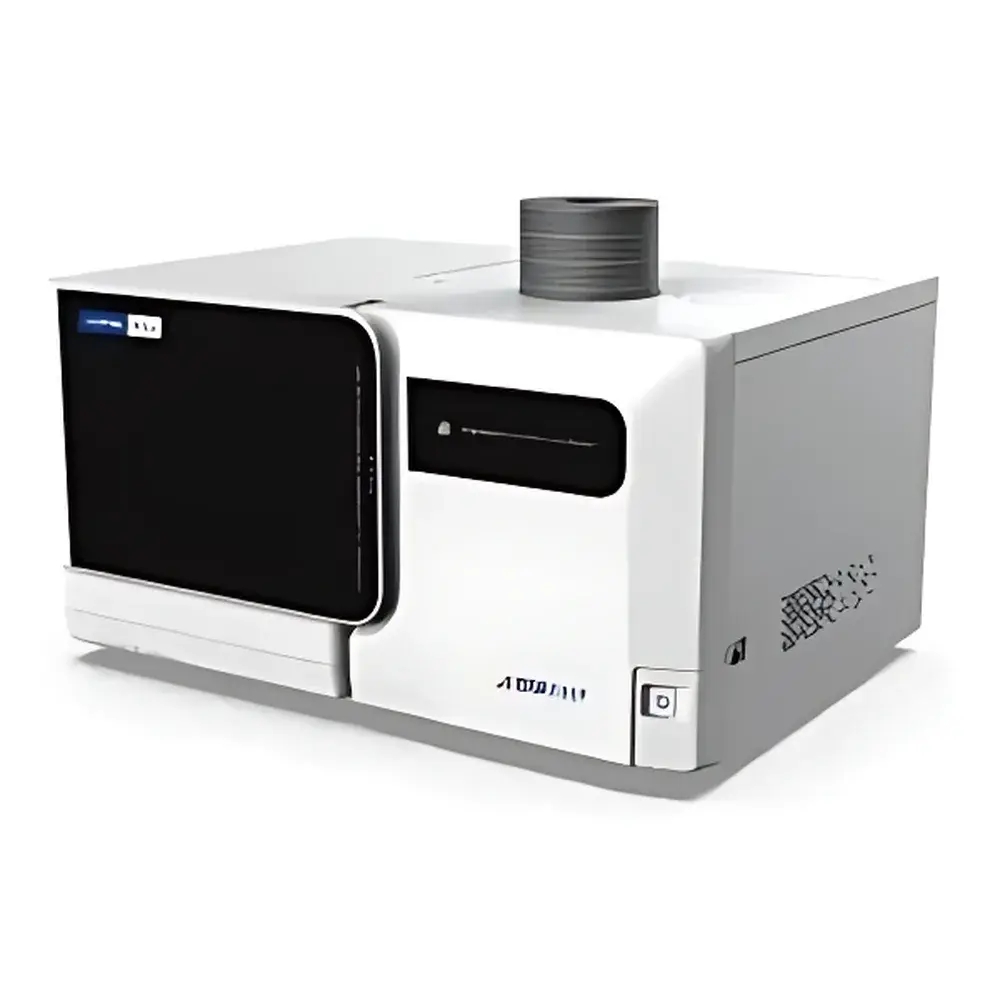
Titan Instruments AFS-11U/AFS-11B Sequential Injection High-Precision Atomic Fluorescence Spectrometer
| Brand | Titan Instruments |
|---|---|
| Origin | Beijing, China |
| Model | AFS-11U / AFS-11B |
| Instrument Type | Multi-channel Atomic Fluorescence Spectrometer |
| Sample Introduction | Dual Sequential Injection Pumps |
| Waste Disposal | Rear Exhaust Design |
| Hydride Generation Mode | Vapor Generation / Hydride Generation |
| Gas Flow Control | Mass Flow Controller (MFC) |
| Detectable Elements | As, Sb, Bi, Sn, Se, Te, Pb, Ge, Hg, Cd, Zn |
| RSD | <0.6% |
| Linear Dynamic Range | >3 orders of magnitude |
| Detection Limits (As, Sb, Se, Bi, Te, Hg, Sn, Pb) | <0.01 µg/L |
| PMT Wavelength Range | 160–320 nm |
| Atomizer Temperature Control | Yes |
Overview
The Titan Instruments AFS-11U and AFS-11B are high-precision, multi-channel atomic fluorescence spectrometers engineered for trace-level quantification of hydride-forming and cold-vapor elements in complex matrices. Based on the principle of atomic fluorescence spectroscopy (AFS), these instruments employ vapor generation (hydride or cold-vapor) coupled with quartz tube atomization and pulsed hollow cathode lamp excitation to achieve exceptional sensitivity and selectivity. The core measurement process involves in-situ generation of volatile species—such as arsine (AsH₃), stibine (SbH₃), mercury vapor (Hg⁰), or selenium hydride (SeH₂)—followed by atomization in a high-temperature quartz cell and subsequent detection of element-specific fluorescence at characteristic wavelengths (160–320 nm). Designed for regulatory compliance and laboratory reproducibility, the AFS-11U/11B meets the instrumental performance requirements specified in major international and national standards—including ISO 17025-accredited workflows—and is widely deployed in food safety, environmental monitoring, clinical toxicology, and geological resource laboratories.
Key Features
- Dual sequential injection pump system enabling precise, pulse-free delivery of sample, carrier solution, and reducing agent—ensuring stoichiometric control and minimizing memory effects.
- Micro-liter-level sampling accuracy with real-time volume compensation, delivering repeatability better than 0.05% RSD for volumetric dispensing.
- Integrated drift compensation via software-based soft calibration and QCP (Quality Control Protocol) functionality, supporting automatic multi-point calibration curve validation and post-run baseline correction.
- Argon gas flow regulated by mass flow controllers (MFCs), ensuring stable and programmable carrier gas delivery critical for consistent hydride transport and atomization efficiency.
- ARM + FPGA dual-processor architecture with dedicated MCU modules for lamp control, atomizer heating, fluidics, and signal acquisition—enabling deterministic timing, low-latency response, and hardware-level fault isolation.
- Intelligent lamp management including auto-ignition, dual-channel lamp synchronization, eccentricity-adaptive lamp holder (optional), and real-time filament current monitoring for predictive maintenance.
- Automated dilution capability for high-concentration samples, scheduled preheating with wake-up timer, and energy-saving sleep mode compliant with ISO 50001-aligned lab operation protocols.
Sample Compatibility & Compliance
The AFS-11U/11B is validated for analysis of aqueous, digested, and microwave-assisted extracts across diverse sample types: drinking water, wastewater, soil leachates, food homogenates, biological tissues, pharmaceutical excipients, and cosmetic formulations. Its performance aligns with methodological requirements of multiple regulatory frameworks, including but not limited to: GB 5009.11–2014 (total and inorganic arsenic in food), GB 5009.17–2021 (total and organic mercury), HJ 694–2014 (water), HJ 1133–2020 (ambient air particulates), HJ 680–2013 and HJ 702–2014 (soil/sediment and solid waste), and ASTM D6720–22 (mercury in coal and coke). The system supports GLP/GMP-compliant data integrity through full audit trail logging, role-based user permissions, electronic signatures, and 21 CFR Part 11–ready software configuration options.
Software & Data Management
Titan’s proprietary AFS-Control Suite provides a modular, dockable GUI environment supporting real-time multi-channel signal visualization, synchronized spectral plotting, and dynamic reaction progress monitoring. Workflow automation includes guided method setup, auto-generation of calibration curves, adaptive dilution logic, and batch-wise QC flagging. All analytical sessions are time-stamped and metadata-enriched (operator ID, instrument state, reagent lot numbers, environmental conditions). Data export complies with ASTM E1384 and ISO/IEC 17025 Annex A.2 requirements, supporting CSV, PDF, and XML formats. Optional LIMS integration via OPC UA or HL7 interfaces enables seamless data handoff to enterprise laboratory information systems.
Applications
- Food safety laboratories performing routine surveillance of As, Hg, and Cd in rice, seafood, infant formula, and dietary supplements.
- Environmental testing facilities conducting EPA-equivalent monitoring of As and Sb in groundwater, surface water, and landfill leachate per HJ 694–2014.
- Clinical and forensic toxicology units quantifying urinary mercury or blood arsenic for exposure assessment.
- Agricultural and feed testing labs evaluating Se and Zn bioavailability in fertilizers and animal feedstuffs.
- Research institutions applying speciation-ready configurations (via optional serial port interface) for As(III)/As(V), methylmercury, or selenomethionine studies using HPLC-AFS coupling.
- Regulatory reference labs maintaining proficiency testing programs under CNAS or ILAC-MRA accreditation schemes.
FAQ
What hydride-forming elements can the AFS-11U/11B quantify at sub-ppt levels?
The instrument achieves detection limits below 0.01 µg/L for As, Sb, Se, Bi, Te, Hg, Sn, and Pb under optimized hydride generation conditions; Cd and Zn are measured via cold-vapor atomic fluorescence with comparable sensitivity.
Is the system compatible with existing microwave digestion platforms?
Yes—it accepts standard 15–50 mL digestion vials and integrates seamlessly with CEM MARS, Anton Paar Multiwave, or Milestone ETHOS systems via standardized sample rack adapters and auto-dilution protocols.
Can the AFS-11U/11B be upgraded for elemental speciation analysis?
Yes—both models feature a dedicated RS-232/485 interface for direct coupling to HPLC or IC systems, enabling future expansion to As, Hg, and Se speciation without hardware replacement.
Does the software support 21 CFR Part 11 compliance?
When configured with password-protected user roles, electronic signature capture, and immutable audit logs, the AFS-Control Suite satisfies key technical controls outlined in FDA 21 CFR Part 11 Subpart B.
What maintenance routines are recommended for long-term stability?
Daily quartz tube cleaning, weekly MFC calibration verification, quarterly PMT gain adjustment, and biannual lamp alignment checks—documented automatically within the software’s maintenance scheduler module.






