
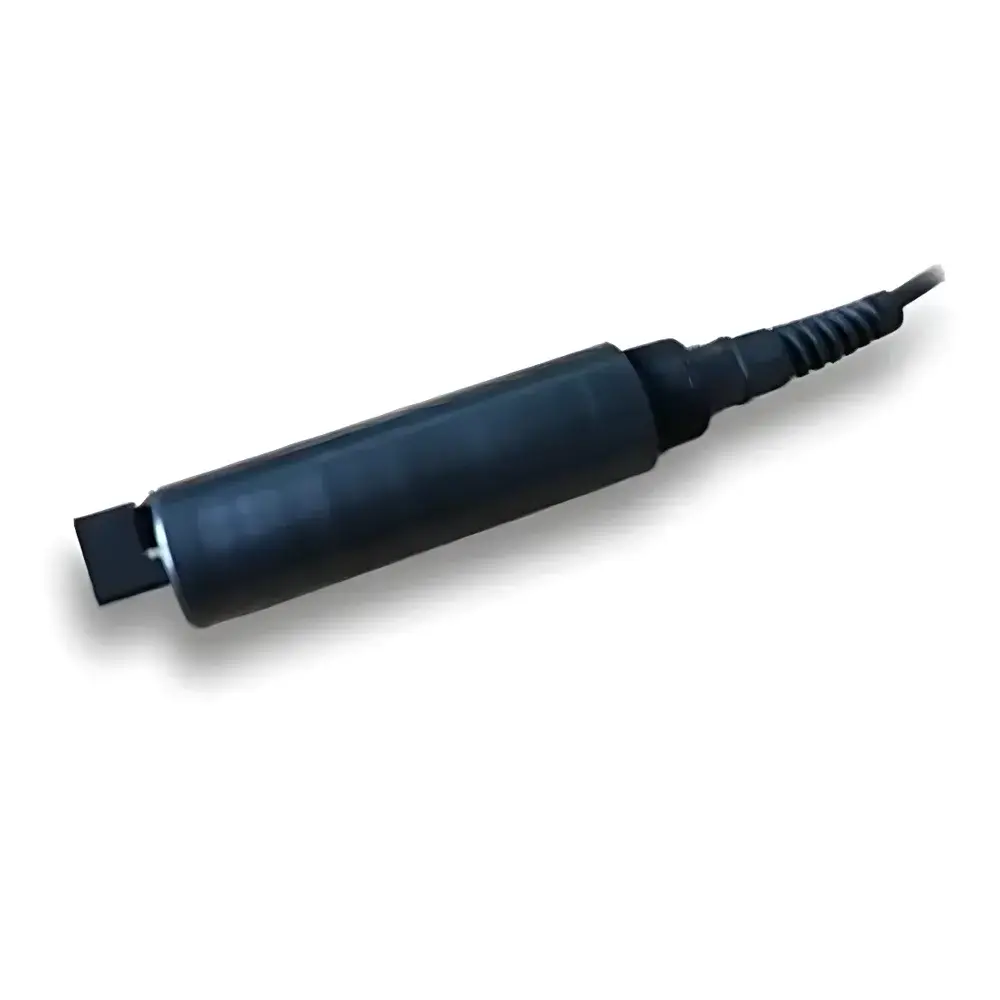
CHL-300 Chlorophyll a Online Water Quality Analyzer by EXPEC
| Brand | EXPEC |
|---|---|
| Model | CHL-300 |
| Measurement Principle | In-situ Fluorescence Detection |
| Output Interface | RS-485 with Modbus RTU Protocol |
| Cleaning Mechanism | Integrated Motorized Brush |
| Power Management | Low-Power Embedded Architecture |
| Environmental Rating | IP68 Submersible Housing |
| Deployment Mode | Continuous Online Monitoring |
| Sample Type | Natural Freshwater, Estuarine, and Marine Waters |
| Compliance | Designed for ASTM D7912-17 (Standard Test Method for Chlorophyll a in Water by Fluorometric Determination) and ISO 10260:2021 (Water Quality — Determination of Chlorophyll a — Fluorometric Method) |
Overview
The CHL-300 Chlorophyll a Online Water Quality Analyzer is an industrial-grade, submersible fluorometric sensor engineered for continuous, in-situ quantification of chlorophyll a concentration in natural aquatic environments. Based on the principle of excitation-emission fluorescence spectroscopy—where chlorophyll a molecules are excited at ~435 nm and emit characteristic fluorescence near 685 nm—the instrument delivers real-time, interference-compensated measurements without reagent addition or sample extraction. Its optical path is sealed within a sapphire window, and the integrated motorized cleaning brush operates on programmable intervals to mitigate biofouling, sediment deposition, and air bubble adhesion—critical failure modes in long-term deployment. The device features a fully embedded low-power architecture optimized for solar- or battery-powered remote stations, supporting unattended operation for up to 12 months between maintenance cycles under typical field conditions.
Key Features
- Optically stable fluorescence detection system with temperature-compensated photodiode array and dual-wavelength reference correction to minimize drift from ambient light, turbidity, and dissolved organic matter (DOM) interference.
- IP68-rated titanium alloy housing with sapphire optical window, rated for continuous submersion up to 10 m depth in freshwater and seawater (35 ppt salinity).
- RS-485 digital interface compliant with Modbus RTU protocol (slave ID configurable), enabling seamless integration into SCADA, PLC, and telemetry platforms including Campbell Scientific CR-series loggers and Siemens Desigo CC systems.
- Intelligent brush-based anti-fouling system with adaptive cleaning frequency (user-definable from 1–24 h intervals), torque monitoring, and fault logging via diagnostic registers.
- Embedded firmware supports automatic zero-point validation using dark-cycle measurement sequences and built-in LED intensity stabilization for long-term signal reproducibility.
- No consumables, no reagents, no wet chemistry—reducing operational overhead and eliminating hazardous waste generation associated with acetone/ethanol extraction methods.
Sample Compatibility & Compliance
The CHL-300 is validated for direct immersion in unpumped, unfiltered water matrices including oligotrophic lakes, eutrophic reservoirs, tidal estuaries, coastal seawater, and treated drinking water distribution networks. It meets functional requirements outlined in EPA Method 445.1 (Fluorometric Determination of Chlorophyll a in Algal Biomass) and aligns with data quality objectives specified in ISO 5667-3:2018 (Water quality — Sampling — Part 3: Guidance on preservation and handling of water samples). While not a certified reference method per se, its output is traceable to NIST-traceable chlorophyll a standards (SRM 1965) and suitable for trend analysis, early-warning threshold triggering, and compliance support under national surface water monitoring programs (e.g., China’s HJ 897–2017, US EPA NPDES reporting frameworks).
Software & Data Management
Raw fluorescence intensity values, temperature-corrected chlorophyll a concentrations (µg/L), brush status, signal-to-noise ratio, and internal diagnostics are accessible via standard Modbus holding registers (4x addresses). EXPEC provides optional configuration software (EXPEC AquaLink v2.1) for Windows-based commissioning, calibration offset adjustment, and firmware updates. For enterprise integration, the analyzer supports MQTT over TCP/IP when paired with EXPEC’s AQ-Edge gateway—enabling secure TLS 1.2 transmission to cloud platforms such as Microsoft Azure IoT Hub or AWS IoT Core. Audit trails, user access logs, and configuration change history comply with GLP-aligned data integrity expectations; full data export (CSV/JSON) includes timestamps synchronized to UTC via optional GPS module input.
Applications
- Real-time algal bloom detection and forecasting in drinking water source reservoirs and intake channels.
- Long-term trophic state monitoring across national hydrological observation networks (e.g., China’s National Surface Water Monitoring Network).
- Regulatory compliance tracking for municipal wastewater effluent and combined sewer overflow (CSO) discharge points.
- Mariculture site management—supporting feed optimization and hypoxia risk assessment through phytoplankton biomass correlation.
- Climate-driven ecological research: high-frequency chlorophyll a time series for studying diel cycles, nutrient pulse responses, and thermal stratification effects.
- Integration into autonomous platforms—including AUVs, moored buoys, and riverbank telemetry nodes—where size, power budget, and mechanical robustness are critical constraints.
FAQ
Does the CHL-300 require periodic calibration in the field?
Field calibration is not required under normal operating conditions. The instrument includes factory calibration traceable to NIST SRM 1965, and drift is mitigated via internal reference channel compensation. Optional field verification using certified secondary standards (e.g., diluted algal cultures) is recommended every 6 months for QA/QC documentation.
Can it be deployed in highly turbid or colored water?
Yes—its dual-wavelength correction algorithm attenuates scattering and absorbance artifacts common in humic-rich or sediment-laden waters. Validation testing shows <±12% deviation versus lab fluorometry in waters with turbidity up to 200 NTU and CDOM absorption coefficient a355 ≤ 5 m⁻¹.
Is the cleaning brush effective against filamentous algae and barnacle settlement?
The brush removes soft biofilm and diatomaceous slimes effectively. For macrofouling organisms (e.g., *Ulva*, barnacles), supplementary antifouling coatings or ultrasonic assist modules (optional AQ-USS add-on) are advised for deployments exceeding 90 days in warm, nutrient-rich estuaries.
What is the minimum detectable concentration and linear range?
The lower limit of quantification (LLOQ) is 0.15 µg/L chlorophyll a; the linear dynamic range extends from 0.15 to 200 µg/L (R² ≥ 0.999 in laboratory validation matrix). Nonlinearity above 200 µg/L is flagged via firmware saturation alert.
How is data security handled during wireless transmission?
When used with the AQ-Edge gateway, all MQTT payloads are encrypted end-to-end using AES-256-GCM, with device authentication via X.509 certificate binding. No credentials or raw sensor data are stored locally on the gateway’s flash memory.
Related Products







