
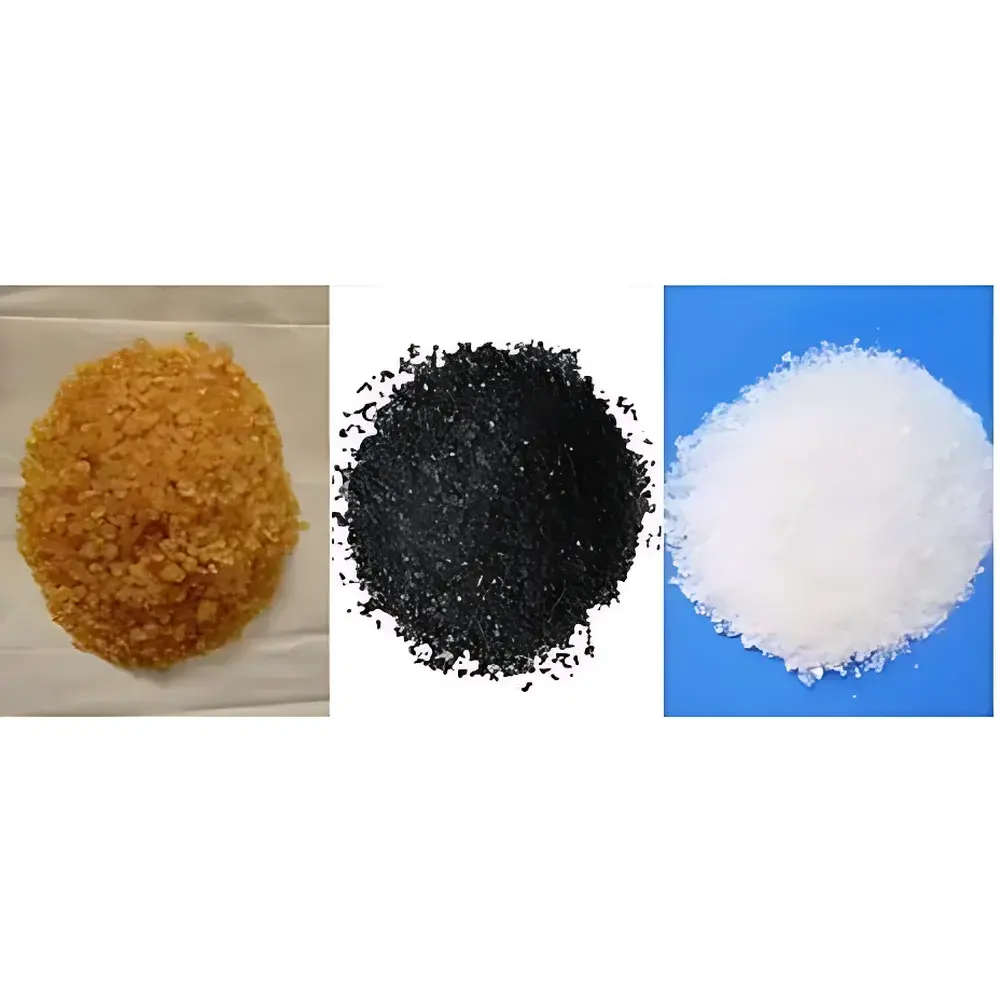
Adsorption-Based COD Removal Technology by Xinbaili (New Biolink)
| Key | Brand: Xinbaili (New Biolink) |
|---|---|
| Origin | Beijing, China |
| Manufacturer Type | Authorized Distributor |
| Country of Origin | China |
| Model | Adsorption-Based COD Removal Technology |
| Pricing | Available Upon Request |
| Sample Processing | Industrial Wastewater Treatment |
Overview
The Adsorption-Based COD Removal Technology is a non-destructive, physical separation platform engineered for selective removal of chemical oxygen demand (COD)-contributing organic compounds from complex industrial wastewaters. Unlike oxidative or biological methods, this system operates on the principle of equilibrium-controlled adsorption—leveraging tailored porous media with high surface area and specific affinity for recalcitrant, low-biodegradability organics. It is not a standalone instrument but a modular, scalable process unit designed for integration into laboratory-scale feasibility studies, pilot-line validation, and full-scale treatment train design. The core mechanism relies on differential adsorption kinetics and thermodynamic selectivity across a multi-component sorbent matrix—including macroporous specialty resins, reactivable granular activated carbon (GAC), and functionalized polymeric adsorbents—enabling preferential capture of aromatic, halogenated, and nitro-substituted compounds (e.g., phenol, chloroform, toluene, nitrobenzene) while permitting inorganic salts and small polar molecules to pass through unretained.
Key Features
- Physicochemical selectivity: Engineered sorbent blends exhibit high affinity for hydrophobic, aromatic, and electrophilic organics—critical for detoxifying biologically inhibitory wastewater streams.
- Regenerable adsorbent system: All primary adsorbents are thermally or chemically regenerable, supporting ≥50 cycles without measurable loss in capacity under controlled operational conditions—reducing long-term consumables cost and waste generation.
- Salinity-resilient operation: Maintains consistent adsorption efficiency across total dissolved solids (TDS) concentrations up to 80,000 mg/L, enabling direct treatment of reverse osmosis (RO) concentrate and zero-liquid-discharge (ZLD) brine streams.
- Modular column architecture: Configurable fixed-bed or moving-bed adsorption modules support flow rates from 0.1 to 5.0 L/min in lab/pilot applications, with pressure drop < 0.3 bar at nominal throughput.
- No chemical addition or sludge generation: Operates without oxidants, coagulants, or pH adjustment—eliminating secondary waste streams and simplifying downstream disposal compliance.
Sample Compatibility & Compliance
This technology demonstrates robust performance across wastewater matrices typical of fine chemical synthesis, coking plant effluents, coal gasification RO concentrates, and pharmaceutical fermentation liquors. It is compatible with influents containing suspended solids ≤ 25 mg/L (pre-filtration recommended), pH 3–11, and temperature range 5–45 °C. While not a certified device per ISO 9001 or ISO 14001 (as it is a process methodology rather than a CE-marked appliance), its implementation aligns with ASTM D3862 (Standard Test Method for Determining Adsorptive Capacity of Activated Carbon), EPA Method 415.3 (for dissolved organic carbon analysis), and supports GLP-compliant data traceability when integrated with validated flow meters, conductivity sensors, and online UV-Vis spectrophotometers. For regulated pharmaceutical applications (e.g., antibiotic mother liquor recovery), the process meets ICH Q5C stability guidance prerequisites for product purity retention during purification.
Software & Data Management
As a bench- and pilot-scale process technology—not a digitally embedded analyzer—this system does not include proprietary firmware or cloud-based control software. However, it is fully compatible with third-party industrial SCADA platforms (e.g., Ignition, Siemens Desigo, or LabVIEW-based DAQ systems) via standard 4–20 mA analog outputs and Modbus RTU/ASCII protocols. Users may configure real-time monitoring of influent/outfluent COD (measured offline per Standard Methods 5220D), flow rate, bed pressure differential, and breakthrough curve modeling using Excel-based Langmuir/Freundlich isotherm templates provided in the technical documentation package. Audit trails for regeneration cycles, sorbent loading history, and batch-wise effluent quality logs can be maintained in accordance with FDA 21 CFR Part 11 requirements when deployed within validated GMP environments.
Applications
- Pretreatment of toxic wastewater prior to biological treatment—reducing inhibition of nitrifying bacteria and improving BOD5/COD ratio.
- Deep polishing of biologically treated effluent where residual COD exceeds discharge limits (e.g., < 50 mg/L).
- Recovery of high-value APIs (e.g., tetracyclines, cephalosporins) from crystallization mother liquors—achieving >92% mass recovery with ≥99.5% chromatographic purity.
- Desalination pretreatment: Selective removal of COD from RO concentrate to prevent fouling of evaporator surfaces and crystallizers in ZLD systems.
- Resource recovery in coal chemical industry: Separation of phenolic compounds from high-salinity gasification wastewater for reuse as feedstock or fuel blending components.
FAQ
Is this technology suitable for continuous-flow laboratory testing?
Yes—modular columns support uninterrupted operation for ≥72 hours at defined hydraulic retention times; breakthrough monitoring is performed via periodic grab sampling and offline COD analysis.
Can the adsorbents be regenerated onsite?
Yes—thermal regeneration (120–180 °C under inert atmosphere) or solvent elution (ethanol/water mixtures) protocols are included in the operator manual, with regeneration efficiency verified by iodine number and methylene blue adsorption tests.
Does the system require hazardous chemical handling?
No—adsorption is purely physical; no strong acids, bases, or oxidizing agents are consumed during normal operation or regeneration.
How is performance validated for regulatory submissions?
Performance data packages include ISO/IEC 17025-accredited lab reports (COD, TOC, GC-MS speciation), breakthrough curve datasets, and mass balance reconciliation across three consecutive regeneration cycles.
What support is available for process scale-up?
Xinbaili provides hydraulic modeling services, pilot trial coordination at client sites, and techno-economic assessment (TEA) including CAPEX/OPEX breakdowns aligned with IChemE guidelines.



