
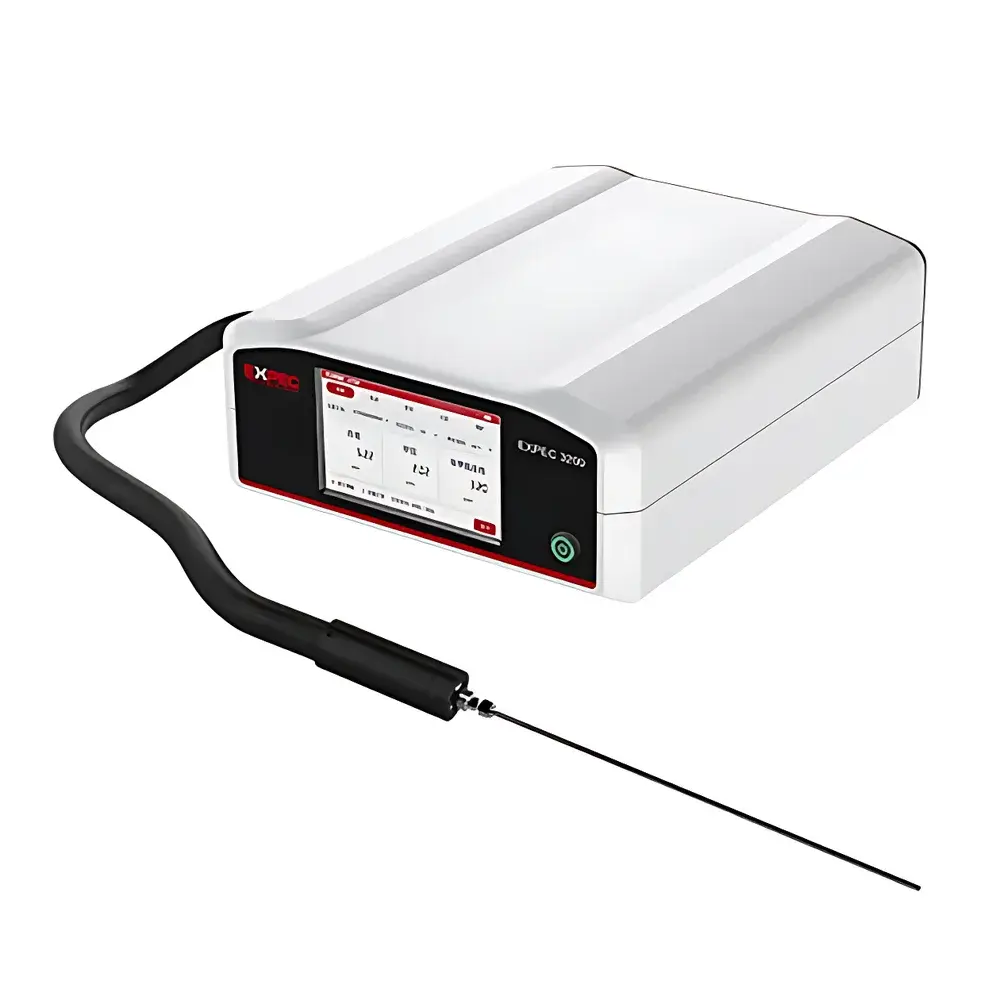
EXPEC 3200 Portable Total Hydrocarbons, Methane, and Non-Methane Hydrocarbons Analyzer (Catalytic Oxidation–FID)
| Brand | EXPEC/Spectrum Instruments |
|---|---|
| Origin | Zhejiang, China |
| Manufacturer Type | Authorized Distributor |
| Product Category | Domestic |
| Model | EXPEC 3200 |
| Instrument Type | Portable Gas Chromatograph |
| Detection Principle | High-Temperature Catalytic Oxidation + Flame Ionization Detection (FID) |
| Detection Limit | Sub-ppb Level for THC/Methane/NMHC |
| Compliance | HJ 1012–2018, Local NMHC Field Monitoring Standards (Beijing, Tianjin, Shandong, Fujian, Jiangxi, Henan) |
Overview
The EXPEC 3200 is a field-deployable, catalytic oxidation–flame ionization detection (CO–FID) based analyzer engineered for quantitative measurement of total hydrocarbons (THC), methane (CH₄), and non-methane hydrocarbons (NMHC) in ambient air and industrial emission streams. Unlike conventional GC-based NMHC analyzers relying on cryogenic or adsorption–desorption separation, the EXPEC 3200 employs high-temperature catalytic oxidation (≥600 °C) to fully mineralize all organic compounds—except methane—into CO₂ and H₂O prior to selective FID quantification. Methane passes unoxidized through the catalyst and is directly measured by the same FID detector, enabling real-time differential calculation of NMHC (NMHC = THC − CH₄). This architecture eliminates chromatographic retention time drift, column contamination, and cold-spot condensation artifacts common in traditional GC-FID systems, thereby ensuring robustness under variable humidity, temperature, and matrix-complex conditions typical of stack testing and fugitive emission surveys.
Key Features
- Integrated high-temperature catalytic oxidation module with dual-zone thermal control (catalyst bed ≥600 °C; transfer lines ≥180 °C) to prevent adsorption loss of C₆–C₁₂ aliphatics and aromatics
- Compact flame ionization detector with low-noise electrometer, optimized for sub-ppb-level signal stability over extended field operation
- Self-contained gas supply: built-in zero-air generator (≤1 ppb THC), hydrogen delivery via rechargeable metal hydride cartridges or external H₂ cylinder (with integrated pressure regulation and leak monitoring)
- Ultra-portable architecture: total system mass <6.5 kg including internal Li-ion battery (7.2 V/12 Ah), compressed gas reservoirs, and electronics—enabling single-operator shoulder carry and rapid site deployment
- Real-time analysis cycle: ≤5 s per sample, with automated zero/span calibration, catalytic efficiency verification, and NMHC calculation per HJ 1012–2018 Annex B
- Operational flexibility: AC 220 V mains operation or hot-swap battery replacement; >8 h continuous runtime at 25 °C ambient
Sample Compatibility & Compliance
The EXPEC 3200 is validated for direct sampling of undiluted exhaust gases from stationary sources (e.g., boiler stacks, coating lines, chemical reactors) and ambient air for fugitive emission assessment. It accommodates sample matrices containing up to 10,000 ppm THC without saturation, thanks to dynamic range compression via catalytic conversion efficiency modulation and FID linear response (10⁶ dynamic range). The instrument meets all performance criteria specified in HJ 1012–2018, including precision (RSD ≤5% at 100 ppb), accuracy (±10% bias vs. reference standard), and interference rejection (no significant response to CO, CO₂, NOₓ, SO₂, or H₂O vapor up to 40% RH). It further aligns with regional implementation protocols issued by environmental authorities in Beijing, Tianjin, Shandong, Fujian, Jiangxi, and Henan provinces for on-site NMHC enforcement monitoring.
Software & Data Management
Embedded firmware supports ISO/IEC 17025-aligned data integrity workflows: timestamped raw FID current traces, catalytic conversion efficiency logs, and calibration event records are stored locally with SHA-256 hash validation. The companion EXPEC FieldLink™ software (Windows/macOS) enables encrypted USB transfer, audit-trail-enabled report generation (PDF/CSV), and customizable templates compliant with China’s Environmental Monitoring Technical Specifications (HJ/T 91–2019). All measurement sessions include GLP-compliant electronic signatures, user access levels (operator/administrator), and automatic backup to removable microSD card—facilitating traceability during regulatory inspections or third-party verification audits.
Applications
- Regulatory compliance monitoring of organized emissions (stacks, vents) and unorganized emissions (fenceline, loading docks, storage tanks)
- Environmental law enforcement and rapid-response leak detection (LDAR) surveys
- Self-auditing by industrial facilities subject to VOCs discharge permits
- Performance validation of VOC abatement systems (e.g., RTOs, carbon adsorbers, biofilters) via inlet–outlet NMHC differentials
- Comparative evaluation against fixed-site continuous emission monitoring systems (CEMS) per HJ 75–2017 requirements
- VOC source apportionment studies using temporal NMHC/CH₄ ratio profiling
FAQ
Does the EXPEC 3200 require external carrier gas or calibration gas cylinders?
No. It integrates a zero-air generator and supports hydrogen supply via solid-state metal hydride cartridges—eliminating dependency on high-pressure gas infrastructure.
How is catalytic oxidation efficiency verified during field use?
The system performs automated efficiency checks every 30 minutes using certified propane challenge gas; results are logged and trigger alerts if conversion falls below 99.5%.
Is the instrument suitable for humid or particulate-laden stack gas?
Yes. A heated Nafion™ dryer (120 °C) and sintered stainless-steel filter (5 µm) are included upstream of the catalyst to manage moisture and aerosol load without compromising oxidation fidelity.
Can measurement data be exported in formats compatible with national environmental monitoring platforms?
Yes. Raw and processed data export to XML schema compliant with China’s National Environmental Monitoring Center (NEMC) data ingestion protocol (Version 3.2).





