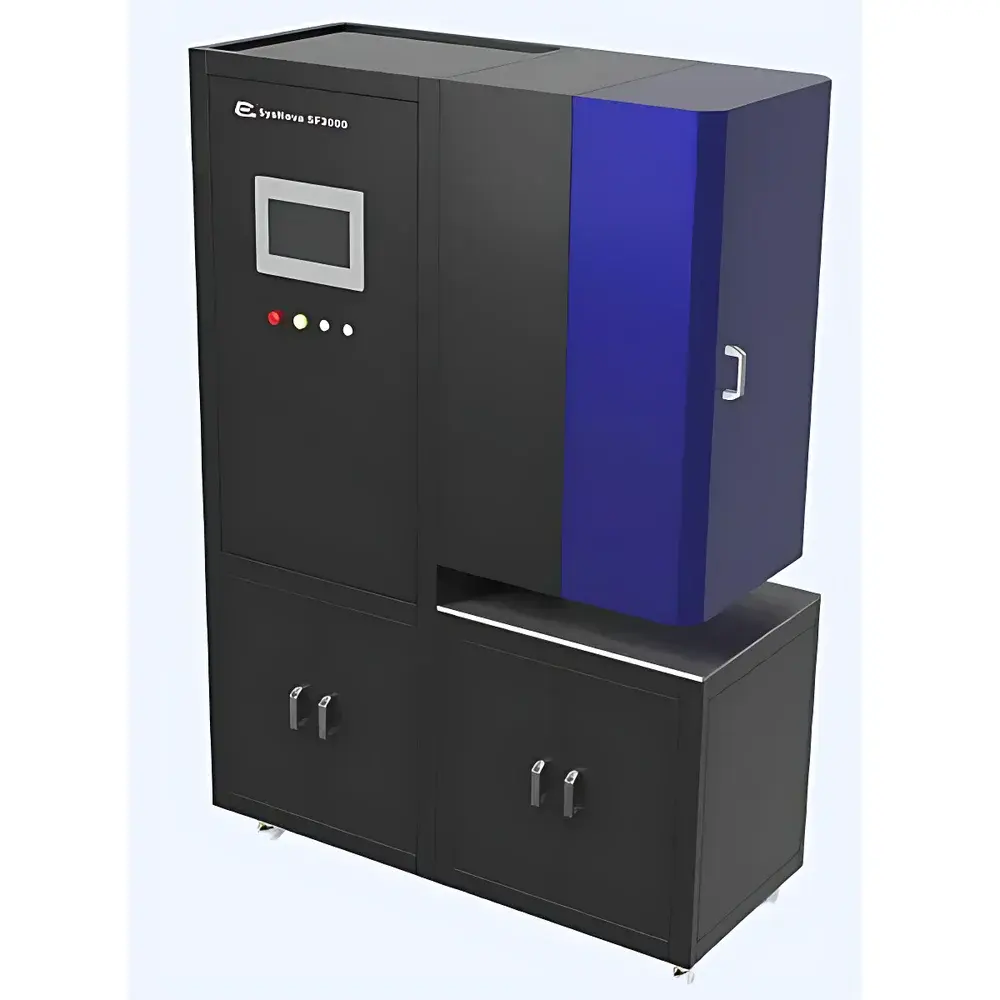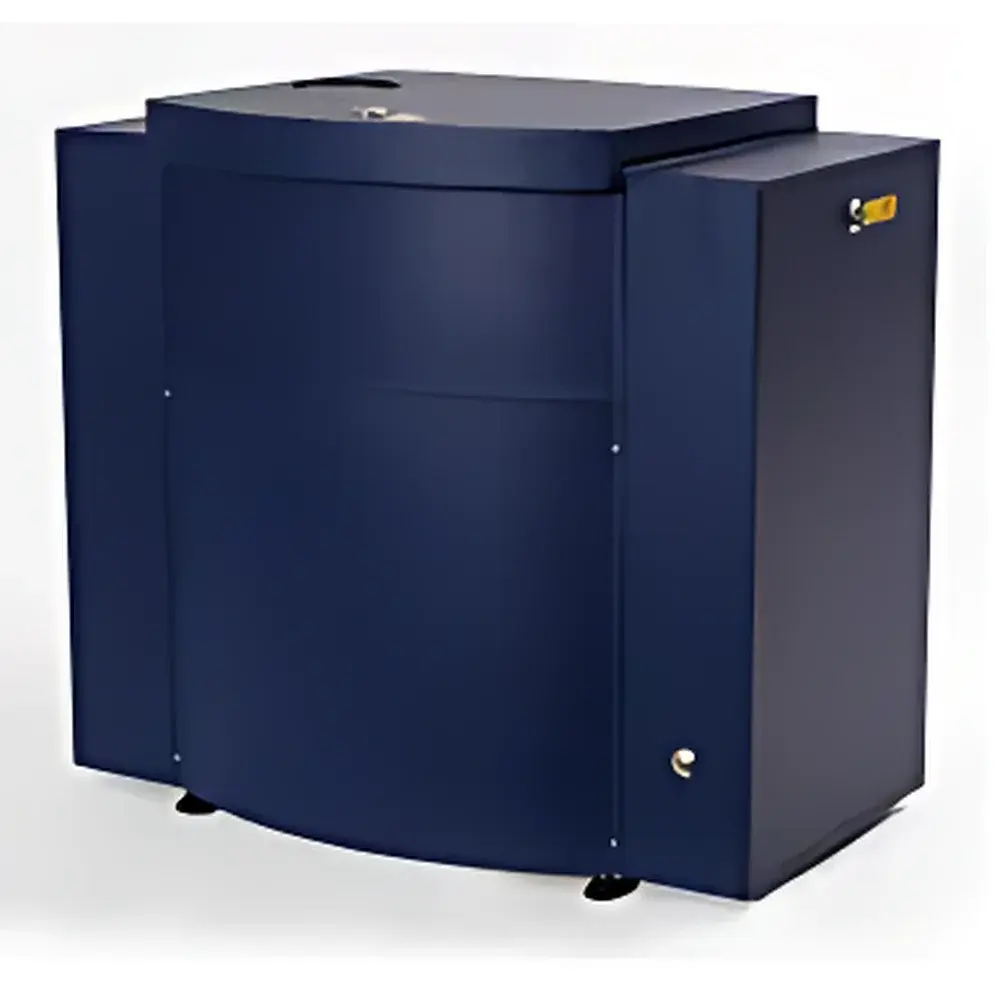
F-100 Heavy Fuel Oil Combustion Characterization Analyzer (Imported, Norway-manufactured)
| Origin | Norway |
|---|---|
| Manufacturer Type | Authorized Distributor |
| Origin Category | Imported |
| Model | F-100 |
| Pricing | Upon Request |
Overview
The F-100 Heavy Fuel Oil Combustion Characterization Analyzer is a precision-engineered, benchtop combustion simulation instrument designed to replicate the thermodynamic and fluid-dynamic conditions of medium-speed, low-load diesel engines. Developed in close collaboration with marine engine OEMs and petroleum research institutions, it implements the Constant Volume Combustion Chamber (CVCC) methodology—fully compliant with IP Standard ST-B14 (Institute of Petroleum, UK) and aligned with ISO 8217 Annex B requirements for residual fuel ignition and combustion behavior. Unlike empirical distillation or viscosity-based specifications, the F-100 delivers quantitative, cycle-resolved combustion metrics under controlled high-pressure, high-temperature conditions: combustion chamber pressure up to 45 bar, injection pressure up to 350 bar, and peak chamber temperature of 500 °C. Each test cycle injects ~0.1 mL of sample into a preheated, pressurized combustion chamber, where optical and piezoelectric sensors capture real-time pressure rise rates (dP/dt), enabling derivation of ignition delay, main combustion phase duration, heat release profile, and derived cetane-related indices—including ECN (Estimated Cetane Number)—without reliance on reference fuels.
Key Features
- CVCC-based combustion simulation architecture, validated against IP ST-B14 and ISO 8217 Annex B protocols
- Integrated high-fidelity pressure transduction system with <1 µs sampling resolution for accurate ROHR (Rate of Heat Release) calculation
- Automated test sequence: sample loading → chamber pressurization → preheat stabilization → timed injection → full-cycle data acquisition → auto-diagnostic reporting
- Standardized utility interfaces: ISO 8573-1 Class 2 compressed air inlet, DIN 4751 cooling water coupling, and EN 13849-compliant exhaust venting
- Compact footprint (70 × 40 × 70 cm) and modular design (60 kg) for laboratory integration or mobile deployment at refinery QC labs or marine technical centers
- Calibration traceable to methylcyclohexane reference material; full calibration report generation per ASTM D6890 Annex A1
Sample Compatibility & Compliance
The F-100 accepts residual fuel oils (RMG, RMK, RMA grades per ISO 8217:2024), blended heavy fuel oils, bio-blended residuals (e.g., HFO/BDF blends), and low-sulfur fuel oils (LSFO). It supports samples with kinematic viscosity up to 700 mm²/s at 50 °C and density up to 1010 kg/m³. All operational parameters—including injection timing, chamber thermal inertia, and pressure decay compensation—are algorithmically adjusted per sample density and volatility profile. The system complies with GLP (Good Laboratory Practice) documentation standards and supports 21 CFR Part 11–compliant audit trails when operated with optional software modules. Test reports include metadata required for ISO/IEC 17025 accreditation: environmental conditions, calibration status, operator ID, and raw pressure-time arrays.
Software & Data Management
The embedded Windows-based control suite provides real-time visualization of dP/dt curves, annotated combustion phase boundaries (ID, MCD, EMC, EC), and derived thermodynamic outputs (maxROHR, PMR, MCP, ABP). Data export is native to CSV, XML, and ASTM E1482-compliant .daf formats. Advanced analysis modules enable comparative overlay of up to 25 sequential runs, statistical process control (SPC) charting per ASTM E2587, and regression modeling of ECN vs. distillation T90 or sulfur content. All software logs are timestamped, digitally signed, and support role-based access control (RBAC) for multi-user environments operating under GMP or API RP 2510 workflows.
Applications
- Marine propulsion engineering: Validates compliance of bunkered fuel against ISO 8217 ignition limits; identifies marginal fuels prone to misfire or excessive NOx under transient load
- Refinery blending optimization: Quantifies combustion synergy/antagonism in multi-stream blends; supports predictive modeling of ignition quality without full-scale engine trials
- OEM engine calibration: Generates boundary-condition data for ECU mapping—especially critical for dual-fuel and flexible-fuel medium-speed engines
- Fuel additive development: Measures dose-response relationships for ignition improvers (e.g., alkyl nitrates) and combustion modifiers under representative in-cylinder conditions
- Third-party certification: Used by DNV, Bureau Veritas, and SGS for independent verification of fuel supplier declarations per MARPOL Annex VI Annex 1
FAQ
What standards does the F-100 directly support?
IP ST-B14, ISO 8217:2024 Annex B, ASTM D6890 Annex A1, and EN 590 Annex D (for distillate-heavy fuel correlation studies).
Can the F-100 test bio-blended residual fuels?
Yes—validated for HFO/biodiesel (FAME) and HFO/HVO blends up to 30% v/v; automatic viscosity compensation ensures consistent injection dynamics.
Is remote diagnostics supported?
Via optional VPN-enabled maintenance module with encrypted VNC session handover and predictive fault logging (ISO 13374 Class II).
How is traceability maintained across calibration cycles?
Each methylcyclohexane calibration run generates a NIST-traceable certificate with uncertainty budget per ISO/IEC 17025 Clause 6.6.
What infrastructure is required for installation?
230 V AC ±10%, 16 A circuit; dry compressed air (7 bar, dew point ≤ −40 °C); chilled water supply (10–15 °C, 2 L/min); dedicated exhaust duct (Ø150 mm, ≥12 Pa static suction).