
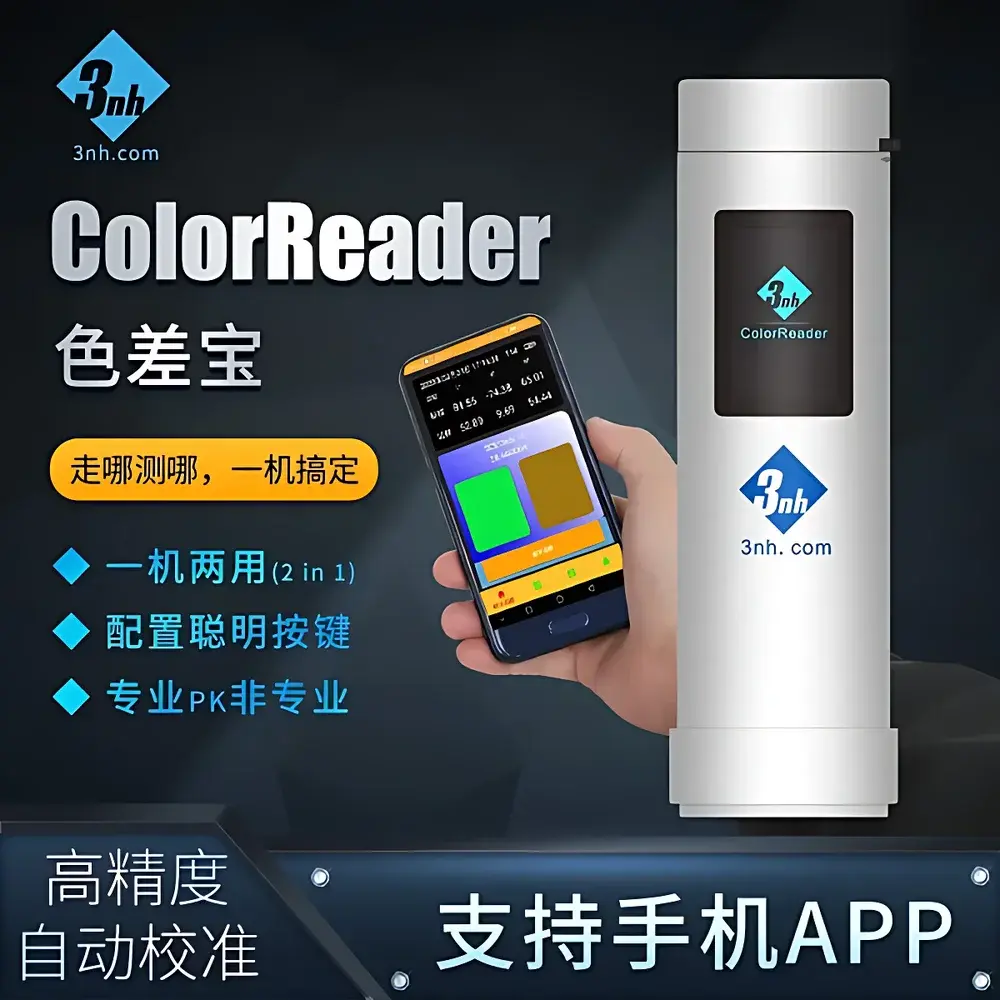
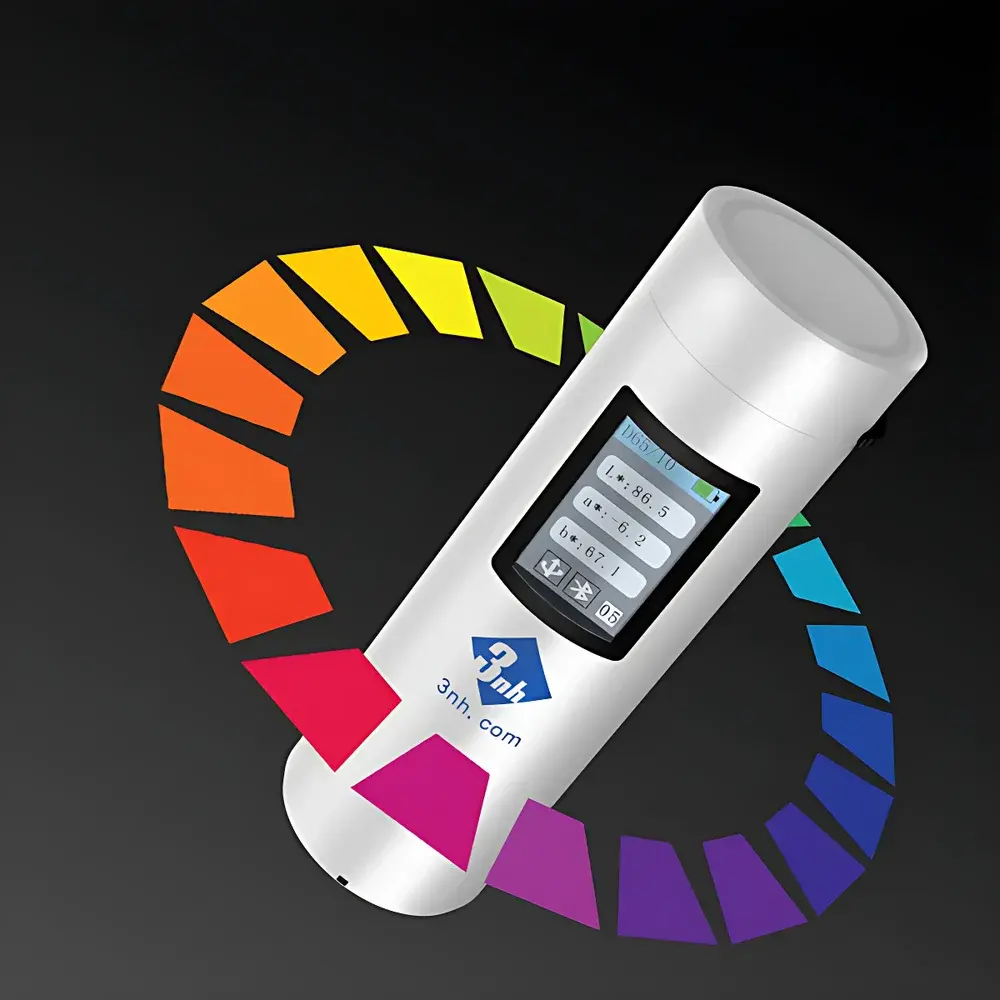
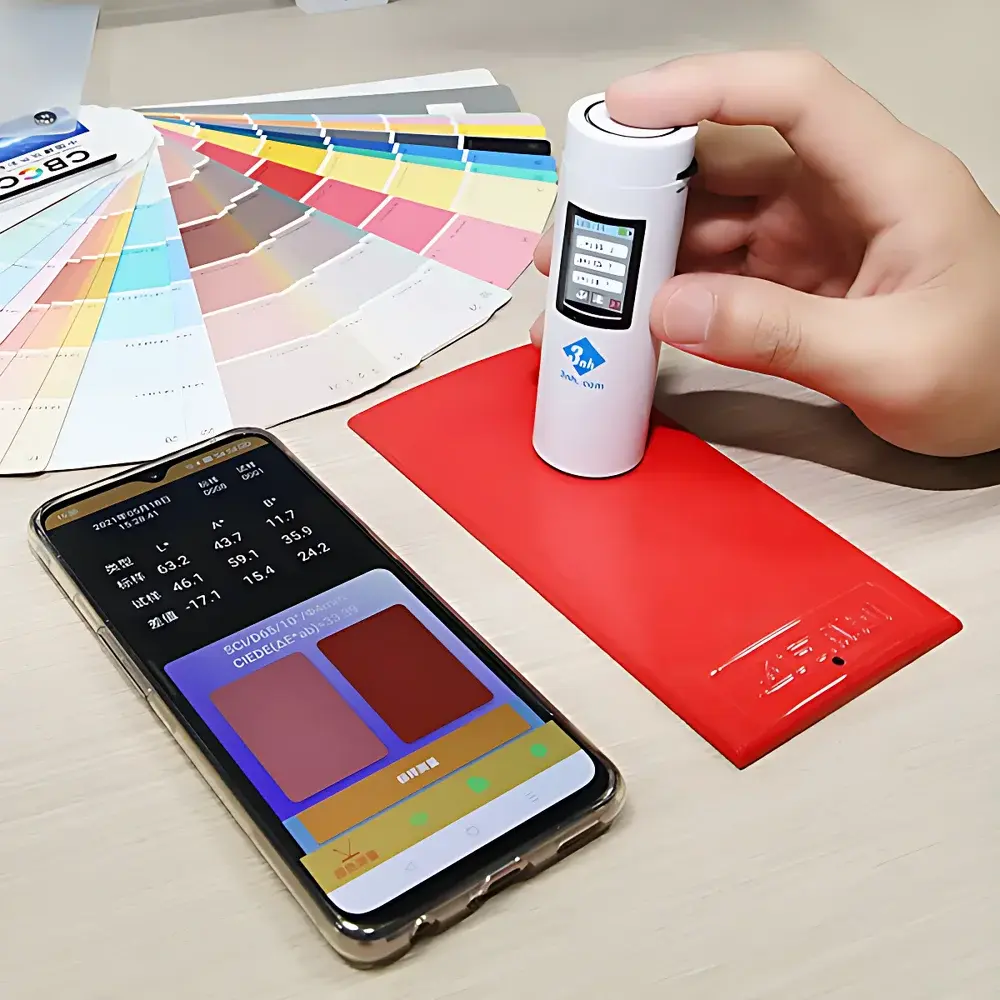
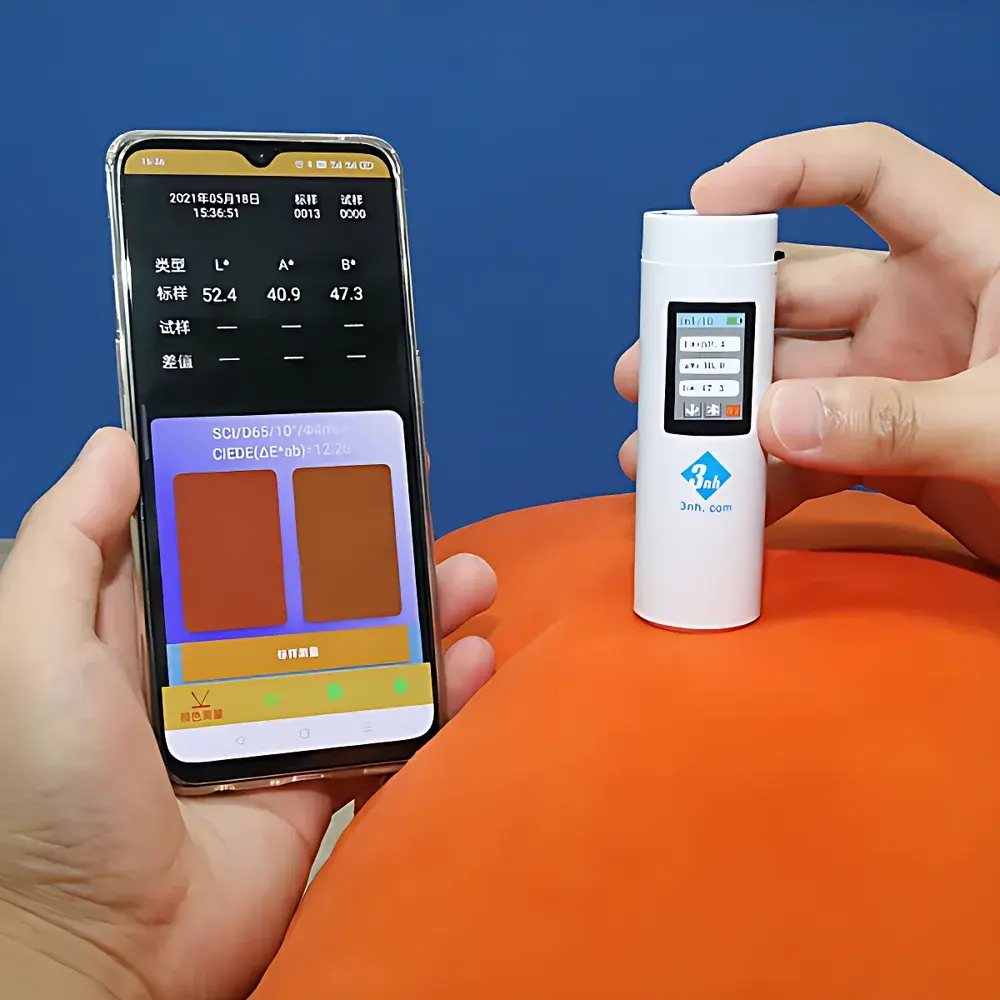
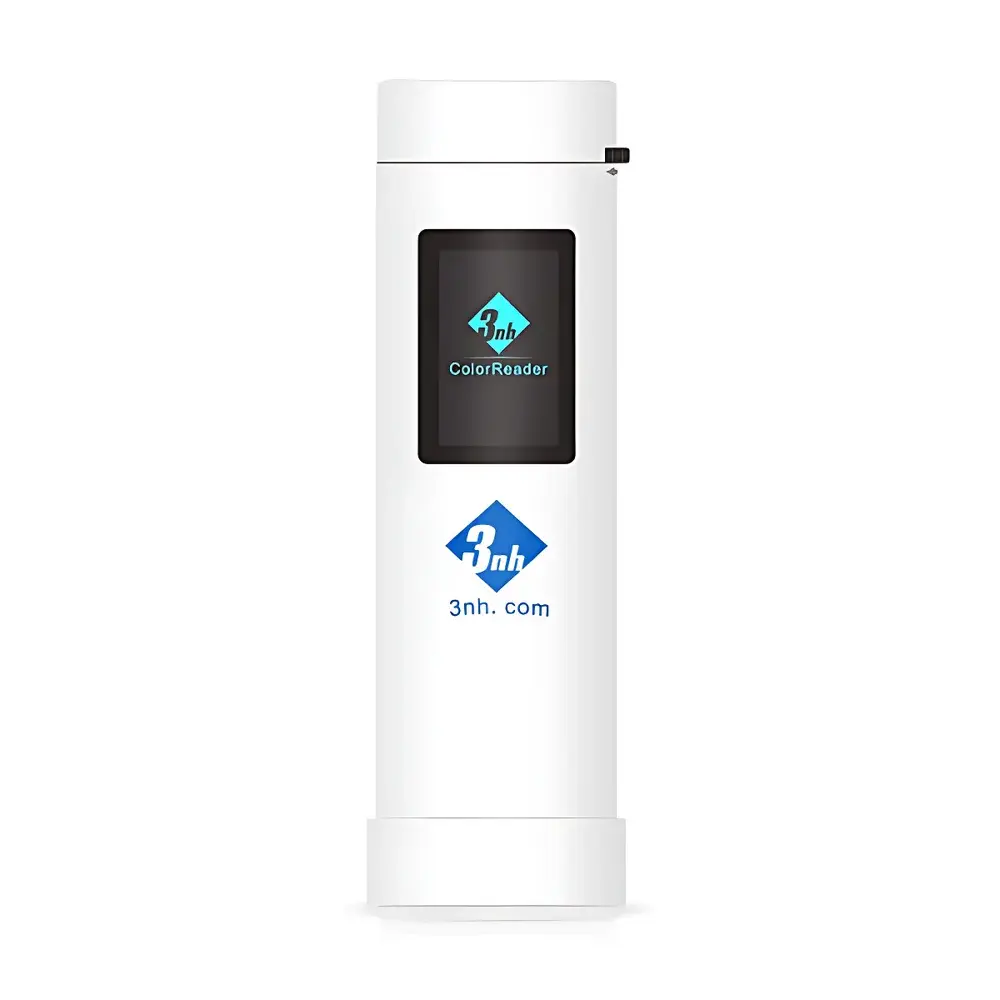
3nh CR1 Portable Color Difference Meter
| Brand | 3nh |
|---|---|
| Origin | Guangdong, China |
| Manufacturer Type | Direct Manufacturer |
| Regional Classification | Domestic (China) |
| Model | CR1 |
| Product Category | Color Difference Meter |
| Instrument Type | Portable |
| Optical Geometry | d/8° integrating sphere (SCI mode) |
| Illuminant | D65 |
| Spectral Range | 400–700 nm |
| Repeatability | ΔE*ab ≤ 0.1 (after warm-up and calibration |
Overview
The 3nh CR1 Portable Color Difference Meter is an industrial-grade handheld color measurement instrument engineered for high-repeatability, field-deployable color quality control in manufacturing environments. It operates on the CIE-compliant d/8° geometry with specular component included (SCI), ensuring consistent measurement of both diffuse and reflectance components—critical for accurate color evaluation across textured, glossy, or matte surfaces. The device integrates a dual-path CMOS sensor array with precision optical filtering, enabling spectral response aligned to the CIE 1964 10° standard observer under D65 illumination. Unlike consumer-grade colorimeters, the CR1 is calibrated to meet metrological requirements for production line verification in regulated industries, supporting traceable color assessment without reliance on external reference standards during routine operation.
Key Features
- Non-contact automatic white/black calibration: Eliminates physical contact between the instrument aperture and calibration tiles, preventing contamination and preserving long-term baseline stability—addressing ISO 13655 and ASTM E308-22 compliance concerns regarding calibration integrity.
- Dual-mode operation: Standalone functionality via integrated “Smart Button” for immediate measurement, parameter adjustment, and local data review—no smartphone or PC required. Simultaneously supports full-feature expansion via Bluetooth 5.0 connection to MOBCCS mobile app or SQCX desktop software.
- High-density spectral acquisition: Full-spectrum LED illumination (400–700 nm) coupled with optimized Φ8 mm measurement aperture and Φ20 mm integrating sphere ensures robust signal-to-noise ratio and minimal inter-instrument variability.
- Industrial-grade embedded architecture: Real-time MCU processing engine enables sub-second measurement cycles (~1.0 s), 0.1-unit display resolution, and ΔE*ab repeatability ≤ 0.1 under controlled conditions per GB/T 3978 and CIE No. 15.
- Extended operational endurance: Rechargeable Li-ion battery (Type-C interface) supports up to 12,000 consecutive measurements per charge—validated per IEC 62133 for safety and cycle life.
- Environmental resilience: Rated for operation from 0–40°C at ≤85% RH (non-condensing) and storage from −20–50°C, compliant with IPC-CC-830B environmental stress classifications for portable test equipment.
Sample Compatibility & Compliance
The CR1 is validated for use on flat, semi-flat, and uniformly coated substrates common in plastics, coatings, textiles, ceramics, and electronics assembly. Its d/8° SCI configuration meets ISO 13655:2017 requirements for multi-angle appearance evaluation and is referenced in ASTM D2244 (standard practice for calculation of color tolerances) and ISO 11664-4 (CIELAB color space). While not certified to GLP or FDA 21 CFR Part 11 out-of-the-box, audit-ready data export (CSV, XLSX) and timestamped measurement logs in MOBCCS/SQCX enable integration into GMP-aligned color release protocols when deployed with documented calibration and change control procedures.
Software & Data Management
MOBCCS mobile application (iOS/Android) provides real-time spectral visualization, pass/fail thresholding, color simulation overlays, directional hue deviation mapping, and reflectance curve analysis. Users can build cloud-synced private color libraries, cross-reference against Pantone®, RAL, NCS, and proprietary palettes, and perform batch-wise statistical process control (SPC) using L*, a*, b*, ΔE*ab, and ΔL*Δa*Δb* metrics. SQCX desktop software adds advanced reporting templates, multi-instrument fleet management, and automated PDF certificate generation compliant with ISO/IEC 17025 documentation expectations.
Applications
- Plastics & Electronics: In-line verification of injection-molded housings, PCB solder mask consistency, and display bezel color matching.
- Paints & Coatings: Batch-to-batch comparison of automotive refinish paints, architectural coatings, and powder coating finishes.
- Textiles & Apparel: Shade sorting of dyed fabrics, trim components, and printed patterns under standardized D65 simulation.
- Ceramics & Tiles: Glaze uniformity assessment across kiln-fired batches and surface defect detection via chromatic outlier analysis.
- R&D Labs: Rapid prototyping feedback loop for pigment formulation, substrate interaction studies, and aging simulation correlation.
FAQ
Does the CR1 require annual factory recalibration?
No mandatory annual recalibration is specified; however, users must perform non-contact white/black calibration before each measurement session per GB/T 3978 guidelines. Optional traceable recalibration services are available through 3nh-accredited labs.
Can the CR1 measure transparent or translucent materials?
Not recommended—its d/8° SCI geometry assumes opaque, diffusely reflecting surfaces. Translucent samples require backside backing or specialized transmission fixtures not included with the base unit.
Is Bluetooth pairing compatible with Windows PCs?
Yes, via third-party BLE dongles and SQCX software; native Bluetooth HID support is limited to Android/iOS for MOBCCS.
What is the measurement uncertainty specification?
3nh declares repeatability (ΔE*ab ≤ 0.1) under defined lab conditions. Total measurement uncertainty depends on sample homogeneity, operator technique, ambient lighting, and calibration frequency—and should be assessed per ISO/IEC 17025 Annex A.3 for accredited applications.
Does the CR1 support custom tolerance ellipsoids (e.g., CMC, DIN99)?
Yes—MOBCCS and SQCX support ΔECMC(2:1), ΔEDIN99d, and ΔE00 calculations alongside standard ΔE*ab, with user-definable acceptance thresholds per L*a*b* axis.



